Category Archives: The USA

“Bone-crushing” & “draconian”: The law that could choke Putin’s oil revenues. [My interview with Norway’s ‘Kapital’]

My thanks to Tor Klaveness at Kapital, Norway’s oldest and leading, business magazine. Below is an English translation, then the Norwegian original. – Tom O’D.

“Bone-crushing” and “draconian”: The law that could choke Putin’s oil revenues

If peace talks between Ukraine and Russia break down, the US Senate is ready to pass a sanctions package that could strangle Russia’s oil exports. In that case, it could significantly strengthen the oil market.

Energy Published 29 Nov. | Paywall removed, Updated 9 Dec.

By: Tor Klaveness

“President Trump said this weekend, ‘Send me the bill.’ So we have to send him the bill to help end this war.”

Dr. Thomas O’Donnell, energy and geopolitical strategist

This was stated by Republican Senator Lindsey Graham in a panel debate on November 19 with Democratic Senator Richard Blumenthal. The debate was moderated by Clayton Seigle, a senior fellow at the think tank Center for Strategic and International Studies (CSIS), which also organized the debate.

The bill Graham referred to is the Sanctioning Russia Act , which he is co-sponsoring with Blumenthal. The bill already has the support of 85 of the 100 US senators and would give US authorities the right to impose punitive tariffs of no less than 500 percent on countries importing Russian energy.

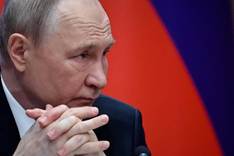
PHOTO: Alexander Kazakov, Sputnik, Kremlin Pool Photo via AP/NTB

With a stick and a carrot

Dr. Thomas O’Donnell is an energy and geopolitical strategist, founder of GlobalBarrel.com and former global fellow at the Wilson Center in Washington, D.C. He believes Congress is now poised to give President Trump an extremely potent weapon.

The proposal is being described as “bone-crushing” and “draconian,” and is set to be voted through almost unanimously in the Senate.

Continue reading

My CNN live: Why Trump wants a Venezuelan oil boom | Venezuelans, living in misery, just want Maduro gone; eight million have fled.

I was interviewed on CNN International’s “Newsroom” with host Kim Brunhuber – live, Friday, 12 Dec. 2025. The transcript is below. Kim asked about Venezuela’s oil industry, the impact of sanctions, what stricter enforcement could do to the Venezuelan economy, and what the US stands to gain if it ultimately gains greater access to the country’s oil reserves? He also wanted to know what Venezuelans are saying. / CNN says: “The show is broadcast around the world on CNN International, and in the US on our new platform All Access.”

Transcript:

0:01 I want to bring in Thomas O’Donnell, an

0:03 energy and geopolitics strategist at

0:05 GlobalBarrel.com. He’s also a former

0:07 visiting professor at the Central

0:09 University of Venezuela and he joins us

0:11 from Berlin. Thank you so much for being

0:13 here with us. Uh so this seizure, a

0:16 clear escalation here. Uh the White

0:19 House says more tanker seizures could be

0:22 coming. If that happens, I mean, what

0:23 would that do to the Venezuelan economy?

0:28 Well, there’s there’s two aspects here.

Continue reading

Video: “Dismantling the Petrostate: Moment of Truth for Russian Oil?” | Our EIES Webinar

Here is the video of our 10 Nov. event, organized by EIES (European Institute for Energy Security). Our topic was the turn in US Trump administration policy on ending Russia’s war against Ukraine and the Russian oil sector.

My sincere thanks to EIES, and especially Executive Director Albéric Mongrenier, for inviting me along with distinguished energy and geopolitics experts. (Note: EIES is affiliated with, but policy-independent of, SAFE in Washington).

Our distinguished expert panel included:

  • Dr. Jaak Aviksoo, Former Minister of Defence of Estonia, EIES Energy Security Leadership Council
  • Christof Rühl, Senior Research Scholar at Columbia University’s Center on Global Energy Policy, former BP Chief Economist 
  • Dr. Thomas O’Donnell, Energy and Geopolitical Strategist and Founder of GlobalBarrel.com 
  • Moderated by Rosemary Griffin, OPEC+ Lead Reporter, S&P Global Commodity Insights
  • Opened by Peter Flory, Senior Fellow, EIES, Former NATO Assistant Secretary General

A central question we addressed was the turn in the Trump administration policy to apply significant coercive measures against the Russian oil sector to undermine the ability of the Putin government to continue its was in Ukraine. We discussed how effective the new sanctions on Rosneft and Lukoil might be and what is the synergistic effect of the Ukrainian drone and missile campaign against Russian domestic refineries and oil export terminal ports.

For an update on expanded attacks on Russian Black Sea oil ports and their meaning, see the written comments accompanying my Kanal24 video interview, posted on Monday, 17 Nov. “The US & Ukraine pound Russian oil | my Kanal24, Kyiv“).

Continue reading

My Kyiv Kanal24: Ukraine’s drones hit Russian refineries hard. USA apparently blocks hits on oil ports. Why?

Dear colleagues and friends — there are two key energy aspects in this detailed interview with Nataliia Lutsenko of Channel 24, an all-news TV channel from Kyiv: (1) Ukraine’s attritional war on Russia’s domestic oil sector and (2) whether Ukrainian long-range drone capacities will be called upon (viz., permitted by the USA) to accomplish what the new US policy of ending Russian oil exports seeks to accomplish through secondary tariffs. Elaborating:

(1) Domestic Russian oil refining capacities: I explained that, If Ukraine can sustain these new drone attacks at a faster rate than Russia can repair them, this will be a major blow to the supply of diesel fuel required by the Russian war economy, especially to war industries, railways (i.e., to locomotive fuel), for harvesting of crops this fall, and to supply the war front and occupied Ukraine. The last time this was tried on a large scale, roughly two years ago, Ukraine caused significant hardships to Russian refining, but ultimately it did not achieve sustained damage at a rate necessary to collapse Russia’s immense national refining capacity. However, as I pointed out to Nataliia, Ukraine’s drone production and sophistication is now greater, and chances of success therefore better. We should know in some weeks or perhaps a few months if Ukraine can now overwhelm Russia’s repair capacities.

Already, fuel prices have spiked in Russia, with Moscow deciding to insure refiners receive a special subsidy they would otherwise not get due to high prices they are charging for fuel, to address difficulties with the renewed drone war. (Russian Refiners Hit Rough Patch, Hope for State Support, E.I., 20August25, [paywall].)

(2) Russian oil export capacities: Why does Ukraine’s war on the Russian oil sector not include destruction of Russia’s three westward facing oil ports, the terminals it uses to export the overwhelming bulk of its oil exports? These are Ust-Luga and Primorsk in the Baltic, and Novorossiya on the Black Sea. Why has the oil export capacities of these ports essentially never been hit?

Continue reading

My TRT-London | With air defenses & proxies decimated, USA-Israel can bomb Iran at will, killing nuclear & missile programs, and its negotiating hand | Trump, Gulf eye Abraham Accords era

MY COMMENTS: 1) USA long-planned surprise strategy 2) Iran leaders’ 20-year nukes brinkmanship strategy aimed for USA ssecurity-guarantee deal
ALL GUESTS – TRT-London, USA bombing

I was invited on TRT-World, London, 24 June, for a panel after US strikes on Iranian nuclear sites (see the panelist lineup below. I answered two questions at some length – see the 2nd video.)

In summary: Trump claims USA Operation Midnight Hammer “obliterated” the country’s nuclear capacity, but how much have they really been degraded?

My analysis is that it does not matter. If the USA decides to bomb again at will, without Iran having air defenses the USA and Israel can destroy or disrupt most any renewed Iranian work on its nuclear or conventional missile program. If, as he stated, repeat bombings as needed are Trump’s intention, then this should be the case. This now leaves Iran very little negotiating leverage. The regional proxies it always intended to use for retaliation in just such a scenario have been decimated by Israel.

Therefore, there is a high likelihood Iran will be forced by Trump to negotiate from a now much weaker position. If Tehran resists, it could fall back to rely on state-sponsored terrorist methods, which are of limited usefulness for maintaining a modern functioning state and economy.

Overall, I emphasize that this “12 Day War” has been especially motivated, by Trump, to assure USA Gulf allies that they can now safely enter into the Abraham Accords with Israel and the USA, establishing a new regional security structure. Trump will be constrained to do whatever is necessary, militarily and in negotiations, to insure the Iranian threat these allies have felt acutely remains under control. In turn, if these accords, which Trump’s chief negotiator, Steve Witkoff, was reportedly already working on among the USA’s Gulf Arab allies immediately after the USA bombing is intended to allow the USA to move on, focusing more squarely on Great Power competition elsewhere.

This is my general assessment. There are many details and some possible derailments here, of course. – Tom O’D.

Continue reading

“12-Day War”: Why no energy crisis? Iran regime was cornered. Seeing USA’s limited aims, it dared not escalate, gave up. | My Al Jazeera comments

The ceasefire Trump brokered will hopefully end this “12-Day War.” I want to discuss here why this war did not trigger a global energy crisis. [Here’s what I said about this to Al Jazeera last week, in the last five paragraphs. A PDF is also embedded below. I’ll also post a TRT-London show on Iran’s nuclear strategy, recorded Tuesday, soon.]

To assess the risk to energy supplies, understanding the aims of the combatants is key. Throughout this war, it was the USA-Israel side setting the agenda, and there were two strategic aims they could pursue. One was to “only” destroy Iran’s nuclear program and its existing conventional regional power-projection capacities. The second was to go beyond this to undermine the viability of the Islamic Republic, up to forcing a regime change. Why do I say this?

Continue reading

My TRT | Türkiye gas-hub? Egypt LNG deal & Black Sea find, but EU still not asking for Russia-replacing Azerbaijani or Turkman gas | With Aura Sabadus & Oktay Tanrısever

My comments are linked here:: -1- 02:21, -2- 06:52 -3- 14:30 -4- 20:50, but hear Aura & Oktay too!

I was happy to address Türkiye’s push to become a gas hub: both for its own domestic security of supply, and to become an indispensable supplier to the European market. I was on with esteemed gas-sector analysts Aura Sabadus and Oktay TanriseverI, and host Yusuf Erim. TRT is a state-supported Turkish national broadcaster. The Turkish, East Med, Central Asian, Caspian regions involved are fairly complex, and I will simply let the interview speak for itself. Turkey is making progress but needs to end market-price setting, as Aura Sabadus stressed – and I agreed, as well as further diversification of supplies. I stressed the self-destructive EU lack of interest in long-term new pipeline gas from Azerbaijan and Turkmenistan it could indeed contract for, which would all transit Turkey.

You will see (my 3rd answer) that I raised again my view that Europe will become ever more deeply in need (i.e., dependent) on natural gas imports, but is acting rather “schizophrenic” about this. Brussels et al seems not to be willing to face this reality. Natural gas importance and its geostrategic nature will only increase due, perhaps counter-intuitively, to EU over-dependence on renewables. But, where is the urgency, then, to sign long-term pipeline-gas contracts from neighboring states via a developing Turkish gas-sales hub? Such supplies would generally be cheaper than LNG imports, especially if the LNG is purchased on short-term spot markets. Indeed, even its main pipeline supplies now, from Norway, are reportedly mainly via short-term spot purchases (See Morten Frisch, Norwegian gas-sector veteran). I find this astonishing for both price and security of supply.

Continue reading

My TVP live: Merz election drama. Merz visit to Tusk reevokes security & migration frictions. If Merz fails to halt German deindustrialization, Poland too faces crisis.

In the last two weeks, I was in Warsaw twice. First, for the Three Seas One Opportunity conference (3S1O) on 27 April, organized by the Opportunity Think Tank, where I co-chaired a session. This was an official side event of the Three Seas Summit (a ministerial conference). Second, for the Warsaw Security Forum’s Public Dialogue. (WSF) 7 May. I will soon post here about both these very interesting events.

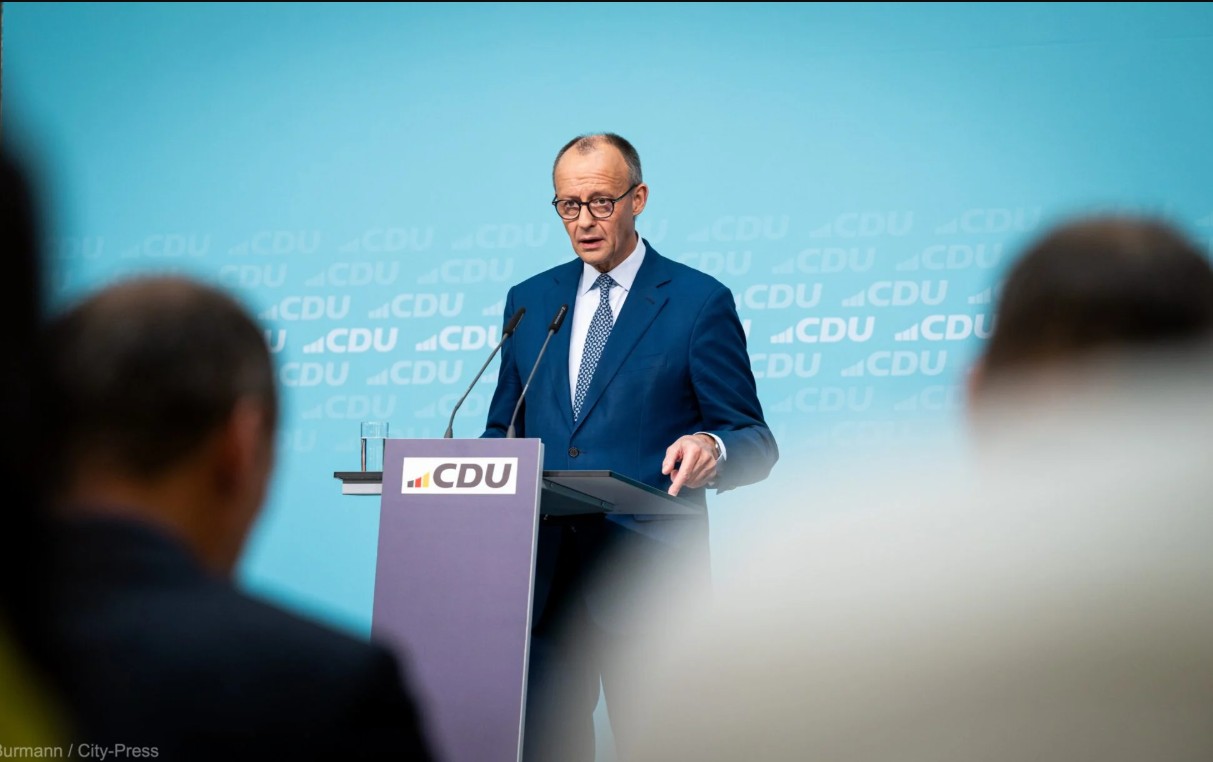
However, I was asked by TVP, the Polish national broadcaster, to come to their Warsaw studios on 8 May, the day after the WSF, for a live-on-air commentary on the recent drama in the German Bundestag (parliament) where the new Chancellor, Fredrich Merz, embarrassingly failed to get the necessary votes on the first ballot. He finally succeeded on second ballot, after intense politicking and consultations within his party, the center-right CDU, in its Bavarian sister party, the CSU, and in his coalition-partner party, the center-left SPD.

So, first; I was asked to explain this surprising electoral fiasco for the new chancellor, Merz, and his party, and how it may have weakened his new government.

Secondly, Merz immediately, after being sworn in, undertook a one-day whirlwind trip to Paris and then Warsaw, to visit his prospective main partners in the European Union, President Macron of France and Prime Minister Tusk of Poland. (Continued ….)

Continue reading

Yo en radio en vivo: TRUMP, RUSIA, UCRANIA: ¿PAZ? | Buenos Aires, Londres, Paris, Madrid, Berlin, Sao Paulo, La Paz y Washington (EN transcript added)

El día de Pascua, 20.04, me entrevistaron en directo por radio, en muchas ciudades de Europa y del hemisferio occidental. On Easter Sunday, April 20, 2025, I was interviewed live in several cities of Europe and the Western Hemisphere. The interview was in Spanish. An English Google translation is below (RHS column). The topic was the negotiations of the Trump USA administration between Russia and Ukraine to end the war. Tom OD.)

Mi agradecimiento por la invitación de María Eugenia Plano, productora del programa radial Corresponsales en Línea, realizado por las corresponsales de los diarios Clarín y La Nación en París y Londres (María Laura Avignolo), París (Danielle Raymond), Madrid (Silvia Pisani), Berlin (Araceli Viceconte), Washington ( Paula Lugones) y San Pablo (Cristina Veiga) con la conducción de Silvia Naishtat (Editora de Economía de Clarín). en vivo y en directo para Radio Ciudad en Buenos Aires, los días domingos de 10 a 12 AM Hora Argentina. My thanks for the invitation from María Eugenia Plano, producer of the radio program Corresponsales en Línea, made by the correspondents of the newspapers Clarín and La Nación in Paris and London (María Laura Avignolo), Paris (Danielle Raymond), Madrid (Silvia Pisani), Berlin (Araceli Viceconte), Washington (Paula Lugones) and Sao Paulo (Cristina Veiga) hosted by Silvia Naishtat (Economics Editor of Clarín). live and direct for Radio Ciudad in Buenos Aires, Sundays from 10 to 12 AM Argentine time.

Continue reading

My analysis in Newsweek: How Trump can cripple Russian oil, if he decides to

Wednesday, I was quoted repeatedly in Newsweek (USA) by Brendan Cole (London) 23 April: “Russian Economy Dealt Blow With Slumping Oil Prices,” And, Below: a Monday audio of my related analysis.

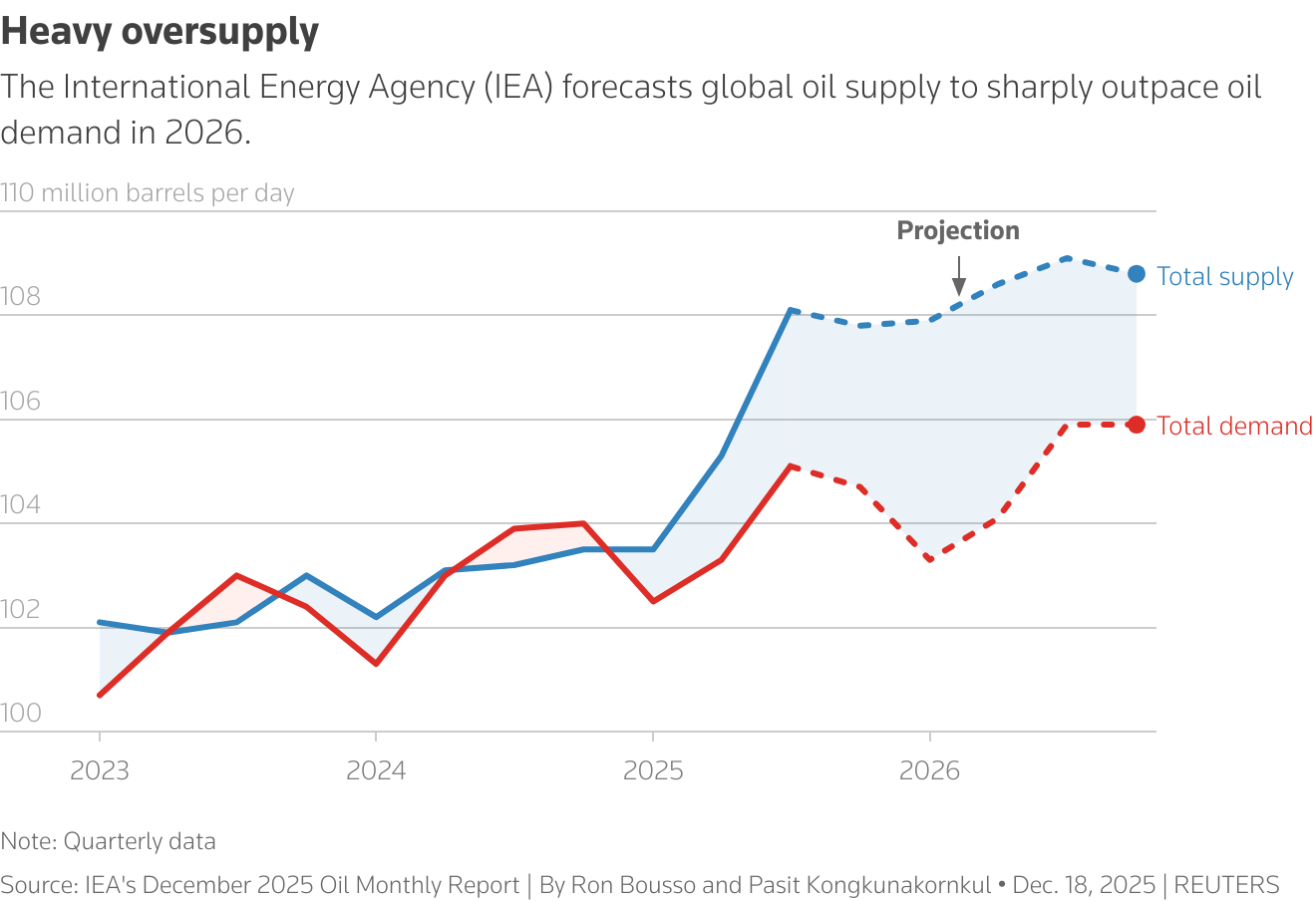
Above: Audio of my comments to (various) press on 22 April 25, on the impact of falling oil prices on Russia’s capacity to war on Ukraine. Also, a scenario I have discussed for over a year, first privately and then publicly, of how the USA could shut down the great majority of Russia’s seaborne oil exports, to devastating consequences for its oil sector and capacity to continue the war. In the present market situation of oversupply and anticipated continued weak demand, this could be done in a way that does not spike global oil prices.

This will only be done if Trump decides he needs to use harsh coercion to force Putin into an acceptable peace deal with Ukraine, AND if Trump were willing to impose lasting harm on the older Russian oil fields.

Continue reading

Analysis: The USA & China each have failings preparing for a trade war (from Poznan)

Xi Jinping has still not built China’s domestic market to escape its trade-war vulnerabilities from over-dependence on exports, a weakness he openly discussed back in February 2012 on his USA tour before becoming premier.

For the USA, Trump had apparently planned to have resolved the Ukraine war and in some way undermined the Russia-China alliance, inducing Russia to move closer to the USA before going after China. But, ending the war has proven far more difficult than he anticipated. His lack of success with Russia will weigh on his ability to negotiate from a position of strength with all the countries he is competing to win away from China’s geoeconomics orbit such as India, Viet Nam, Cambodia, Philippines, Thailand and etc. — the states that Treasury Secretary would say are in the “yellow zone” as opposed to the USA#s closest allies such as Japan, South Korea, Taiwan, in the so-called “green zone.” For details – see this post on my blog,

Continue reading

My Asharq-Bloomberg: (1)Trump is following Miran’s tariff strategy (2)My reply to Jeff Sachs on US dollar role (3)Tariffs boost EU deindustrialization & (4)turbocharge German auto-crisis (5)Trump’s EU energy-purchase demands

Here’s my interview and a written elaboration – in lieu of a transcript:

  1. Trump’s “tariff shock” on everyone was intended mainly to force negotiations. Especially this is to insure no country:
    • Functions as a transit state for Chinese exports to get into the USA without paying crippling tariffs, or
    • Provides a Chinese-owned manufacturing site in their country with the same aim of accessing the USA market without crippling tariffs..
      • Trump’s Chair of the Council of Economic Advisers Miran and Treasury Secretary Bessent have been fairly clear about this, if one listens in detail.
  2. Trump Tariffs’ impact on Europe – Deindustrialization. German auto sector as an example.
    • While Trump and his circle militate against “deindustrialization” of the USA accomplished over the past few decades by the growth of Chinese manufacturing capacity and the export of these products into the USA market, Europe has an immediate problem, however, with the current advance of its “deindustrialization” or, as some more optimistically say, its new industrial “evolution”. [Some references from major German economic institutes on deindustrialization: IFO Institute, IW Institute, Kiel Institute, the latter of which has evolved a bit on this].
    • Taking the German auto industry as an example, it was already suffering from well known, chronic problems of Germany’s own making. These include two decades of low infrastructure investments, poor digitalization, high taxes, and being subjected to arbitrary government mandates to reduce diesel sales and increase battery electric vehicle production, and etc. ON top of this, German industry has also suffered high energy prices due to the countries exceptionally complex all-renewables energy transition model. On top of this came suddenly, from 2021, the Russian energy war, which denied Europe half of the cheap gas that European, and especially German industry was relying on to compensate for the high-cost of the all-renewables transition.
    • This energy war – and on the heels of the Covid shock – was devastating to German manufacturing and heavy industries, providing the proverbial straw that broke the camel’s back. In my assessment at the time, this was the point at which German industry’s problems of multi-faceted uncompetitiveness morphed into a form of deindustrialization,
    • Germany is in its third year of recession. However, this is not just a recession. Note that the VW, the German auto firm, for example, in September 2024, began mass layoffs for the first time in 87 years in September 2024. BASF is in a similar conundrum. In my view this is a systemic, secular problem over and above any present economic downturn.
    • So, the point of painting this detailed picture of the crisis of German automobile manufacturing, as an example, is that one can now really only imagine what a sharp knock-on effect Trump’s auto tariffs and his other tariffs might have on top of all this.  This is devastating. Already the CEO of Mercedes has said if the tariffs continue he will move the production of the cheaper models to the USA. Already one of the largest exporters of cats from the USA is a German factory.
  3. My response (critique) of Jeff Sacks‘ dollar-decline predictions
    • I was asked to listen to a clip from Asharq/Bloomberg’s earlier on-air interview with Nobel Prize economist, Jeffry Sachs, about his prediction that the US dollar would lose its reserve currency status in this decade and be replaced by regional currencies.
    • My take was that there was little new (or old) factual evidence of this, plus Trump’s tariff shock is not necessarily a long-term tactic. So, I commented that Sachs has had this theory for a long time, an it is nothing new. (I think it is fair to say he is quite sympathetic to China in various interviews, for some years now.) So, I simply said I was not surprised he says this, as he has for a long time.
    • However, I explained (with a bit more factual detail than Sachs, I hope) that indeed, even Trump’s theorist Miran and Bessent too agree that the tariffs strategy is designed to reduce the value of the dollar (its aims is precisely a weak dollar), and this should normally mean that the dollar loses its reserve currency status, its preferred use in the world, that these Trump theorists have a plan for a “Mar-a-Lago” or similar accord for states that are seen as being key, close allies, who would agree to peg their currencies to the dollar, and that they should be expected to agree as they need to trade into the USA market.. This is based on the observation that the USA market has a special status in the world. If this were to pass, they theorize that this would in fact preserve the special, preferred reserve status of the US dollar.  Trump likes this as he has said that if this status is lost, then the destiny of the USA is to be a “third world” economy. **Continued at GlobalBarrel.com ….
Continue reading

My Al Jazeera: The EU will retaliate against Trump’s arbitrary tariffs | Attacking allies, Trump dilutes fight vs. real threats from highly subsidized Chinese exports.

Last night, I was live on Al Jazeera’s evening news to give an “EU perspective” on Trump’s sweeping tariffs on the EU and have a bit of a debate with Hon. Robert Arlett, Sussex County Council, Delaware, USA – a MAGA supporter. I was happy to do so.

I think I made several decent points of criticism about how the entire premise for “retaliation” against the EU on trade was “made up” under an “arbitrary” formula that “makes no sense.” I allowed that, as is often the case with Trump, much of this, the “retaliatory” portion, might be a pressure tactic for some other, still-to-be-revealed concession Trump is aiming for from Europe.

Of course, this is the geo-economic side to Trump’s geostrategic undermining of a unified USA-EU approach to facing Russia over its invasion of Ukraine. (However exactly how that new geostrategic relationship with Europe and NATO might all fit into Trump’s larger, global security strategy is still mostly up in the air, a matter still taking shape.)

However, as for these massive tariffs on Europe and Asian allies, these are a systematic attempt to dismantle globalization as we have known it and instead to focus on the subordination of European and Asian allies to a system where hegemon is unwilling to pay certain costs of maintaining its allies within its system.

Trump envisions a system where the USA makes no sacrifices or pays no communal costs, but must profit at every step from each and every ally. Indeed, the USA has powerful tools afforded it from its geo-economic dominance, tools which Trump seeks to exploit to unilaterally shape international economic and geopolitical relations, while forcing its allies to pay for the privilege and advantages of belonging to the USA-hegemon-maintained system.

Continue reading

My Dublin talk: “The role of renewables in securing Europe’s energy” [at EU Commission Representation, Polish Presidency event]

I felt greatly honored to speak in Ireland, the home of my ancestors, at a high-level Irish-Polish event, invited by the Polish embassy as part of Poland’s Presidency of the European Council. [Spoiler alert: my assessment of the Green Deal’s impact on EU energy security and competitiveness was highly critical. And, I called for a radical reform, modeled on the 1970-80’s French Messmer nuclear program, the response to a similarly dire European energy and competitiveness crisis.]

For Ireland we had Secretary General Oonagh Buckley and Wind Energy Ireland CEO Noel Cunniffee; for Poland, Daniel Piekarsky, Head of Energy Security Unit in the Foreign Ministry, and myself, Global Fellow of the Wilson Center, Washington (external) working in Europe, from Berlin.

Our moderator, from the Polish Embassy, Dublin, was the Polish diplomat and patriot, Dr. Jacek Rosa — a good friend, with whom I had the great pleasure of closely collaborating, for several years, in opposition to the Russian-German Nord Stream 2 gas-pipeline partnership, before the 2022 full-scale invasion of Ukraine. Below is the lineup, the initial invitation and some pictures. The event was off-the-record, so I show here only my own, slightly redacted talk.

Continue reading

My Q1 Polish press: |1|Does Germany want Russian gas back? |2|Green Deal model has a tech problem. |3|German deindustrialization: bankruptcies up. |4|Warsaw, Paris & London must act fast for Ukraine!

Opening of Nord Stream1 pipeline, 2011. Gazprom via PAP

Below are links to 12 articles that appeared in the Polish press in the last few months, interviewing or quoting me on four topics I feel are important. The topics are listed in the title above.

The links are below, sorted by topic. The first or left column has English translations of the titles, and the second or right column has the original Polish — which unfortunately I don’t speak! If you follow the links, Google Translate or Deepl will translated the Polish articles pretty well into English. My special thanks to the intrepid Polish journalist, Artur Ciechanowicz at BiznesAlert in Warsaw for his interviews in the list. (I also had about 33 quotes or interviews in several other languages since December [1]).

ENGLISH titles and links:

  1. On German (far-right) & USA (Trump) each plotting a Russian gas return to Germany
    • A former Stasi agent lobbies for the resumption of Nord Stream. Expert: One of the gas pipeline lines ready to be launched,, By,: Artur Ciechanowicz, March 3, 2025, biznesAlert.pl
    • Some EU countries believed that Gazprom gas would be in Europe forever BiznesAlert.pl
    • “Like a Drug Addict Returning to Heroin.” Analyst on the Idea of ​​Unblocking Gas Imports from Russia to Europe, Author: Artur Ciechanowicz, February 1, 2025, 07:21
  2. Failures of EU Green Deal on technology and energy security.
    • American expert: recommendation to reduce emissions by 90 percent by 2040 is “fantasy” | Energetyka24
    • Expert: EC recommendation to reduce gas emissions is fantasy wpolityce.pl
    • Unrealistic EU climate plan. Expert opinion crushes – Super Business
    • “Rearranging deckchairs on the sinking Titanic”. Expert slams the eco-target dictates of Brussels Eurocrats PCH24.pl
  3. Trump, EU & Poland: Ukraine War crisis.
    • First talk with Putin. Trump has visions of ending the war in Ukraine | Newsweek Jan 21
    • How Trump Can Bring Down the Russian Economy: Analysts: He Has an Arsenal of Means to Do It, By Artur Ciechanowicz, Jan 24, 2025 | Biznes Alert
    • Trump may use [oil] sanctions to finish off Moscow, which is running out of money for the National Welfare Fund. – 16 January 2026 UBN
    • Expert: Washington, London, Warsaw should work quickly. Kiev can’t afford to be patient – Dziennik.pl
  4. German deindustrialization: Energy & economic crisis
    • Major shoe retailer goes bankrupt A sharp increase in bankruptcies in Germany

Polish titles and links:

  1. First topic.
    • Agent Stasi lobbuje za wznowieniem Nord Stream. Ekspert: Jedna z nitek gazociągu gotowa do uruchomienia biznesalert.pl
    • Część krajów Unii uwierzyła, że gaz z Gazpromu będzie w Europie na zawsze BiznesAlert.pl
    • “Jak powrót narkomana do heroiny”. Analityk o pomyśle odblokowania importu gazu z Rosji do Europy | BizNes Alert
  2. 2nd Topic
    • Amerykański ekspert: zalecenie redukcji emisji o 90 proc. do 2040 r. to „fantastyka” | Energetyka24
    • Ekspert: Zalecenie KE redukcji emisji gazów to fantastyka wpolityce.pl
    • Nierealny plan klimatyczny UE. Opinia eksperta miażdży – Super Business
    • “Przestawianie leżaków na tonącym Titanicu”. Ekspert nie zostawia suchej nitki na eko-dyktaturze brukselskich eurokratów – PCH24.pl
  3. Third topic
    • Donald Trump chce uchronić świat przed III wojną światową | Newsweek
    • Jak Trump może złamać rosyjską gospodarkę?
    • Trump may use [oil] sanctions to finish off Moscow, which is running out of money for the National Welfare Fund. – UBN
    • Ekspert: Waszyngton, Londyn, Warszawa powinny szybko działać. Kijowa nie stać na cierpliwość – Dziennik.pl
  4. Fourth topic

Notes:

  • [1] Other than being cited/interviewed in Poland, I was also quoted elsewhere about 33 times so far in 2025, mainly in the USA, with many then translated to languages of Europe, Asia and Latin America. I never know what to do with all these print interviews. Here at GlobalBarrel.com, I often publish videos of some of my live-on-air expert commentary, usually accompanied by a detailed blog post. So, my idea is I will make a new tab at the top of the GlobalBarrel.com site, next to the “About Me” tab, where I can simply list link to my recent press citations or Op-Eds. [Back to text]