
Last night on TRT World Global News (London), I emphasized that despite the modest spike in oil prices from about $70 to $78 per barrel as of yesterday, Trump has an historically unprecedented advantage for exercising “US Energy Dominance.”
The campaigns against Venezuela and Iran, plus the turning of the Indian oil-consuming behemoth towards USA and Western interests vs Russian oil, are examples of the geopolitical leverage the USA’s now-dominant role in global oil affairs has afforded the Trump administration.
This oil-market advantage comes mainly from of two things:
- First, what Trump terms “USA Energy Dominance.” This is a product of the Fracking Revolution and the USA rocketing to becoming the number-one producer of oil and gas and,
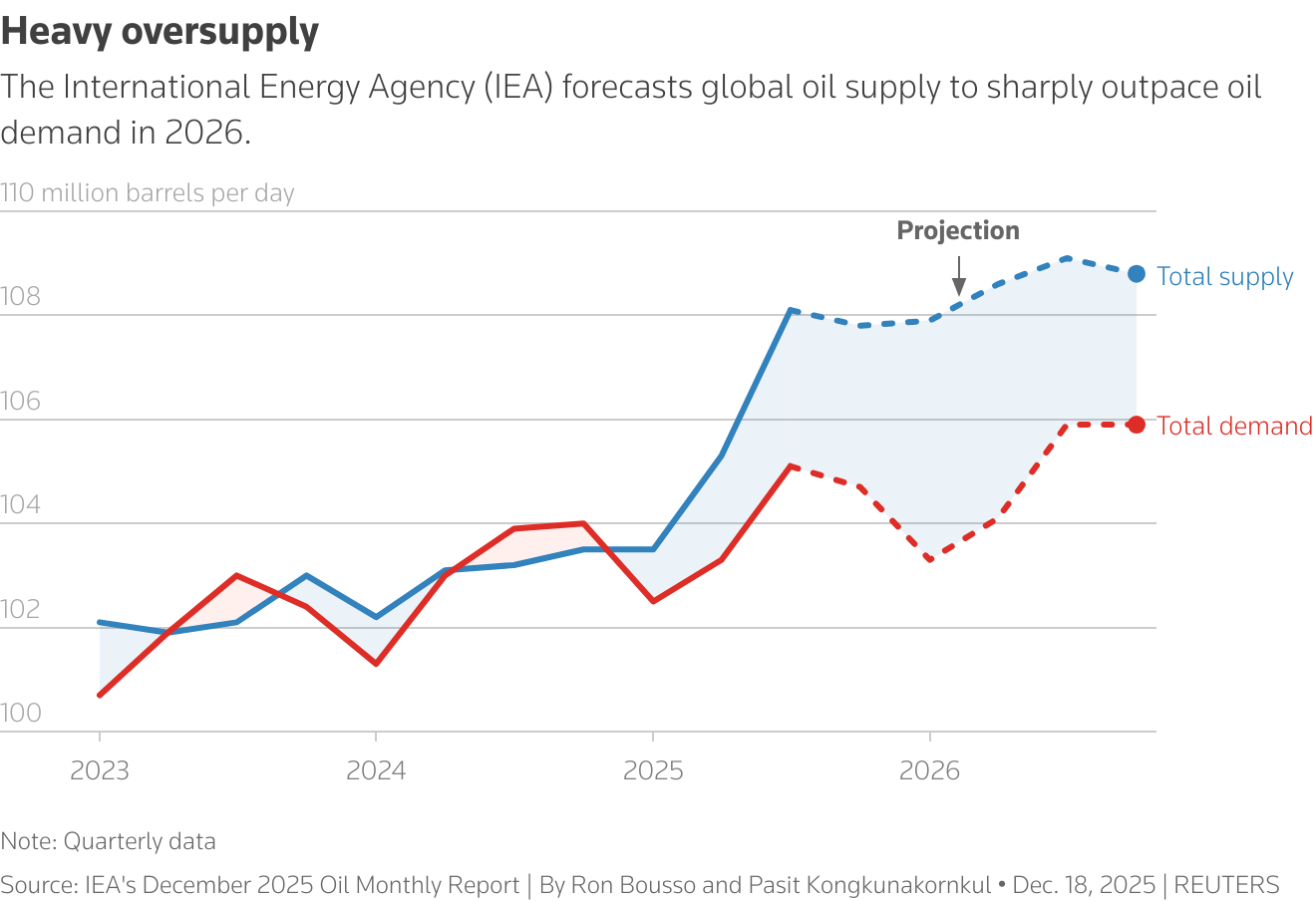
- Secondly, a persistent oil market glut, forecast to continue throughout 2026 (Fig.1, IEA).
As for the market glut, the Saudis, UAE and OPEC+ in-general, have about 3 million barrels per day (mbd) of production capacity still being held offline.
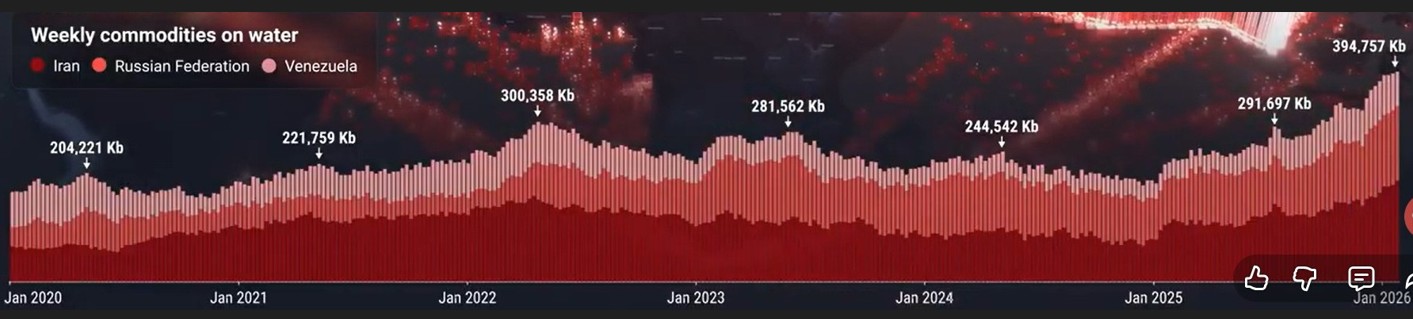
So too, there are about 1.25-1.4 billion barrels of oil floating “on the water.” There are two components to this amount.
- First, oil on ships that are in motion. This is reportedly at an all time high of about 400 million battels (ref. Kepler, see Video 2). Figure 2 is a screenshot from this video (Fig 2), charting the contributions of Russian, Iranian and Venezuelan oil to this total.
- Second, oil that is being stored on ships parked somewhere. This portion is almost a billion barrels.
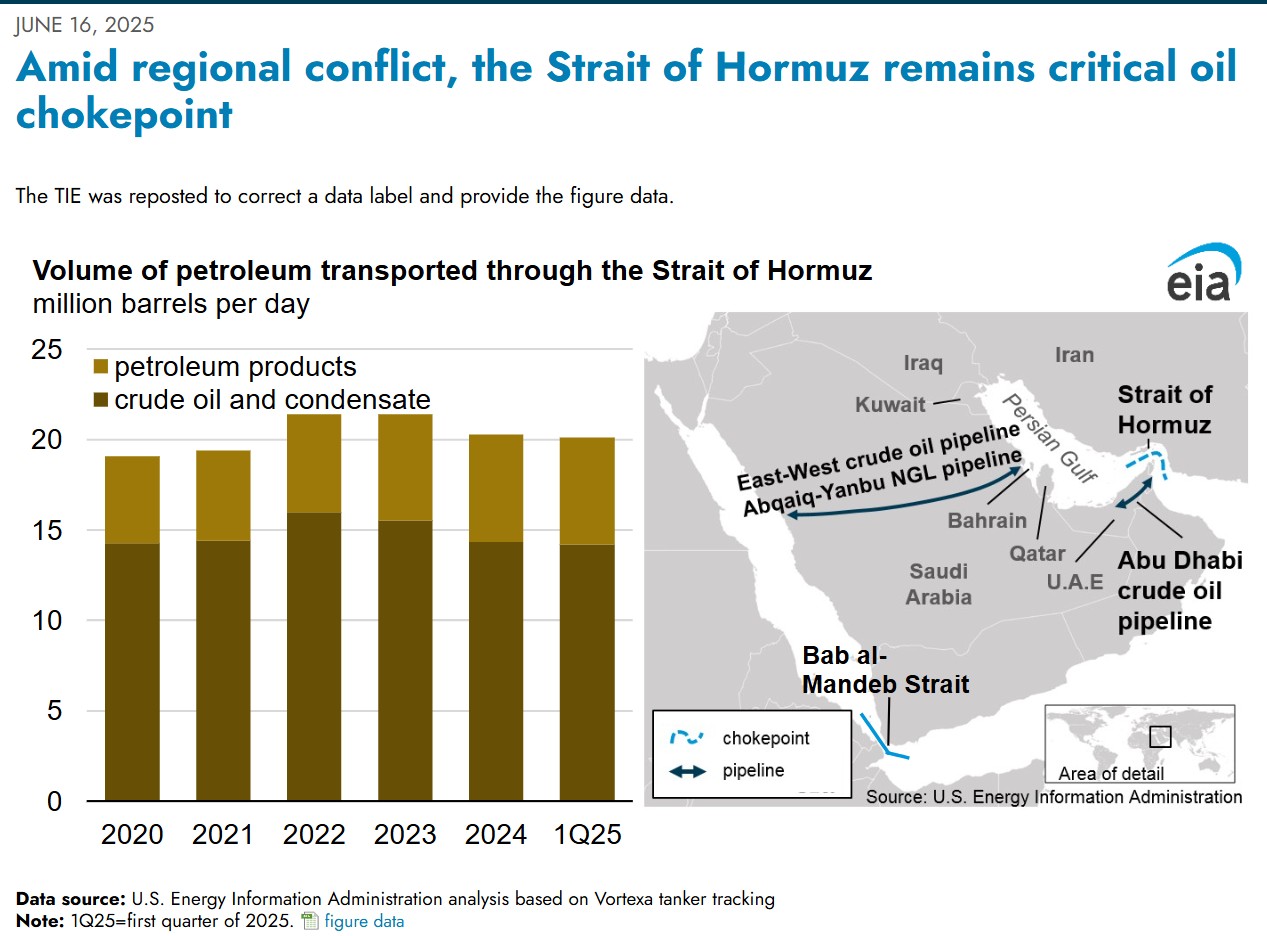
In the Iranian case, oil in transit and oil stored on tankers was discussed last week by veteran oil reporter Kate Dourian, Contributing Editor at Middle East Economic Survey Two of her points, which I have long also emphasized, are important to empathize:
(1) “Today, China is the largest purchaser of Russian and Iranian crude oil. This has provided Tehran with a crucial economic lifeline despite US sanctions. Some analysts argue that the tougher line taken by Donald Trump’s administration toward Iran — particularly the “maximum pressure” campaign — was aimed not only at curbing Iran’s regional ambitions and forcing it to abandon its nuclear program but also at constraining a key energy supplier to Beijing.” (emphasis added, T.O’D.(
and,
(2) “Data intelligence provider Kpler estimates Iran’s floating storage – barrels that have been on the water for more than seven days – at around 46mn barrels, mostly floating in Asia. These volumes are dwarfed by the amount of Iranian oil in transit, which exceeds 180mn barrels and surpasses the previous peak of nearly 160mn barrels in early 2022.” (Insights: “Iran: From US Surrogate to Adversary,” MEES, 25.02.26).
In my considered opinion, if the Iran campaign goes well for the Trump administration, the next target will be Russia’s remaining oil flows to China, as described in my recent, detailed study for EIES (see previous post “Liquidating the Russian Petrostate,” or download the report).
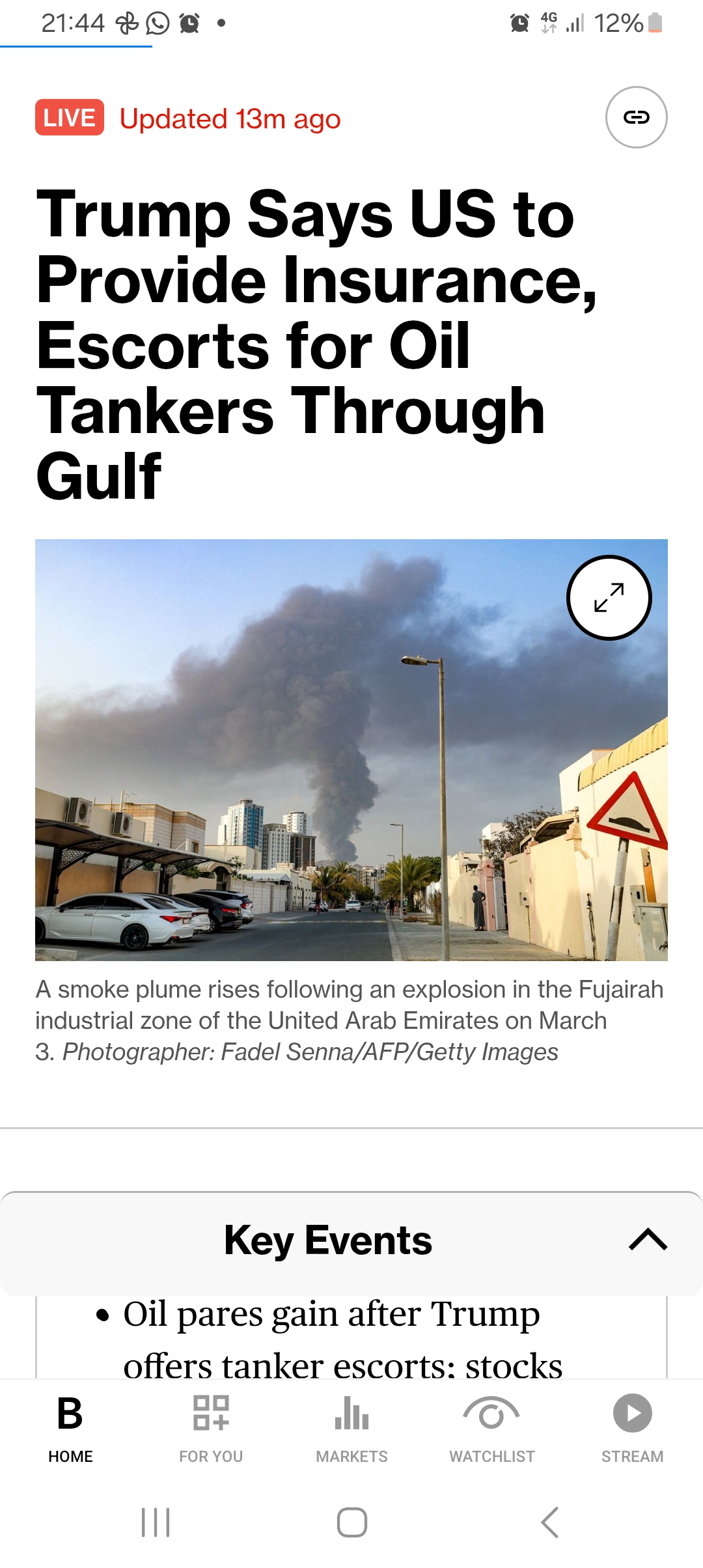
Late addition to this post: Just after posting this, Trump announced (Bloomberg, about 15:00 EST, 03.03.26) that the US would provide Insurance, and Escorts for Oil Tankers Through the Gulf,” i.e., the Strait of Hormuz. (Fig 3.) This was apparently what Rubio had in mind yesterday when he said they had “additional measures” to apply to address a rise in oil prices. Indeed, this should do so.
Some recommended links to data and/or readings on these issues:
- This first link is a late addition after posting: Javier Blass, Bloomberg, makes many similar points as I did to TRT above on the limits of any impact on the oil market due to the Iran hostilities. It is worth a read: https://www.bloomberg.com/opinion/articles/2026-03-01/iran-strikes-oil-prices-will-get-nasty-but-historic-shock-is-unlikely
- https://www.iea.org/data-and-statistics/data-tools/oil-stocks-of-iea-countries
- https://www.iea.org/commentaries/as-oil-market-surplus-keeps-rising-something-s-got-to-give
- https://www.cnbcafrica.com/2026/opec-agrees-modest-oil-output-boost-even-as-us-war-on-iran-disrupts-shipments
- https://fortune.com/2026/03/01/opec-oil-output-increase-saudi-arabia-russia-iran-conflict-crude-prices/
- https://www.bloomberg.com/news/articles/2025-11-12/oil-s-billion-barrel-buildup-at-sea-points-to-sanctions-stress
- https://www.bloomberg.com/news/articles/2026-03-03/asian-oil-refiners-could-cut-run-rates-on-hormuz-strait-logjam
- https://www.bloomberg.com/news/articles/2026-03-02/saudi-arabia-s-ras-tanura-refinery-shuts-down-after-drone-attack?fromMostRead=true
- https://www.cnbcafrica.com/2026/oil-gas-surge-as-iran-conflict-disrupts-middle-eastern-flows
- https://www.tradewindsnews.com/tankers/asian-crude-buyers-eye-alternatives-to-oil-from-the-middle-east-gulf/2-1-1952561
- https://www.reuters.com/business/energy/irans-oil-stored-water-hits-record-high-kpler-says-2026-01-12/
- https://www.bloomberg.com/news/articles/2025-10-06/global-oil-at-sea-climbs-to-a-record-as-production-surges
- https://fortune.com/2026/03/01/opec-oil-output-increase-saudi-arabia-russia-iran-conflict-crude-prices/
- https://www.jpmorgan.com/insights/global-research/commodities/oil-prices
- https://www.cnbcafrica.com/2026/iran-security-chief-ali-larijani-rejects-u-s-talks-blames-trump-for-chaos

