Category Archives: opec-plus

“Bone-crushing” & “draconian”: The law that could choke Putin’s oil revenues. [My interview with Norway’s ‘Kapital’]

My thanks to Tor Klaveness at Kapital, Norway’s oldest and leading, business magazine. Below is an English translation, then the Norwegian original. – Tom O’D.

“Bone-crushing” and “draconian”: The law that could choke Putin’s oil revenues

If peace talks between Ukraine and Russia break down, the US Senate is ready to pass a sanctions package that could strangle Russia’s oil exports. In that case, it could significantly strengthen the oil market.

Energy Published 29 Nov. | Paywall removed, Updated 9 Dec.

By: Tor Klaveness

“President Trump said this weekend, ‘Send me the bill.’ So we have to send him the bill to help end this war.”

Dr. Thomas O’Donnell, energy and geopolitical strategist

This was stated by Republican Senator Lindsey Graham in a panel debate on November 19 with Democratic Senator Richard Blumenthal. The debate was moderated by Clayton Seigle, a senior fellow at the think tank Center for Strategic and International Studies (CSIS), which also organized the debate.

The bill Graham referred to is the Sanctioning Russia Act , which he is co-sponsoring with Blumenthal. The bill already has the support of 85 of the 100 US senators and would give US authorities the right to impose punitive tariffs of no less than 500 percent on countries importing Russian energy.

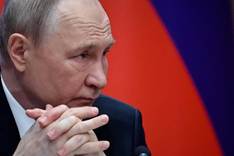
PHOTO: Alexander Kazakov, Sputnik, Kremlin Pool Photo via AP/NTB

With a stick and a carrot

Dr. Thomas O’Donnell is an energy and geopolitical strategist, founder of GlobalBarrel.com and former global fellow at the Wilson Center in Washington, D.C. He believes Congress is now poised to give President Trump an extremely potent weapon.

The proposal is being described as “bone-crushing” and “draconian,” and is set to be voted through almost unanimously in the Senate.

Continue reading

My Kyiv Kanal24: Ukraine’s drones hit Russian refineries hard. USA apparently blocks hits on oil ports. Why?

Dear colleagues and friends — there are two key energy aspects in this detailed interview with Nataliia Lutsenko of Channel 24, an all-news TV channel from Kyiv: (1) Ukraine’s attritional war on Russia’s domestic oil sector and (2) whether Ukrainian long-range drone capacities will be called upon (viz., permitted by the USA) to accomplish what the new US policy of ending Russian oil exports seeks to accomplish through secondary tariffs. Elaborating:

(1) Domestic Russian oil refining capacities: I explained that, If Ukraine can sustain these new drone attacks at a faster rate than Russia can repair them, this will be a major blow to the supply of diesel fuel required by the Russian war economy, especially to war industries, railways (i.e., to locomotive fuel), for harvesting of crops this fall, and to supply the war front and occupied Ukraine. The last time this was tried on a large scale, roughly two years ago, Ukraine caused significant hardships to Russian refining, but ultimately it did not achieve sustained damage at a rate necessary to collapse Russia’s immense national refining capacity. However, as I pointed out to Nataliia, Ukraine’s drone production and sophistication is now greater, and chances of success therefore better. We should know in some weeks or perhaps a few months if Ukraine can now overwhelm Russia’s repair capacities.

Already, fuel prices have spiked in Russia, with Moscow deciding to insure refiners receive a special subsidy they would otherwise not get due to high prices they are charging for fuel, to address difficulties with the renewed drone war. (Russian Refiners Hit Rough Patch, Hope for State Support, E.I., 20August25, [paywall].)

(2) Russian oil export capacities: Why does Ukraine’s war on the Russian oil sector not include destruction of Russia’s three westward facing oil ports, the terminals it uses to export the overwhelming bulk of its oil exports? These are Ust-Luga and Primorsk in the Baltic, and Novorossiya on the Black Sea. Why has the oil export capacities of these ports essentially never been hit?

Continue reading

My Ukraine Ch24 TV: Seeing Trump can kill his oil sales, Putin asked talks | “Bone-crushing” tariffs on Russian-oil buyers during a market glut can be very effective

This Friday, Trump and Putin will talk in Alaska about the future of Ukraine. Why has Putin asked for this meeting?

The two have spoken repeatedly on the phone …. but, something changed. As I indicated in my previous post (here), Trump has turned from his preferred plan to end the war, to one of confrontation and coercion of Putin (what I have called “Plan B”), aiming to force him into halting his war of aggression and seriously discuss peace proposals.

It was an honor to speak with Natalia Lutsenko of Channel 24 TV in Kyiv, and the Ukrainian national audience on these heavy issues of war and peace. The video interview – about 34 minutes long – goes into some detail of my analysis of the balance of forces.

Continue reading

“12-Day War”: Why no energy crisis? Iran regime was cornered. Seeing USA’s limited aims, it dared not escalate, gave up. | My Al Jazeera comments

The ceasefire Trump brokered will hopefully end this “12-Day War.” I want to discuss here why this war did not trigger a global energy crisis. [Here’s what I said about this to Al Jazeera last week, in the last five paragraphs. A PDF is also embedded below. I’ll also post a TRT-London show on Iran’s nuclear strategy, recorded Tuesday, soon.]

To assess the risk to energy supplies, understanding the aims of the combatants is key. Throughout this war, it was the USA-Israel side setting the agenda, and there were two strategic aims they could pursue. One was to “only” destroy Iran’s nuclear program and its existing conventional regional power-projection capacities. The second was to go beyond this to undermine the viability of the Islamic Republic, up to forcing a regime change. Why do I say this?

Continue reading

My interview at Lithuania’s LRT: Trump could seriously harm Russia if he wants to | Trumpas, jeigu tik norėtų, galėtų stipriai pakenkti Rusijai

My long print interview at Lithuania’s LRT [Lithuanian PDF | English PDF​] with Aleksandra ​Ketlerienė, deputy editor-in-chief of Lithuania’s LRT.lt, published 7January. We spoke in Warsaw, 19 November. My thanks to Aleksandra for her insightful questioning and editorial care. We discussed:

  • The EU’s systemic energy​-policy “own goals” ​since its initial energy-crisis win ​after Moscow began cutting gas exports early in 2021​.
  • Reforming failed/ineffective Russian price-cap sanctions for real sanctions, and how the global oil market is now favorable for “maximum pressure.”
  • Historical perspectives on oil, gas, renewables, and nuclear sectors, essential for realistic policy formation.
  • An historical overview of China’s decades-long effort to overcome its energy security, learning lessons of Japan’s WW2 weaknesses.
  • (​See topics summary))
Continue reading

My Al Watan(Cairo): Iran would seek global energy crisis if an Israeli/USA strike threatened regime survival | IEA warns on EU winter gas

ENGLISH Interview | Al Watan, Cairo.  Thurs 10Oct24. 15 minutes
ARABIC Interview

At first, we focused on IEA warnings of a possible EU winder gas shortage due to supply-and-demand mismatches. I agree and expand on the IEA points.

Second, I explained that if Israel retaliates against Iran so strongly that it threatens the regimes survival, or is seen as intending to provoke regime change, then the Iranian leadership will have “nothing to lose” by in-turn escalating to the maximum. Aside from unleashing the maximum response of its proxies surrounding Israel, Tehran’s most potent weapon would be to spark a global oil and gas crisis.

Consider oil: Iran can either shut down the Straights of Hormuz (or simply make them unsafe for tankers) and/or, it can use missiles and drones to destroy significant parts of Saudi, UAE and other Gulf oil facilities, including perhaps even Azerbaijan’s as some Iranian propagandists have threatened.

Consider natural gas: Shutting the Straights or directly hitting Qatar’s massive LNG exports infrastructure would immediately stop Qatari LNG exports. As the world’s second largest LNG exporter, this would immediately cause a separate global natural gas crisis.

Continue reading

My BBC(Cairo)+Alhurra(Wash DC): What if Israel bombs Iran’s oil? Does Israel have an end strategy? “Smite enemies, repeat in 10 years”?

Again, oil security is determined by both global-market balances and geostrategic realities – at present the Mideast war and Russia’s War on Ukraine. My analyses this weekend were featured in: (a) an AlHurra video (LHS English, RHS Arabic), and below these (b) a detailed BBC-Cairo print interview (LHS English Google Translate, RHS Arabic original). where I make similar points as my Friday video in Warsaw.

Alhurra ENGLISH. My comments at 2:45 & 8:20. Date: 5 Oct 2024, with co-guest GPI President Paolo von Schirach, Washington.
Alhurra ARABIC, 5 October 2024

My BBC (CAIRO) print interview in Arabic and English (Google Translate):

Continue reading

What if Israel bombs Iran’s oil? Four points on market & geopolitics. Video-Warsaw 03oct24

Recorded Thurs AM, 03Oct24. Warsaw Old Town, Castle Square.

Will Israel hit Iranian oil infrastructure? And, what part of it? To what effect on markets, and geopolitics, (i.e., Mideast, OPEC, Russia and Ukraine war)? A video report.

MAIN POINTS (see transcript):

1. What if Israel hits Iran oil infrastructure in retaliation for missile strikes on Tel Aviv on Tuesday night? 1.a. The difference effects of hitting Iranian refineries vs oil export terminals In itself, neither target would make big difference in the market. The market would immediately jump, of course, but in principle the effect would be small. 1b OPEC+ and Western Hemisphere have plenty of spare capacity.

2. Consider Saudi market tactics … reportedly they want to now go for share over price support, as price support is failing after well over a year of output cuts (about 6 mb/d). Note: Shortly after this recording the Saudis repudiated the WSJ that reported the switch in tactics to defending share. Likely they’ll now want to wait and see what happens to Iranian exports, or if this Israel-Iran tit-for-tat gets out of hand.

Continue reading

My SkyNews: Saudis can & will limit oil price before tanking customers’ economies. Russian cap has had impact; but it’s lessening.

This has English audio.
This is the on-air ARABIC version – T.O’D.

Two key, of several, points I made:

[02.10.23 Note: Some typos/syntax corrected. Somehow could not edit w/ my phone yesterday.]

–1– The Saudis have no intention to spike oil price over $100/barrel, at least not for long – that’s my read.

Their customers’ economies are troubled, especially China, but Europe too – where too-high-an-oil-price could re-boost inflation, even push them into recession(s) killing oil demand.

Over the last year, the Saudi’s were newly proactive (their traditional mode was always to react after-the-fact). And their economists’ market calls were correct.

For several months, OPEC+ cumulative production cuts barely held prices stable. Only in recent months, along with new (though tepid) demand, did prices climb, form high-$80s to now mid $90s.

The Saudi minister professes to be unsure whether demand will rise in Q4. The IEA and the futures market (in backwardian now) see tightness. The Saudi minister answers that, if that happens, he has plenty of oil ready to put back into markets.

But – Nota Bene – despite present drawdowns in USA oil stocks and apparent tightness elsewhere, suddenly many oil analysts are saying that the present price rally could be short lived, and that OPEC-plus may have to keep or even deepen its cuts to maintain prices as they are.

Here are three very useful reports to this effect:

Continue reading

My Al Jazeera comments: OPEC+ strikes delicate balance as UAE & Russia defy Saudis

Here’s an English transcript of my Al Jazeera comments on OPEC+ negotiations and some further remarks on the group’s agreement to raise production.
Good evening from Berlin.
Answer 1. Well, OPEC-Plus is faced with maintaining a very delicate balance.
On the one hand, demand in the Western world is down, its weak, while in the Eastern world, in Asia – in China and India – demand is relatively strong. And this is a complicating matter.
At the same time, in supply, in Libya, for example, the oil production is not under the [OPEC+] agreement and has been coming back on the market.
OPEC has been doing relatively well, in the last few months or so, of balancing the market. The question is, how to maintain this going forward, with its exports, how to balance supply with demand.
But what is appearing is not the big split between Russia and Saudi Arabia that we saw last year in the Oil Price War. Now we have differences … such as we see with the UAE [i.e., versus the Saudis]. The UAE would like, as we have seen, also Russia has said, an increase in production. That would be very difficult for other, more expensive producers to do at this point.
Answer 2: Yes. It does. I mean, of course the UAE has been getting a lot of press [about its demand to increase production], … so it is a matter of how serious the UAE is, and how serious the Russians are to want to raise production in some way.

Continue reading

Oil Price War 3: My AlJazeera spot on negative price, Putin’s rout, shale, and Trump’s dilemma: independents v big oil

The 24.04 video: Aljazeera asked me about negative prices and we got into storage, Putin’s huge blunder in launching the price war, the fate of US shale, and the dilemma faced by Trump and the Texas Railway Commission on cutting US production: there’s no way to please both the independent US producers and the big US international oil companies.  One or the other is going will be very upset. (Note: English audio record replaces original Arabic here. Thanks to AlJazeera for the clip.)

Facing urgent oil-cut decision, Trump & Texas Railway Commission dither

Let me expand a bit on this point I made at the end of the interview: Trump is dithering as the day of reckoning approaches – the day when US oil’s physical storage is full.  Then it won’t be just the WTI Nymex futures price going negative overnight, the physical, spot market would go negative and freeze up.

So, either Trump has to invoke national security and use federal powers to order proportional, across-the-board cuts nationally, or the Texas Railway Commission and its Continue reading

Decoding the Oil Price War 2: My Wikistrat webinar “Oil Price War & COVID Crisis” transcript

covid-oil_war_2bd-cropped-graphic_wikistrat_12apr20_captureMy Wikistrat webinar transcript “Oil Price War & COVID” from a couple weeks ago is now available on their website as a PDF.  Issues discussed include:

  • Why did Moscow declare the “war”? [Note: Putin & Sechin’s initial boasts Russia would hold out for “years”, kill shale & end sanctions all stopped in only a couple days!]
  • The Saudi response was sharply focused against Russian oil-pipeline markets in W Europe (Druzhba) & Asia.  [I believe this focused Mr. Putin’s attention on economic realities as opposed to Mr. Sechin’s anger-driven desire for revenge against US sanctions that had inflated his (self-)image of Rosneft and Russian oil-market prowess when up against a concerted Saudi counter-war, and the prospects of various US responses.  Reports are that Putin spend three days on the phone to undo this fiasco and, in the end, had to accept significant cuts to Russian output.  See my GlobalBarrel.com post of last week explaining the initial, flawed Russian strategy.]
  • The options Trump had to choose from undermine his long antipathy to OPEC. (Did he secretly offer Putin any Nord Stream 2, Ukraine or Venezuela sanctions relief? If so, Congress won’t approve.) Also: Big Oil (American Petroleum Institute) and W. Texas/other independent producers are pulling at Trump in two very different policy directions re. OPEC, tariffs, production controls, etc
  • And more (esp. in the Q&A): probable impact on carbon mitigation policies, the China market for LNG, US shale’s financial and production future, etc.

Continue reading

Decoding the Oil Price War 1: Moscow seized COVID crisis to hit US shale, force sanctions relief

This slideshow requires JavaScript.

The “Oil Price War of 2020” was launched at the worst possible time.  The COVID-19 pandemic was spreading to the world beyond China, promising to kill tens-of-thousands, and bring a global economic collapse.

However, this war was not preordained. Things could have gone otherwise from the start.  It was a decision, a sort of Pearl-Harbor-esque surprise attack, announced by Russian minister of energy, Alexander Novak, upon his arriving late to the OPEC-plus summit hall in Vienna on March 6.

If Moscow now abandons its all-out war on US shale, it will be because Putin has miscalculated.  He was willing to increase the pain for everyone else by exploiting the COVID-19 energy crisis in a half-baked attempt to get out from under the US sanctions.  However, the unanticipated repercussions might get too hot for Moscow.

The facts about why Putin decided to launch this oil price war are important to decode.  A key aspect to understand is that Moscow’s game plan was to blame the Saudis; and it soon began a disinformation campaign saying the Saudis launched the war.

We shall see, below and in future posts, how this blame-shifting is a stratagem designed to manipulate a section of US politicians and especially independent US oil producers, who traditionally hold strong, anti-Saudi sentiments (to be clear: they have good reasons to hold these anti-Saudi views), to preferentially sympathize with Russia against the Saudis and to lobby Trump and Congress to give Moscow relief from US sanctions.

Whether this Oil War strategy of Moscow can, at least in part, succeed in freeing Russia from US sanctions is not clear.  But, Moscow’s is highly motivated to succeed due to the significant constraints these sanctions are imposing on Russia.  They include sanctions in retaliation for its war against Ukraine, since 2014, which have undermined expansion of Russia’s domestic oil and gas sector; sanctions which have stalled Russian-German plans to finish the Nord Stream 2 pipeline; and sanctions on Rosneft’s efforts to sustain the Maduro dictatorship in Venezuela.

Today, as explained below, I would say the odds are against Moscow’s success, with the plan bordering on adventurism.  The Saudi’s initial response, in so far as it specifically targets Russia’s oil business, is rational; however, by de facto joining the Russian oil price war on US shale,  the Saudis will also provoke a backlash from powerful US oil-business and political interests, which is likely precisely what Putin and Igor Sechin hoped to bait the Saudis’ Prince MbS into doing.

Considering the pain the world is already suffering, Putin and Sechin’s callous game to exploit the COVID-19 oil-market crisis must be seen for what it is.  Most especially, one should not acquiesce to Moscow’s disinformation campaign to shift the blame elsewhere.

In Vienna: Who started the price war?

For weeks, Riyadh had aggressively lobbied the 10 OPEC and 11 non-OPEC members of the OPEC-plus alliance to agree to a major production cut.  This alliance had been born in 2016, of a newfound, market-dictated, yet grudging, Russian-Saudi mutual recognition of the reality that only such a large-scale collective effort could begin to get control of a market in long-term oversupply.  By December 2019, their OPEC-plus group had Continue reading