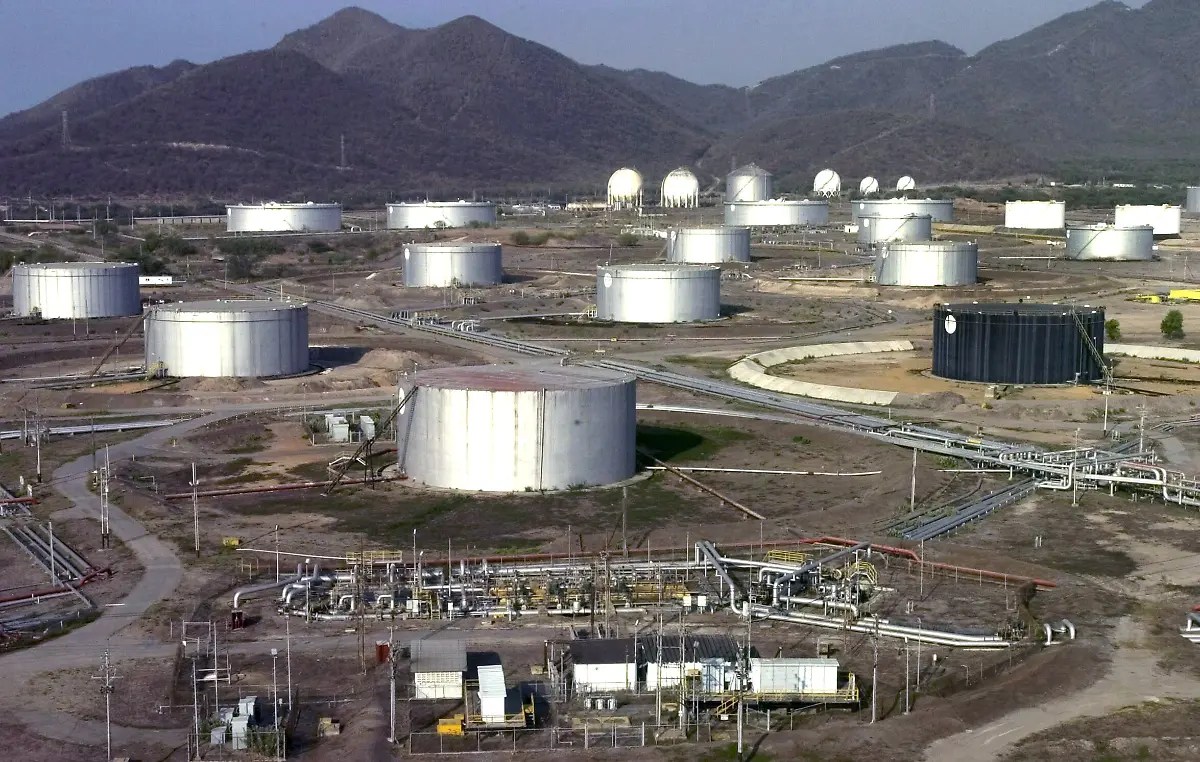
Investitionswillige Unternehmen stehen in Venezuela vor großen Hürden: Sicherheitsrisiken, eine verfallene Infrastruktur, ungeklärte Rechtsfragen zum US-Einsatz und die Gefahr langfristiger politischer Unruhen. (Foto: IMAGO/IlluPics)
Trumps Plan klingt ambitioniert: US-Ölkonzerne sollen nach Venezuela zurückkehren und Milliarden in die stark beschädigte Infrastruktur investieren. Im Interview erklärt Energiestratege Thomas O’Donnell, wie schnell das Land nach Jahren politischer und wirtschaftlicher Krise wieder zu alter Stärke finden kann.
ntv.de: Trumps Versprechen klingt vollmundig: US-Ölkonzerne sollen nach dem Angriff auf Venezuela ins Land zurückkehren und Milliarden von Dollar investieren, die stark beschädigte Ölinfrastruktur reparieren und damit beginnen, Geld zu verdienen. Wird dieser Plan aufgehen?
I was interviewed 05 Jan. by Juliane Kipper, Business Editor at Germany’s ntv.de, for this print article. Lies es Auf Deutsch— Read In English (from Google Translate). Or, read at ntv.de.
Investitionswillige Unternehmen stehen in Venezuela vor großen Hürden: Sicherheitsrisiken, eine verfallene Infrastruktur, ungeklärte Rechtsfragen zum US-Einsatz und die Gefahr langfristiger politischer Unruhen. (Foto: IMAGO/IlluPics)
Trumps Plan klingt ambitioniert: US-Ölkonzerne sollen nach Venezuela zurückkehren und Milliarden in die stark beschädigte Infrastruktur investieren. Im Interview erklärt Energiestratege Thomas O’Donnell, wie schnell das Land nach Jahren politischer und wirtschaftlicher Krise wieder zu alter Stärke finden kann.
ntv.de: Trumps Versprechen klingt vollmundig: US-Ölkonzerne sollen nach dem Angriff auf Venezuela ins Land zurückkehren und Milliarden von Dollar investieren, die stark beschädigte Ölinfrastruktur reparieren und damit beginnen, Geld zu verdienen. Wird dieser Plan aufgehen?
My thanks to Tor Klaveness at Kapital, Norway’s oldest and leading, business magazine. Below is an English translation, then the Norwegian original. – Tom O’D.
“Bone-crushing” and “draconian”: The law that could choke Putin’s oil revenues
If peace talks between Ukraine and Russia break down, the US Senate is ready to pass a sanctions package that could strangle Russia’s oil exports. In that case, it could significantly strengthen the oil market.
Energy Published 29 Nov. | Paywall removed, Updated 9 Dec.
“President Trump said this weekend, ‘Send me the bill.’ So we have to send him the bill to help end this war.”
Dr. Thomas O’Donnell, energy and geopolitical strategist
This was stated by Republican Senator Lindsey Graham in a panel debate on November 19 with Democratic Senator Richard Blumenthal. The debate was moderated by Clayton Seigle, a senior fellow at the think tank Center for Strategic and International Studies (CSIS), which also organized the debate.
The bill Graham referred to is the Sanctioning Russia Act , which he is co-sponsoring with Blumenthal. The bill already has the support of 85 of the 100 US senators and would give US authorities the right to impose punitive tariffs of no less than 500 percent on countries importing Russian energy.
PHOTO: Alexander Kazakov, Sputnik, Kremlin Pool Photo via AP/NTB
With a stick and a carrot
Dr. Thomas O’Donnell is an energy and geopolitical strategist, founder of GlobalBarrel.com and former global fellow at the Wilson Center in Washington, D.C. He believes Congress is now poised to give President Trump an extremely potent weapon.
The proposal is being described as “bone-crushing” and “draconian,” and is set to be voted through almost unanimously in the Senate.
On 5 November, I told Kanal24, Kyiv that a US-Ukraine campaign to disable the Russian petrostate’s oil sector is underway. I stressed that this is a multi-spectral campaign combining (i) severe USA sanctions and secondary tariffs on Russian oil exports in parallel with (ii) Ukrainian military action on oil refineries and export-terminal ports. These attacks are known to be conducted and planned in close cooperation with USA military intelligence (FT,12 Oct.).
This means that an assessment of either aspect of this campaign on its own is inadequate. The synergy of sanctions plus military hits is the issue.
Secondary Sanctions. It has been widely recognized that the USA would need to, as promised, vigorously impose secondary tariffs on any entities that violated its recent tariff announcement. Indeed, on Sunday, President Trump lent support to a bill being drafted in Congress to hit any entity “doing business with Russia.”, not only buying its oil (i.e., “Trump says Republicans drafting bill to sanction countries that trade with Russia, Reuters. November 17). This sounds similar to the Senators Lindsey Graham (R, SC) and Richard Blumenthal’s (D Conn) so-called “bone-crushing sanctions” bill (Politico, 7 June) endorsed by 83 senators on 3 June.
The apparent aim of the port drone and missile attacks is to slash oil exports from Russia’s three or four biggest westward facing terminals. The focus thus far is on Black Sea terminals:
Above: Audio of my comments to (various) press on 22 April 25, on the impact of falling oil prices on Russia’s capacity to war on Ukraine. Also, a scenario I have discussed for over a year, first privately and then publicly, of how the USA could shut down the great majority of Russia’s seaborne oil exports, to devastating consequences for its oil sector and capacity to continue the war. In the present market situation of oversupply and anticipated continued weak demand, this could be done in a way that does not spike global oil prices.
This will only be done if Trump decides he needs to use harsh coercion to force Putin into an acceptable peace deal with Ukraine, AND if Trump were willing to impose lasting harm on the older Russian oil fields.
This is in English, after Eugene Romer of Układ Sił media introduces me in Polish. This was at the “3 Seas -1 Opportunity Forum” in Gdansk, last June 4-5, 2024. I have been wanting to post it ever since, as the questions remain relevant. My thanks to Eugene and his team, and to his Opportunity Think Tank colleagues.
My panel at the forum was on problems of relying on energy security that arrives via the sea. So, think Poland and Lithuania’s LNG terminals, of the many sub-sea pipelines, power and communications cables between Baltic and Nordic states. And, since June, all the incidents where ships leaving Russian ports “accidentally” dragged their anchors, cutting such vital links. So, this conference was rather prescient. My sincere thanks to our hosts The Opportunity Institute for Foreign Affairs.
ENGLISH Interview | Al Watan, Cairo. Thurs 10Oct24. 15 minutes
ARABIC Interview
At first, we focused on IEA warnings of a possible EU winder gas shortage due to supply-and-demand mismatches. I agree and expand on the IEA points.
Second, I explained that if Israel retaliates against Iran so strongly that it threatens the regimes survival, or is seen as intending to provoke regime change, then the Iranian leadership will have “nothing to lose” by in-turn escalating to the maximum. Aside from unleashing the maximum response of its proxies surrounding Israel, Tehran’s most potent weapon would be to spark a global oil and gas crisis.
Consider oil: Iran can either shut down the Straights of Hormuz (or simply make them unsafe for tankers) and/or, it can use missiles and drones to destroy significant parts of Saudi, UAE and other Gulf oil facilities, including perhaps even Azerbaijan’s as some Iranian propagandists have threatened.
Consider natural gas: Shutting the Straights or directly hitting Qatar’s massive LNG exports infrastructure would immediately stop Qatari LNG exports. As the world’s second largest LNG exporter, this would immediately cause a separate global natural gas crisis.
Again, oil security is determined by both global-market balances and geostrategic realities – at present the Mideast war and Russia’s War on Ukraine. My analyses this weekend were featured in: (a)an AlHurra video (LHS English, RHS Arabic), and below these (b)a detailed BBC-Cairo print interview (LHS English Google Translate, RHS Arabic original). where I make similar points as my Friday video in Warsaw.
Alhurra ENGLISH. My comments at 2:45 & 8:20. Date: 5 Oct 2024, with co-guest GPI President Paolo von Schirach, Washington.
Alhurra ARABIC, 5 October 2024
My BBC (CAIRO) print interview in Arabic and English (Google Translate):
Recorded Thurs AM, 03Oct24. Warsaw Old Town, Castle Square.
Will Israel hit Iranian oil infrastructure? And, what part of it? To what effect on markets, and geopolitics, (i.e., Mideast, OPEC, Russia and Ukraine war)? A video report.
MAIN POINTS (see transcript):
1. What if Israel hits Iran oil infrastructure in retaliation for missile strikes on Tel Aviv on Tuesday night? 1.a. The difference effects of hitting Iranian refineries vs oil export terminals In itself, neither target would make big difference in the market. The market would immediately jump, of course, but in principle the effect would be small. 1b OPEC+ and Western Hemisphere have plenty of spare capacity.
2. Consider Saudi market tactics … reportedly they want to now go for share over price support, as price support is failing after well over a year of output cuts (about 6 mb/d). Note: Shortly after this recording the Saudis repudiated the WSJ that reported the switch in tactics to defending share. Likely they’ll now want to wait and see what happens to Iranian exports, or if this Israel-Iran tit-for-tat gets out of hand.
Interview 1/3: Kate Lycock of DW Radio’s Inside Europe interviewed me yesterday, on the historical role of fuel-denial in war, and the impacts of Ukraine’s drone strategy on Russia (first story, on 21 March)
Aside from some WW2 history, I identified two separate impacts we can see in the present Ukrainian campaign: a) The impact on Russian fuel deliveries to the war zones themselves and to the domestic Russian war economy, and b) their possible impact as a “force multiplier” for the oil-price cap sanctions on Russian oil exports, designed to deny Moscow its all-important oil revenues that are financing its aggression. I also speculated a bit as to how these strikes, together with Black Sea sea-drone operations, might be shaping coming Ukrainian offensive(s). (This show is also syndicated in the USA as I recall.)
2/3: on 20 March, I was also interviewed on the drone strikes by Voice of America’s Harry Ridgwell, while I was at the Berlin Energy Transition Dialogue, held at the German Federal Foreign Office. (See Video in LHS column.)
3/3: Lastly, I was quoted a couple times by Brendan Cole of the USA national magazine, Newsweek, on 18 March:
Note, there are new developments since yesterday, including Russia’s revenge strikes on Ukrainian infrastructure (reports are that 1 million Ukrainians have no electricity today) and on its Special Operations Headquarters. However, of the 30 Russian drones that swarmed to target this Kyiv building, every one was shot down.
Also, there are reports (Financial Times) that the USA is warning Ukraine that the strikes will draw retaliation and raise the price of oil.
Who cares! This has gone on for simply too long. There are vastly sufficient oil reserves in the world that can be tapped to fully replace Russian oil even if it were totally taken offline. After over two years of war, Washington and the EU Members should have by now begun a concerted effort to get sufficient new oil on line to enable blocking a high percentage of Russian exports from being exported to the world market
I talk about one possible approach to this in my DW interview, involving Denmark and Sweden inspecting and banning passage of sketchy Russian tankers through their economic zones in the Baltic Sea.
After two-plus years of war, there is no excuse to still be playing around with the oil price cap without either significantly lowing it — say, to $30/barrel as the Ukrainians suggest, in any case begin stepwise lowering it below the present $60, which would be a signal to producers to start developing new fields — and/or finding ways to block shipments more directly.
This is not to diminish the clever and difficult work people at especially OFAC and the USA Justice Department in Washington and their colleagues in London and Brussels have carried out to tighten and make more effective the oil price cap. However, as it stands, the cap is too high and a weak instrument.
The entire political preoccupation with keeping Russian oil on the market is fundamentally flawed, Signals must be given to the market that it will be step-wise taken off the market, which will instill/stimulate IOCs, NOCs and smaller firms to rapidly bring undeveloped oil reserves online to permanently replace Russian exports.
LAST: Here are some references for further reading that I found useful in my research.
Highly recommended, by my friend, the intrepid Михайло Гончар – Україна уразила вже третину найбільших російських НПЗ – Главредhttps://glavred.net/article/v-rossii-krasivo-gorit-ukraina-porazila-uzhe-tret-krupneyshih-rossiyskih-npz-gonchar-10550015.html (Translation: Russia is on fire: Ukraine has already hit a third of the largest Russian refineries – Interview with Michael Gonchar, March 14, 2024, 4:02 p.m, Ukrainian drones are reducing oil refining in Russia and creating a fuel shortage there, Mykhailo Gonchar believes.)
Ukraine Drone Strike Hits Refining Complex Deep in Russia || Peter Zeihan – YouTube (NOTE: added a gap to URL before ‘.com’ to prevent it displaying here) https://www.youtube .com/watch?v=86YrV2D-nB4
According to energy and geopolitics expert Tom O’Donnell, Ukrainian allies’ oil price cap, in conjunction with Ukrainian drones’ physical damage could be a significant hit to Russian revenues.
Tom O’Donnell, PhD, an expert on energy and geopolitics, sat down with Kyiv Post to explain what Ukraine’s attacks on Russia’s energy sector will mean for the larger Russian energy sector.
It sounds like a huge number. But how much do you think losing 12 percent of production, in a day, will affect Russia?
First off, although these refineries hit by Ukrainian drones yesterday represent about 12 percent of Russian production, experience shows that they might not each be totally impaired from production. Nevertheless, there are two particularly significant implications for Russia.
First, whatever percentage of Russian refined oil products this impairs, the damage will both deprive the war economy of needed export revenues and/or of much-needed fuels to keep the domestic war economy running.
Already, Russia had announced it will ban the export of gasoline from March 1 in order to tame prices for consumers in the runup to the presidential elections mid-month. In 2023 about 17 percent of Russian gasoline was exported.
What is the origin of the current price pressure?
The present price pressure is both a result of the demands of the war economy as well as previously successful Ukrainian hits on other refineries that began in January.
This gets to my second point – the successful refinery strikes of yesterday, involving a reported launch of 58 drones, as well as recent hits on a Russian domestic gas transmission pipeline, all demonstrate that the January successes were not one-off special operations, but rather the beginning of what will be a sustained Ukraine armed forces campaign capable of, over time, significantly disrupting Russia’s all-important oil and gas import revenues and internal refined-product supplies.
Kyiv has launched some of its largest air attacks on Russia this week ahead of the vote, which is set to hand President Vladimir Putin another six-year term in the Kremlin.
If Russia continues to lose refineries, which appears likely, what new complications will it create for Russia?
First, from a strategic point of view, it is important to see these physical strikes against Russian oil and gas infrastructure in conjunction with the sanctions efforts of the USA, EU and other allies aimed at reducing Russian oil profits. These drone strikes should be seen as a “force multiplier” to allied oil sanctions.
How so?
Consider that, with Russia no longer having the Druzba oil pipeline flowing into Central Europe due to EU sanctions, this has forced it to shift its Urals-region oil exports to seaports on the Baltic coast of Russia and to a new western-Arctic port. Hence, hitting any refining or export facilities inside Russia along this general Urals-oil export corridor has a significant effect on Russia sustaining export revenues. This oil mainly flows to Turkey, India and China, with Russian oil tankers representing the main users of the Suez and then the Red Sea. Due to sanctions, most of these ships are now either directly or indirectly Russian-controlled, to avoid the sanctions oil-price cap.
There has been a discussion in US-EU security-and-sanctions circles that these ships could be stopped for inspection by Sweden and/or Denmark in the Baltic, in the straights between their countries, and many might be refused passage due to having sketchy insurance and/or being unsafe, old vessels.
Advertisement
What do you think of the oil price cap? Is it a good idea?
From the point of view of strategic impact, the allies’ choice of an oil-price cap has been, in my view, a weak and overly complex-to-enforce instrument. However, in conjunction with Ukrainian drones’ physical damage, the overall hit to Russian revenues might become significant.
Secondly, Ukraine has also hit refineries in Russia just east of its own territory, which will mainly undermine the region’s war economy and complicate supplying the massive demand from Russia’s invasion forces. This region already has chronic fuel-supply problems, with farmers last year protesting against a lack of diesel for harvests, causing Russia to ban diesel exports during that season.
Dr. Tom O’Donnell is Berlin-based and is a Global Fellow of the Wilson Center.
Jason Jay Smart, Ph.D., is a political adviser who has lived and worked in Ukraine, Moldova, Kyrgyzstan, Kazakhstan, Russia, and Latin America. Due to his work with the democratic opposition to Pres. Vladimir Putin, Smart was persona non grata, for life, by Russia in 2010. His websites can be found at http://www.JasonJaySmart.com / http://www.AmericanPoliticalServices.com / fb.com/jasonjaysmart / Twitter: @OfficeJJSmart
Related references for assertions I made in my interview – Tom O’D.
This interview with Artur Ciechanowich (Polish Associated Press-PAP, Brussels) appeared on Sunday, 25 November 2022 in several Polish press, TV and radio outlets (links below this post). Polish & English (via Google Translate) versions follow:
ENGLISH – via Google Translate
Europe without gas and oil from Russia? An expert gives a possible date
If the European Union does not bow to the Russian energy attack, it may completely replace gas and oil imports from this country with raw materials from other sources within four to six years, said Thomas O’Donnell, an energy market analyst and lecturer at a university in Berlin …..
Russia is waging an energy war against Europe, which is part of a larger war between Russia and Ukraine. We see that the war on the battlefield is not going Russia’s way, so the Kremlin is counting on its energy policy to cause enough economic problems for Europeans to divide the EU and withdraw from solidarity with Ukraine, says O’Donnell.
The question of replacing gas and oil imports from Russia
Vladimir Putin has a much greater influence on Europe through the supply of gas than oil. This is because gas is mainly supplied by pipelines. Around 2027, Europe, the United States, Qatar and others will increase the export capacity of liquefied natural gas enough to replace the EU’s dependence on Russian gas and allow gas prices in the EU to fall to levels close to the low prices in the US, the analyst predicts.
However, he does not hide that before this happens, citizens of EU countries will have to go through a more difficult period. “This is an energy war, and in a war both sides suffer – consumers and businesses in the EU will suffer. It will take at least four years to implement huge new LNG export projects from the US and Qatar, he cautions, adding that the EU will also need to receive as much gas as possible from Algeria, Egypt and Norway.
This year Europe filled up its gas storages. It will be harder next year. It should be understood that the storage facilities – under normal conditions – have never been used to provide normal gas supplies to consumers. They’re just too small for that. They were created with the idea of storing the raw material saved in the summer and using it in the winter, when the Russian and Norwegian pipelines could not keep up with the demand, explains Thomas O’Donnell.
He points out that, therefore, Germany has repealed the regulations requiring the maintenance of a minimum temperature in homes, and in some EU countries there are debates about power cuts for citizens. – Europe has become dependent not only on Russian gas, but also on completely unpredictable wind energy. If the wind is weak – as in the 2020-21 season – combined with the lack of appropriate transmission networks and the lack of technical capacity to store electricity on a large scale, it can mean a disaster. These are the facts. In times of war, citizens must know the whole truth, the expert argues.
PAP He emphasizes that Russia is waging an energy war against Europe in order to break its solidarity towards Ukraine. – In the US and Qatar, but also in Norway, Algeria, Azerbaijan, Israel, Egypt and so on, there are plenty of new gas reserves, financing opportunities, technologies and functioning markets. In four to six years, Europe’s dependence on Russia will be completely replaced by imports from other directions. This also applies to crude oil. Russia, meanwhile, will be reduced from an energy superpower to an OPEC second or third tier country, concludes O’Donnell.
TVN24 live – watch on TVN24 GO The material is part of the TVN24 GO website Author:kris/ToL
Source: PAP
Main photo source: Marcin Bielecki/PAP
POLISH – as from PAP
Europa bez gazu i ropy z Rosji? Ekspert podaje możliwy termin
Jeżeli Unia Europejska nie ugnie się przed rosyjskim atakiem energetycznym, to w czasie od 4 do 6 lat może całkowicie zastąpić import gazu i ropy naftowej z tego kraju surowcami z innych kierunków – stwierdził Thomas O’Donnell, analityk rynku energetycznego i wykładowca na prywatnej berlińskiej uczelni ….
Rosja prowadzi przeciwko Europie wojnę energetyczną, która jest częścią większej wojny Rosji z Ukrainą. Widzimy, że wojna na polu bitwy nie idzie po myśli Rosji, więc Kreml liczy na to, że jej polityka energetyczna wywoła u Europejczyków wystarczające problemy ekonomiczne, by podzielić UE i odstąpić od solidarności z Ukrainą – mówi O’Donnell.
Kwestia zastąpienia importu gazu i ropy z Rosji
Władimir Putin ma znacznie większy wpływ na Europę poprzez dostawy gazu niż ropy naftowej. Dzieje się tak, ponieważ gaz dostarczany jest głównie rurociągami. Około 2027 roku Europa, Stany Zjednoczone, Katar i inne kraje zwiększą możliwości eksportowe skroplonego gazu ziemnego na tyle, aby zastąpić zależność UE od rosyjskiego gazu i pozwolić na obniżenie cen gazu w UE do poziomu zbliżonego do niskich cen w USA – przewiduje analityk.
Nie ukrywa jednak, że zanim to się stanie, to obywatele państw Unii będą musieli przejść przez trudniejszy okres. – To wojna energetyczna, a na wojnie obie strony ponoszą ofiary – ucierpią konsumenci i firmy w UE. Co najmniej cztery lata zajmie wdrożenie ogromnych nowych projektów eksportu LNG z USA i Kataru – zastrzega, dodając, że UE będzie musiała otrzymywać jak najwięcej gazu także z Algierii, Egiptu i Norwegii.
W tym roku Europa napełniła swoje magazyny gazu. W przyszłym roku będzie trudniej. Należy rozumieć, że magazyny – w normalnych warunkach – nigdy nie służyły do zapewniania normalnych dostaw gazu konsumentom. Są na to po prostu za małe. Powstawały z myślą przechowania surowca zaoszczędzonego latem i wykorzystania go zimą, kiedy rosyjskie i norweskie rurociągi nie nadążały z zaspokojeniem popytu – tłumaczy Thomas O’Donnell.
Zwraca uwagę, że w związku z tym, Niemcy uchylili przepisy nakazujące utrzymywanie w domach minimalnej temperatury, a w niektórych krajach Unii toczą się debaty na temat przerw w dostawach prądu dla obywateli. – Europa uzależniła się nie tylko od rosyjskiego gazu, ale postawiła też na całkowicie nieprzewidywalną energię wiatrową. Jeśli wiatr będzie słaby – jak w sezonie 2020-21 – to w połączeniu z brakiem odpowiednich sieci przesyłowych i brakiem technicznych możliwości magazynowania prądu na wielką skalę, może to oznaczać katastrofę. Takie są fakty. W czasie wojny obywatele muszą znać całą prawdę – przekonuje ekspert.
PAP Podkreśla, że Rosja prowadzi wojnę energetyczną przeciwko Europie, aby rozbić jej solidarność wobec Ukrainy. – W USA i Katarze, ale też w Norwegii, Algierii, Azerbejdżanie, Izraelu, Egipcie i tak dalej, istnieje mnóstwo nowych rezerw gazu, możliwości finansowania, technologii i funkcjonujących rynków. Za cztery do sześciu zależność Europy od Rosji zostanie całkowicie zastąpiona importem z innych kierunków. Dotyczy to również ropy naftowej. Rosja tymczasem zostanie zredukowana z supermocarstwa energetycznego do drugoligowego lub trzecioligowego kraju OPEC – konkluduje O’Donnell.
TVN24 na żywo – oglądaj w TVN24 GO Materiał jest częścią serwisu TVN24 GO Autor:kris/ToL
Źródło: PAP
Źródło zdjęcia głównego: Marcin Bielecki/PAP
Here are links to some of the Polish media where the PAP interview was published:
1 day ago — … 4 do 6 lat może całkowicie zastąpić import gazu i ropy naftowej z tego kraju surowcami z innych kierunków – stwierdził Thomas O’Donnell, …
21 hours ago — Rosja tymczasem zostanie zredukowana z supermocarstwa energetycznego do drugoligowego lub trzecioligowego kraju OPEC” – konkluduje O’Donnell. Z …
1 day ago — Jeśli Unia Europejska nie ugnie się przed atakiem energetycznym ze strony Rosji, to w ciągu 4-6 lat zastąpi całkowicie import gazu i ropy …
1 day ago — Jeśli Unia Europejska nie ugnie się przed atakiem energetycznym ze strony Rosji, to w ciągu 4-6 lat zastąpi całkowicie import gazu i ropy …
1 day ago — Jeśli Unia Europejska nie ugnie się przed atakiem energetycznym ze strony Rosji, to w ciągu 4-6 lat zastąpi całkowicie import gazu i ropy …
27 Sept 2022 — Czy Europa jest wystarczająco silna, aby poradzić sobie bez ropy i gazu z Rosji? … Polska, podobnie jak pozostałe państwa Unii Europejskiej, …
Ile lat potrzeba UE aby uniezależnić się od importu ropy i gazu z Rosji? Ekspert wyjaśnia. Jeśli Unia Europejska nie ugnie się przed atakiem energetycznym …
Ekspert: Polska jest dobrze przygotowana na odcięcie dostaw gazu z Rosji, … sprawę z takiego niebezpieczeństwa – mówi w rozmowie z PAP Thomas O’Donnell, …Open document settingsOpen publish panel
Above: English Audio – translator asking question (low) and my (louder) answers.
Al Jazeera interview, Doha [Arabic] on the ramifications of the Russian Central Bank default due to USA sanctions. (13 Mar 2022, 22:40, from Berlin).
Note: It is indeed possible for the EU – including Germany too – to immediately cut Russian oil imports to zero and not suffer prolonged high oil prices. How? I will explain in a coming post. This is a topic I have been working on intensively the past couple weeks.
I mention some of my (and others’) rationale for saying this in my answer to the second question from Al Jazeera. NOTE: A very good reference on this is: Christof Rühl speaking last week to bne inelligence. I strongly concur with him. (this note added 15 Mar.)
The 24.04 video: Aljazeera asked me about negative prices and we got into storage, Putin’s huge blunder in launching the price war, the fate of US shale, and the dilemma faced by Trump and the Texas Railway Commission on cutting US production: there’s no way to please both the independent US producers and the big US international oil companies. One or the other is going will be very upset. (Note: English audio record replaces original Arabic here. Thanks to AlJazeera for the clip.)
Let me expand a bit on this point I made at the end of the interview: Trump is dithering as the day of reckoning approaches – the day when US oil’s physical storage is full. Then it won’t be just the WTI Nymex futures price going negative overnight, the physical, spot market would go negative and freeze up.
So, either Trump has to invoke national security and use federal powers to order proportional, across-the-board cuts nationally, or the Texas Railway Commission and itsContinue reading →
Why did Moscow declare the “war”? [Note: Putin & Sechin’s initial boasts Russia would hold out for “years”, kill shale & end sanctions all stopped in only a couple days!]
The Saudi response was sharply focused against Russian oil-pipeline markets in W Europe (Druzhba) & Asia. [I believe this focused Mr. Putin’s attention on economic realities as opposed to Mr. Sechin’s anger-driven desire for revenge against US sanctions that had inflated his (self-)image of Rosneft and Russian oil-market prowess when up against a concerted Saudi counter-war, and the prospects of various US responses. Reports are that Putin spend three days on the phone to undo this fiasco and, in the end, had to accept significant cuts to Russian output. See my GlobalBarrel.com post of last week explaining the initial, flawed Russian strategy.]
The options Trump had to choose from undermine his long antipathy to OPEC. (Did he secretly offer Putin any Nord Stream 2, Ukraine or Venezuela sanctions relief? If so, Congress won’t approve.) Also: Big Oil (American Petroleum Institute) and W. Texas/other independent producers are pulling at Trump in two very different policy directions re. OPEC, tariffs, production controls, etc
And more (esp. in the Q&A): probable impact on carbon mitigation policies, the China market for LNG, US shale’s financial and production future, etc.
The “Oil Price War of 2020” was launched at the worst possible time. The COVID-19 pandemic was spreading to the world beyond China, promising to kill tens-of-thousands, and bring a global economic collapse.
However, this war was not preordained. Things could have gone otherwise from the start. It was a decision, a sort of Pearl-Harbor-esque surprise attack, announced by Russian minister of energy, Alexander Novak, upon his arriving late to the OPEC-plus summit hall in Vienna on March 6.
If Moscow now abandons its all-out war on US shale, it will be because Putin has miscalculated. He was willing to increase the pain for everyone else by exploiting the COVID-19 energy crisis in a half-baked attempt to get out from under the US sanctions. However, the unanticipated repercussions might get too hot for Moscow.
The facts about why Putin decided to launch this oil price war are important to decode. A key aspect to understand is that Moscow’s game plan was to blame the Saudis; and it soon began a disinformation campaign saying the Saudis launched the war.
We shall see, below and in future posts, how this blame-shifting is a stratagem designed to manipulate a section of US politicians and especially independent US oil producers, who traditionally hold strong, anti-Saudi sentiments (to be clear: they have good reasons to hold these anti-Saudi views), to preferentially sympathize with Russia against the Saudis and to lobby Trump and Congress to give Moscow relief from US sanctions.
Whether this Oil War strategy of Moscow can, at least in part, succeed in freeing Russia from US sanctions is not clear. But, Moscow’s is highly motivated to succeed due to the significant constraints these sanctions are imposing on Russia. They include sanctions in retaliation for its war against Ukraine, since 2014, which have undermined expansion of Russia’s domestic oil and gas sector; sanctions which have stalled Russian-German plans to finish the Nord Stream 2 pipeline; and sanctions on Rosneft’s efforts to sustain the Maduro dictatorship in Venezuela.
Today, as explained below, I would say the odds are against Moscow’s success, with the plan bordering on adventurism. The Saudi’s initial response, in so far as it specifically targets Russia’s oil business, is rational; however, by de facto joining the Russian oil price war on US shale, the Saudis will also provoke a backlash from powerful US oil-business and political interests, which is likely precisely what Putin and Igor Sechin hoped to bait the Saudis’ Prince MbS into doing.
Considering the pain the world is already suffering, Putin and Sechin’s callous game to exploit the COVID-19 oil-market crisis must be seen for what it is. Most especially, one should not acquiesce to Moscow’s disinformation campaign to shift the blame elsewhere.
In Vienna: Who started the price war?
For weeks, Riyadh had aggressively lobbied the 10 OPEC and 11 non-OPEC members of the OPEC-plus alliance to agree to a major production cut. This alliance had been born in 2016, of a newfound, market-dictated, yet grudging, Russian-Saudi mutual recognition of the reality that only such a large-scale collective effort could begin to get control of a market in long-term oversupply. By December 2019, their OPEC-plus group had Continue reading →






 My Wikistrat webinar transcript “Oil Price War & COVID” from a couple weeks ago is
  The Global Barrel