Category Archives: Global Oil Market

My bTV| On the Trump administration’s Venezuela logic: drugs, migration & oil (partly vs Russia). Both Maduro’s regime & Machado’s opposition sit & wait.

I was interviewed by David Karalvanov at bTV (Bulgaria) on the US-Venezuela confrontation under Trump and Maduro (01Dec). David used excerpts for a documentary and kindly gave me the full video here. An outline of the five questions and answers is below here.

Three Asides:

  1. I recall vividly how Trump and co., in his first term, easily misled a naively dependent Venezuelan opposition into believing that the USA was planning to forcibly remove Maduro. In turn, the opposition convinced the country’s population that the USA was preparing to forcibly liberate them. This belief was deeply corrosive to advancing any self-reliant domestic anti-Maduro pro-democracy movement. In the end, the Trump administration tried a poorly prepared putsch. John Bolton, Trump’s then-National Security Advisor, the organizer, was embarrassingly gamed by the Venezuelan regime’s intelligence police. Meanwhile, the present Venezuelan opposition has long been unwilling to organize or endorse any popular movement to forcibly restore democracy from below.
  2. In a recent CNN interview I spoke about Trump rationales for the present confrontation. See: “Why Trump wants a Venezuelan oil boom …“) and dangers of not preparing for the day-after possibilities of chaotic events, terrorism or resistance by armed pro-Chavista military or collectivo groups, and/or x-Colombian guerilla groups long active in the country.
  3. I’ve written for 20 years on Venezuela, Chavismo and oil, including two years as visiting professor, Universidad Central de Venezuela’s UCV/CENDES, Caracas.–I’m happy to speak or consult on Ven.-US-China-Russia-Iran-Colombian-EU-… and/or Ven. domestic matters in English or Spanish.- Tom O’D

David’s five questions and some of my answers:

Continue reading

My Kanal24 Kyiv | Oil War: Ukraine-US escalation could ruin W. Siberian fields. As Putin nixes peace deal, Trump faces a decision.

To watch at Kanal24 site here

Nataly Lutsenko at Kanal24 TV in Kyiv, invited me again to an interview. We discussed, in detail, what I see as “the oil war” jointly waged by Ukraine and the USA against Russia. Each has its role:

(i) Ukraine is waging an air campaign with drones and missiles against Russian refineries, oil export terminal ports, and oil tankers. This is an audacious and expanding campaign seriously impeding Russian capacity to handle export of the oil its fields produce.

It is important to note, politically, that these attacks are assisted by USA intelligence, as reported in October by the FT. Ukraine’s intelligence chief also spoke of Ukraine’s crucial dependence on US intelligence assets on 20 December, and later on the depth. Unlike the former “oil price cap” strategy of the Biden administration and the early months of the second-Trump administration, the present, much expanded air war on Russian oil is now clearly embraced by the USA.

(ii) For its part, the USA’s role in this oil-war – along with NATO, UK, EU and G7 allies – involves increasingly harsh tariffs and sanctions against Russian oil exports.

Continue reading

“Bone-crushing” & “draconian”: The law that could choke Putin’s oil revenues. [My interview with Norway’s ‘Kapital’]

My thanks to Tor Klaveness at Kapital, Norway’s oldest and leading, business magazine. Below is an English translation, then the Norwegian original. – Tom O’D.

“Bone-crushing” and “draconian”: The law that could choke Putin’s oil revenues

If peace talks between Ukraine and Russia break down, the US Senate is ready to pass a sanctions package that could strangle Russia’s oil exports. In that case, it could significantly strengthen the oil market.

Energy Published 29 Nov. | Paywall removed, Updated 9 Dec.

By: Tor Klaveness

“President Trump said this weekend, ‘Send me the bill.’ So we have to send him the bill to help end this war.”

Dr. Thomas O’Donnell, energy and geopolitical strategist

This was stated by Republican Senator Lindsey Graham in a panel debate on November 19 with Democratic Senator Richard Blumenthal. The debate was moderated by Clayton Seigle, a senior fellow at the think tank Center for Strategic and International Studies (CSIS), which also organized the debate.

The bill Graham referred to is the Sanctioning Russia Act , which he is co-sponsoring with Blumenthal. The bill already has the support of 85 of the 100 US senators and would give US authorities the right to impose punitive tariffs of no less than 500 percent on countries importing Russian energy.

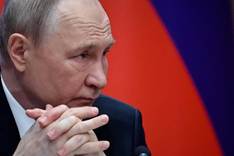
PHOTO: Alexander Kazakov, Sputnik, Kremlin Pool Photo via AP/NTB

With a stick and a carrot

Dr. Thomas O’Donnell is an energy and geopolitical strategist, founder of GlobalBarrel.com and former global fellow at the Wilson Center in Washington, D.C. He believes Congress is now poised to give President Trump an extremely potent weapon.

The proposal is being described as “bone-crushing” and “draconian,” and is set to be voted through almost unanimously in the Senate.

Continue reading

My CNN live: Why Trump wants a Venezuelan oil boom | Venezuelans, living in misery, just want Maduro gone; eight million have fled.

I was interviewed on CNN International’s “Newsroom” with host Kim Brunhuber – live, Friday, 12 Dec. 2025. The transcript is below. Kim asked about Venezuela’s oil industry, the impact of sanctions, what stricter enforcement could do to the Venezuelan economy, and what the US stands to gain if it ultimately gains greater access to the country’s oil reserves? He also wanted to know what Venezuelans are saying. / CNN says: “The show is broadcast around the world on CNN International, and in the US on our new platform All Access.”

Transcript:

0:01 I want to bring in Thomas O’Donnell, an

0:03 energy and geopolitics strategist at

0:05 GlobalBarrel.com. He’s also a former

0:07 visiting professor at the Central

0:09 University of Venezuela and he joins us

0:11 from Berlin. Thank you so much for being

0:13 here with us. Uh so this seizure, a

0:16 clear escalation here. Uh the White

0:19 House says more tanker seizures could be

0:22 coming. If that happens, I mean, what

0:23 would that do to the Venezuelan economy?

0:28 Well, there’s there’s two aspects here.

Continue reading

Video: “Dismantling the Petrostate: Moment of Truth for Russian Oil?” | Our EIES Webinar

Here is the video of our 10 Nov. event, organized by EIES (European Institute for Energy Security). Our topic was the turn in US Trump administration policy on ending Russia’s war against Ukraine and the Russian oil sector.

My sincere thanks to EIES, and especially Executive Director Albéric Mongrenier, for inviting me along with distinguished energy and geopolitics experts. (Note: EIES is affiliated with, but policy-independent of, SAFE in Washington).

Our distinguished expert panel included:

  • Dr. Jaak Aviksoo, Former Minister of Defence of Estonia, EIES Energy Security Leadership Council
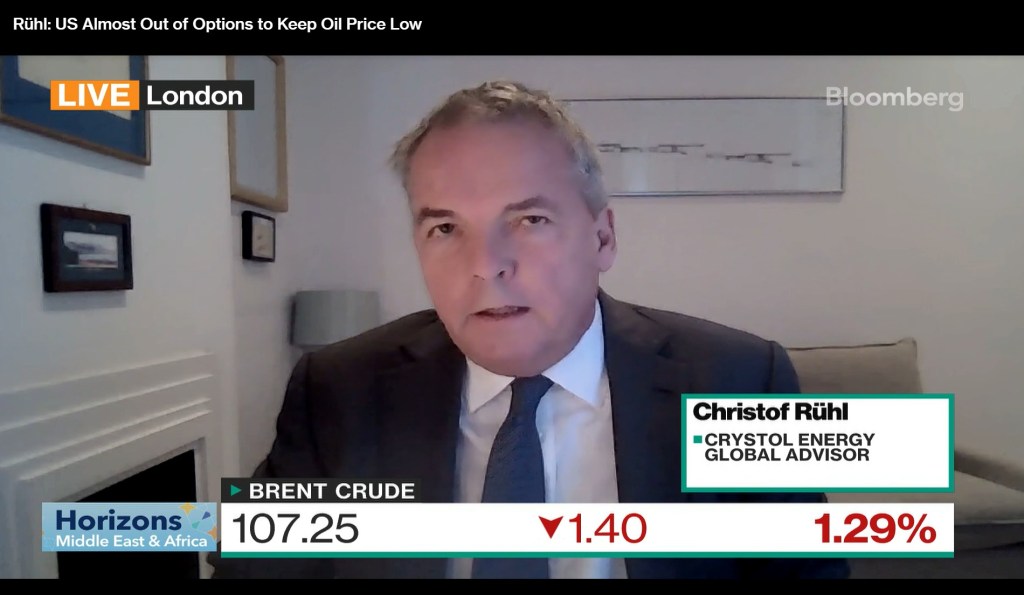
  • Christof Rühl, Senior Research Scholar at Columbia University’s Center on Global Energy Policy, former BP Chief Economist 
  • Dr. Thomas O’Donnell, Energy and Geopolitical Strategist and Founder of GlobalBarrel.com 
  • Moderated by Rosemary Griffin, OPEC+ Lead Reporter, S&P Global Commodity Insights
  • Opened by Peter Flory, Senior Fellow, EIES, Former NATO Assistant Secretary General

A central question we addressed was the turn in the Trump administration policy to apply significant coercive measures against the Russian oil sector to undermine the ability of the Putin government to continue its was in Ukraine. We discussed how effective the new sanctions on Rosneft and Lukoil might be and what is the synergistic effect of the Ukrainian drone and missile campaign against Russian domestic refineries and oil export terminal ports.

For an update on expanded attacks on Russian Black Sea oil ports and their meaning, see the written comments accompanying my Kanal24 video interview, posted on Monday, 17 Nov. “The US & Ukraine pound Russian oil | my Kanal24, Kyiv“).

Continue reading

The US & Ukraine pound Russian oil | my Kanal24, Kyiv

On 5 November, I told Kanal24, Kyiv that a US-Ukraine campaign to disable the Russian petrostate’s oil sector is underway. I stressed that this is a multi-spectral campaign combining (i) severe USA sanctions and secondary tariffs on Russian oil exports in parallel with (ii) Ukrainian military action on oil refineries and export-terminal ports. These attacks are known to be conducted and planned in close cooperation with USA military intelligence (FT,12 Oct.).

This means that an assessment of either aspect of this campaign on its own is inadequate. The synergy of sanctions plus military hits is the issue.

Secondary Sanctions. It has been widely recognized that the USA would need to, as promised, vigorously impose secondary tariffs on any entities that violated its recent tariff announcement. Indeed, on Sunday, President Trump lent support to a bill being drafted in Congress to hit any entity “doing business with Russia.”, not only buying its oil (i.e., “Trump says Republicans drafting bill to sanction countries that trade with Russia, Reuters. November 17). This sounds similar to the Senators Lindsey Graham (R, SC) and Richard Blumenthal’s (D Conn) so-called “bone-crushing sanctions” bill (Politico, 7 June) endorsed by 83 senators on 3 June.

The apparent aim of the port drone and missile attacks is to slash oil exports from Russia’s three or four biggest westward facing terminals. The focus thus far is on Black Sea terminals:

Continue reading

JOIN Webinar! – Dismantling the Petrostate: Moment of Truth for Russian Oil? – Mon,10 Nov.

You are invited to register now for Monday, 10 Nov. at 14:00 UK || 15:00 CET || 9:00 ET, an EIES Webinar. [My view: the USA, Ukraine & allies can dismantle the Russian petrostate. My posts on this are linked at the end]. I’m honored to join experts:

  • Dr. Jaak Aviksoo, Former Minister of Defence of Estonia, EIES Energy Security Leadership Council
  • Christof Rühl, Senior Research Scholar at Columbia University’s Center on Global Energy Policy, former BP Chief Economist 
  • Dr. Thomas O’Donnell, Energy and Geopolitical Strategist and Founder of GlobalBarrel.com 
  • Moderated by Rosemary Griffin, OPEC+ Lead Reporter, S&P Global Commodity Insights
  • Opened by Peter Flory, Senior Fellow, EIES, Former NATO Assistant Secretary General

Dismantling the Petrostate: Moment of Truth for Russian Oil? – Webinar: Monday 10 Nov.

Register Now – Allies have so far failed to break Putin’s war machine. The EU recently agreed on a 19th round of sanctions and plans to further ramp down Russian energy supplies. But EU sanctions have shown their limits, political leaders have not been able to use Russia’s frozen assets to aid Ukraine, and Moscow’s hydrocarbons still flow into the Union and other major markets.

Washington’s and London’s most recent sanctions may change the game. As we enter another winter of war, can Europe and the United States build on hard-won Transatlantic convergence to strike a decisive blow to the engine of the Kremlin’s aggression: Russia’s oil exports? Can the EU agree to and successfully manage the phaseout of Russian oil and gas?

Continue reading

“12-Day War”: Why no energy crisis? Iran regime was cornered. Seeing USA’s limited aims, it dared not escalate, gave up. | My Al Jazeera comments

The ceasefire Trump brokered will hopefully end this “12-Day War.” I want to discuss here why this war did not trigger a global energy crisis. [Here’s what I said about this to Al Jazeera last week, in the last five paragraphs. A PDF is also embedded below. I’ll also post a TRT-London show on Iran’s nuclear strategy, recorded Tuesday, soon.]

To assess the risk to energy supplies, understanding the aims of the combatants is key. Throughout this war, it was the USA-Israel side setting the agenda, and there were two strategic aims they could pursue. One was to “only” destroy Iran’s nuclear program and its existing conventional regional power-projection capacities. The second was to go beyond this to undermine the viability of the Islamic Republic, up to forcing a regime change. Why do I say this?

Continue reading

My analysis in Newsweek: How Trump can cripple Russian oil, if he decides to

Wednesday, I was quoted repeatedly in Newsweek (USA) by Brendan Cole (London) 23 April: “Russian Economy Dealt Blow With Slumping Oil Prices,” And, Below: a Monday audio of my related analysis.

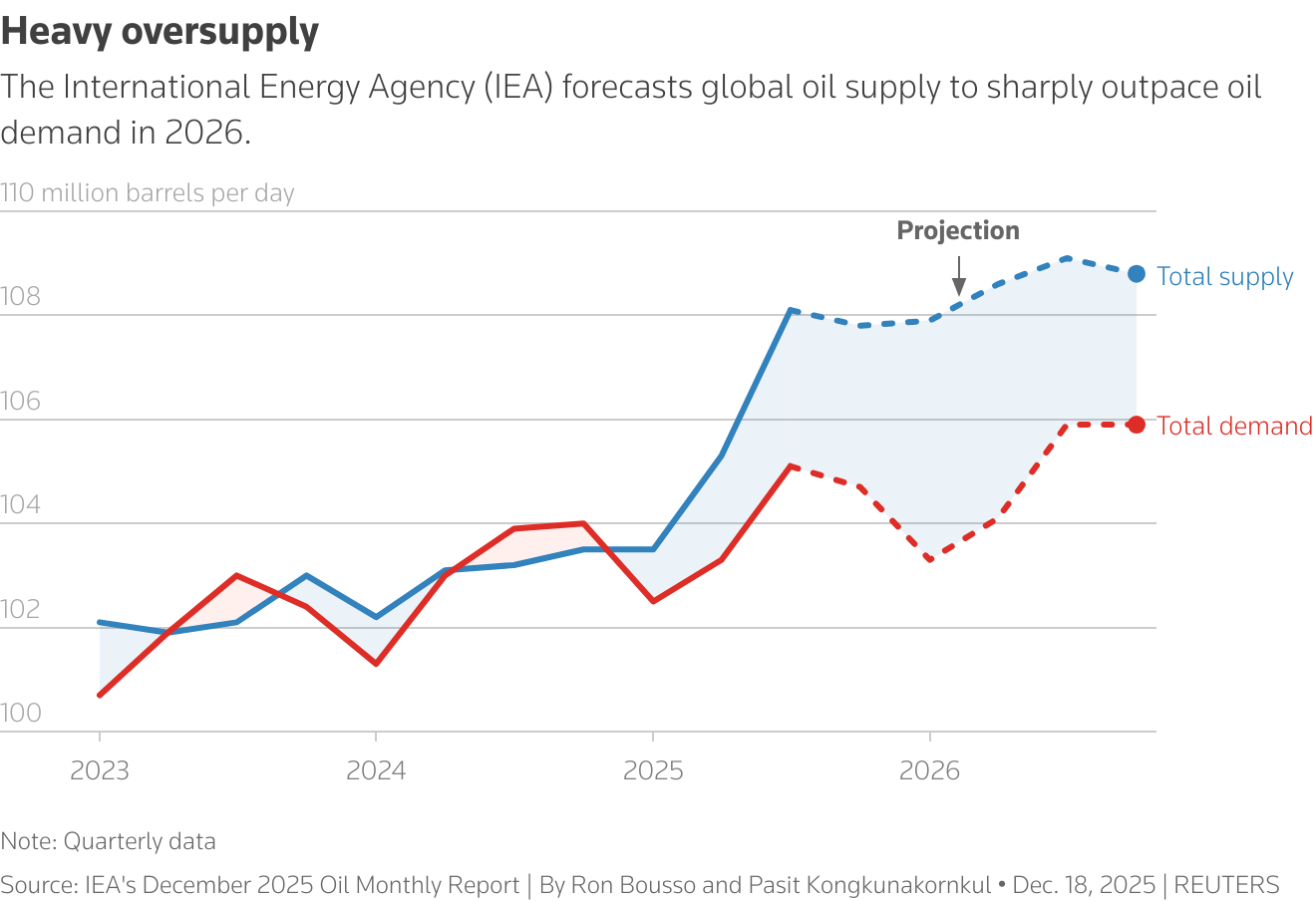
Above: Audio of my comments to (various) press on 22 April 25, on the impact of falling oil prices on Russia’s capacity to war on Ukraine. Also, a scenario I have discussed for over a year, first privately and then publicly, of how the USA could shut down the great majority of Russia’s seaborne oil exports, to devastating consequences for its oil sector and capacity to continue the war. In the present market situation of oversupply and anticipated continued weak demand, this could be done in a way that does not spike global oil prices.

This will only be done if Trump decides he needs to use harsh coercion to force Putin into an acceptable peace deal with Ukraine, AND if Trump were willing to impose lasting harm on the older Russian oil fields.

Continue reading

My interview at Lithuania’s LRT: Trump could seriously harm Russia if he wants to | Trumpas, jeigu tik norėtų, galėtų stipriai pakenkti Rusijai

My long print interview at Lithuania’s LRT [Lithuanian PDF | English PDF​] with Aleksandra ​Ketlerienė, deputy editor-in-chief of Lithuania’s LRT.lt, published 7January. We spoke in Warsaw, 19 November. My thanks to Aleksandra for her insightful questioning and editorial care. We discussed:

  • The EU’s systemic energy​-policy “own goals” ​since its initial energy-crisis win ​after Moscow began cutting gas exports early in 2021​.
  • Reforming failed/ineffective Russian price-cap sanctions for real sanctions, and how the global oil market is now favorable for “maximum pressure.”
  • Historical perspectives on oil, gas, renewables, and nuclear sectors, essential for realistic policy formation.
  • An historical overview of China’s decades-long effort to overcome its energy security, learning lessons of Japan’s WW2 weaknesses.
  • (​See topics summary))
Continue reading

My Al Watan(Cairo): Iran would seek global energy crisis if an Israeli/USA strike threatened regime survival | IEA warns on EU winter gas

ENGLISH Interview | Al Watan, Cairo.  Thurs 10Oct24. 15 minutes
ARABIC Interview

At first, we focused on IEA warnings of a possible EU winder gas shortage due to supply-and-demand mismatches. I agree and expand on the IEA points.

Second, I explained that if Israel retaliates against Iran so strongly that it threatens the regimes survival, or is seen as intending to provoke regime change, then the Iranian leadership will have “nothing to lose” by in-turn escalating to the maximum. Aside from unleashing the maximum response of its proxies surrounding Israel, Tehran’s most potent weapon would be to spark a global oil and gas crisis.

Consider oil: Iran can either shut down the Straights of Hormuz (or simply make them unsafe for tankers) and/or, it can use missiles and drones to destroy significant parts of Saudi, UAE and other Gulf oil facilities, including perhaps even Azerbaijan’s as some Iranian propagandists have threatened.

Consider natural gas: Shutting the Straights or directly hitting Qatar’s massive LNG exports infrastructure would immediately stop Qatari LNG exports. As the world’s second largest LNG exporter, this would immediately cause a separate global natural gas crisis.

Continue reading

What if Israel bombs Iran’s oil? Four points on market & geopolitics. Video-Warsaw 03oct24

Recorded Thurs AM, 03Oct24. Warsaw Old Town, Castle Square.

Will Israel hit Iranian oil infrastructure? And, what part of it? To what effect on markets, and geopolitics, (i.e., Mideast, OPEC, Russia and Ukraine war)? A video report.

MAIN POINTS (see transcript):

1. What if Israel hits Iran oil infrastructure in retaliation for missile strikes on Tel Aviv on Tuesday night? 1.a. The difference effects of hitting Iranian refineries vs oil export terminals In itself, neither target would make big difference in the market. The market would immediately jump, of course, but in principle the effect would be small. 1b OPEC+ and Western Hemisphere have plenty of spare capacity.

2. Consider Saudi market tactics … reportedly they want to now go for share over price support, as price support is failing after well over a year of output cuts (about 6 mb/d). Note: Shortly after this recording the Saudis repudiated the WSJ that reported the switch in tactics to defending share. Likely they’ll now want to wait and see what happens to Iranian exports, or if this Israel-Iran tit-for-tat gets out of hand.

Continue reading

1st “Berlin Energy Forum” 21 May | A monthly disruption of the local ‘energy echo chamber.’

Dear Colleagues & friends, Below is an invite to our first Berlin Energy Forum (jump to details | jump to register), but first a personal note.

First, a personal note: As some of you know, this is an idea I’ve been floating in Berlin since well before Corona. Then, last October, I had an experimental test run, a one-off, sponsored by the Qatari embassy’s Divan – and it went very well.

However, the biggest success from that event was that Ben Aris, co-founder and editor-in-chief of bne IntelliNews enthusiastically joined me to found the Berlin Energy Forum as a regular monthly sort of membership club. Amongst the longest serving foreign correspondents in Eastern Europe, Ben has been covering Russia since 1993, with stints in the Baltics and Central Asia. He is a former Moscow bureau chief for the Daily Telegraph and was a contributing editor at The Banker and Euromoney for a decade amongst writing for many other publications. He is also a professional photographer, and nowadays based in Berlin.

Ben is one of those rare people who relishes doing analysis and data-driven writing (non-stop!), AND who knows how to do business – and thoroughly enjoys doing it. Just the partner for this endeavor.

My model and inspiration for this forum was always the New York Energy Forum, which has run for over 40 years now. I happily attended while teaching in NYC. My experience with that forum, plus familiarity with a few top DC think tanks, and various foreign diplomats (esp. in NYC/UN), is how, as an academic, I got to know a broad spectrum of USA oil and gas executives, journalists, financial-institution analysts and government officials. Those personal connections have, over the years, anchored my assessments of USA, of OPEC MENA-and-Latin American members’, and of Russian and Chinese strategy. This sort of community doesn’t exist in Europe in such a focused manner, save perhaps in London. Perhaps we can now bring a bit of that world to Berlin with our new BEF.

Continue reading

My Sky News: Why is oil up? | If Kyiv hit Russian oil ports, what would happen?

This version has my voice in English. Translations of interview question are in the blog pos

[Right: Video in English. Below: Arabic version]

The US administration asserts that Kyiv’s drone strikes on Russian refineries threaten to cause higher oil prices. However, as I have argued since early-mid-March (Kyiv Post, USA press, USA press, Polish press), this is not logical (to first order). What undoubtedly alarms DC is that Kyiv has demonstrated that – if it chose to – it could also disrupt the three big Russian westward-facing oil-ports that handle 60% of Russian exports to the global oil market, undoubtedly causing a global oil-price shock. But, fear of such a shock might be overblown. [1]

Continue reading

My Newsweek: 1) Ukraine could hit Russian oil exports-but hasn’t. 2) Gen. Hodges is right–USA stand regrettable.

Credit: Kyiv Post 13mar24

“O’Donnell told Newsweek that that if Ukrainians really wanted to hit oil exports, they would go after Novorossiysk Fuel Oil Terminal in the [eastern] Black Sea and Primorsk Oil Terminal at the end of the Baltic Pipeline System.

“‘These are the two major exports sites for Russian oil and they are demonstrated to be within range of aerial drones and perhaps, in the case the Black Sea, their seaborne drones,’ he said. ‘If they really want to cut Russia’s oil income, they would go after those ports and they haven’t—that might be in deference to Americans concerns.’ (Russia Faces Major Gas Headache After Ukraine Strikes, Newsweek, article by Brendan Cole, Mar 25, 2024.)

Last week, Newsweek (USA) twice cited my analysis of Ukrainian drone strikes. In one instance, I had the honor of following an interview with General Ben Hodges, former Commander of US Army, Europe, with whom I concur in regretting the USA opposition.

(Aside: I hope to have an Op-Ed, perhaps tomorrow, in Europe, assessing that (i) the USA’s stated reasons versus Ukraine’s drone strikes to date do not make sense, and (ii) the “elephant in the room,” which must really have alarmed the White House, is that Ukraine’s strikes on refineries ipso facto demonstrate they COULD, if they so chose, disrupt anywhere up to 60% of Russian oil exports. Lastly,(iii) if the USA, EU and allies do not rapidly prepare non-Russian oil-sector producers for this eventuality, a global oil price shock could result.)

Here are the links to last week’s two new interviews/citations by Newsweek:

Continue reading