Tag Archives: Trump

My BizNesAlert.pl — American expert: Germany is again contemplating Russian gas — Amerykański ekspert: Niemcy znów myślą o gazie z Rosji

x.com/_FriedrichMerz

I discussed with Artur Ciechanowicz  (BizNesAlert.pl) how Chancellor Merz and Energy Minister Reiche refuse the one reform that can really boost German energy security: focusing on nuclear energy as France has, and Poland has begun to do. (Read below in English or in Polish) — Twice last week, Merz indicated willingness to work with Russia when the Ukraine war ends. For two decades before the war, working with Russia meant more Russian gas imports, building Nord Stream 1 & 2. Now Merz worries about dependence on USA LNG. However, the German model he continues, one of installing BOTH a full-scale, wildly complex renewables system, plus a full-scale natural-gas backup system, guarantees high-cost energy, deindustrialization and foreign energy dependence.(Polish at BizNesAlert.pl)

Amerykański ekspert: Niemcy znów myślą o gazie z Rosji

Autor: Artur Ciechanowicz27 stycznia, 2026, 07:05

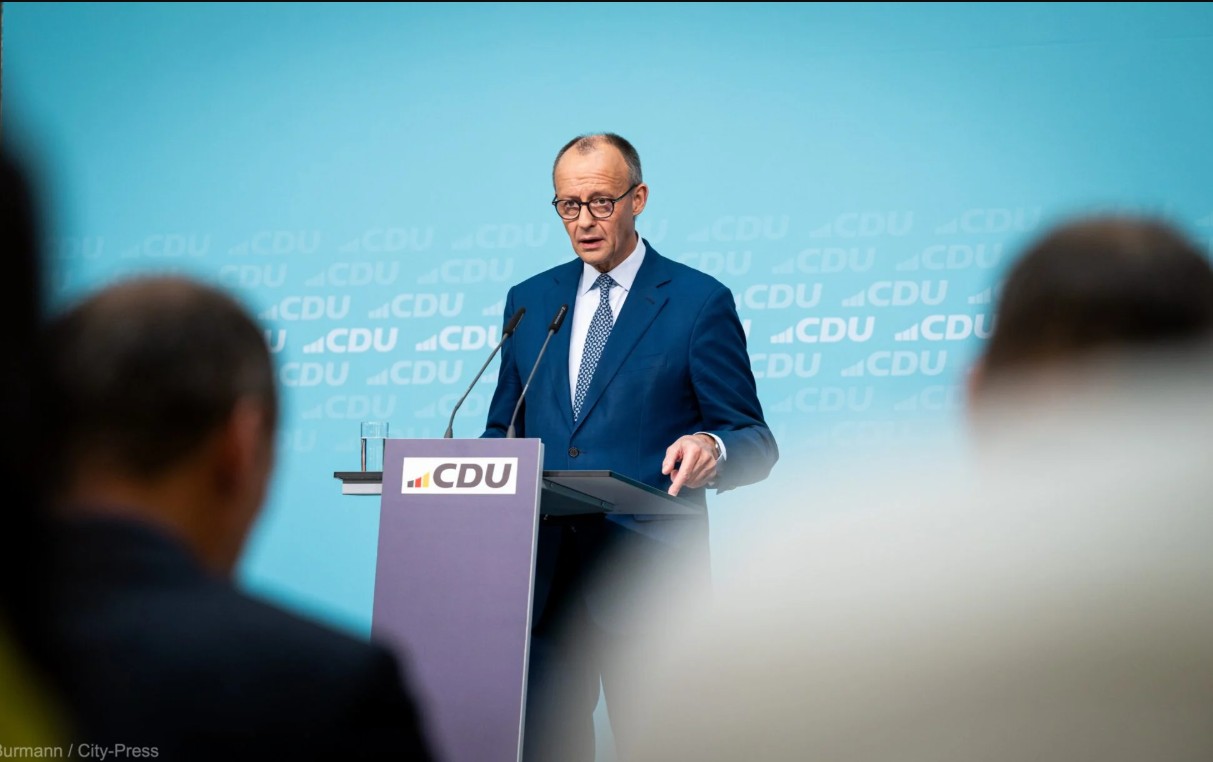
Wcześniej czy później Niemcy ponownie będą racjonalizować podporządkowanie się Gazpromowi Putina w imię +dywersyfikacji+ dostaw – ocenia Thomas O’Donnell, ekspert ds. energii i geopolityki z amerykańskiego think-tanku Wilson Center. Na zdjęciu kanclerz Niemiec Friedrich Merz.FOTO: x.com/_FriedrichMerz

Berlin zaczyna zmieniać kurs wobec Rosji i znów będzie racjonalizować współpracę z Putinem w imię „dywersyfikacji” dostaw gazu. Stanie się tak, bo Niemcy nadal opierają swoją strategię energetyczną na OZE wspierane gazem, zamiast postawić na atom jako priorytet – ocenia w rozmowie z Biznes Alert amerykański ekspert Thomas O’Donnell.

Wypowiedzi kanclerza Niemiec Friedricha Merza o potrzebie „pojednania” z Rosją, wygłoszone dwukrotnie nie da się traktować, jako wyrwanych z kontekstu i przypadkowych. To sygnał polityczny. Najbogatsze państwo Europy i przemysłowy motor Unii Europejskiej zaczyna rewidować swoją linię wobec Moskwy.

Merz z ufnością o Rosji

– Jeśli uda nam się przywrócić pokój i wolność w Europie, jeśli ponownie odnajdziemy równowagę w relacjach z naszym największym europejskim sąsiadem, czyli z Rosją, jeśli zapanuje pokój i zostanie zapewniona wolność –  jeśli to wszystko nam się powiedzie, wtedy Unia Europejska, a wraz z nią my w Niemczech, przejdziemy kolejny test i będziemy mogli z ufnością patrzeć w przyszłość także po 2026 roku – powiedział szef niemieckiego rządu na spotkaniu noworocznym z przedstawicielami przemysłu i handlu 14 stycznia w Halle, dodając potem: „(…) jeśli w dłuższej perspektywie uda nam się na nowo przywrócić równowagę w relacjach z Rosją, gdy zapanuje pokój i gdy wolność będzie zagwarantowana”.

Niemiecki przemysł od 2023 roku zmaga się z wysokimi cenami energii, spadkiem konkurencyjności, rosnącą presją chińskich producentów oraz stagnacją wzrostu gospodarczego. W 2024 roku niemiecka gospodarka formalnie weszła w recesję techniczną, a prognozy wzrostu na 2025 rok były jednymi z najsłabszych w UE.

Wypowiedzi Merza nie oznaczają natychmiastowego zwrotu w polityce wobec Moskwy ani propozycji zniesienia sankcji. Nie są ofertą pokoju ani jednostronnym gestem. Wskazują jednak na rosnące przekonanie w niemieckich elitach politycznych i gospodarczych, że obecny stan konfrontacji – bez realistycznej strategii wyjścia – osiągnął dla nich próg bólu.

„Powrót do „mafijnego bossa od gazu”

Thomas O’Donnell, ekspert ds. energii i geopolityki z amerykańskiego think-tanku Wilson Center wyjaśnia w rozmowie z Biznes Alertem intencje Merza: „Niemieckiemu kanclerzowi chodzi przede wszystkim o uniezależnienie się od pełnego sojuszu z USA, od zależności od Stanów Zjednoczonych. Jednak powrót do starego +mafijnego bossa od gazu+, Władimira Putina, trudno nazwać niezależną strategią”.

Z analizowanych przez O’Donnella wypowiedzi i komentarzy, a także z poufnych rozmów wynika, że niemieccy urzędnicy rządowi traktują amerykańską energię, jako potencjalnie równie zawodną jak tę z Rosji.

– Merz zlecił w związku z tym swoim ludziom znalezienie rozwiązań.  Oczywiście, metody Donalda Trumpa w relacjach z sojusznikami nie są konstruktywne. Mimo że Niemcy są teraz ogromnym odbiorcą LNG z USA, to amerykański prezydent traktuje te biznesowe więzi również jako instrument nacisku – zaznacza ekspert.

– Jednak źródło problemu leży w nierealistycznej polityce energetycznej ostatnich czterech kanclerzy. Merz dostrzega problem silnie subsydiowanych odnawialnych źródeł energii oraz nadmiernej zależności od rosyjskiego gazu. Ale wciąż nie widzi, że Niemcy nie mogą zapewnić sobie bezpieczeństwa energetycznego ani przystępnych cen, opierając się na zależnych od pogody OZE wspieranych gazem. Postawienie na nową energetykę jądrową jako priorytet to jedyna droga — co Francja jasno udowodniła – dodaje.

Niemcy znowu pomyślą o gazie z Rosji

O’Donnell zwraca uwagę, że Merz i jego rząd popierają kontynuację budowy tych samych dwóch równoległych systemów, które tworzyli poprzedni dwaj kanclerze: jednego opartego wyłącznie na OZE i drugiego — gazowego — jako zaplecza na dni bez wiatru lub słońca.

– W praktyce tak zwana reforma polityki energetycznej Merza polega na tym, że dalsza rozbudowa OZE i sieci ma być teraz w większym zakresie finansowana z prywatnych środków, a planowane ogromne instalacje turbin gazowych również mają powstać — tyle że zasilane LNG z USA, a nie rosyjskim gazem – podkreśla Thomas O’Donnell i ocenia, że nie jest to radykalna, strukturalna reforma energetyczno‑przemysłowa, której Niemcy potrzebują, a jedynie kosmetyczna zmiana.

– W sposób konieczny wcześniej czy później doprowadzi to do tego, że Niemcy ponownie będą racjonalizować podporządkowanie się Gazpromowi Putina w imię +dywersyfikacji+ dostaw. Czy to z powodu ideologiczno‑technologiczno‑politycznego zamieszania, czy oportunizmu — niemieccy przywódcy nie dostrzegają, że już istniejące OZE i każda nowa generacja gazowa powinny być traktowane jedynie jako rozwiązania pomostowe, podczas gdy rozwój energetyki jądrowej powinien być priorytetem – jako jedyna realna droga – podsumowuje amerykański ekspert.

Artur Ciechanowicz

American expert: Germany is considering gas from Russia again

Author: Artur Ciechanowicz January 27, 2026, 07:05

Sooner or later, Germany will once again rationalize its subordination to Putin’s Gazprom in the name of “diversification” of supplies, says Thomas O’Donnell, an energy and geopolitics expert at the American think tank Wilson Center. Pictured is German Chancellor Friedrich Merz. PHOTO: x.com/_FriedrichMerz

Berlin is beginning to change course towards Russia and will once again rationalize cooperation with Putin in the name of “diversifying” gas supplies. This will happen because Germany continues to base its energy strategy on renewable energy supported by gas, instead of prioritizing nuclear power, American expert Thomas O’Donnell told Biznes Alert.

German Chancellor Friedrich Merz’s statements about the need for “reconciliation” with Russia, made twice, cannot be dismissed as out of context or coincidental. They are a political signal. Europe’s richest country and the industrial engine of the European Union is beginning to reconsider its stance towards Moscow.

Merz with confidence about Russia

– If we manage to restore peace and freedom in Europe, if we manage to find balance again in relations with our largest European neighbor, Russia, if peace prevails and freedom is guaranteed – if all this succeeds, then the European Union, and with it we in Germany, will have passed another test and will be able to look to the future with confidence even after 2026 – said the head of the German government at a New Year’s meeting with representatives of industry and trade on January 14 in Halle, later adding: “(…) if in the long term we manage to restore balance again in relations with Russia, when peace prevails and freedom is guaranteed.”

German industry has been struggling with high energy prices, declining competitiveness, increasing pressure from Chinese manufacturers, and stagnant economic growth since 2023. In 2024, the German economy formally entered a technical recession, and growth forecasts for 2025 were among the weakest in the EU.

Merz’s statements do not signal an immediate shift in policy toward Moscow or a proposal to lift sanctions . They are not an offer of peace or a unilateral gesture. However, they indicate a growing conviction among German political and economic elites that the current state of confrontation—without a realistic exit strategy—has reached their pain threshold.

“Return to the ‘Mafia Gas Boss'”

Thomas O’Donnell, an energy and geopolitics expert from the American think-tank Wilson Center, explains Merz’s intentions in an interview with Biznes Alert: “The German chancellor is primarily concerned with becoming independent from a full alliance with the United States, from dependence on the United States. However, returning to the old ‘mafia gas boss’, Vladimir Putin, is hardly an independent strategy.”

Statements and comments analyzed by O’Donnell, as well as confidential conversations, indicate that German government officials view American energy as potentially as unreliable as that from Russia.

“Merz has therefore tasked his people with finding solutions. Of course, Donald Trump’s methods in relations with allies are not constructive. Even though Germany is now a huge recipient of LNG from the US, the American president also uses these business ties as a tool for pressure,” the expert notes.

“However, the root of the problem lies in the unrealistic energy policies of the last four chancellors. Merz recognizes the problem of heavily subsidized renewable energy sources and excessive dependence on Russian gas. But he still fails to see that Germany cannot ensure energy security and affordable prices by relying on weather-dependent renewable energy sources supported by gas. Prioritizing new nuclear energy is the only way forward—as France has clearly demonstrated,” he adds.

Germany will think about gas from Russia again

O’Donnell points out that Merz and his government support the continuation of the construction of the same two parallel systems that the previous two chancellors created: one based solely on renewable energy and the other – gas – as a backup for days without wind or sun.

– In practice, the so-called Merz energy policy reform means that further expansion of renewable energy sources and the grid is now to be financed to a greater extent from private funds, and the planned huge gas turbine installations are also to be built – but powered by LNG from the USA, not Russian gas – emphasizes Thomas O’Donnell, assessing that this is not the radical, structural energy and industrial reform that Germany needs, but merely a cosmetic change.

“Sooner or later, this will inevitably lead to Germany once again rationalizing its subordination to Putin’s Gazprom in the name of ‘diversification’ of supplies. Whether due to ideological, technological, and political confusion or opportunism, German leaders fail to recognize that existing renewable energy sources and any new gas-fired generation should be treated merely as bridge solutions, while the development of nuclear energy should be a priority—the only viable path,” the American expert concludes.

Artur Ciechanowicz

My Al Jazeera| In Venezuela, an oil “security guarantee” means Trump-Rubio get armed Chavismo to disband or stand down.

My Al Jazeera (EN) interview, Interview recorded

I spoke about three issues

-1- How US and other foreign oil firms can start immediately to stepwise developing three different types of oil fields. Yes, Venezuela can become a “powerhouse” oil producer. This could be a huge change in the global oil system.

-2- What is meant when Trump and oil firms talk about USA “security guarantees” for work in Venezuela. The USA government is unlikely to subsidize oil majors going into Venezuela. Instead, they are talking about somehow Washington managing a “regime change.” The KEY element of this is that the present pro-Chavista armed actors, both the state and non-state armed actors and the Chavista-state intelligence services, all of which are widespread in the country, are still intact and are still active, either agree to disband stepwise or to stepdown and not oppose the formation, eventually, of a new government elected freely. The instruments of state armed coercion that will remain, including elements of the police, intelligence services, national guard, army, must agree to serve whomsoever is democratically elected in future elections. However, as Trump himself points out, the foreign oil majors “are tough guys” and they have abundant experience and methods to work in countries having fairly dangerous situations.

Continue reading

Kyiv TV| Venezuela can replace Russian oil.

My Kanal24 interview with Nataly Lutsenko, who was in Kyiv, Ukraine on11Jan25, posted here 18Jan.. I explained:

— The stepwise manner in which different Venezuelan oil basins can start being brought to market rapidly while recovery and new production can proceed to more complex and higher-investment projects over time.

Continue reading

My Newsweek| I counter Exxon CEO Darren Wood’s WH drama that “Venezuela is uninvestable.” And more commentary.

Oil Bosses Hit Trump With Venezuela Setback: ‘Uninvestable’

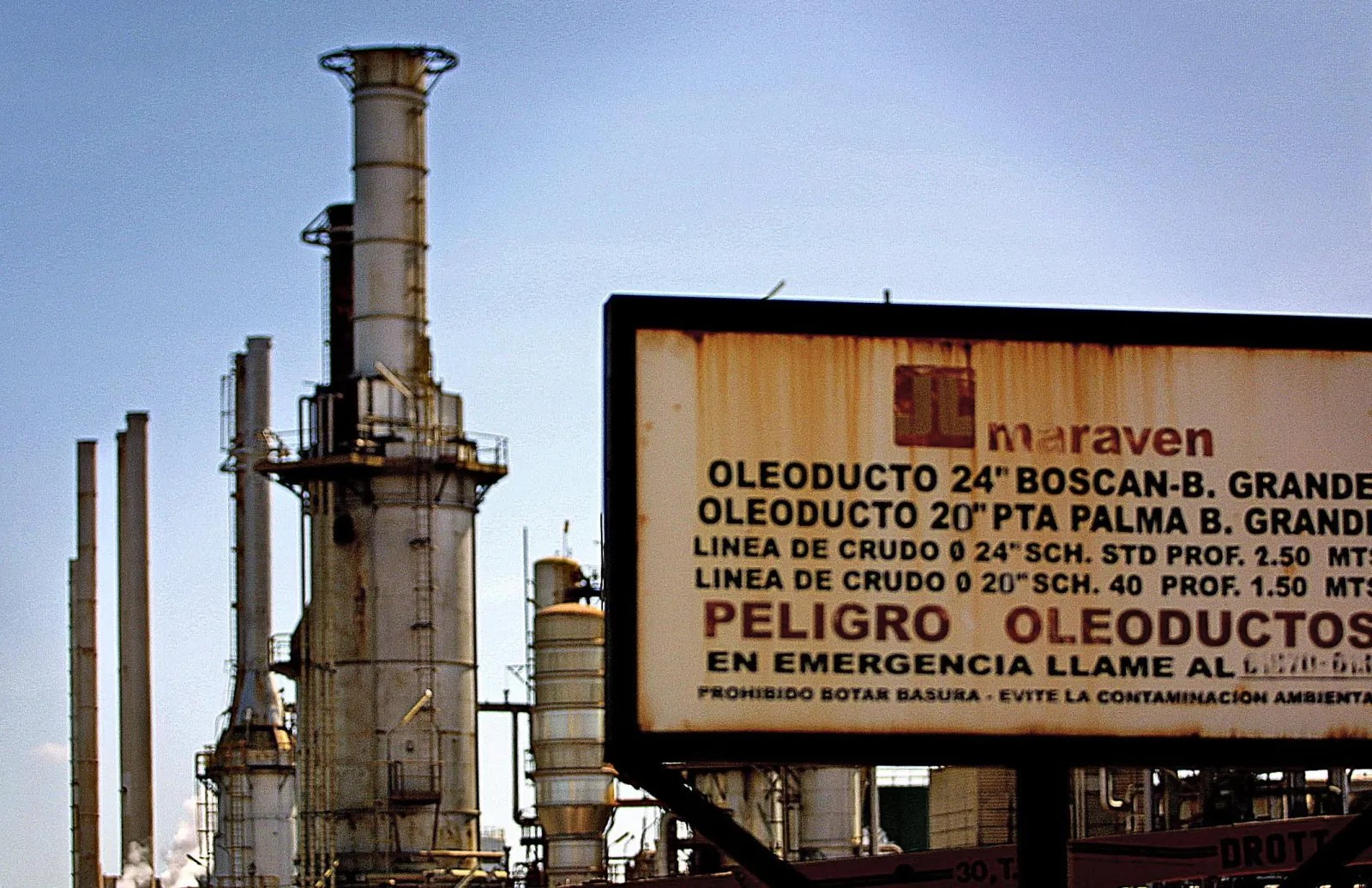
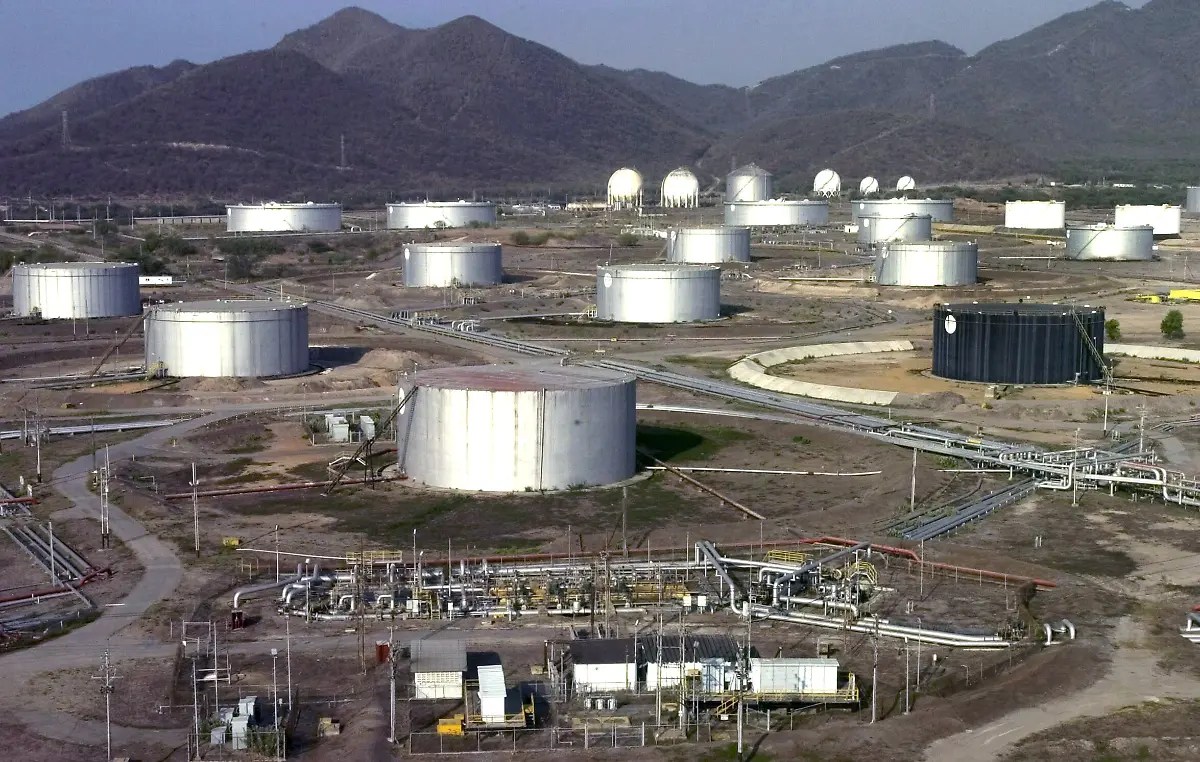
Image from 2002 shows an oil refinery in Maracaibo, Vzla. Photo ANDREW ALVAREZ

Published Jan 10, 2026 – By, Brendan Cole, Senior News Reporter

Developing Venezuela’s oil industry  following the removal of its leader, Nicolas Maduro,  would require major legal and commercial changes, Exxon CEO Darren Woods has told President Donald Trump

Woods gave a downbeat assessment of the viability of restoring oil production in the South American country believed to hold the world’s largest reserves, telling Trump that at the moment, the country’s industry was “uninvestable.”

Energy industry analyst, Thomas O’Donnell, told Newsweek on Saturday that one approach would be for companies to work on small projects to kickstart production before targeting the oil fields that require heavy investment.   

Continue reading

Oil Bosses Hit Trump With Venezuela Setback: ‘Uninvestable’

Image from 2002 shows an oil refinery in Maracaibo, Vzla. Photo ANDREW ALVAREZ

Published Jan 10, 2026 – By, Brendan Cole, Senior News Reporter

Developing Venezuela’s oil industry  following the removal of its leader, Nicolas Maduro,  would require major legal and commercial changes, Exxon CEO Darren Woods has told President Donald Trump

Woods gave a downbeat assessment of the viability of restoring oil production in the South American country believed to hold the world’s largest reserves, telling Trump that at the moment, the country’s industry was “uninvestable.”

Energy industry analyst, Thomas O’Donnell, told Newsweek on Saturday that one approach would be for companies to work on small projects to kickstart production before targeting the oil fields that require heavy investment.   

Continue reading

My Al Jazeera| Venezuela: China’s $100b oil-debt conundrum & Trump| With Janiv Shah, VP Rystad

7 January 2026, Al Jazeera English. On Venezuelan oil, and Trump’s new leverage over China’s oil-loans..

See especially (i) my second response re. China’s big risk regarding repayment of its $100b loans, collateralized with a promised flow of Venezuelan oil, and equally (ii) Janiv Shah’s first comment, on the more immediate China impact. It was a pleasure to be on with the well known oil expert Janiv Shah, VP RystadEnergy.

Continue reading

My ntv.de| So schwer ist es, Venezuelas Ölinfrastruktur zu retten| How hard is it to restore Venezuela’s oil infrastructure

Investitionswillige Unternehmen stehen in Venezuela vor großen Hürden: Sicherheitsrisiken, eine verfallene Infrastruktur, ungeklärte Rechtsfragen zum US-Einsatz und die Gefahr langfristiger politischer Unruhen. (Foto: IMAGO/IlluPics)

Trumps Plan klingt ambitioniert: US-Ölkonzerne sollen nach Venezuela zurückkehren und Milliarden in die stark beschädigte Infrastruktur investieren. Im Interview erklärt Energiestratege Thomas O’Donnell, wie schnell das Land nach Jahren politischer und wirtschaftlicher Krise wieder zu alter Stärke finden kann.

ntv.de: Trumps Versprechen klingt vollmundig: US-Ölkonzerne sollen nach dem Angriff auf Venezuela ins Land zurückkehren und Milliarden von Dollar investieren, die stark beschädigte Ölinfrastruktur reparieren und damit beginnen, Geld zu verdienen. Wird dieser Plan aufgehen?

Continue reading

I was interviewed 05 Jan. by Juliane Kipper, Business Editor at Germany’s ntv.de, for this print article. Lies es Auf DeutschRead In English (from Google Translate). Or, read at ntv.de.

Investitionswillige Unternehmen stehen in Venezuela vor großen Hürden: Sicherheitsrisiken, eine verfallene Infrastruktur, ungeklärte Rechtsfragen zum US-Einsatz und die Gefahr langfristiger politischer Unruhen. (Foto: IMAGO/IlluPics)

Trumps Plan klingt ambitioniert: US-Ölkonzerne sollen nach Venezuela zurückkehren und Milliarden in die stark beschädigte Infrastruktur investieren. Im Interview erklärt Energiestratege Thomas O’Donnell, wie schnell das Land nach Jahren politischer und wirtschaftlicher Krise wieder zu alter Stärke finden kann.

ntv.de: Trumps Versprechen klingt vollmundig: US-Ölkonzerne sollen nach dem Angriff auf Venezuela ins Land zurückkehren und Milliarden von Dollar investieren, die stark beschädigte Ölinfrastruktur reparieren und damit beginnen, Geld zu verdienen. Wird dieser Plan aufgehen?

Continue reading

My bTV| On the Trump administration’s Venezuela logic: drugs, migration & oil (partly vs Russia). Both Maduro’s regime & Machado’s opposition sit & wait.

I was interviewed by David Karalvanov at bTV (Bulgaria) on the US-Venezuela confrontation under Trump and Maduro (01Dec). David used excerpts for a documentary and kindly gave me the full video here. An outline of the five questions and answers is below here.

Three Asides:

  1. I recall vividly how Trump and co., in his first term, easily misled a naively dependent Venezuelan opposition into believing that the USA was planning to forcibly remove Maduro. In turn, the opposition convinced the country’s population that the USA was preparing to forcibly liberate them. This belief was deeply corrosive to advancing any self-reliant domestic anti-Maduro pro-democracy movement. In the end, the Trump administration tried a poorly prepared putsch. John Bolton, Trump’s then-National Security Advisor, the organizer, was embarrassingly gamed by the Venezuelan regime’s intelligence police. Meanwhile, the present Venezuelan opposition has long been unwilling to organize or endorse any popular movement to forcibly restore democracy from below.
  2. In a recent CNN interview I spoke about Trump rationales for the present confrontation. See: “Why Trump wants a Venezuelan oil boom …“) and dangers of not preparing for the day-after possibilities of chaotic events, terrorism or resistance by armed pro-Chavista military or collectivo groups, and/or x-Colombian guerilla groups long active in the country.
  3. I’ve written for 20 years on Venezuela, Chavismo and oil, including two years as visiting professor, Universidad Central de Venezuela’s UCV/CENDES, Caracas.–I’m happy to speak or consult on Ven.-US-China-Russia-Iran-Colombian-EU-… and/or Ven. domestic matters in English or Spanish.- Tom O’D

David’s five questions and some of my answers:

Continue reading

My Kanal24 Kyiv | Oil War: Ukraine-US escalation could ruin W. Siberian fields. As Putin nixes peace deal, Trump faces a decision.

To watch at Kanal24 site here

Nataly Lutsenko at Kanal24 TV in Kyiv, invited me again to an interview. We discussed, in detail, what I see as “the oil war” jointly waged by Ukraine and the USA against Russia. Each has its role:

(i) Ukraine is waging an air campaign with drones and missiles against Russian refineries, oil export terminal ports, and oil tankers. This is an audacious and expanding campaign seriously impeding Russian capacity to handle export of the oil its fields produce.

It is important to note, politically, that these attacks are assisted by USA intelligence, as reported in October by the FT. Ukraine’s intelligence chief also spoke of Ukraine’s crucial dependence on US intelligence assets on 20 December, and later on the depth. Unlike the former “oil price cap” strategy of the Biden administration and the early months of the second-Trump administration, the present, much expanded air war on Russian oil is now clearly embraced by the USA.

(ii) For its part, the USA’s role in this oil-war – along with NATO, UK, EU and G7 allies – involves increasingly harsh tariffs and sanctions against Russian oil exports.

Continue reading

“Bone-crushing” & “draconian”: The law that could choke Putin’s oil revenues. [My interview with Norway’s ‘Kapital’]

My thanks to Tor Klaveness at Kapital, Norway’s oldest and leading, business magazine. Below is an English translation, then the Norwegian original. – Tom O’D.

“Bone-crushing” and “draconian”: The law that could choke Putin’s oil revenues

If peace talks between Ukraine and Russia break down, the US Senate is ready to pass a sanctions package that could strangle Russia’s oil exports. In that case, it could significantly strengthen the oil market.

Energy Published 29 Nov. | Paywall removed, Updated 9 Dec.

By: Tor Klaveness

“President Trump said this weekend, ‘Send me the bill.’ So we have to send him the bill to help end this war.”

Dr. Thomas O’Donnell, energy and geopolitical strategist

This was stated by Republican Senator Lindsey Graham in a panel debate on November 19 with Democratic Senator Richard Blumenthal. The debate was moderated by Clayton Seigle, a senior fellow at the think tank Center for Strategic and International Studies (CSIS), which also organized the debate.

The bill Graham referred to is the Sanctioning Russia Act , which he is co-sponsoring with Blumenthal. The bill already has the support of 85 of the 100 US senators and would give US authorities the right to impose punitive tariffs of no less than 500 percent on countries importing Russian energy.

PHOTO: Alexander Kazakov, Sputnik, Kremlin Pool Photo via AP/NTB

With a stick and a carrot

Dr. Thomas O’Donnell is an energy and geopolitical strategist, founder of GlobalBarrel.com and former global fellow at the Wilson Center in Washington, D.C. He believes Congress is now poised to give President Trump an extremely potent weapon.

The proposal is being described as “bone-crushing” and “draconian,” and is set to be voted through almost unanimously in the Senate.

Continue reading

My CNN live: Why Trump wants a Venezuelan oil boom | Venezuelans, living in misery, just want Maduro gone; eight million have fled.

I was interviewed on CNN International’s “Newsroom” with host Kim Brunhuber – live, Friday, 12 Dec. 2025. The transcript is below. Kim asked about Venezuela’s oil industry, the impact of sanctions, what stricter enforcement could do to the Venezuelan economy, and what the US stands to gain if it ultimately gains greater access to the country’s oil reserves? He also wanted to know what Venezuelans are saying. / CNN says: “The show is broadcast around the world on CNN International, and in the US on our new platform All Access.”

Transcript:

0:01 I want to bring in Thomas O’Donnell, an

0:03 energy and geopolitics strategist at

0:05 GlobalBarrel.com. He’s also a former

0:07 visiting professor at the Central

0:09 University of Venezuela and he joins us

0:11 from Berlin. Thank you so much for being

0:13 here with us. Uh so this seizure, a

0:16 clear escalation here. Uh the White

0:19 House says more tanker seizures could be

0:22 coming. If that happens, I mean, what

0:23 would that do to the Venezuelan economy?

0:28 Well, there’s there’s two aspects here.

Continue reading

Video: “Dismantling the Petrostate: Moment of Truth for Russian Oil?” | Our EIES Webinar

Here is the video of our 10 Nov. event, organized by EIES (European Institute for Energy Security). Our topic was the turn in US Trump administration policy on ending Russia’s war against Ukraine and the Russian oil sector.

My sincere thanks to EIES, and especially Executive Director Albéric Mongrenier, for inviting me along with distinguished energy and geopolitics experts. (Note: EIES is affiliated with, but policy-independent of, SAFE in Washington).

Our distinguished expert panel included:

  • Dr. Jaak Aviksoo, Former Minister of Defence of Estonia, EIES Energy Security Leadership Council
  • Christof Rühl, Senior Research Scholar at Columbia University’s Center on Global Energy Policy, former BP Chief Economist 
  • Dr. Thomas O’Donnell, Energy and Geopolitical Strategist and Founder of GlobalBarrel.com 
  • Moderated by Rosemary Griffin, OPEC+ Lead Reporter, S&P Global Commodity Insights
  • Opened by Peter Flory, Senior Fellow, EIES, Former NATO Assistant Secretary General

A central question we addressed was the turn in the Trump administration policy to apply significant coercive measures against the Russian oil sector to undermine the ability of the Putin government to continue its was in Ukraine. We discussed how effective the new sanctions on Rosneft and Lukoil might be and what is the synergistic effect of the Ukrainian drone and missile campaign against Russian domestic refineries and oil export terminal ports.

For an update on expanded attacks on Russian Black Sea oil ports and their meaning, see the written comments accompanying my Kanal24 video interview, posted on Monday, 17 Nov. “The US & Ukraine pound Russian oil | my Kanal24, Kyiv“).

Continue reading

The US & Ukraine pound Russian oil | my Kanal24, Kyiv

On 5 November, I told Kanal24, Kyiv that a US-Ukraine campaign to disable the Russian petrostate’s oil sector is underway. I stressed that this is a multi-spectral campaign combining (i) severe USA sanctions and secondary tariffs on Russian oil exports in parallel with (ii) Ukrainian military action on oil refineries and export-terminal ports. These attacks are known to be conducted and planned in close cooperation with USA military intelligence (FT,12 Oct.).

This means that an assessment of either aspect of this campaign on its own is inadequate. The synergy of sanctions plus military hits is the issue.

Secondary Sanctions. It has been widely recognized that the USA would need to, as promised, vigorously impose secondary tariffs on any entities that violated its recent tariff announcement. Indeed, on Sunday, President Trump lent support to a bill being drafted in Congress to hit any entity “doing business with Russia.”, not only buying its oil (i.e., “Trump says Republicans drafting bill to sanction countries that trade with Russia, Reuters. November 17). This sounds similar to the Senators Lindsey Graham (R, SC) and Richard Blumenthal’s (D Conn) so-called “bone-crushing sanctions” bill (Politico, 7 June) endorsed by 83 senators on 3 June.

The apparent aim of the port drone and missile attacks is to slash oil exports from Russia’s three or four biggest westward facing terminals. The focus thus far is on Black Sea terminals:

Continue reading

JOIN Webinar! – Dismantling the Petrostate: Moment of Truth for Russian Oil? – Mon,10 Nov.

You are invited to register now for Monday, 10 Nov. at 14:00 UK || 15:00 CET || 9:00 ET, an EIES Webinar. [My view: the USA, Ukraine & allies can dismantle the Russian petrostate. My posts on this are linked at the end]. I’m honored to join experts:

  • Dr. Jaak Aviksoo, Former Minister of Defence of Estonia, EIES Energy Security Leadership Council
  • Christof Rühl, Senior Research Scholar at Columbia University’s Center on Global Energy Policy, former BP Chief Economist 
  • Dr. Thomas O’Donnell, Energy and Geopolitical Strategist and Founder of GlobalBarrel.com 
  • Moderated by Rosemary Griffin, OPEC+ Lead Reporter, S&P Global Commodity Insights
  • Opened by Peter Flory, Senior Fellow, EIES, Former NATO Assistant Secretary General

Dismantling the Petrostate: Moment of Truth for Russian Oil? – Webinar: Monday 10 Nov.

Register Now – Allies have so far failed to break Putin’s war machine. The EU recently agreed on a 19th round of sanctions and plans to further ramp down Russian energy supplies. But EU sanctions have shown their limits, political leaders have not been able to use Russia’s frozen assets to aid Ukraine, and Moscow’s hydrocarbons still flow into the Union and other major markets.

Washington’s and London’s most recent sanctions may change the game. As we enter another winter of war, can Europe and the United States build on hard-won Transatlantic convergence to strike a decisive blow to the engine of the Kremlin’s aggression: Russia’s oil exports? Can the EU agree to and successfully manage the phaseout of Russian oil and gas?

Continue reading

My Kyiv Kanal24: Ukraine’s drones hit Russian refineries hard. USA apparently blocks hits on oil ports. Why?

Dear colleagues and friends — there are two key energy aspects in this detailed interview with Nataliia Lutsenko of Channel 24, an all-news TV channel from Kyiv: (1) Ukraine’s attritional war on Russia’s domestic oil sector and (2) whether Ukrainian long-range drone capacities will be called upon (viz., permitted by the USA) to accomplish what the new US policy of ending Russian oil exports seeks to accomplish through secondary tariffs. Elaborating:

(1) Domestic Russian oil refining capacities: I explained that, If Ukraine can sustain these new drone attacks at a faster rate than Russia can repair them, this will be a major blow to the supply of diesel fuel required by the Russian war economy, especially to war industries, railways (i.e., to locomotive fuel), for harvesting of crops this fall, and to supply the war front and occupied Ukraine. The last time this was tried on a large scale, roughly two years ago, Ukraine caused significant hardships to Russian refining, but ultimately it did not achieve sustained damage at a rate necessary to collapse Russia’s immense national refining capacity. However, as I pointed out to Nataliia, Ukraine’s drone production and sophistication is now greater, and chances of success therefore better. We should know in some weeks or perhaps a few months if Ukraine can now overwhelm Russia’s repair capacities.

Already, fuel prices have spiked in Russia, with Moscow deciding to insure refiners receive a special subsidy they would otherwise not get due to high prices they are charging for fuel, to address difficulties with the renewed drone war. (Russian Refiners Hit Rough Patch, Hope for State Support, E.I., 20August25, [paywall].)

(2) Russian oil export capacities: Why does Ukraine’s war on the Russian oil sector not include destruction of Russia’s three westward facing oil ports, the terminals it uses to export the overwhelming bulk of its oil exports? These are Ust-Luga and Primorsk in the Baltic, and Novorossiya on the Black Sea. Why has the oil export capacities of these ports essentially never been hit?

Continue reading

My Alarby [EN]: 30% EU tariff a Trump tactic. Talks go well despite EU weakness. Focus on autos, agriculture & pharma. EU drops digital | Mutual problem is China | Trump persists with Miran’s strategy

My Alarby TV Qatar [English above, Arabic is below] from Berlin Brandenburg Gate studio 12 July.

Summary points: I discussed Trump’s announcement that the USA would impose 30% tariffs on the European Union. (For my “must read” Trump tariff key analysis, see my post “(1)Trump is following Miran’s tariff strategy (2)My reply to Jeff Sachs on USD’s role (3)Tariffs boost EU deindustrialization & (4)turbocharge German auto-crisis (5)Trump’s EU energy-purchase demands” This post keeps getting most hits.)

I focused on context – the global USA strategy here – and the state of EU-USA negotiations. The negotiations are going fairly well with most issues near to being settled. However, it is no secret that Europe is in a very weak geoeconomic position (e.g., see Jamie Diamon’s EU warning, FT) exacerbated by Van der Leyen having “hesitated” (zögern in German) as Trump “escalates.” Euractiv having followed a low-key strategy of detachment from talks, relying on her ever-negotiator, Maroš Šefčovič.

The EU backed down on digital taxes on USA IT firms (Politico) and negotiations are advanced on agricultural, automobile, and pharmaceutical tariffs. These seem the focus now.

Trump had said he’d delay 200% pharma tariffs for a year, but now says a 1 August tariff imposition is likely.

I misspoke on EU agriculture. It’s not that the EU is “famous” for “tariffs” protecting its ag against imports, what it’s actually “famous” for are subsidies for its agriculture, which Trump has targeted as unfair. (Note: the EU’s higher farm subsidies are seen to be a significant factor in lower average EU vs. USA agriculture productivity growth since the early 1990s. See USDA here, esp. from p. 33 .)

I predicted a general settlement will be found before 1 August, and the EU will hold off on retaliatory tariffs to focus on negotiations.

Continue reading