Category Archives: U.S. oil

My Al Jazeera| In Venezuela, an oil “security guarantee” means Trump-Rubio get armed Chavismo to disband or stand down.

My Al Jazeera (EN) interview, Interview recorded

I spoke about three issues

-1- How US and other foreign oil firms can start immediately to stepwise developing three different types of oil fields. Yes, Venezuela can become a “powerhouse” oil producer. This could be a huge change in the global oil system.

-2- What is meant when Trump and oil firms talk about USA “security guarantees” for work in Venezuela. The USA government is unlikely to subsidize oil majors going into Venezuela. Instead, they are talking about somehow Washington managing a “regime change.” The KEY element of this is that the present pro-Chavista armed actors, both the state and non-state armed actors and the Chavista-state intelligence services, all of which are widespread in the country, are still intact and are still active, either agree to disband stepwise or to stepdown and not oppose the formation, eventually, of a new government elected freely. The instruments of state armed coercion that will remain, including elements of the police, intelligence services, national guard, army, must agree to serve whomsoever is democratically elected in future elections. However, as Trump himself points out, the foreign oil majors “are tough guys” and they have abundant experience and methods to work in countries having fairly dangerous situations.

Continue reading

Kyiv TV| Venezuela can replace Russian oil.

My Kanal24 interview with Nataly Lutsenko, who was in Kyiv, Ukraine on11Jan25, posted here 18Jan.. I explained:

— The stepwise manner in which different Venezuelan oil basins can start being brought to market rapidly while recovery and new production can proceed to more complex and higher-investment projects over time.

Continue reading

My Newsweek| I counter Exxon CEO Darren Wood’s WH drama that “Venezuela is uninvestable.” And more commentary.

Oil Bosses Hit Trump With Venezuela Setback: ‘Uninvestable’

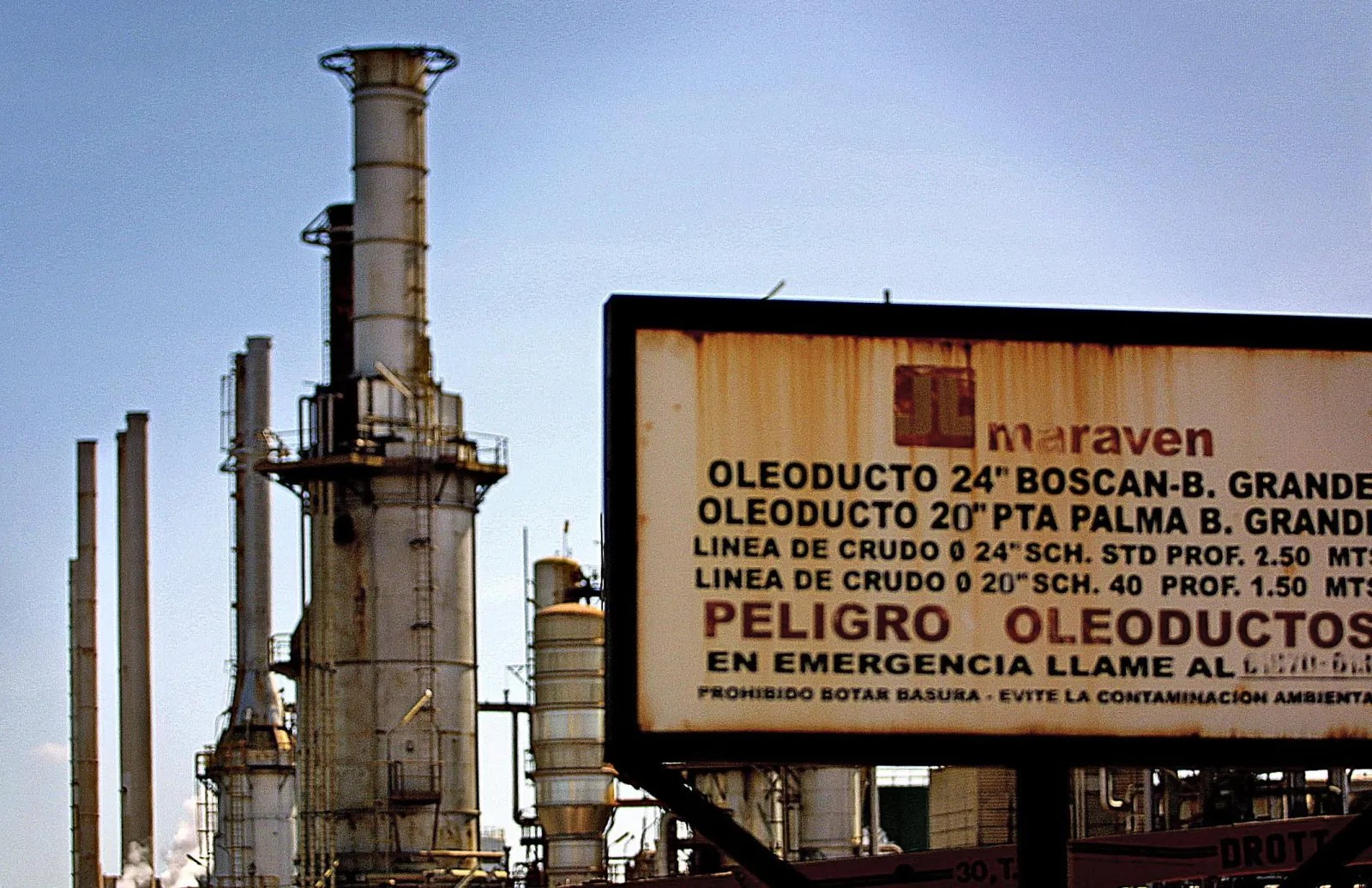
Image from 2002 shows an oil refinery in Maracaibo, Vzla. Photo ANDREW ALVAREZ

Published Jan 10, 2026 – By, Brendan Cole, Senior News Reporter

Developing Venezuela’s oil industry  following the removal of its leader, Nicolas Maduro,  would require major legal and commercial changes, Exxon CEO Darren Woods has told President Donald Trump

Woods gave a downbeat assessment of the viability of restoring oil production in the South American country believed to hold the world’s largest reserves, telling Trump that at the moment, the country’s industry was “uninvestable.”

Energy industry analyst, Thomas O’Donnell, told Newsweek on Saturday that one approach would be for companies to work on small projects to kickstart production before targeting the oil fields that require heavy investment.   

Continue reading

Oil Bosses Hit Trump With Venezuela Setback: ‘Uninvestable’

Image from 2002 shows an oil refinery in Maracaibo, Vzla. Photo ANDREW ALVAREZ

Published Jan 10, 2026 – By, Brendan Cole, Senior News Reporter

Developing Venezuela’s oil industry  following the removal of its leader, Nicolas Maduro,  would require major legal and commercial changes, Exxon CEO Darren Woods has told President Donald Trump

Woods gave a downbeat assessment of the viability of restoring oil production in the South American country believed to hold the world’s largest reserves, telling Trump that at the moment, the country’s industry was “uninvestable.”

Energy industry analyst, Thomas O’Donnell, told Newsweek on Saturday that one approach would be for companies to work on small projects to kickstart production before targeting the oil fields that require heavy investment.   

Continue reading

My Al Jazeera| Venezuela: China’s $100b oil-debt conundrum & Trump| With Janiv Shah, VP Rystad

7 January 2026, Al Jazeera English. On Venezuelan oil, and Trump’s new leverage over China’s oil-loans..

See especially (i) my second response re. China’s big risk regarding repayment of its $100b loans, collateralized with a promised flow of Venezuelan oil, and equally (ii) Janiv Shah’s first comment, on the more immediate China impact. It was a pleasure to be on with the well known oil expert Janiv Shah, VP RystadEnergy.

Continue reading

My bTV| On the Trump administration’s Venezuela logic: drugs, migration & oil (partly vs Russia). Both Maduro’s regime & Machado’s opposition sit & wait.

I was interviewed by David Karalvanov at bTV (Bulgaria) on the US-Venezuela confrontation under Trump and Maduro (01Dec). David used excerpts for a documentary and kindly gave me the full video here. An outline of the five questions and answers is below here.

Three Asides:

  1. I recall vividly how Trump and co., in his first term, easily misled a naively dependent Venezuelan opposition into believing that the USA was planning to forcibly remove Maduro. In turn, the opposition convinced the country’s population that the USA was preparing to forcibly liberate them. This belief was deeply corrosive to advancing any self-reliant domestic anti-Maduro pro-democracy movement. In the end, the Trump administration tried a poorly prepared putsch. John Bolton, Trump’s then-National Security Advisor, the organizer, was embarrassingly gamed by the Venezuelan regime’s intelligence police. Meanwhile, the present Venezuelan opposition has long been unwilling to organize or endorse any popular movement to forcibly restore democracy from below.
  2. In a recent CNN interview I spoke about Trump rationales for the present confrontation. See: “Why Trump wants a Venezuelan oil boom …“) and dangers of not preparing for the day-after possibilities of chaotic events, terrorism or resistance by armed pro-Chavista military or collectivo groups, and/or x-Colombian guerilla groups long active in the country.
  3. I’ve written for 20 years on Venezuela, Chavismo and oil, including two years as visiting professor, Universidad Central de Venezuela’s UCV/CENDES, Caracas.–I’m happy to speak or consult on Ven.-US-China-Russia-Iran-Colombian-EU-… and/or Ven. domestic matters in English or Spanish.- Tom O’D

David’s five questions and some of my answers:

Continue reading

“Bone-crushing” & “draconian”: The law that could choke Putin’s oil revenues. [My interview with Norway’s ‘Kapital’]

My thanks to Tor Klaveness at Kapital, Norway’s oldest and leading, business magazine. Below is an English translation, then the Norwegian original. – Tom O’D.

“Bone-crushing” and “draconian”: The law that could choke Putin’s oil revenues

If peace talks between Ukraine and Russia break down, the US Senate is ready to pass a sanctions package that could strangle Russia’s oil exports. In that case, it could significantly strengthen the oil market.

Energy Published 29 Nov. | Paywall removed, Updated 9 Dec.

By: Tor Klaveness

“President Trump said this weekend, ‘Send me the bill.’ So we have to send him the bill to help end this war.”

Dr. Thomas O’Donnell, energy and geopolitical strategist

This was stated by Republican Senator Lindsey Graham in a panel debate on November 19 with Democratic Senator Richard Blumenthal. The debate was moderated by Clayton Seigle, a senior fellow at the think tank Center for Strategic and International Studies (CSIS), which also organized the debate.

The bill Graham referred to is the Sanctioning Russia Act , which he is co-sponsoring with Blumenthal. The bill already has the support of 85 of the 100 US senators and would give US authorities the right to impose punitive tariffs of no less than 500 percent on countries importing Russian energy.

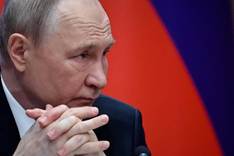
PHOTO: Alexander Kazakov, Sputnik, Kremlin Pool Photo via AP/NTB

With a stick and a carrot

Dr. Thomas O’Donnell is an energy and geopolitical strategist, founder of GlobalBarrel.com and former global fellow at the Wilson Center in Washington, D.C. He believes Congress is now poised to give President Trump an extremely potent weapon.

The proposal is being described as “bone-crushing” and “draconian,” and is set to be voted through almost unanimously in the Senate.

Continue reading

My CNN live: Why Trump wants a Venezuelan oil boom | Venezuelans, living in misery, just want Maduro gone; eight million have fled.

I was interviewed on CNN International’s “Newsroom” with host Kim Brunhuber – live, Friday, 12 Dec. 2025. The transcript is below. Kim asked about Venezuela’s oil industry, the impact of sanctions, what stricter enforcement could do to the Venezuelan economy, and what the US stands to gain if it ultimately gains greater access to the country’s oil reserves? He also wanted to know what Venezuelans are saying. / CNN says: “The show is broadcast around the world on CNN International, and in the US on our new platform All Access.”

Transcript:

0:01 I want to bring in Thomas O’Donnell, an

0:03 energy and geopolitics strategist at

0:05 GlobalBarrel.com. He’s also a former

0:07 visiting professor at the Central

0:09 University of Venezuela and he joins us

0:11 from Berlin. Thank you so much for being

0:13 here with us. Uh so this seizure, a

0:16 clear escalation here. Uh the White

0:19 House says more tanker seizures could be

0:22 coming. If that happens, I mean, what

0:23 would that do to the Venezuelan economy?

0:28 Well, there’s there’s two aspects here.

Continue reading

Video: “Dismantling the Petrostate: Moment of Truth for Russian Oil?” | Our EIES Webinar

Here is the video of our 10 Nov. event, organized by EIES (European Institute for Energy Security). Our topic was the turn in US Trump administration policy on ending Russia’s war against Ukraine and the Russian oil sector.

My sincere thanks to EIES, and especially Executive Director Albéric Mongrenier, for inviting me along with distinguished energy and geopolitics experts. (Note: EIES is affiliated with, but policy-independent of, SAFE in Washington).

Our distinguished expert panel included:

  • Dr. Jaak Aviksoo, Former Minister of Defence of Estonia, EIES Energy Security Leadership Council
  • Christof Rühl, Senior Research Scholar at Columbia University’s Center on Global Energy Policy, former BP Chief Economist 
  • Dr. Thomas O’Donnell, Energy and Geopolitical Strategist and Founder of GlobalBarrel.com 
  • Moderated by Rosemary Griffin, OPEC+ Lead Reporter, S&P Global Commodity Insights
  • Opened by Peter Flory, Senior Fellow, EIES, Former NATO Assistant Secretary General

A central question we addressed was the turn in the Trump administration policy to apply significant coercive measures against the Russian oil sector to undermine the ability of the Putin government to continue its was in Ukraine. We discussed how effective the new sanctions on Rosneft and Lukoil might be and what is the synergistic effect of the Ukrainian drone and missile campaign against Russian domestic refineries and oil export terminal ports.

For an update on expanded attacks on Russian Black Sea oil ports and their meaning, see the written comments accompanying my Kanal24 video interview, posted on Monday, 17 Nov. “The US & Ukraine pound Russian oil | my Kanal24, Kyiv“).

Continue reading

My Kyiv Kanal24: Ukraine’s drones hit Russian refineries hard. USA apparently blocks hits on oil ports. Why?

Dear colleagues and friends — there are two key energy aspects in this detailed interview with Nataliia Lutsenko of Channel 24, an all-news TV channel from Kyiv: (1) Ukraine’s attritional war on Russia’s domestic oil sector and (2) whether Ukrainian long-range drone capacities will be called upon (viz., permitted by the USA) to accomplish what the new US policy of ending Russian oil exports seeks to accomplish through secondary tariffs. Elaborating:

(1) Domestic Russian oil refining capacities: I explained that, If Ukraine can sustain these new drone attacks at a faster rate than Russia can repair them, this will be a major blow to the supply of diesel fuel required by the Russian war economy, especially to war industries, railways (i.e., to locomotive fuel), for harvesting of crops this fall, and to supply the war front and occupied Ukraine. The last time this was tried on a large scale, roughly two years ago, Ukraine caused significant hardships to Russian refining, but ultimately it did not achieve sustained damage at a rate necessary to collapse Russia’s immense national refining capacity. However, as I pointed out to Nataliia, Ukraine’s drone production and sophistication is now greater, and chances of success therefore better. We should know in some weeks or perhaps a few months if Ukraine can now overwhelm Russia’s repair capacities.

Already, fuel prices have spiked in Russia, with Moscow deciding to insure refiners receive a special subsidy they would otherwise not get due to high prices they are charging for fuel, to address difficulties with the renewed drone war. (Russian Refiners Hit Rough Patch, Hope for State Support, E.I., 20August25, [paywall].)

(2) Russian oil export capacities: Why does Ukraine’s war on the Russian oil sector not include destruction of Russia’s three westward facing oil ports, the terminals it uses to export the overwhelming bulk of its oil exports? These are Ust-Luga and Primorsk in the Baltic, and Novorossiya on the Black Sea. Why has the oil export capacities of these ports essentially never been hit?

Continue reading

Our Gdansk chat: Baltic energy risks | USA ousting China from post-war order | “Transition” will be simple: nuclear & mass-transit. “Critical” minerals overblown | EU’s failing model: all-renewables, new grids, grid-storage & EVs | Poland’s risk: China uses Russia

This is in English, after Eugene Romer of Układ Sił media introduces me in Polish. This was at the “3 Seas -1 Opportunity Forum” in Gdansk, last June 4-5, 2024. I have been wanting to post it ever since, as the questions remain relevant. My thanks to Eugene and his team, and to his Opportunity Think Tank colleagues.

My panel at the forum was on problems of relying on energy security that arrives via the sea. So, think Poland and Lithuania’s LNG terminals, of the many sub-sea pipelines, power and communications cables between Baltic and Nordic states. And, since June, all the incidents where ships leaving Russian ports “accidentally” dragged their anchors, cutting such vital links. So, this conference was rather prescient. My sincere thanks to our hosts The Opportunity Institute for Foreign Affairs.

Continue reading

My interview at Lithuania’s LRT: Trump could seriously harm Russia if he wants to | Trumpas, jeigu tik norėtų, galėtų stipriai pakenkti Rusijai

My long print interview at Lithuania’s LRT [Lithuanian PDF | English PDF​] with Aleksandra ​Ketlerienė, deputy editor-in-chief of Lithuania’s LRT.lt, published 7January. We spoke in Warsaw, 19 November. My thanks to Aleksandra for her insightful questioning and editorial care. We discussed:

  • The EU’s systemic energy​-policy “own goals” ​since its initial energy-crisis win ​after Moscow began cutting gas exports early in 2021​.
  • Reforming failed/ineffective Russian price-cap sanctions for real sanctions, and how the global oil market is now favorable for “maximum pressure.”
  • Historical perspectives on oil, gas, renewables, and nuclear sectors, essential for realistic policy formation.
  • An historical overview of China’s decades-long effort to overcome its energy security, learning lessons of Japan’s WW2 weaknesses.
  • (​See topics summary))
Continue reading

Decoding the Oil Price War 1: Moscow seized COVID crisis to hit US shale, force sanctions relief

This slideshow requires JavaScript.

The “Oil Price War of 2020” was launched at the worst possible time.  The COVID-19 pandemic was spreading to the world beyond China, promising to kill tens-of-thousands, and bring a global economic collapse.

However, this war was not preordained. Things could have gone otherwise from the start.  It was a decision, a sort of Pearl-Harbor-esque surprise attack, announced by Russian minister of energy, Alexander Novak, upon his arriving late to the OPEC-plus summit hall in Vienna on March 6.

If Moscow now abandons its all-out war on US shale, it will be because Putin has miscalculated.  He was willing to increase the pain for everyone else by exploiting the COVID-19 energy crisis in a half-baked attempt to get out from under the US sanctions.  However, the unanticipated repercussions might get too hot for Moscow.

The facts about why Putin decided to launch this oil price war are important to decode.  A key aspect to understand is that Moscow’s game plan was to blame the Saudis; and it soon began a disinformation campaign saying the Saudis launched the war.

We shall see, below and in future posts, how this blame-shifting is a stratagem designed to manipulate a section of US politicians and especially independent US oil producers, who traditionally hold strong, anti-Saudi sentiments (to be clear: they have good reasons to hold these anti-Saudi views), to preferentially sympathize with Russia against the Saudis and to lobby Trump and Congress to give Moscow relief from US sanctions.

Whether this Oil War strategy of Moscow can, at least in part, succeed in freeing Russia from US sanctions is not clear.  But, Moscow’s is highly motivated to succeed due to the significant constraints these sanctions are imposing on Russia.  They include sanctions in retaliation for its war against Ukraine, since 2014, which have undermined expansion of Russia’s domestic oil and gas sector; sanctions which have stalled Russian-German plans to finish the Nord Stream 2 pipeline; and sanctions on Rosneft’s efforts to sustain the Maduro dictatorship in Venezuela.

Today, as explained below, I would say the odds are against Moscow’s success, with the plan bordering on adventurism.  The Saudi’s initial response, in so far as it specifically targets Russia’s oil business, is rational; however, by de facto joining the Russian oil price war on US shale,  the Saudis will also provoke a backlash from powerful US oil-business and political interests, which is likely precisely what Putin and Igor Sechin hoped to bait the Saudis’ Prince MbS into doing.

Considering the pain the world is already suffering, Putin and Sechin’s callous game to exploit the COVID-19 oil-market crisis must be seen for what it is.  Most especially, one should not acquiesce to Moscow’s disinformation campaign to shift the blame elsewhere.

In Vienna: Who started the price war?

For weeks, Riyadh had aggressively lobbied the 10 OPEC and 11 non-OPEC members of the OPEC-plus alliance to agree to a major production cut.  This alliance had been born in 2016, of a newfound, market-dictated, yet grudging, Russian-Saudi mutual recognition of the reality that only such a large-scale collective effort could begin to get control of a market in long-term oversupply.  By December 2019, their OPEC-plus group had Continue reading

Putin’s OPEC tactics: Iran sanctions and the Saudis [IBD cites me]

dc-Cover-p9fbkcs8ccuhvnnnubuhqc2fn7-20161201210531.Medi

June 2018 OPEC meeting’s key players (AP)

Last week, Gillian Rich at Investor’s Business Daily (Washington), asked me (Berlin) and others about the OPEC’s 20-21 June meeting. Below here, I give my views in more detail, including the tie-in to the Trump project to isolate Iran and my comment about Putin likely betraying the Iranians again.  The IBD piece is here: Trump Could Make OPEC’s Next Meeting As Dysfunctional As G-7 Summit. 15 June ’18.

We spoke about market and geopolitical aspects. On the latter, I emphasized both the Trump Administration’s evolving plan to sanction and isolate Iran, and Russia’s new role as a central player with OPEC ever since the 2016 joint Russian-OPEC decision to raise production.

That’s when Putin played a new role for any Russian leader. Not only did he coordinate Russian oil policy with OPEC’s, he got personally involved in heated discussions, getting on the phone late in the last night with Iranian and Saudi leaders to get the deal sealed. Continue reading

China’s big NOCs slash prices to take market from private oil refiners ~ I’m quoted in “China Oil Week”

sinopec_station_china_newsbase_21jul17

A Sinopec station in China.  Sinopec and other big NOC’s are slashing prices to take business from Chna’s small private “Tea Pot” refiners.

Last week, I was quoted on my assessment of how China’s “Tea Pot” refineries (small, private outfits) will fare in the face of  China’s big National Oil Companies (NOCs) cutting  prices to grab the Tea Pots’ business.  My main point to Newsbase reporter Saw Wright was that China is far from a completely “free market” and the state can be expected to weigh in on one side or another, complicating any outcome predictions based on market and/or tech strengths and weaknesses.  I’m quoted a couple times near the article’s end, here:
Continue reading

Trump’s promise to “stay totally independent” of OPEC is populist hype [My IBD interview]

eia_apr15_us_oil_prod-importsContrary to his campaign hype (see article below), Trump-as-president will not do anything to interfere with the free flow of oil or gas to or from the USA.  As I pointed out in the Investors Business Daily interview (Gillian Rich’s story is below), people central to Trump’s administration – such as Rex Tillerson, his designated secretary of state and former CEO of Exxon, and Harold Hamm, Trump’s fracking billionaire friend he wanted for secretary of energy – are global-market-oriented businessmen who would never agree to disconnect the USA from global energy markets.

The free flow of petroleum through the unified global market traded in US dollars – what I call the “Global Barrel” – is central to the business model of every private as well as every national oil company.  Today there is essentially one, global oil price. If you break up the global market by limiting imports or exports, you get national markets with national prices.  Then what?

If the US price went higher than the global price due to keeping out cheap foreign oil, Trump’s popular approval would dive. And, if the U.S. price went lower due to a domestic production glut of fracked oil, then his support among business would tank.

Moreover, the unified global market serves as the key element in the world’s collective energy-security system by guaranteeing equal access and prices to all suppliers and consumers.   Continue reading