My Kanal24 interview with Nataly Lutsenko, who was in Kyiv, Ukraine on11Jan25, posted here 18Jan.. I explained:
— The stepwise manner in which different Venezuelan oil basins can start being brought to market rapidly while recovery and new production can proceed to more complex and higher-investment projects over time.
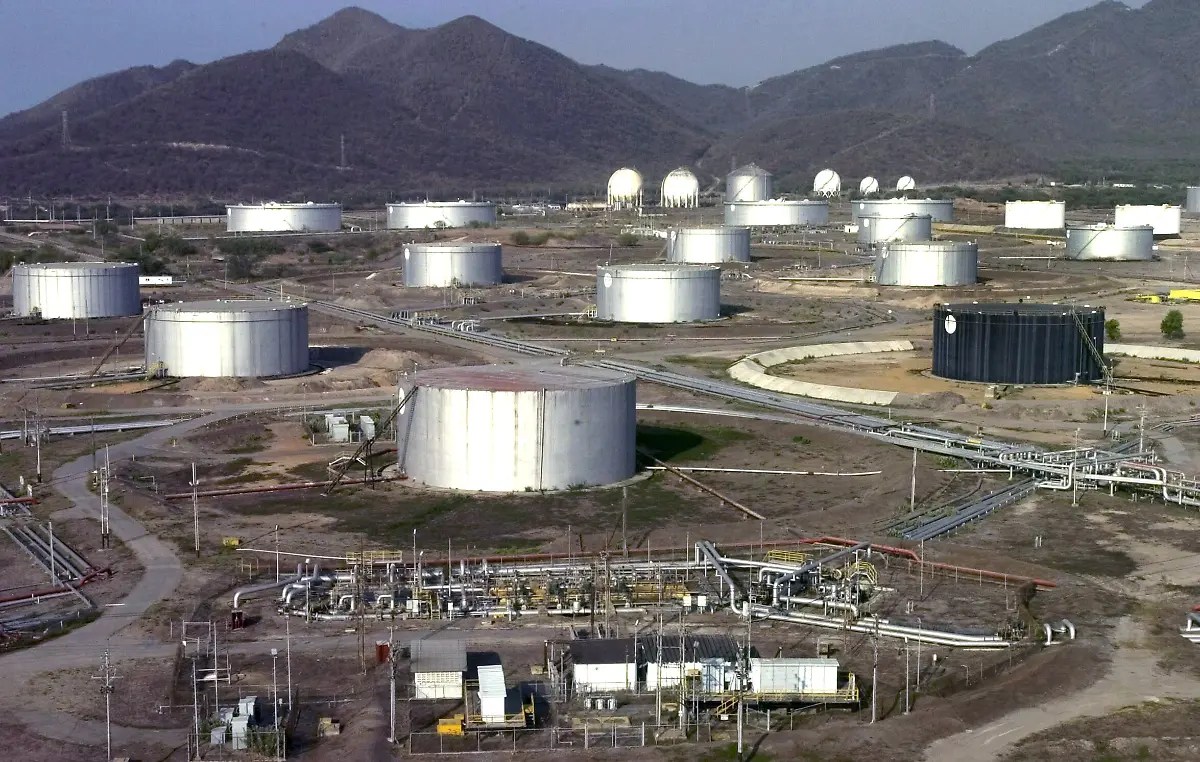
Investitionswillige Unternehmen stehen in Venezuela vor großen Hürden: Sicherheitsrisiken, eine verfallene Infrastruktur, ungeklärte Rechtsfragen zum US-Einsatz und die Gefahr langfristiger politischer Unruhen. (Foto: IMAGO/IlluPics)
Trumps Plan klingt ambitioniert: US-Ölkonzerne sollen nach Venezuela zurückkehren und Milliarden in die stark beschädigte Infrastruktur investieren. Im Interview erklärt Energiestratege Thomas O’Donnell, wie schnell das Land nach Jahren politischer und wirtschaftlicher Krise wieder zu alter Stärke finden kann.
ntv.de: Trumps Versprechen klingt vollmundig: US-Ölkonzerne sollen nach dem Angriff auf Venezuela ins Land zurückkehren und Milliarden von Dollar investieren, die stark beschädigte Ölinfrastruktur reparieren und damit beginnen, Geld zu verdienen. Wird dieser Plan aufgehen?
I was interviewed 05 Jan. by Juliane Kipper, Business Editor at Germany’s ntv.de, for this print article. Lies es Auf Deutsch— Read In English (from Google Translate). Or, read at ntv.de.
Investitionswillige Unternehmen stehen in Venezuela vor großen Hürden: Sicherheitsrisiken, eine verfallene Infrastruktur, ungeklärte Rechtsfragen zum US-Einsatz und die Gefahr langfristiger politischer Unruhen. (Foto: IMAGO/IlluPics)
Trumps Plan klingt ambitioniert: US-Ölkonzerne sollen nach Venezuela zurückkehren und Milliarden in die stark beschädigte Infrastruktur investieren. Im Interview erklärt Energiestratege Thomas O’Donnell, wie schnell das Land nach Jahren politischer und wirtschaftlicher Krise wieder zu alter Stärke finden kann.
ntv.de: Trumps Versprechen klingt vollmundig: US-Ölkonzerne sollen nach dem Angriff auf Venezuela ins Land zurückkehren und Milliarden von Dollar investieren, die stark beschädigte Ölinfrastruktur reparieren und damit beginnen, Geld zu verdienen. Wird dieser Plan aufgehen?
I was interviewed by David Karalvanov at bTV (Bulgaria) on the US-Venezuela confrontation under Trump and Maduro (01Dec). David used excerpts for a documentary and kindly gave me the full video here. An outline of the five questions and answers is below here.
Three Asides:
I recall vividly how Trump and co., in his first term, easily misled a naively dependent Venezuelan opposition into believing that the USA was planning to forcibly remove Maduro. In turn, the opposition convinced the country’s population that the USA was preparing to forcibly liberate them. This belief was deeply corrosive to advancing any self-reliant domestic anti-Maduro pro-democracy movement. In the end, the Trump administration tried a poorly prepared putsch. John Bolton, Trump’s then-National Security Advisor, the organizer, was embarrassingly gamed by the Venezuelan regime’s intelligence police. Meanwhile, the present Venezuelan opposition has long been unwilling to organize or endorse any popular movement to forcibly restore democracy from below.
In a recent CNN interview I spoke about Trump rationales for the present confrontation. See: “Why Trump wants a Venezuelan oil boom …“) and dangers of not preparing for the day-after possibilities of chaotic events, terrorism or resistance by armed pro-Chavista military or collectivo groups, and/or x-Colombian guerilla groups long active in the country.
I’ve written for 20 years on Venezuela, Chavismo and oil, including two years as visiting professor, Universidad Central de Venezuela’s UCV/CENDES, Caracas.–I’m happy to speak or consult on Ven.-US-China-Russia-Iran-Colombian-EU-… and/or Ven. domestic matters in English or Spanish.- Tom O’D
My thanks to Tor Klaveness at Kapital, Norway’s oldest and leading, business magazine. Below is an English translation, then the Norwegian original. – Tom O’D.
“Bone-crushing” and “draconian”: The law that could choke Putin’s oil revenues
If peace talks between Ukraine and Russia break down, the US Senate is ready to pass a sanctions package that could strangle Russia’s oil exports. In that case, it could significantly strengthen the oil market.
Energy Published 29 Nov. | Paywall removed, Updated 9 Dec.
“President Trump said this weekend, ‘Send me the bill.’ So we have to send him the bill to help end this war.”
Dr. Thomas O’Donnell, energy and geopolitical strategist
This was stated by Republican Senator Lindsey Graham in a panel debate on November 19 with Democratic Senator Richard Blumenthal. The debate was moderated by Clayton Seigle, a senior fellow at the think tank Center for Strategic and International Studies (CSIS), which also organized the debate.
The bill Graham referred to is the Sanctioning Russia Act , which he is co-sponsoring with Blumenthal. The bill already has the support of 85 of the 100 US senators and would give US authorities the right to impose punitive tariffs of no less than 500 percent on countries importing Russian energy.
PHOTO: Alexander Kazakov, Sputnik, Kremlin Pool Photo via AP/NTB
With a stick and a carrot
Dr. Thomas O’Donnell is an energy and geopolitical strategist, founder of GlobalBarrel.com and former global fellow at the Wilson Center in Washington, D.C. He believes Congress is now poised to give President Trump an extremely potent weapon.
The proposal is being described as “bone-crushing” and “draconian,” and is set to be voted through almost unanimously in the Senate.
I was interviewed on CNN International’s “Newsroom” with host Kim Brunhuber – live, Friday, 12 Dec. 2025. The transcript is below. Kim asked about Venezuela’s oil industry, the impact of sanctions, what stricter enforcement could do to the Venezuelan economy, and what the US stands to gain if it ultimately gains greater access to the country’s oil reserves? He also wanted to know what Venezuelans are saying. / CNN says: “The show is broadcast around the world on CNN International, and in the US on our new platform All Access.”
On 5 November, I told Kanal24, Kyiv that a US-Ukraine campaign to disable the Russian petrostate’s oil sector is underway. I stressed that this is a multi-spectral campaign combining (i) severe USA sanctions and secondary tariffs on Russian oil exports in parallel with (ii) Ukrainian military action on oil refineries and export-terminal ports. These attacks are known to be conducted and planned in close cooperation with USA military intelligence (FT,12 Oct.).
This means that an assessment of either aspect of this campaign on its own is inadequate. The synergy of sanctions plus military hits is the issue.
Secondary Sanctions. It has been widely recognized that the USA would need to, as promised, vigorously impose secondary tariffs on any entities that violated its recent tariff announcement. Indeed, on Sunday, President Trump lent support to a bill being drafted in Congress to hit any entity “doing business with Russia.”, not only buying its oil (i.e., “Trump says Republicans drafting bill to sanction countries that trade with Russia, Reuters. November 17). This sounds similar to the Senators Lindsey Graham (R, SC) and Richard Blumenthal’s (D Conn) so-called “bone-crushing sanctions” bill (Politico, 7 June) endorsed by 83 senators on 3 June.
The apparent aim of the port drone and missile attacks is to slash oil exports from Russia’s three or four biggest westward facing terminals. The focus thus far is on Black Sea terminals:
You are invited to register now for Monday, 10 Nov. at 14:00 UK || 15:00 CET || 9:00 ET, an EIES Webinar. [My view: the USA, Ukraine & allies can dismantle the Russian petrostate. My posts on this are linked at the end]. I’m honored to join experts:
Dr. Jaak Aviksoo, Former Minister of Defence of Estonia, EIES Energy Security Leadership Council
Christof Rühl, Senior Research Scholar at Columbia University’s Center on Global Energy Policy, former BP Chief Economist
Dr. Thomas O’Donnell, Energy and Geopolitical Strategist and Founder of GlobalBarrel.com
Moderated by Rosemary Griffin, OPEC+ Lead Reporter, S&P Global Commodity Insights
Opened by Peter Flory, Senior Fellow, EIES, Former NATO Assistant Secretary General
Dismantling the Petrostate: Moment of Truth for Russian Oil? – Webinar: Monday 10 Nov.
Register Now – Allies have so far failed to break Putin’s war machine. The EU recently agreed on a 19th round of sanctions and plans to further ramp down Russian energy supplies. But EU sanctions have shown their limits, political leaders have not been able to use Russia’s frozen assets to aid Ukraine, and Moscow’s hydrocarbons still flow into the Union and other major markets.
Washington’s and London’s most recent sanctions may change the game. As we enter another winter of war, can Europe and the United States build on hard-won Transatlantic convergence to strike a decisive blow to the engine of the Kremlin’s aggression: Russia’s oil exports? Can the EU agree to and successfully manage the phaseout of Russian oil and gas?
This Friday, Trump and Putin will talk in Alaska about the future of Ukraine. Why has Putin asked for this meeting?
The two have spoken repeatedly on the phone …. but, something changed. As I indicated in my previous post (here), Trump has turned from his preferred plan to end the war, to one of confrontation and coercion of Putin (what I have called “Plan B”), aiming to force him into halting his war of aggression and seriously discuss peace proposals.
It was an honor to speak with Natalia Lutsenko of Channel 24 TV in Kyiv, and the Ukrainian national audience on these heavy issues of war and peace. The video interview – about 34 minutes long – goes into some detail of my analysis of the balance of forces.
The thesis of this video analysis (above) is that the USA, in coordination with its allies, has prepared an unprecedented “Oil War,” as I term it, against the Russian Federation to force either an end to Putin’s war on Ukraine, or the ruin of Russia’s oil sector, the main foundation of its war economy.
It is difficult to consider this to be anything less than an oil war, not merely a new sanctions or tariffs policy. Its aims to “permanently” destroy Russia’s capacity to export oil, should Putin not relent, an objective that the American Secretary of the Interior has persistently lobbied for inside the Trump cabinet.
This oil war has been in preparation, together with allies of NATO, the EU, the Saudis and various OPEC states, for several months, as I explain in detail in the video. In particular, as I endeavor to explain, the objective market balances of the past two or more years — of abundant surplus production capacity being held offline by OPEC and OPEC+, which far exceeds the total seaborn exports of the Russian Federation, taken together with the preeminent position of the USA plus its ally, Saudi Arabia — means that this objective should be very taken seriously.
In my view, media and expert commentary have simply not seen the full sweep of what has been in preparation since perhaps January, and certainly since April.
The media and both geostrategic and oil-sector commentators have been too focused on week-by-week, or even daily perspectives, and fail to consider the Trump administration’s longer term, consistent policy objectives in which these events are situated.
For some perspective, we should recall clearly that Putin, for his part, has twice weaponized the oil or gas prowess of the Russian Federation attempting to impose energy-sector and thereby geostrategic defeats on the USA — and on its European Union/G7 and NATO, Saudis and various OPEC-member allies. Consider:
— First, there was the oil price war of March 2020 – overtly aimed to “destroy” USA shale and, with it, the capacity of the USA to sanction Russian oil and gas. (See my analyses during those events.)
— Second, there was the weaponization of Europe’s over-dependence on Russian gas-pipeline exports in parallel to Putin’s full-scale invasion of Ukraine in 2022. This energy war aimed to force Ukraine’s European allies to abandon their solidarity with Ukraine under threat of severe energy shortages and high prices aimed at ruining the European economy. (See my many analyses during those events.)
Both these Russian-initiated energy wars, one in 2020 using oil, the other in 2022 using gas, failed. However, the consequences of the gas war persist in Europe and are still a major contributing factor in its de-industrialization and uncompetitiveness – indeed, the EU victory of 2022 over the Russian gas war may yet prove to be pyrrhic if Europe doesn’t drastically reform its energy policies in a coherent, scientific manner.
So, it is not so surprising that the USA should now lead a counter onslaught, an “oil war” against Russia with the geostrategic goal of forcing Putin to make an acceptable deal to end the Ukraine war.
Should Putin not relent to Trump’s demands to end the war, this USA-led oil-sector policy could, in my estimation (see the video), severely restrict the capacity of the Russian Federation to produce and export oil, and to continue its historical role as one of the three biggest players in the global oil market. This in turn, would ruin the Russian economy and capacity to maintain the current war production.
Putin’s pre-2022 European gas-market dominance (e.g., 40% of all imports were from Russia, and Gazprom owned much of European gas infrastructure) meant that he could weaponize this position to launch a second, energy front against Europe in support of his February 2022 full-scale military invasion of Ukraine.
Many have spoken of USA “energy dominance.” The economic benefits for the USA from the oil and gas fracking revolution have been seen. And, oil remains the world’s most geostrategic resource.
This reality should be taken as seriously, not simply as a trope. As I endeavor to explain in the video, the current particulars of the global oil market (the tech, finance,, resource base, production and spare capacities, and security arrangements of the market-centered, one “global barrel” energy security system, mean that, If the Trump administration and Congress proceed as threatened, the Russian oil sector will face an existential threat to its continuation.
Appendix: Some comments I made on LnkedIn on related issues.
Some argue that the recent EU lowering of the Russian oil price cap is a “big deal.” However, it is not. Here I explain/argue that “the Russian oil-price cap is all a waste of effort.” and that “a devastating, fundamental shift in approach has been prepared.” To wit:
The cap hasn’t failed because it is too high. It is a fundamentally ineffective policy. Russia’s shadow fleet is effective as a backdoor to evade the cap, exactly as most people in the oil sector – including me – predicated it would.
Russian oil has to be simply taken offline and this enforced via harsh secondary sanctions and/or tariffs. This *should* begin within a week, led by the USA.
There has long been plenty of withheld spare supply in OPEC, OPEC+, USA and elsewhere. It was a fundamental fallacy in 2022 that Russian oil needed to be kept online for market stability, and this fallacy/timidness led to the USA’s “novel” price cap fiasco.
Only “bone crushing” [Senators Graham (R, SC) & Blumenthal (D, Conn)] oil and gas sanctions can REALLY undermine Russia’s war mchine.
This has been Trump’s, his cabinet’s and Congress’ Plan B since January for Putin.
I would argue the Saudis et al (Gulf Opec) have been prepping/shaping the global oil market since then for the possibility of an epic, anti-Russian US-led oil-sanctions war.
(I suggest looking at how easily the Saudis crushed Putin-Sechin’s oil-price war of March 2020, at GlobalBarrel(dot)com)
NOTE Secretary of Interior Burgum has long advocated “destruction” of Russia’s oil sector, Energy Secretary C. Wright speaks positively of scenarios wherein Russian oil exports are replaced by others, including the USA.
We’ll know very shortly if Trump sticks to this Plan B for the war in Ukraine.
A huge confrontation will result. Russia may retaliate, somehow, in desperation. Infrastructure (Baltic? Atlantic?) and cyber attacks? Battlefield escalations, etc.? Spreading the war? What will China do? Will Putin consider a real “deal”?
Trump will again offer Putin, undoubtedly, at some point, inducements to end the war and move away from China towards Western investments, such as a return to oil & gas markets, etc.
The Trumpian “grand strategy” is to pull Russia away from China, isolating China but, if not possible, then devastate it’s ally, Russia.
This might fail, deepening their alliance. A devestating failure is if a greatly weakened Russia allowed China, which has 1/3 of global manufacturing, to arm Russia as it’s “cats paw.” Xi speaks tough till now on all this, rhetorically backing Russia vs. USA oil & gas sanctions & tariffs.
I should add that Ukraine has long been capable of smashing the oil-export infrastructure of Russia’s three big west-facing oil ports. Perhaps it will soon be allowed to do so?
Appendix: Some comments I make on the recent USA-EU tariffs deal (also form LinkedIn):
A key, analytically, is to see that Trump’s numbers should (obviously?) be taken qualitatively, not quantitatively. This implies, then, one should also take them, seriously.
The qualitative aspect here is that Trump has now gotten his ‘ducks’ (I.e., European NATO, EU trade and especially energy, and similarly Japan – “all in a row. This now allows him to transition to his “Plan B” vs. Putin -which will entail a severe energy shock to Russian oil & gas exports, and require an as-smooth-as-possible global oil-market reworking…. while maximally squeezing India & China. Von der Leyen et al are in on all this.
One should take as ominous his immediately cutting Putin’s days before the Western energy sanctions onslaught begins.
This required getting the NATO meeting and the EU & Japan deals done.
PS There is also a sig. Mideast angle here, re. presumed Trump/USA coordination with the Saudis/Gulf on OPEC/OPEC+ pre-shaping of the oil market for the oil-confrontation vs Russia.
First, Bloomberg reported Ukraine had destroyed an oil pumping station on the pipeline feeding Russia’s big Ust Luga oil export terminal on the Baltic Sea. This is the first time Kyiv has shutdown a Russian oil port, … which is exactly what I advocated in the interview above and since early-2024 as a military tactic to accompany imposition of “real” USA-EU oil sanctions on the three Russian west-facing oil ports, replacing the failed “oil price cap” policy.
Second, Christof Ruhl, former-BP VP, and -World Bank Moscow rep., now at the Columbia U. Energy Center, had an OP-ED in the FT, with a similar argument that Russian oil can be replaced with OPEC crude. I recommend it:“Trump should call on Opec in his bid to negotiate with Putin Ukraine’s western allies must join forces with the oil cartel to really squeeze Russia’s war economy” Christof Ruhl, 30jan25.]
There are two topics in this interview with Diana Skya of Poland’s national broadcaster, TVP:
Putin’s oil export income can be slashed via new sanctions and military policies, in line with Trump’s interest in forcing a “deal”
EU member states that seek a new Putin gas partnership are dysfunctionally replaying Merkel-ism and avoiding the real solution of reforming the Green Deal to put nuclear energy in the center. (See: “EU debates return to Russian gas as part of Ukraine peace deal. Advocates say reopening pipelines could help settlement with Moscow and cut energy costs” Henry Foy and Alice Hancock in Brussels and Christopher Miller in Kyiv, FT, 30jan25)
OIL SANCTIONS:
I have argued for three years that the rationale behind the USA-EU imposition of a Russian “oil-price cap” rather than simply imposing real oil sanctions has been flawed, and the policy has failed.
It was conceived in early-2022, apparently by former-central-banker Mario Draghi of Italy and taken up by then-USA-Treasury-head Janet Yellen, neither of whom understood global oil trade sufficiently to see how easily the Russians could get around this scheme, as they have with a “shadow fleet” of oil tankers insured by Chinese, Russian or other non-EU, non-UK firms.
(Arabic. English is above). Asharq-Bloomberg spot.
Last night, Asharq, the Mideast Bloomberg news affiliate, asked me three questions (roughly translated):
The the EU wants to extend the sanctions (on Russian gas), at the same time they want to open open the Russian pipeline through Ukraine. What is this contradiction? How to understand it in practise?
How will Ukraine respond to these talks? Don’t you think that Ukraine will accept, for example, to open this project or to reopen these pipelines to resupply gas? Don’t you think the other European nations that were impacted neglecting or abandoning this Russian gas?
Doctor, don’t you think that there has been a change in US policies, economic and political policies towards Russia after the reelection of Trump? Do you think we may see a change?
Here is a transcript of the Q&A (AI generated)
1 00:00:00,052 –> 00:00:02,772 are joined by Doctor Thomas Odoner. From
2 00:00:02,932 –> 00:00:05,052 Berlin. Welcome back, Doctor. Happy to
3 00:00:05,052 –> 00:00:07,972 have you with us tonight. So the EU
My assessment of how threats posed to the 3-Seas-Region Member States executing a pragmatic energy transition incorporating nuclear energy emanate both from the role of Russia’s Rosneft, and equally from the activities of seven anti-nuclear Member States led by Germany, and
Detailed research on Russia’s nuclear energy dangers contributed by colleagues in Poland and Ukraine. Their research includes:
Appendix A: Some facts and policy recommendations on Rosatom activities, based on research by Warsaw colleagues at The Polish Economic Institute (PEI), Dr. Adam Juszczak, and Mr. Kamil Lipiński (p. 6);
Appendix B. Rosatom may be assisting in circumventing sanctions., from research by colleagues at DiXiE Group, Kyiv, Ukraine, especially Mr. Roman Nitsovych, and Ms. Olena Pavlenko (p. 7);
Appendix C. Why sanction Rosatom: Link between “peaceful” Rosatom energy & Russian nuclear weapons, based on research by CGS Strategy XXI , Kyiv, Ukraine, in particular Mykhailo M. Gonchar, Founder and President, and Chief Editor of the Black Sea Security Journal (p. 11.)
I highly recommend their three Appendices.
I should note that what I wrote in the main body was likely unexpected. I wrote that, for accomplishing a pragmatic, nuclear-power-inclusive energy transition in the 3-Seas Region (i.e., the EU’s Central and Eastern Europe, Baltic, and Balkan Member States), the continued dependencies on Russia’s Rosatom are not the only threats. The threat from the Group of Seven anti-nuclear states, led by Germany, is clearly equally or more disruptive to the Region accomplishing a pragmatic energy security-and-transition policy. I’ll quote a bit of the report on this point:
This version has my voice in English. Translations of interview question are in the blog pos
[Right: Video in English. Below: Arabic version]
The US administration asserts that Kyiv’s drone strikes on Russian refineries threaten to cause higher oil prices. However, as I have argued since early-mid-March (Kyiv Post, USA press, USA press, Polish press), this is not logical (to first order). What undoubtedly alarms DC is that Kyiv has demonstrated that – if it chose to – it could also disrupt the three big Russian westward-facing oil-ports that handle 60% of Russian exports to the global oil market, undoubtedly causing a global oil-price shock. But, fear of such a shock might be overblown. [1]
According to energy and geopolitics expert Tom O’Donnell, Ukrainian allies’ oil price cap, in conjunction with Ukrainian drones’ physical damage could be a significant hit to Russian revenues.
Tom O’Donnell, PhD, an expert on energy and geopolitics, sat down with Kyiv Post to explain what Ukraine’s attacks on Russia’s energy sector will mean for the larger Russian energy sector.
It sounds like a huge number. But how much do you think losing 12 percent of production, in a day, will affect Russia?
First off, although these refineries hit by Ukrainian drones yesterday represent about 12 percent of Russian production, experience shows that they might not each be totally impaired from production. Nevertheless, there are two particularly significant implications for Russia.
First, whatever percentage of Russian refined oil products this impairs, the damage will both deprive the war economy of needed export revenues and/or of much-needed fuels to keep the domestic war economy running.
Already, Russia had announced it will ban the export of gasoline from March 1 in order to tame prices for consumers in the runup to the presidential elections mid-month. In 2023 about 17 percent of Russian gasoline was exported.
What is the origin of the current price pressure?
The present price pressure is both a result of the demands of the war economy as well as previously successful Ukrainian hits on other refineries that began in January.
This gets to my second point – the successful refinery strikes of yesterday, involving a reported launch of 58 drones, as well as recent hits on a Russian domestic gas transmission pipeline, all demonstrate that the January successes were not one-off special operations, but rather the beginning of what will be a sustained Ukraine armed forces campaign capable of, over time, significantly disrupting Russia’s all-important oil and gas import revenues and internal refined-product supplies.
Kyiv has launched some of its largest air attacks on Russia this week ahead of the vote, which is set to hand President Vladimir Putin another six-year term in the Kremlin.
If Russia continues to lose refineries, which appears likely, what new complications will it create for Russia?
First, from a strategic point of view, it is important to see these physical strikes against Russian oil and gas infrastructure in conjunction with the sanctions efforts of the USA, EU and other allies aimed at reducing Russian oil profits. These drone strikes should be seen as a “force multiplier” to allied oil sanctions.
How so?
Consider that, with Russia no longer having the Druzba oil pipeline flowing into Central Europe due to EU sanctions, this has forced it to shift its Urals-region oil exports to seaports on the Baltic coast of Russia and to a new western-Arctic port. Hence, hitting any refining or export facilities inside Russia along this general Urals-oil export corridor has a significant effect on Russia sustaining export revenues. This oil mainly flows to Turkey, India and China, with Russian oil tankers representing the main users of the Suez and then the Red Sea. Due to sanctions, most of these ships are now either directly or indirectly Russian-controlled, to avoid the sanctions oil-price cap.
There has been a discussion in US-EU security-and-sanctions circles that these ships could be stopped for inspection by Sweden and/or Denmark in the Baltic, in the straights between their countries, and many might be refused passage due to having sketchy insurance and/or being unsafe, old vessels.
Advertisement
What do you think of the oil price cap? Is it a good idea?
From the point of view of strategic impact, the allies’ choice of an oil-price cap has been, in my view, a weak and overly complex-to-enforce instrument. However, in conjunction with Ukrainian drones’ physical damage, the overall hit to Russian revenues might become significant.
Secondly, Ukraine has also hit refineries in Russia just east of its own territory, which will mainly undermine the region’s war economy and complicate supplying the massive demand from Russia’s invasion forces. This region already has chronic fuel-supply problems, with farmers last year protesting against a lack of diesel for harvests, causing Russia to ban diesel exports during that season.
Dr. Tom O’Donnell is Berlin-based and is a Global Fellow of the Wilson Center.
Jason Jay Smart, Ph.D., is a political adviser who has lived and worked in Ukraine, Moldova, Kyrgyzstan, Kazakhstan, Russia, and Latin America. Due to his work with the democratic opposition to Pres. Vladimir Putin, Smart was persona non grata, for life, by Russia in 2010. His websites can be found at http://www.JasonJaySmart.com / http://www.AmericanPoliticalServices.com / fb.com/jasonjaysmart / Twitter: @OfficeJJSmart
Related references for assertions I made in my interview – Tom O’D.
Berlin Energy Roudtable. L to R: Ben Aris, Tom O’Donnell, Morten Frisch & Andriy Kobolyev (video link from Kyiv) 24 October 2023, Haus der Bunderpresskonferenz – PHOTO GALLERY BELOW(Divan staff)
On 24 October, I was honored to moderate a great roundtable in Berlin with three European energy experts, sponsored by Der Divan Kulturehaus. SUGGESTION: While listening, open up that speaker’s file below. You’ll find Ben Aris’ data-slides on Russian price-cap failings, Andriy Kobolyev’s proposal to tax Moscow’s oil & Morten Frisch’s slides on EU renewable shortcomings & continued oil and gas needs.







 The Global Barrel