Tag Archives: Energy

Europe’s Gas Crunch:  The Pending Crisis Around Nordstream 2 & Ukraine Transit

My public talk in Washington, 12 June:

pic_my_12jun_kennan_talk_european_gas_crisis

Despite Berlin and Moscow’s rush to make the Nordstream 2 (NS2) pipeline construction through the Baltic Sea a fait accompli, opposition from several EU states has stalled its completion. Meanwhile, Gazprom’s transit contract with Ukraine will expire in January and Moscow has put unacceptable preconditions on negotiating a new one. Once again, Europe must brace itself for a Russian gas-supply crisis. Professor Thomas O’Donnell will discuss European states’ various interests and heightened energy anxieties, the prospects for the NS2 pipeline, and Russia’s strategy.

Speaker:  Thomas O’Donnell, 

Instructor, Hertie School of Governance, Berlin;  Title VIII Short-term Scholar, Kennan Institute — Scholar’s Research-Project Page at Kennan

RSVP Now

Wednesday, June 12, 2019
2:00pm-3:00pm  –   5th Floor Conference Room

Directions

Wilson Center
Ronald Reagan Building and
International Trade Center
One Woodrow Wilson Plaza
1300 Pennsylvania, Ave., NW
Washington, D.C. 20004   Phone: 202.691.4000    kennan@wilsoncenter.org

Washington interviews: Energy Relations of Russia, Germany, Poland & Ukraine (Kennan Fellow)

g7-trump-merkel-round-9jun18-jezco_denzel_ger_gov_photo.jpgWhat are US experts’ and officials’ views on the increasingly conflictive energy and geostrategic relations between Russia, Germany, Poland and Ukraine? 

Greetings. I’m in Washington as a “Title VIII” fellow of the Kennan Institute in the Woodrow Wilson Center, interviewing people in think tanks and government (legislative and executive) on these topics. I’ll also give a public talk on this at Wilson on 12 June, at 2 PM (more info soon). putin_wink-round-hnewkremlinstooge-wordpress

I’m interested to hear anything readers think should be asked and of whom.  Don’t hesitate to write me at twod(at)umich.edu or my (temp) Wilson email: thomas.odonnell(at) wilsoncenter.org

A central issue: why is Germany so adamantly for Nordstream 2 despite the negative security consequences for Ukraine and despite the tremendous hit this project is causing to German soft-power not only with Poland, but with most Central and Eastern European (CEE) and Nordic states?  (Here’s my own analysis.)  How do US experts see this? Continue reading

Germany backs small-scale LNG import terminals despite opposition [my King’s College/EUCERS paper]

Here is my detailed analysis of the decision by Angela Merkel’s government to begin “small-scale” Liquid Natural Gas (LNG) imports to address greenhouse gas emissions and competitiveness issues in Germany’s heavy-road transport and maritime-shipping sectors.  Read it below (via Scribid) or go directly to EUCERS.  [This peer-reviewed paper appears in the King’s College-London, Newsletter of the European Centre for Energy and Resource Security (EUCERS), Issue 77, July 2018.] – Tom O’D.

Germany’s Real LNG Policy [My BPJ analysis]

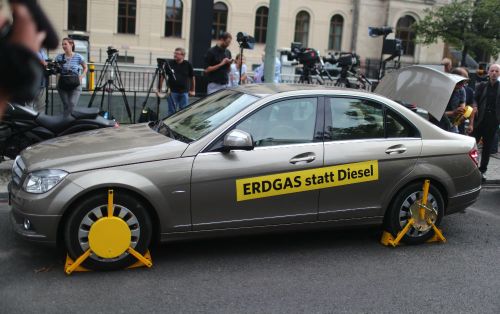
bpj_erdgas_statt_diesel_c-reuters_28jun18

“Natural gas instead of Diesel” © REUTERS/Hannibal Hanschke

My latest at: Berlin Policy Journal (German Council on Foreign Relations), June 28, 2018:

Germany’s Real LNG Policy
Germany’s government has endorsed imports of liquid natural gas for the first time—but not because of Russia and Nord Stream 2. 

The German federal government has decided in favor of building liquid natural gas (LNG) import terminals and infrastructure. In March, Chancellor Angela Merkel’s CDU/CSU-SPD government, in its “coalition contract,” pledged to “Make Germany the site for LNG infrastructure.” This is a notable policy change, because in Germany the opposition to LNG imports and use has been so much stronger than anywhere else in Europe.

The aim of this new endorsement is to reduce maritime and roadway heavy-transport emissions. However, many in Germany argue that using “small-scale” LNG in this way, as a “bridging” fossil fuel, is “wasted investment”. They contend that Energiewende-mandated electric vehicles can and will rapidly de-carbonize heavy transport. Still others oppose LNG imports on the grounds that they would unnecessarily diversify Germany’s gas suppliers with the aim of offsetting increasing reliance on Russian pipeline gas. They insist that Russian pipeline gas has been “historically reliable” and is cheaper for Germany than building large-scale import terminals for LNG.
Continue reading

Putin’s OPEC tactics: Iran sanctions and the Saudis [IBD cites me]

dc-Cover-p9fbkcs8ccuhvnnnubuhqc2fn7-20161201210531.Medi

June 2018 OPEC meeting’s key players (AP)

Last week, Gillian Rich at Investor’s Business Daily (Washington), asked me (Berlin) and others about the OPEC’s 20-21 June meeting. Below here, I give my views in more detail, including the tie-in to the Trump project to isolate Iran and my comment about Putin likely betraying the Iranians again.  The IBD piece is here: Trump Could Make OPEC’s Next Meeting As Dysfunctional As G-7 Summit. 15 June ’18.

We spoke about market and geopolitical aspects. On the latter, I emphasized both the Trump Administration’s evolving plan to sanction and isolate Iran, and Russia’s new role as a central player with OPEC ever since the 2016 joint Russian-OPEC decision to raise production.

That’s when Putin played a new role for any Russian leader. Not only did he coordinate Russian oil policy with OPEC’s, he got personally involved in heated discussions, getting on the phone late in the last night with Iranian and Saudi leaders to get the deal sealed. Continue reading

“Neue Neue Ostpolitik” My BPJ piece on German fury at Senate NS2 sanctions

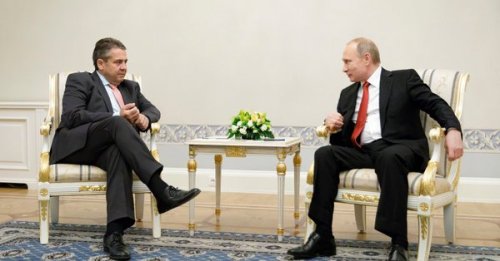
putin_gabriel_schroeder_dinner with an old acquaintance-der_spiegel_07jun17_U637TtLQ

The US Senate’s decision to expand sanctions against Russia triggered indignation in Berlin, throwing Germany’s geopolitical ambitions over the Nord Stream 2 project into sharp relief.  Read below or get the App.   My other articles at Berlin Policy Journal  

“Neue Neue Ostpolitik”  

Berlin – July 21, 2017    By: Thomas O’Donnell —  On June 15, the US Senate approved an act to sharply expand sanctions imposed on Russia in retaliation for its intervention in eastern Ukraine and annexation of Crimea in 2014. The broadly bi-partisan move that enshrined Barack Obama’s earlier executive orders – intended as a response to Moscow’s alleged cyber interference in US elections – was a stunning rebuke to US President Donald Trump’s Russia policy, essentially taking a broad swath of foreign policy out of his hands. Continue reading

Trump’s promise to “stay totally independent” of OPEC is populist hype [My IBD interview]

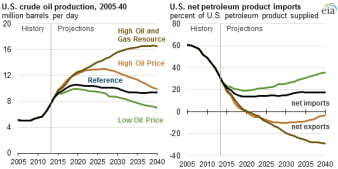
eia_apr15_us_oil_prod-importsContrary to his campaign hype (see article below), Trump-as-president will not do anything to interfere with the free flow of oil or gas to or from the USA.  As I pointed out in the Investors Business Daily interview (Gillian Rich’s story is below), people central to Trump’s administration – such as Rex Tillerson, his designated secretary of state and former CEO of Exxon, and Harold Hamm, Trump’s fracking billionaire friend he wanted for secretary of energy – are global-market-oriented businessmen who would never agree to disconnect the USA from global energy markets.

The free flow of petroleum through the unified global market traded in US dollars – what I call the “Global Barrel” – is central to the business model of every private as well as every national oil company.  Today there is essentially one, global oil price. If you break up the global market by limiting imports or exports, you get national markets with national prices.  Then what?

If the US price went higher than the global price due to keeping out cheap foreign oil, Trump’s popular approval would dive. And, if the U.S. price went lower due to a domestic production glut of fracked oil, then his support among business would tank.

Moreover, the unified global market serves as the key element in the world’s collective energy-security system by guaranteeing equal access and prices to all suppliers and consumers.   Continue reading

Pipe Dream? Polish ruling complicates Nord Stream 2 pipeline for Gazprom & EU partners [My Berlin Policy Journal piece]

bpj_online_odonnell_nordstream2_cutHere’s my latest analysis in Berlin Policy Journal (German Council on Foreign Relations -DGAP).Pipe Dream? The Nord Stream 2 pipeline project is in danger of being derailed.
THOMAS W. O’DONNELL , SEPTEMBER 22, 2016 

A pipeline project to double Gazprom’s export capacity to Europe has always been controversial. A recent ruling by Poland’s competition authority could seriously undercut the support it has accrued, leaving its European backers at odds.

The proposed Nord Stream 2 pipeline project has bitterly pitted European states that back the project, including Germany, the Netherlands, Austria, and France, against project opponents, including Ukraine, Poland, and other former Soviet-bloc states. The project aims to double the capacity of the existing huge, 55-billion-cubic-meter-per-year Nord Stream 1 pipeline, running in parallel to it under the Baltic Sea from near St. Petersburg in Russia directly to Greifswald in Germany.

This dispute has exposed two very different views of Gazprom, Russia’s state-owned gas-export monopoly, and of Vladimir Putin’s Russia itself – one side sees it as a “necessary” and “reliable” energy supplier, the other a dangerous and manipulative adversary. This dispute is but one more collision inflicting lasting harm on the European Project.

Polish competition authority rejects project

The latest row involves a ruling in late July by the Polish Office of Competition and Consumer Protection (Urzed Ochrony Konkurencji i Konsumentow, or UOKiK) rejecting an application by five private western European energy firms proposing to partner with Gazprom to build and operate Nord Stream 2. The firms are Germany’s E.ON (soon to be Uniper) and Wintershall, Austria’s OMV, Anglo-Dutch Shell, and France’s Engie.

Shortly before the Polish announcement, the five companies agreed to withdraw their association proposal to avoid UOKiK initiating a legal process against them. The commission’s president, Marek Niechcial, declared categorically on August 12 that the Polish rejection was definitive, asserting “This will stop the [Nord Stream 2] deal.” The five firms have nevertheless made it clear they are seeking a strategy to work around the decision, and expect to proceed as planned. Gazprom has said the same.

So why go through this proceeding in the first place? To understand these events better, I spoke with several experts and diplomats working on these matters in Moscow, Berlin, Washington, Paris, and Warsaw.

Commercial Arguments

An often-heard line of argument is that at least some of the five companies might actually have little commercial interest in the project, but need to preserve their relationships in Russia where they have large investments in energy projects. After all, the Kremlin has a track record of taking over projects from foreign partners with whom it has fallen out. A further theme in this vein is that Nord Stream 2 is not really needed in northwestern Europe, even though the Groningen field in the Netherlands and Norway’s reserves in the North Sea are declining, because future demand in northwestern Europe is overestimated and Liquefied Natural Gas (LNG) will be available from the United States. This view led to press speculation that the five firms likely welcomed the Polish decision, allowing them a graceful exit.

However, virtually all the experts I spoke with had no doubt Nord Stream 2 would be a lucrative commercial enterprise over the long run, and that the five firms seem genuinely enthusiastic. Continue reading

“Energy independence” won’t free the USA from global oil market & geopolitics [I’m cited: CNNMoney]

160809121848-us-oil-imports-shrink-780x439

Credit: CNNMoney, 9 August 2016

Mr. Trump promises he’d use the USA’s shale-oil revolution to deliver “complete” independence from foreign oil, telling voters in May: “Imagine a world in which our foes and the oil cartels (sic) can no longer use energy as a weapon. Wouldn’t that be nice?” But, he is confusing two quite distinct things:

“Energy independence” – in the sense of the USA producing more oil than the country consumes – is indeed possible, even “tantalizingly close” as this CNNMoney article (Aug. 9, 2016, by Matt Egan) makes clear, citing myself and other experts.  For clarity, I’ll call this “net oil-exporter status.”

However, Donald Trump asks us to “imagine” he can use this net oil exporter status, to make the US independent of the global oil market and oil in geopolitics where our “foes” and “cartels” have leverage. Continue reading

New US tech squeezing oilfields & rivals [IBD quotes me]

U.S. oil companies are developing new technologies and techniques to produce oil cheaper and faster.Gillian Rich at Investors’ Business Daily News (17 June 2016) writes a quite informative survey of the many new technological methods pushing the cost of US shale production ever downward. Here’s Gillian’s article. She asked me about the impact on OPEC producers and my central point (my quotes are below) was that it will be the high-tech, most-efficient producers (such as US shale) and NOT necessarily those with the largest and easiest-to-access proven reserves (e.g., countries such as Venezuela and much of OPEC, many corrupt Russian and Chinese state-dominated firms, etc.)  that will set the pace in the new oil order

If the latter actors can’t find ways to innovate in technology and operational methods they will be at a disadvantage because shale production looks more like manufacturing than  traditional oil extraction.  Many OPEC and other state-owned firms never had to think like a combination of Henry Ford and Silicon Valley, but could instead count on huge, low-cost reserves, inefficient exploration and production and cheap local labor.

Eventually, the new shale methods will of course spread to promising shale fields in Argentina, China, Eastern/Central Europe and elsewhere; but this will require big advances in local infrastructure, training and government regulatory capacity. Again, things those countries must think about very seriously. Here are my quotes (from near the end of her long article).

New Oil Order

…. OPEC countries like Nigeria and Venezuela that haven’t invested in newer technology will be hurt by advances in the U.S., said Thomas O’Donnell, a senior energy analyst at the consulting firm Wikistrat. Russia also can’t exploit shale and Arctic assets because of economic sanctions that limit Westerners from helping develop the new fields.

Meanwhile, Saudi Arabia has low-cost production fields, and state-run oil company Saudi Aramco can bring in foreign experts knowledgeable about fracking and new technologies, he added.

Still, OPEC must now grapple with U.S. shale producers on the rebound, which could lead to volatility, O’Donnell said. “The oil order has changed. It’s conventional oil on one side, and new shale oil on the other.”

Aside

Last night Investor’s Business Daily NEWS’ Gillin Rich interviewed me. The title reflects some rumors, but my point of view, as she reports, emphasizes market realities that bode against any output limit – esp. if the Iranians are still intransigent … and … Continue reading

Rate this:

Latin American Oil: Beijing Still Lending, But for How Long? – I’m quoted by Energy Compass

energy_intelligence_tom_od2_13may16

Last week, Energy Intelligence (EI) quoted me on China’s continued appetite for oil and gas investments in Latin America even with its own  economic slowdown and LatAm’s many political upheavals. (Sincere thanks to EI for a PDF of their proprietary Energy Compass to share on my blog. You can access it below here.)

Some thoughts on China’s strategy: In the case of Venezuela, as the price of oil fell, Beijing quickly eased up on PDVSA’s repayment terms for its huge outstanding loans which are repayable in oil. This shows some willingness to help Venezuela cope with the falling market value of oil. Why? Because, mainly, it is the oil that China has always been laser-focused on – not making interest on these loans.

Generally, it is clear that new Chinese investments or loans are still possible in Latin America. In Venezuela however, Continue reading

Wikistrat Report “Saudi Arabia & the Future of Oil” cites my views

Wikistrat - my quote on US continued interestThis Wikistrat Report on the Saudi kingdom’s “reform” plans and the future of oil is from a press webinar I did on 17 May together with Dr. Ariel Cohen (Atlantic Council, Washington) and Prof. Shaul Mishal (Middle East Division, IDC Herzliya & Tel Aviv U.).  A nicely done report on oil market and geopolitical hot topics.

30May16 note: A couple typos I had found have been fixed by Wikistrat since I initially posted this Report.  The latest version is now linked here. – T.O’D.

I’m quoted by MarketWatch: Five key issues for OPEC’s June meet

Oil ministers of Venezuela, Saudi Arabia & Qatar had agreed in February to freeze output if others did too. AFP/Getty Images

After a Wikistrat Webinar I did, MarketWatch asked me about Saudi & OPEC policy, ond US Shale. Read on here, or at MarketWactch! – Tom O’D.

5 key issues OPEC must wrestle with at its June meeting

Oil output freeze is needed to ‘create a firm price floor’: analyst

The oil market has given members of the Organization of the Petroleum Exporting Countries a reason to crack a cautious smile when they meet June 2 in Vienna.

Signs of a more stable oil market have emerged since the cartel members last held a regularly-scheduled meeting. Oil prices CLN6, +0.04% LCON6, -0.38%  have gained more than 30% so far this year. And both West Texas Intermediate, the U.S. benchmark, and Brent crude, the global benchmark, briefly traded above $50 on Thursday.

Global production is falling following a larger-than-expected weekly decline in crude supplies, according to a report from the American Petroleum Institute late Tuesday. The report comes as the number of active-drilling rigs have been in a steady state of decline and oil-company spending cuts, oil-and-gas sector bankruptcies, and recent outages in Africa and North America, have been supportive for crude prices.

“OPEC members are likely to be a little happier going into June’s meeting than they were in December,” Tom Pugh, commodities economist at Capital Economics, said in recent research note.

Oil prices have “surged by about a third since the start of the year,” he said. The “higher prices will have removed some of the pressure on [OPEC] to act to prop up prices.”

But that doesn’t mean major oil producers can sit back and relax when they get together. Oil market supply and demand haven’t fully stabilized and there a lot of factors than can, and probably will, rock OPEC’s boat.

Here’s a rundown of what analysts see as the key issues at hand and possible outcomes for the OPEC summit: Continue reading

Bypass Operation: Nord Stream 2, Russia-to-Germany pipeline deal, raises questions

BPJ_online_ODonnell_NordStream2_cut

Here’s my latest at Berlin Policy Journal (DGAP):  With Nord Stream 2, Russia’s President Vladimir Putin is nearing his goal of cutting Ukraine out of the gas supply picture.  October 20, 2015

On 18 June, during the annual St. Petersburg International Economic Forum, an agreement was signed to build a controversial new “Nord Stream 2” pipeline under the Baltic Sea that would go directly from Russia to northern Germany, with a capacity of 55 billion cubic meters (bcm). The project, which consists of two segments that would run along the same route as the existing two segments of the 55 bcm Nord Stream line, completed in 2011, has met with strong opposition from energy officials in Brussels, as well as leaders in Ukraine and some other EU states.

Indeed, the agreement between Russia’s Gazprom and a consortium of German, Austrian, French,, and Anglo-Dutch companies came as a surprise. After all, in January 2015 Gazprom announced it had abandoned the project, blaming both the falling price of gas over the previous year and anti-monopoly restrictions in the EU’s Third Energy Package, which prohibit suppliers of gas from also owning pipelines delivering it. This provision has prevented Gazprom from ever filling the original North Stream more than half way.[1] In retrospect, the sudden signing of a Nord Stream 2 agreement only six months after the project was supposedly abandoned, plus the fact that the consortium foresees a quick start reveals the prior cancellation to have been a political ruse. Continue reading