Category Archives: Poland

Analysis: The USA & China each have failings preparing for a trade war (from Poznan)

Xi Jinping has still not built China’s domestic market to escape its trade-war vulnerabilities from over-dependence on exports, a weakness he openly discussed back in February 2012 on his USA tour before becoming premier.

For the USA, Trump had apparently planned to have resolved the Ukraine war and in some way undermined the Russia-China alliance, inducing Russia to move closer to the USA before going after China. But, ending the war has proven far more difficult than he anticipated. His lack of success with Russia will weigh on his ability to negotiate from a position of strength with all the countries he is competing to win away from China’s geoeconomics orbit such as India, Viet Nam, Cambodia, Philippines, Thailand and etc. — the states that Treasury Secretary would say are in the “yellow zone” as opposed to the USA#s closest allies such as Japan, South Korea, Taiwan, in the so-called “green zone.” For details – see this post on my blog,

Continue reading

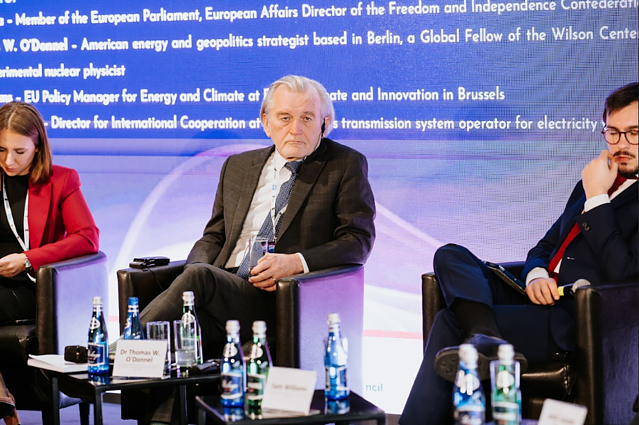
My Dublin talk: “The role of renewables in securing Europe’s energy” [at EU Commission Representation, Polish Presidency event]

I felt greatly honored to speak in Ireland, the home of my ancestors, at a high-level Irish-Polish event, invited by the Polish embassy as part of Poland’s Presidency of the European Council. [Spoiler alert: my assessment of the Green Deal’s impact on EU energy security and competitiveness was highly critical. And, I called for a radical reform, modeled on the 1970-80’s French Messmer nuclear program, the response to a similarly dire European energy and competitiveness crisis.]

For Ireland we had Secretary General Oonagh Buckley and Wind Energy Ireland CEO Noel Cunniffee; for Poland, Daniel Piekarsky, Head of Energy Security Unit in the Foreign Ministry, and myself, Global Fellow of the Wilson Center, Washington (external) working in Europe, from Berlin.

Our moderator, from the Polish Embassy, Dublin, was the Polish diplomat and patriot, Dr. Jacek Rosa — a good friend, with whom I had the great pleasure of closely collaborating, for several years, in opposition to the Russian-German Nord Stream 2 gas-pipeline partnership, before the 2022 full-scale invasion of Ukraine. Below is the lineup, the initial invitation and some pictures. The event was off-the-record, so I show here only my own, slightly redacted talk.

Continue reading

My Q1 Polish press: |1|Does Germany want Russian gas back? |2|Green Deal model has a tech problem. |3|German deindustrialization: bankruptcies up. |4|Warsaw, Paris & London must act fast for Ukraine!

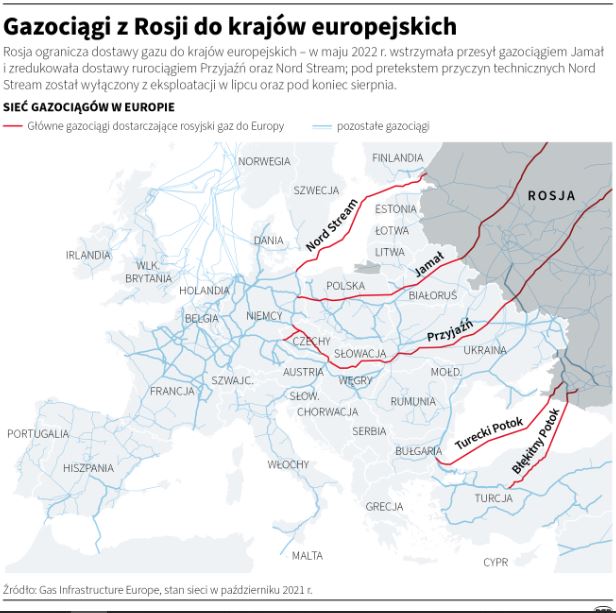
Opening of Nord Stream1 pipeline, 2011. Gazprom via PAP

Below are links to 12 articles that appeared in the Polish press in the last few months, interviewing or quoting me on four topics I feel are important. The topics are listed in the title above.

The links are below, sorted by topic. The first or left column has English translations of the titles, and the second or right column has the original Polish — which unfortunately I don’t speak! If you follow the links, Google Translate or Deepl will translated the Polish articles pretty well into English. My special thanks to the intrepid Polish journalist, Artur Ciechanowicz at BiznesAlert in Warsaw for his interviews in the list. (I also had about 33 quotes or interviews in several other languages since December [1]).

ENGLISH titles and links:

  1. On German (far-right) & USA (Trump) each plotting a Russian gas return to Germany
    • A former Stasi agent lobbies for the resumption of Nord Stream. Expert: One of the gas pipeline lines ready to be launched,, By,: Artur Ciechanowicz, March 3, 2025, biznesAlert.pl
    • Some EU countries believed that Gazprom gas would be in Europe forever BiznesAlert.pl
    • “Like a Drug Addict Returning to Heroin.” Analyst on the Idea of ​​Unblocking Gas Imports from Russia to Europe, Author: Artur Ciechanowicz, February 1, 2025, 07:21
  2. Failures of EU Green Deal on technology and energy security.
    • American expert: recommendation to reduce emissions by 90 percent by 2040 is “fantasy” | Energetyka24
    • Expert: EC recommendation to reduce gas emissions is fantasy wpolityce.pl
    • Unrealistic EU climate plan. Expert opinion crushes – Super Business
    • “Rearranging deckchairs on the sinking Titanic”. Expert slams the eco-target dictates of Brussels Eurocrats PCH24.pl
  3. Trump, EU & Poland: Ukraine War crisis.
    • First talk with Putin. Trump has visions of ending the war in Ukraine | Newsweek Jan 21
    • How Trump Can Bring Down the Russian Economy: Analysts: He Has an Arsenal of Means to Do It, By Artur Ciechanowicz, Jan 24, 2025 | Biznes Alert
    • Trump may use [oil] sanctions to finish off Moscow, which is running out of money for the National Welfare Fund. – 16 January 2026 UBN
    • Expert: Washington, London, Warsaw should work quickly. Kiev can’t afford to be patient – Dziennik.pl
  4. German deindustrialization: Energy & economic crisis
    • Major shoe retailer goes bankrupt A sharp increase in bankruptcies in Germany

Polish titles and links:

  1. First topic.
    • Agent Stasi lobbuje za wznowieniem Nord Stream. Ekspert: Jedna z nitek gazociągu gotowa do uruchomienia biznesalert.pl
    • Część krajów Unii uwierzyła, że gaz z Gazpromu będzie w Europie na zawsze BiznesAlert.pl
    • “Jak powrót narkomana do heroiny”. Analityk o pomyśle odblokowania importu gazu z Rosji do Europy | BizNes Alert
  2. 2nd Topic
    • Amerykański ekspert: zalecenie redukcji emisji o 90 proc. do 2040 r. to „fantastyka” | Energetyka24
    • Ekspert: Zalecenie KE redukcji emisji gazów to fantastyka wpolityce.pl
    • Nierealny plan klimatyczny UE. Opinia eksperta miażdży – Super Business
    • “Przestawianie leżaków na tonącym Titanicu”. Ekspert nie zostawia suchej nitki na eko-dyktaturze brukselskich eurokratów – PCH24.pl
  3. Third topic
    • Donald Trump chce uchronić świat przed III wojną światową | Newsweek
    • Jak Trump może złamać rosyjską gospodarkę?
    • Trump may use [oil] sanctions to finish off Moscow, which is running out of money for the National Welfare Fund. – UBN
    • Ekspert: Waszyngton, Londyn, Warszawa powinny szybko działać. Kijowa nie stać na cierpliwość – Dziennik.pl
  4. Fourth topic

Notes:

  • [1] Other than being cited/interviewed in Poland, I was also quoted elsewhere about 33 times so far in 2025, mainly in the USA, with many then translated to languages of Europe, Asia and Latin America. I never know what to do with all these print interviews. Here at GlobalBarrel.com, I often publish videos of some of my live-on-air expert commentary, usually accompanied by a detailed blog post. So, my idea is I will make a new tab at the top of the GlobalBarrel.com site, next to the “About Me” tab, where I can simply list link to my recent press citations or Op-Eds. [Back to text]

Our Gdansk chat: Baltic energy risks | USA ousting China from post-war order | “Transition” will be simple: nuclear & mass-transit. “Critical” minerals overblown | EU’s failing model: all-renewables, new grids, grid-storage & EVs | Poland’s risk: China uses Russia

This is in English, after Eugene Romer of Układ Sił media introduces me in Polish. This was at the “3 Seas -1 Opportunity Forum” in Gdansk, last June 4-5, 2024. I have been wanting to post it ever since, as the questions remain relevant. My thanks to Eugene and his team, and to his Opportunity Think Tank colleagues.

My panel at the forum was on problems of relying on energy security that arrives via the sea. So, think Poland and Lithuania’s LNG terminals, of the many sub-sea pipelines, power and communications cables between Baltic and Nordic states. And, since June, all the incidents where ships leaving Russian ports “accidentally” dragged their anchors, cutting such vital links. So, this conference was rather prescient. My sincere thanks to our hosts The Opportunity Institute for Foreign Affairs.

Continue reading

My interview at Lithuania’s LRT: Trump could seriously harm Russia if he wants to | Trumpas, jeigu tik norėtų, galėtų stipriai pakenkti Rusijai

My long print interview at Lithuania’s LRT [Lithuanian PDF | English PDF​] with Aleksandra ​Ketlerienė, deputy editor-in-chief of Lithuania’s LRT.lt, published 7January. We spoke in Warsaw, 19 November. My thanks to Aleksandra for her insightful questioning and editorial care. We discussed:

  • The EU’s systemic energy​-policy “own goals” ​since its initial energy-crisis win ​after Moscow began cutting gas exports early in 2021​.
  • Reforming failed/ineffective Russian price-cap sanctions for real sanctions, and how the global oil market is now favorable for “maximum pressure.”
  • Historical perspectives on oil, gas, renewables, and nuclear sectors, essential for realistic policy formation.
  • An historical overview of China’s decades-long effort to overcome its energy security, learning lessons of Japan’s WW2 weaknesses.
  • (​See topics summary))
Continue reading

My BiznesAlert: German elites have no idea how to get out of the crisis / Ekspert dla Biznes Alert: niemieckie elity nie mają pomysłu na wyjście zkryzysu

Last night, leaving the Polish Sejm, after a long discussion, invited by a leader.

URL CORRECTIONS: ENGLISH Biznes Interview LINK & POLISH Biznes Interview LINK

[Warsaw, 21 Nov] Here’s my interview with BiznesAlert’s Artur Ciechanowicz (in EN & Pl) on Germany’s energy, industrial and political crises. I spoke here in Warsaw Monday at the CEE Energy Security Conference, attended Wednesday’s 25 Years of NATO Membership conference, and was invited yesterday evening, by a leader of the Sejm (parliament) for a long talk in his offices, joined by Mark Voyger (American University Kyiv and former-NATO). More soon. Tom O’D.

Continue reading

My PAP, Poland: “Expert: EC recommendation to reduce greenhouse gas emissions by 90% by 2040 is fantasy” / “Ekspert: zalecenie KE redukcji emisji gazów cieplarnianych o 90% do 2040 roku to fantastyka”

I’ve been thinking about what to say on Monday in Warsaw: at the “Energy Security in Central & Eastern Europe” conference. As soon as I saw the title of my panel: “Does EU Climate Policy Need Evolution or Revolution? What Should We Change in the European Green Deal?” I accepted! This question goes beyond politics – left, right or center – it is a pressing matter for European energy security

Then, I recalled my syndicated interview with Polish AP’s Arthur Ciechanowicz (Brussels) this February. It’s exactly what I should say in Warsaw (see below: LHS in EN, RHS in PL), especially given President Von der Leyen’s choices of long-time anti-nuclear politicians to be her top commissioners for climate and (re)industrialization (Teresa Ribera), and for energy (Dan Jørgensen). (**Details in footnotes). See what you think.

* Footnotes: References on new EU Commissioners’ anti-nuclear attitudes:

Continue reading

New “CEE Nuclear Energy Network” holds 1st policy consultation with Polish officials & experts.

On 4 April, in Warsaw, the first meeting of our new CEE Nuclear Expert Network (a policy network) was held to consult with Polish officials and experts. The network organizers include:

Below, I explain: i) Our event, who attended and such, and ii) our other planned 2024 Nuclear Expert Network events for Poland and the 3 Seas Region.

i) 1st “Chatham House” Nuclear Expert Network meeting

Attending were representatives of the Ministry of Climate and Environment, the Ministry of Technology and Development, the Prime Minister’s office, National Development Bank of Poland (BGK), Industrial Development Agency (ARP), Polskie Sieci Elektroenergetyczne S.A. (PSE – the national electric grid operator or TSO), a consultancy advising the ministry, and others. (See also Kamil Lipinski’s LinkedIn Post’s list below.),

Continue reading

Why USA alarm? [PL/EN] Analityk: Ukraina pokazała, że może zakłócić eksport rosyjskiej ropy przez porty /Analyst: Ukraine has shown it could disrupt Russian ports exporting oil

Money.pl Getty …

In an Easter Sunday interview in 20+ Polish papers [POLISH & ENGLISH below], I said White House reasons for Ukraine not to hit Russian refineries don’t make sense. The “elephant in the room” alarming DC is that Ukraine can now disrupt Primorsk, UST-Luga and Novorossiskya oil ports, needed for 60% of Russian exports.

This would not only deny Moscow vital oil revenues needed to wage war, it would also spark a spectacular global oil market shock. I explain that the USA and allies can urgently prepare for this, while the Ukrainians are still maintaining strategic patience.

Continue reading

My Polish press interview: “Europe can replace Russian oil & gas by 2027” but “in war there are casualties” (Pl. & Eng.)

This image has an empty alt attribute; its file name is capture-pap-poland-energy-war-25nov22.jpg

This interview with Artur Ciechanowich (Polish Associated Press-PAP, Brussels) appeared on Sunday, 25 November 2022 in several Polish press, TV and radio outlets (links below this post). Polish & English (via Google Translate) versions follow:

ENGLISH – via Google Translate

Europe without gas and oil from Russia? An expert gives a possible date

If the European Union does not bow to the Russian energy attack, it may completely replace gas and oil imports from this country with raw materials from other sources within four to six years, said Thomas O’Donnell, an energy market analyst and lecturer at a university in Berlin …..

  • Russia is waging an energy war against Europe, which is part of a larger war between Russia and Ukraine. We see that the war on the battlefield is not going Russia’s way, so the Kremlin is counting on its energy policy to cause enough economic problems for Europeans to divide the EU and withdraw from solidarity with Ukraine, says O’Donnell.

The question of replacing gas and oil imports from Russia

  • Vladimir Putin has a much greater influence on Europe through the supply of gas than oil. This is because gas is mainly supplied by pipelines. Around 2027, Europe, the United States, Qatar and others will increase the export capacity of liquefied natural gas enough to replace the EU’s dependence on Russian gas and allow gas prices in the EU to fall to levels close to the low prices in the US, the analyst predicts.

However, he does not hide that before this happens, citizens of EU countries will have to go through a more difficult period. “This is an energy war, and in a war both sides suffer – consumers and businesses in the EU will suffer. It will take at least four years to implement huge new LNG export projects from the US and Qatar, he cautions, adding that the EU will also need to receive as much gas as possible from Algeria, Egypt and Norway.

  • This year Europe filled up its gas storages. It will be harder next year. It should be understood that the storage facilities – under normal conditions – have never been used to provide normal gas supplies to consumers. They’re just too small for that. They were created with the idea of ​​storing the raw material saved in the summer and using it in the winter, when the Russian and Norwegian pipelines could not keep up with the demand, explains Thomas O’Donnell.

He points out that, therefore, Germany has repealed the regulations requiring the maintenance of a minimum temperature in homes, and in some EU countries there are debates about power cuts for citizens. – Europe has become dependent not only on Russian gas, but also on completely unpredictable wind energy. If the wind is weak – as in the 2020-21 season – combined with the lack of appropriate transmission networks and the lack of technical capacity to store electricity on a large scale, it can mean a disaster. These are the facts. In times of war, citizens must know the whole truth, the expert argues.

PAP
He emphasizes that Russia is waging an energy war against Europe in order to break its solidarity towards Ukraine. – In the US and Qatar, but also in Norway, Algeria, Azerbaijan, Israel, Egypt and so on, there are plenty of new gas reserves, financing opportunities, technologies and functioning markets. In four to six years, Europe’s dependence on Russia will be completely replaced by imports from other directions. This also applies to crude oil. Russia, meanwhile, will be reduced from an energy superpower to an OPEC second or third tier country, concludes O’Donnell.

TVN24 live – watch on TVN24 GO
The material is part of the TVN24 GO website
Author:kris/ToL

Source: PAP

Main photo source: Marcin Bielecki/PAP

POLISH – as from PAP

Europa bez gazu i ropy z Rosji? Ekspert podaje możliwy termin

Jeżeli Unia Europejska nie ugnie się przed rosyjskim atakiem energetycznym, to w czasie od 4 do 6 lat może całkowicie zastąpić import gazu i ropy naftowej z tego kraju surowcami z innych kierunków – stwierdził Thomas O’Donnell, analityk rynku energetycznego i wykładowca na prywatnej berlińskiej uczelni ….

  • Rosja prowadzi przeciwko Europie wojnę energetyczną, która jest częścią większej wojny Rosji z Ukrainą. Widzimy, że wojna na polu bitwy nie idzie po myśli Rosji, więc Kreml liczy na to, że jej polityka energetyczna wywoła u Europejczyków wystarczające problemy ekonomiczne, by podzielić UE i odstąpić od solidarności z Ukrainą – mówi O’Donnell.

Kwestia zastąpienia importu gazu i ropy z Rosji

  • Władimir Putin ma znacznie większy wpływ na Europę poprzez dostawy gazu niż ropy naftowej. Dzieje się tak, ponieważ gaz dostarczany jest głównie rurociągami. Około 2027 roku Europa, Stany Zjednoczone, Katar i inne kraje zwiększą możliwości eksportowe skroplonego gazu ziemnego na tyle, aby zastąpić zależność UE od rosyjskiego gazu i pozwolić na obniżenie cen gazu w UE do poziomu zbliżonego do niskich cen w USA – przewiduje analityk.

Nie ukrywa jednak, że zanim to się stanie, to obywatele państw Unii będą musieli przejść przez trudniejszy okres. – To wojna energetyczna, a na wojnie obie strony ponoszą ofiary – ucierpią konsumenci i firmy w UE. Co najmniej cztery lata zajmie wdrożenie ogromnych nowych projektów eksportu LNG z USA i Kataru – zastrzega, dodając, że UE będzie musiała otrzymywać jak najwięcej gazu także z Algierii, Egiptu i Norwegii.

  • W tym roku Europa napełniła swoje magazyny gazu. W przyszłym roku będzie trudniej. Należy rozumieć, że magazyny – w normalnych warunkach – nigdy nie służyły do zapewniania normalnych dostaw gazu konsumentom. Są na to po prostu za małe. Powstawały z myślą przechowania surowca zaoszczędzonego latem i wykorzystania go zimą, kiedy rosyjskie i norweskie rurociągi nie nadążały z zaspokojeniem popytu – tłumaczy Thomas O’Donnell.

Zwraca uwagę, że w związku z tym, Niemcy uchylili przepisy nakazujące utrzymywanie w domach minimalnej temperatury, a w niektórych krajach Unii toczą się debaty na temat przerw w dostawach prądu dla obywateli. – Europa uzależniła się nie tylko od rosyjskiego gazu, ale postawiła też na całkowicie nieprzewidywalną energię wiatrową. Jeśli wiatr będzie słaby – jak w sezonie 2020-21 – to w połączeniu z brakiem odpowiednich sieci przesyłowych i brakiem technicznych możliwości magazynowania prądu na wielką skalę, może to oznaczać katastrofę. Takie są fakty. W czasie wojny obywatele muszą znać całą prawdę – przekonuje ekspert.

PAP
Podkreśla, że Rosja prowadzi wojnę energetyczną przeciwko Europie, aby rozbić jej solidarność wobec Ukrainy. – W USA i Katarze, ale też w Norwegii, Algierii, Azerbejdżanie, Izraelu, Egipcie i tak dalej, istnieje mnóstwo nowych rezerw gazu, możliwości finansowania, technologii i funkcjonujących rynków. Za cztery do sześciu zależność Europy od Rosji zostanie całkowicie zastąpiona importem z innych kierunków. Dotyczy to również ropy naftowej. Rosja tymczasem zostanie zredukowana z supermocarstwa energetycznego do drugoligowego lub trzecioligowego kraju OPEC – konkluduje O’Donnell.

TVN24 na żywo – oglądaj w TVN24 GO
Materiał jest częścią serwisu TVN24 GO
Autor:kris/ToL

Źródło: PAP

Źródło zdjęcia głównego: Marcin Bielecki/PAP

Here are links to some of the Polish media where the PAP interview was published:

* Europa bez gazu i ropy z Rosji? Ekspert podaje możliwy termin

https://tvn24.pl › biznes › ze-swiata

1 day ago — … 4 do 6 lat może całkowicie zastąpić import gazu i ropy naftowej z tego kraju surowcami z innych kierunków – stwierdził Thomas O’Donnell, …

* Ekspert: Europa może poradzić sobie bez gazu i ropy z Rosji …

https://www.pap.pl › aktualnosci › ne…

·Translate this page

21 hours ago — Rosja tymczasem zostanie zredukowana z supermocarstwa energetycznego do drugoligowego lub trzecioligowego kraju OPEC” – konkluduje O’DonnellZ …

* UE może obejść się bez gazu i ropy z Rosji. „Jeśli pozostanie …

https://www.tvp.info › ue-moze-obej…

1 day ago — Jeśli Unia Europejska nie ugnie się przed atakiem energetycznym ze strony Rosji, to w ciągu 4-6 lat zastąpi całkowicie import gazu i ropy …

* Ekspert: UE może w ciągu 4-6 lat całkowicie zastąpić import …

https://www.bankier.pl › wiadomosc

·Translate this page

1 day ago — Jeśli Unia Europejska nie ugnie się przed atakiem energetycznym ze strony Rosji, to w ciągu 4-6 lat zastąpi całkowicie import gazu i ropy …

* Ile lat potrzeba UE aby uniezależnić się od importu ropy i gazu …

https://polskieradio24.pl › artykul

1 day ago — Jeśli Unia Europejska nie ugnie się przed atakiem energetycznym ze strony Rosji, to w ciągu 4-6 lat zastąpi całkowicie import gazu i ropy …

Czy Europa jest wystarczająco silna, aby poradzić sobie bez …

https://mycompanypolska.pl › artykul

27 Sept 2022 — Czy Europa jest wystarczająco silna, aby poradzić sobie bez ropy i gazu z Rosji? … Polska, podobnie jak pozostałe państwa Unii Europejskiej, …

gaz w PolskieRadio.pl

https://www.polskieradio.pl › gaz › T…

Ile lat potrzeba UE aby uniezależnić się od importu ropy i gazu z RosjiEkspert wyjaśnia. Jeśli Unia Europejska nie ugnie się przed atakiem energetycznym …

* Ekspert: Polska jest dobrze przygotowana na odcięcie dostaw gazu …

https://www.gospodarkamorska.pl › …

Ekspert: Polska jest dobrze przygotowana na odcięcie dostaw gazu z Rosji, … sprawę z takiego niebezpieczeństwa – mówi w rozmowie z PAP Thomas O’Donnell, …Open document settingsOpen publish panel

  • Post
  • Paragraph

Notifications

30 blocks selected.

My TVP, Warsaw: Assessing Energy Supplies in the EU’s Energy Crisis vs Russia.

This video is the portion of the TVP show (Warsaw, Poland, in English) with my interview on 09sep22.

We discussedthe present energy crisis in Europe vs. Putin’s Russia – as an additional front parallel to the hot war inside Ukraine.

I gave my views on the causes for Europe’s predicament: this includes over-dependence on Russian energy – long insisted upon by especially Germany and Austria – to over-dependence on variable wind energy without having any significant amout of grid-scale storage installed.

Also, on the necessity of nuclear as a zero-carbon base load generation capaciy, and the most useful applications for larger, Generation 3+ nuclear plants as versus smaller SMRs (small modular reactors). I aso commented on the Polish national energy transistion plan, wich seems much moe flexib .

[Note: TVP is the Polish state-media corporation TV channel. See: https://en.wikipedia.org/wiki/Telewizja_Polska

As the Wiki indicates, TVP is criticized for being partisan pro-government. In my interview, on this topic, this was not the case. I also often go onto German state-media TV, Deutsche Welle (DW), subject to my similar observations when I’ve been on that station. ]

Continue reading

My Al Jazeera: Finland, the Baltics & Poland prepared well for Gazprom’s cutoff. Germany & Austria did the opposite, putting EU at risk.

ABOVE is English audio — BELOW is Arabic video. Recorded live; Al Jazeera, 21 May 2022.

I told Al Jazeera that Finland is well prepared, having worked since 2017 with Estonia, Latvia and Lithuania – the Baltic states – and with Poland to connect them all together with new pipelines, also to access LNG, storage and soon, new supplies from Norway.

Finland has also rented a regasification ship, from a US firm, to receive 5 billion cubic meters per year of LNG, whch will be plenty to supply both itself and Estonia in the wake of Putin cutting off Gazprom supplies of natural gas. Finland refuses, as did Poland too, to pay Moscow in rubles and so are being punished by Putin.

Continue reading

Le dije a Radio Clarín Buenos Aires: Putin amenaza con cortarle el gas a la UE/Alemania, pero no tiene otra fuente de dinero. Si lo hace, Biden y la UE organizarán un “Gas-Lift” … [Spanish]

Lo sentimos, la calidad de la comunicación celular desde Alemania no es buena. Por lo tanto, he escrito mi respuesta larga a la primera pregunta a continuación. Las otras preguntas también están abajo. Muchas gracias a los periodistas de Radio Clarín y La Nacion en Argentina (y en París).

Re: Urgente Pedido de Entrevista Periodística – Corresponsales Clarín y La Nación – Argentina

De Maria E… … Fri, Apr 29, 11:50 PM

Dr. O ´Donnell, … Estas son las preguntas para la entrevista del domingo:

1¿Alemania tiene otra posibilidad que no sea seguir comprando el gas ruso? ¿Cuáles serían sus otras opciones?

Repuesta: Antes que nada, muchas gracias por esta oportunidad de hablar con su audiencia argentina.

Pues, debo señalar que hay dos problemas diferentes: el suministro de petróleo ruso a Alemania y Europa y el suministro de gas ruso a Alemania y Europa. Me preguntas por el gas. El gas es mucho más difícil para Europa y para Alemania que el petróleo Hay dos casos: una reducción gradual o parcial de gas o un corte inmediato.

Un corte gradual se puede manejar bastante bien. Ahora Putin está tratando de dividir y conquistar Europa cortando el suministro de gas a Polonia y Bulgaria.

Un recorte inmediato, ya sea por parte de Putin o debido a las sanciones de la UE, crearía una gran crisis energética en Europa. Sin embargo, es importante entender que, al final, Putin está en una posición mucho más débil.

Si Putin corta todos los suministros de gas a Europa, ahora no hay suficiente gas en el mercado mundial para compensar. Pero Occidente, y especialmente EE. UU., la administración Biden, se ha estado preparando para esto al menos dos meses antes de que Putin invadiera Ucrania, incluso antes de que Europa creyera las advertencias de EE. UU. de que Putin atacaría Ucrania.

Continue reading

EU Commission openness to nuclear as green, betrays falling confidence in the German 100%-renewables model [English & Polish]

Dr. Thomas W. O’Donnell, Berlin 27.01.22 (Polish original 22.09.22)

Printed in Polish by Banker.pl as Komisja Europejska może uznać energetykę jądrową za “zieloną” 2021-09-22, from a written interview with Artur Chierskiwsky (PAP, Brussels) Here’s the unpublished English.-Tom O’D. [Edit:: Headline word “betrays” was initially miswritten “belays”].

Reportedly, the EU Commission plans to soon include nuclear power in its green finance taxonomy, finally making it eligible for favorable financing and carbon credits on a par with wind and solar.[1]

This could be spun two ways: as a victory for science over populist capture of climate policies, or as a tipping point in Brussels angst at the growing complexities and costs of the “100% renewables and no nuclear” model.

In reality, it’s some and some.

On the one hand, in March, the Commission received reports solicited from the Joint Research Centre (JRC), its scientific expert arm, finding that nuclear waste is “manageable”, posing no “significant” harm to the environment, and that nuclear energy has been demonstrated to be eminently safe.[2]

However, these assessments are not surprising. Had the Commission requested these years ago, they undoubtedly would have concluded similarly. Nuclear, public-health, risk-assessment and other expert bodies have been saying these things for years (full disclosure: my PhD is in experimental nuclear physics [3]).  

The question then is, why is this scientific consensus only now becoming actionable for the Commission?

Continue reading

“EU leaders will consider creating a strategic gas reserve” [TVPoland explains I proposed this in August: “Ukraine as a Central Bank of Energy”]

ursula_von-der-leyen_EU_gas_strategic_reserve_tvp_pap_03oct21For explanation of  my proposal, go below to bold text on my August Tagesspiegel Op-Ed.

RAJA ME  |

EU leaders will discuss the idea of ​​creating a strategic EU gas reserve and decoupling electricity prices from gas prices, said the head of the European Commission, Ursula von der Leyen.

– When it comes to gas, we are dependent on imports – 90 percent. gas is imported. The economies in the world are growing, so is the demand. But the supply is not correspondingly greater. We are very grateful that Norway is increasing production, but it seems that this is not the case in Russia, noted the head of the European Commission, visiting Estonia. In her opinion, the solution to the problem are investments in renewable energy sources, which should make the Community independent of imports and stabilize prices.

– In the short term, we will talk at the European Council, not only this evening (Tuesday), but in two weeks’ time at the formal Council of Europe, how to deal with storage, the strategic reserve and we will look at the overall price structure on the electricity market. Electricity prices are high due to high gas prices and we have to consider the possibility of (them) decoupling because we have much cheaper energy from renewable sources, said von der Leyen

On Tuesday evening, an informal meeting of European leaders will take place in Slovenia ahead of the EU-Western Balkans summit scheduled for Wednesday.

According to unofficial diplomatic sources in Brussels, Poland wants the European Commission to conduct investigations into the manipulation of the natural gas market by the Russian company Gazprom, which are causing the increase in gas prices in the EU. This issue is expected to appear at the EU summit on October 21-22.

Back in April, American energy market analyst Thomas O’Donnell predicted that Russia would use gas supplies to build strategic domination. The EU’s response should be to create a kind of gas ‘central bank’ in Ukrainian warehouses and use this country as a buffer, he proposed.

Ukraine is a key element of the strategic gas reserve

– Shortly after the beginning of the Maidan revolution and the Russian aggression, Ukraine, with the support of the EU, quickly made technical modifications to the export pipelines to Slovakia, Poland, Hungary and Romania in such a way as to enable a reverse. This quickly freed Kiev from having no alternative to buying Russian gas, said the expert.

– Moreover, the Kremlin cannot so easily promote favorable oligarchs – he envisaged adding that the implementation of this idea was only a matter of legislation.

– The EU could designate warehouses in Ukraine, Germany and France as the so-called strategic reserves that must always hold a certain minimum amount of gas. In the event of any aggression by Russia against Ukraine or other countries, these warehouses would be launched by a special EU-US committee or within the OECD, and Russian pipelines would be cut, the analyst suggested.

– Gas belonging to Gazprom, which stores huge amounts of gas in Germany and other EU countries, should in this case be nationalized – the expert believes.

Responding to the objection that such ideas sounded a bit fantastic, he explained that this is almost exactly how the international oil security system has operated for 50 years: in the event of a crisis, 90-day strategic oil reserves are deployed in each member state of the International Energy Agency.