Category Archives: Chavez

My Al Jazeera| In Venezuela, an oil “security guarantee” means Trump-Rubio get armed Chavismo to disband or stand down.

My Al Jazeera (EN) interview, Interview recorded

I spoke about three issues

-1- How US and other foreign oil firms can start immediately to stepwise developing three different types of oil fields. Yes, Venezuela can become a “powerhouse” oil producer. This could be a huge change in the global oil system.

-2- What is meant when Trump and oil firms talk about USA “security guarantees” for work in Venezuela. The USA government is unlikely to subsidize oil majors going into Venezuela. Instead, they are talking about somehow Washington managing a “regime change.” The KEY element of this is that the present pro-Chavista armed actors, both the state and non-state armed actors and the Chavista-state intelligence services, all of which are widespread in the country, are still intact and are still active, either agree to disband stepwise or to stepdown and not oppose the formation, eventually, of a new government elected freely. The instruments of state armed coercion that will remain, including elements of the police, intelligence services, national guard, army, must agree to serve whomsoever is democratically elected in future elections. However, as Trump himself points out, the foreign oil majors “are tough guys” and they have abundant experience and methods to work in countries having fairly dangerous situations.

Continue reading
Kyiv TV| Venezuela can replace Russian oil.

My Kanal24 interview with Nataly Lutsenko, who was in Kyiv, Ukraine on11Jan25, posted here 18Jan.. I explained:

— The stepwise manner in which different Venezuelan oil basins can start being brought to market rapidly while recovery and new production can proceed to more complex and higher-investment projects over time.

Continue reading

My Newsweek| I counter Exxon CEO Darren Wood’s WH drama that “Venezuela is uninvestable.” And more commentary.

Oil Bosses Hit Trump With Venezuela Setback: ‘Uninvestable’

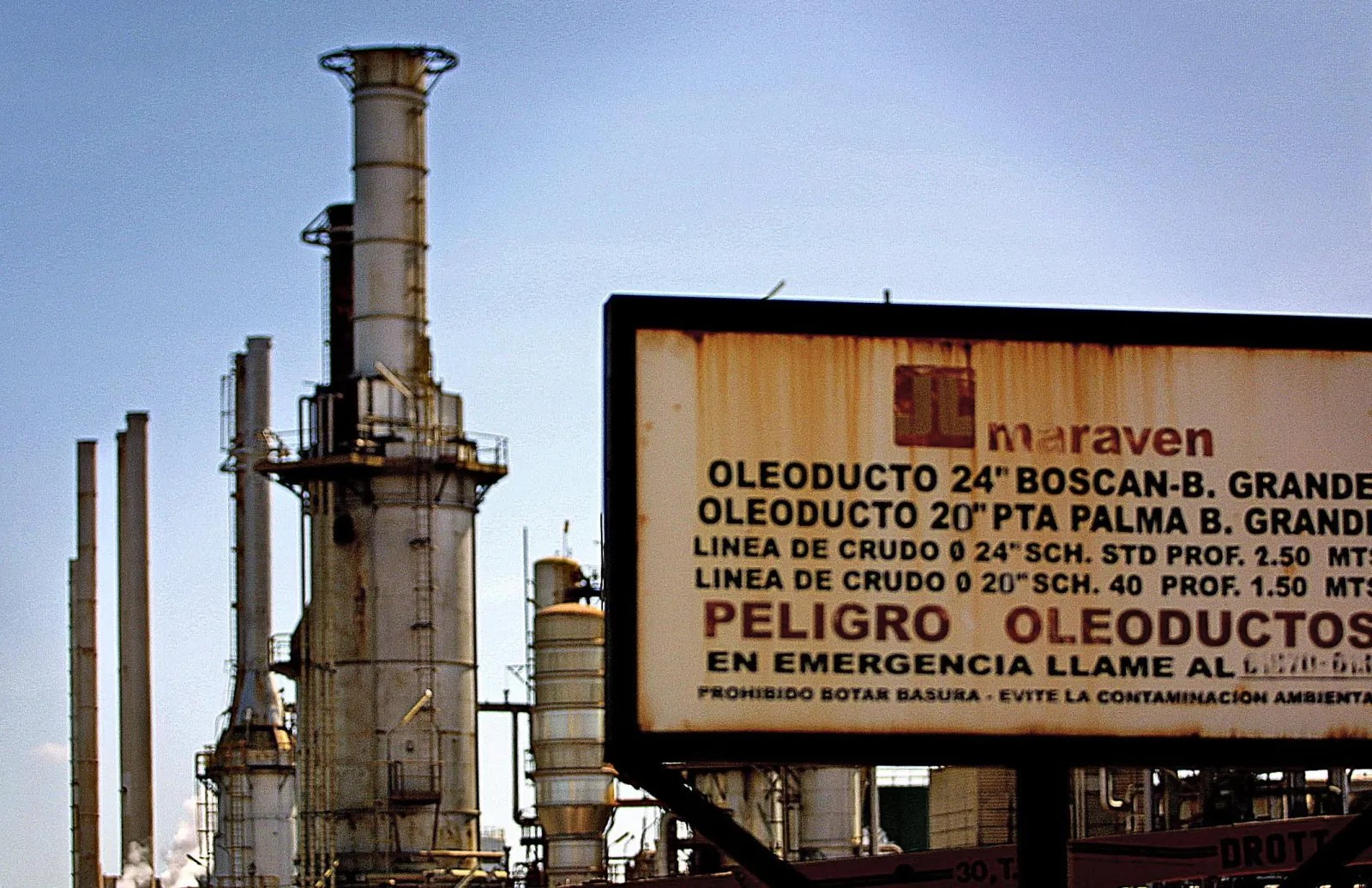
Image from 2002 shows an oil refinery in Maracaibo, Vzla. Photo ANDREW ALVAREZ

Published Jan 10, 2026 – By, Brendan Cole, Senior News Reporter

Developing Venezuela’s oil industry  following the removal of its leader, Nicolas Maduro,  would require major legal and commercial changes, Exxon CEO Darren Woods has told President Donald Trump

Woods gave a downbeat assessment of the viability of restoring oil production in the South American country believed to hold the world’s largest reserves, telling Trump that at the moment, the country’s industry was “uninvestable.”

Energy industry analyst, Thomas O’Donnell, told Newsweek on Saturday that one approach would be for companies to work on small projects to kickstart production before targeting the oil fields that require heavy investment.   

Continue reading

Oil Bosses Hit Trump With Venezuela Setback: ‘Uninvestable’

Image from 2002 shows an oil refinery in Maracaibo, Vzla. Photo ANDREW ALVAREZ

Published Jan 10, 2026 – By, Brendan Cole, Senior News Reporter

Developing Venezuela’s oil industry  following the removal of its leader, Nicolas Maduro,  would require major legal and commercial changes, Exxon CEO Darren Woods has told President Donald Trump

Woods gave a downbeat assessment of the viability of restoring oil production in the South American country believed to hold the world’s largest reserves, telling Trump that at the moment, the country’s industry was “uninvestable.”

Energy industry analyst, Thomas O’Donnell, told Newsweek on Saturday that one approach would be for companies to work on small projects to kickstart production before targeting the oil fields that require heavy investment.   

Continue reading

My bTV| On the Trump administration’s Venezuela logic: drugs, migration & oil (partly vs Russia). Both Maduro’s regime & Machado’s opposition sit & wait.

I was interviewed by David Karalvanov at bTV (Bulgaria) on the US-Venezuela confrontation under Trump and Maduro (01Dec). David used excerpts for a documentary and kindly gave me the full video here. An outline of the five questions and answers is below here.

Three Asides:

  1. I recall vividly how Trump and co., in his first term, easily misled a naively dependent Venezuelan opposition into believing that the USA was planning to forcibly remove Maduro. In turn, the opposition convinced the country’s population that the USA was preparing to forcibly liberate them. This belief was deeply corrosive to advancing any self-reliant domestic anti-Maduro pro-democracy movement. In the end, the Trump administration tried a poorly prepared putsch. John Bolton, Trump’s then-National Security Advisor, the organizer, was embarrassingly gamed by the Venezuelan regime’s intelligence police. Meanwhile, the present Venezuelan opposition has long been unwilling to organize or endorse any popular movement to forcibly restore democracy from below.
  2. In a recent CNN interview I spoke about Trump rationales for the present confrontation. See: “Why Trump wants a Venezuelan oil boom …“) and dangers of not preparing for the day-after possibilities of chaotic events, terrorism or resistance by armed pro-Chavista military or collectivo groups, and/or x-Colombian guerilla groups long active in the country.
  3. I’ve written for 20 years on Venezuela, Chavismo and oil, including two years as visiting professor, Universidad Central de Venezuela’s UCV/CENDES, Caracas.–I’m happy to speak or consult on Ven.-US-China-Russia-Iran-Colombian-EU-… and/or Ven. domestic matters in English or Spanish.- Tom O’D

David’s five questions and some of my answers:

Continue reading

My CNN live: Why Trump wants a Venezuelan oil boom | Venezuelans, living in misery, just want Maduro gone; eight million have fled.

I was interviewed on CNN International’s “Newsroom” with host Kim Brunhuber – live, Friday, 12 Dec. 2025. The transcript is below. Kim asked about Venezuela’s oil industry, the impact of sanctions, what stricter enforcement could do to the Venezuelan economy, and what the US stands to gain if it ultimately gains greater access to the country’s oil reserves? He also wanted to know what Venezuelans are saying. / CNN says: “The show is broadcast around the world on CNN International, and in the US on our new platform All Access.”

Transcript:

0:01 I want to bring in Thomas O’Donnell, an

0:03 energy and geopolitics strategist at

0:05 GlobalBarrel.com. He’s also a former

0:07 visiting professor at the Central

0:09 University of Venezuela and he joins us

0:11 from Berlin. Thank you so much for being

0:13 here with us. Uh so this seizure, a

0:16 clear escalation here. Uh the White

0:19 House says more tanker seizures could be

0:22 coming. If that happens, I mean, what

0:23 would that do to the Venezuelan economy?

0:28 Well, there’s there’s two aspects here.

Continue reading

China & Russia stick with Venezuela’s Maduro for the same reason the USA stuck with S. Viet Nam [My Energy Analytics Institute Q&A]

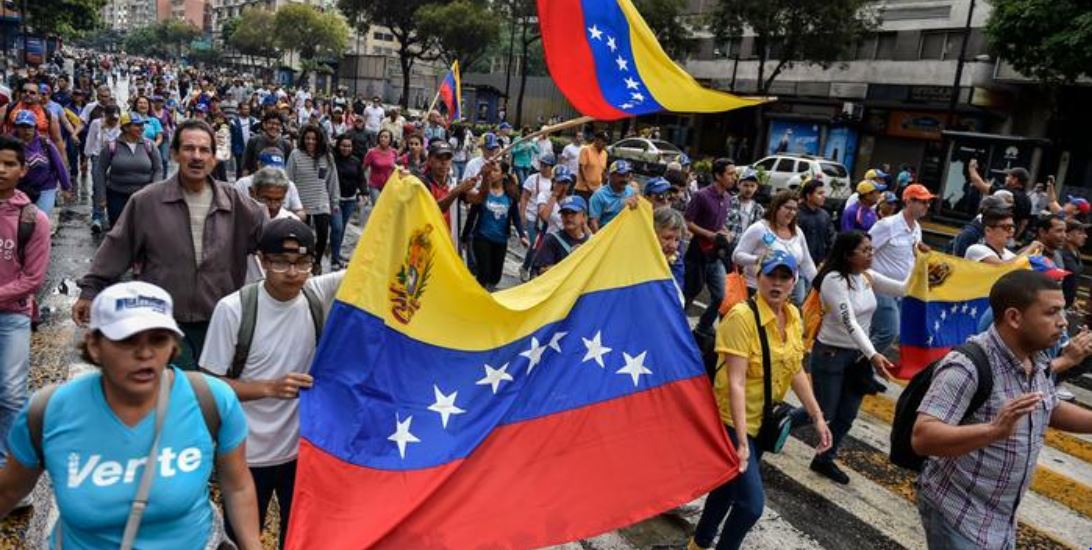
Venezuelan protest, 31 January 2019. Photo credit Deutsche Welle, German public broadcaster.

I was very happy to be interviewed for the Latin American “Energy Analytics Institute” (EAI), a Houston-based consultancy and news service. I’ve followed its work for years.

With Biden in and Trump out, everyone is debating how to deal with Maduro and his chavista regime that’s brought such misery and ruin in Venezuela. It’s not only the USA’s new LatAm team of Biden, Blinken and Nichols, but the EU, Norway, the OAS, the Lima Group, who are all looking for a new strategy. And so has the Venezuelan opposition, plus an increasingly important actor: the growing and doggedly persistent civil society organizations. Increasingly suffering forced-isolation from abroad, this array of social, cultural, media, medical, educational, nutrition, economic and political resistance groups do largely self-sufficient work to replace basic necessities and social-services, which the chavista government and ruined private sector can no longer provide.

However, in this brief Q&A what was addressed was not strategy per se; but a key underlying issue to understand in framing a strategy: the interests of both Moscow and Beijing as key obstacles to removal of the chavista regime. Read at EAI site (free) or Read below – Tom O’D.

China, Russia, Venezuela: Q&A With Thomas O’Donnell

(Energy Analytics Institute, 13.Feb.2021) — China and Russia continue to push around their might in Venezuela. Thomas O’Donnell with the Hertie School of Governance & Freie Universität-Berlin weighs in briefly here.

Energy Analytics Institute: What might China and Russia be willing to do this year to assist Venezuela’s President Nicolas Maduro?

Thomas O’Donnell, PhD: Beijing’s original (and perhaps still) plan for Venezuela was deep vertical integration mirroring PDVSA-Citgo Petroleum: new Faja upgraders, a pipeline to Colombia’s Pacific coast, dedicated ships, dedicated domestic Chinese refineries, etc. All very rational and lucrative for both sides. China became alarmed with Hugo Chavez’ unreliability and incompetence within a few years and with Maduro’s incapacity to reform within a year or so. The entire “oil-for-loans” history was a fallback strategy for Beijing – at least secure an oil stream with minimized risk. I have no doubt the Chinese Communist Party wants a new Caracas regime it can work with.

Continue reading

Venezuelan transition? My analysis on Germany’s DW TV | Videos: español & English

venezuela_protest_dw.de_31jan19

Here are two videos from the Quadriga show on Germany’s international network DW.de —  Aquí hay dos vídeos del programa Cuadriga de la red internacional alemana DW.de

Espanol, 28 febrero 2019:  https://p.dw.com/p/3EHYo  (… luego desplácese hasta el video)

English 31 January 2019 : https://p.dw.com/p/3CVxR (… then scroll down to the video)

Continue reading

Putin’s OPEC tactics: Iran sanctions and the Saudis [IBD cites me]

dc-Cover-p9fbkcs8ccuhvnnnubuhqc2fn7-20161201210531.Medi

June 2018 OPEC meeting’s key players (AP)

Last week, Gillian Rich at Investor’s Business Daily (Washington), asked me (Berlin) and others about the OPEC’s 20-21 June meeting. Below here, I give my views in more detail, including the tie-in to the Trump project to isolate Iran and my comment about Putin likely betraying the Iranians again.  The IBD piece is here: Trump Could Make OPEC’s Next Meeting As Dysfunctional As G-7 Summit. 15 June ’18.

We spoke about market and geopolitical aspects. On the latter, I emphasized both the Trump Administration’s evolving plan to sanction and isolate Iran, and Russia’s new role as a central player with OPEC ever since the 2016 joint Russian-OPEC decision to raise production.

That’s when Putin played a new role for any Russian leader. Not only did he coordinate Russian oil policy with OPEC’s, he got personally involved in heated discussions, getting on the phone late in the last night with Iranian and Saudi leaders to get the deal sealed. Continue reading

What’s keeping foreign oil firms out of Iran? IRG? [CNNMoney quotes me]

iran_oil_production-sanctioneffect_17jun16

To put Iran’s recent production increases in perspective: On its own, for 37 years, Iran has struggled to produce two-thirds of its pre-revolutionary level of 6 million barrels/day. Now, domestic opposition is again limiting foreign oil companies’ participation to boost production.

Since the Obama-administration’s and Europe’s nuclear sanctions were lifted early this year (marked ‘e’ on the chart), Iran has been expanding its production and exports more rapidly than most experts had expected. Tehran has actually tripled exports since late-2015 (see point ‘f’).  But, here’s the big question: Can Iran sustain this years’ production gains?
If to, this could seriously undermine Saudi Arabia’s global oil-market share, and boost Iran’s sanctions-damaged economy to a long-awaited recovery.
The short answer: Now that foreign sanctions are finally lifted, the battle to boost Iran’s oil exports has shifted to a domestic clash over whether to allow foreign oil companies to have significant upstream involvement. This is a domestic Iranian issue with a long history.
Historical perspective
Let’s start with some historical perspective: The Iranian National Oil Company (NIOC) can only do so much on its own to boost production. After decades of sanctions, it lacks the needed technology and finance.  I told CNNMoney‘s Matt Egan, on Wednesday, that the faster Iran expands on its own, the faster production will plateau. (His CNNMoney article today quotes me .).
This was what happened after the 1980-1988 Iran-Iraq war.(‘b’ on the chart). By about 1992, production had plateaued at almost 4 million barrels/day, under 2/3 of the pre-revolutionary, late-1970’s level of roughly 6 million barrels per day. (‘a’ on chart).  The Iranian president at the time, Rafsanjani, argued to religious conservative and nationalist members of the Majilis that only foreign oil companies’ technology and investments could expand production further. However, he only won grudging approval for an offshore project due to fears that foreigners would bring their irreligious ways ashore and/or undermine the hard-won nationalization of Iran’s oil sector.
Continue reading

Latin American Oil: Beijing Still Lending, But for How Long? – I’m quoted by Energy Compass

energy_intelligence_tom_od2_13may16

Last week, Energy Intelligence (EI) quoted me on China’s continued appetite for oil and gas investments in Latin America even with its own  economic slowdown and LatAm’s many political upheavals. (Sincere thanks to EI for a PDF of their proprietary Energy Compass to share on my blog. You can access it below here.)

Some thoughts on China’s strategy: In the case of Venezuela, as the price of oil fell, Beijing quickly eased up on PDVSA’s repayment terms for its huge outstanding loans which are repayable in oil. This shows some willingness to help Venezuela cope with the falling market value of oil. Why? Because, mainly, it is the oil that China has always been laser-focused on – not making interest on these loans.

Generally, it is clear that new Chinese investments or loans are still possible in Latin America. In Venezuela however, Continue reading

My AQ piece: “Russia Is Beating China to Venezuela’s Oil Fields”

map_aq_russia-pdvsa_oil_a

Russian Production & Stakes in Venezuelan Oil Projects (40% stake is limit)

Last October & November I succeeded in interviewing several people in the Venezuelan private sector directly knowledgeable of Russian oil projects with PDVSA. Many Venezuelans wonder what all the Russians-known for their secrecy-are up to there.  Some of my key findings are in Americas Quarterly‘s Winter 2016 edition. Read on … 

Russia Is Beating China to Venezuela’s Oil Fields – By THOMAS W. O’DONNELL

The profits, politics and luck behind Russia’s growing footprint.

Russian companies produce more oil in joint projects with PDVSA than their Chinese counterparts This article is adapted from our 1st print issue of 2016. 

The late Venezuelan President Hugo Chávez, had long envisioned China becoming Venezuela’s biggest oil-sector production partner. So when Rafael Ramírez, then president of Petróleos de Venezuela, S.A. (PDVSA), announced in January 2013 that Russia would produce enough oil with PDVSA by 2021 to become “the biggest petroleum partner of our country,” very few people believed him. It sounded like empty hype.

Yet it turns out that Ramírez was serious. Three years later, Russian companies are already producing more oil in joint projects with PDVSA than their Chinese counterparts. Official figures are either unreliable or unavailable, but according to field data provided by Global Business Consultants (GBC), a Caracas-based energy consulting firm, Russia-Venezuela production as of late 2015 was 209,000 barrels per day (bpd), compared to China-Venezuela’s at a bit over 171,000 bpd.

Continue reading

A Strange “No!” Alignment: Greeks, IMF and Washington v. Berlin and Brussels

What a strange rebellion against the international financial order.  On Sunday 5 July, Greece voted “No!” by a resounding 61% to the bailout conditions insisted upon by Berlin, Brussels and “the creditors.”  But, what is truly unique here is the alignment of international forces for renegotiation of Greek debt.

Throughout the post-War era, whenever it came down to imposing “discipline” on other small, debt-defaulting states, the most intrepid champions of the norms of the international financial order have consistently been Washington and the IMF (just ask Argentina’s Mrs. Kirchner, she’ll tell you).

Yet, look who agrees with the Greeks that their debts–in their present magnitude and structure–are impossible and potentially disastrous for the country: Continue reading

Paralyzed on Economic Reforms, Venezuela Will Mortgage Citgo [My Americas Quarterly analysis]

listverse.com-28jan15-178789073

Photo:: Listverse.com

[My post at Americas Quarterly, 5 Feb 2015]  Since before the death of Venezuelan President Hugo Chávez in March 2013, his successor, Nicolás Maduro, has remained paralyzed to enact reforms needed to escape the economic dysfunction Chávez left behind.

In his latest national address on the economy on January 21, Maduro finally acknowledged the recession and shortages faced by Venezuelan citizens. Yet, he failed again to clearly implement any of the pragmatic economic reforms[1] advocated by Rafael Ramírez, the former minister of energy and former president of Petróleos de Venezuela, S.A. (Petroleum of Venezuela—PDVSA)— such as a de facto bolívar-to-dollar devaluation via unification of Venezuela’s multi-tier foreign exchange (FX) system, measures to attract more foreign financing for oil production, and removing internal price controls, especially for gasoline.  Meanwhile, in September 2014, Ramírez was demoted to foreign minister, and then to UN ambassador several months later.

According to insiders, Maduro’s failure to implement pragmatic reforms stems principally from two sources.
Continue reading

Oil Price Collaterals: Saudi strategy shakes Russia, Iran & Venezuela, but they’re not targets

Obama and Saudi King in Saudi Arabia after the death of previous king

Falling oil prices are not a US-EU-Saudi plot against Russia, Iran and Venezuela… though their effect is certainly not unwelcomed..Foto: REUTERS/Jim Bourg


[Printed in IP Journal, German Council on Foreign Affairs] Pin-pointing the reason for the dramatic – and continuing – fall in the price of oil is relatively easy: OPEC held its 166th conference in late-November 2014 to decide on a strategy to address oil prices, which had been falling at five to ten percent per month since July. Rather than pursue a production cut

Continue reading

[Spanish] Mi opinión en Petroquía: China se involucra en los principales proyectos de América Latina

Here’s my piece [in Spanish] in Petroguía 2015, the oil-&-gas sector catalog for Latin America  Note: Hemispheric integration (e.g., energy infrastructure) was endlessly promoted by Hugo Chavez.  In the end, he built none. The region’s resources continue going mainly to develop other regions, such as China. Continue reading