Tag Archives: China

My Al Jazeera| Venezuela: China’s $100b oil-debt conundrum & Trump| With Janiv Shah, VP Rystad

7 January 2026, Al Jazeera English. On Venezuelan oil, and Trump’s new leverage over China’s oil-loans..

See especially (i) my second response re. China’s big risk regarding repayment of its $100b loans, collateralized with a promised flow of Venezuelan oil, and equally (ii) Janiv Shah’s first comment, on the more immediate China impact. It was a pleasure to be on with the well known oil expert Janiv Shah, VP RystadEnergy.

Continue reading

My ntv.de| So schwer ist es, Venezuelas Ölinfrastruktur zu retten| How hard is it to restore Venezuela’s oil infrastructure

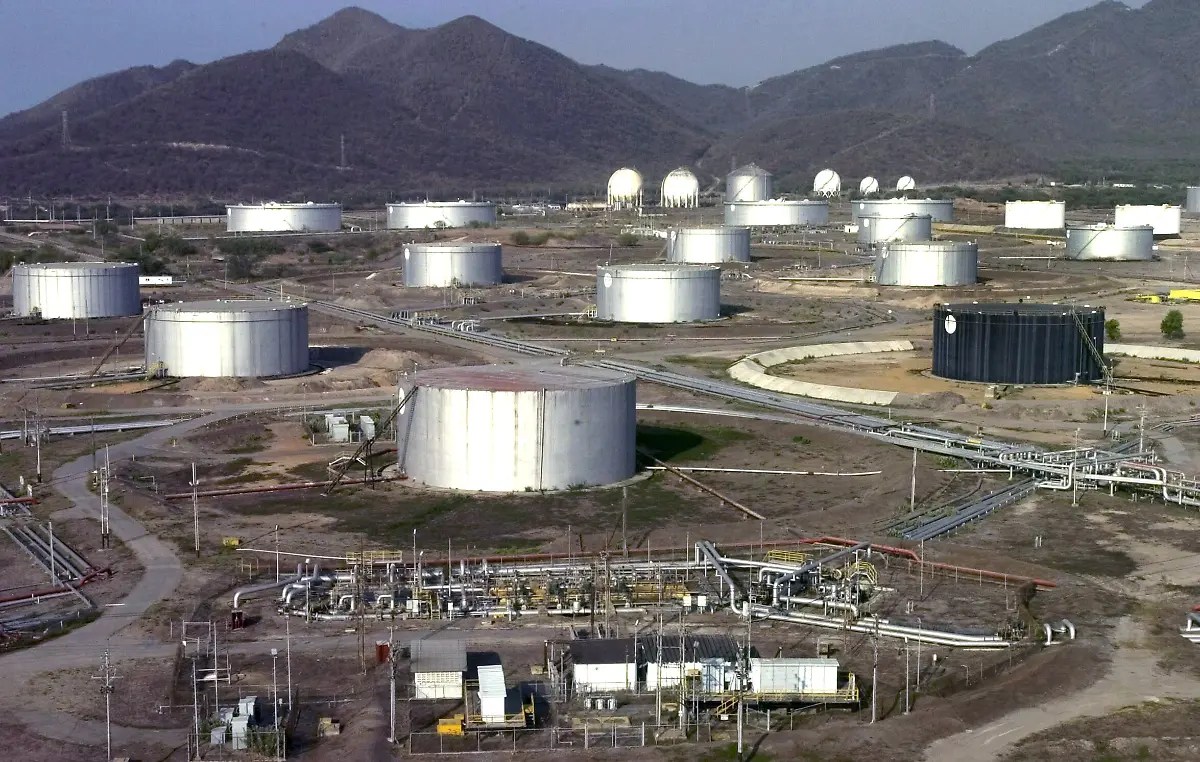
Investitionswillige Unternehmen stehen in Venezuela vor großen Hürden: Sicherheitsrisiken, eine verfallene Infrastruktur, ungeklärte Rechtsfragen zum US-Einsatz und die Gefahr langfristiger politischer Unruhen. (Foto: IMAGO/IlluPics)

Trumps Plan klingt ambitioniert: US-Ölkonzerne sollen nach Venezuela zurückkehren und Milliarden in die stark beschädigte Infrastruktur investieren. Im Interview erklärt Energiestratege Thomas O’Donnell, wie schnell das Land nach Jahren politischer und wirtschaftlicher Krise wieder zu alter Stärke finden kann.

ntv.de: Trumps Versprechen klingt vollmundig: US-Ölkonzerne sollen nach dem Angriff auf Venezuela ins Land zurückkehren und Milliarden von Dollar investieren, die stark beschädigte Ölinfrastruktur reparieren und damit beginnen, Geld zu verdienen. Wird dieser Plan aufgehen?

Continue reading

I was interviewed 05 Jan. by Juliane Kipper, Business Editor at Germany’s ntv.de, for this print article. Lies es Auf DeutschRead In English (from Google Translate). Or, read at ntv.de.

Investitionswillige Unternehmen stehen in Venezuela vor großen Hürden: Sicherheitsrisiken, eine verfallene Infrastruktur, ungeklärte Rechtsfragen zum US-Einsatz und die Gefahr langfristiger politischer Unruhen. (Foto: IMAGO/IlluPics)

Trumps Plan klingt ambitioniert: US-Ölkonzerne sollen nach Venezuela zurückkehren und Milliarden in die stark beschädigte Infrastruktur investieren. Im Interview erklärt Energiestratege Thomas O’Donnell, wie schnell das Land nach Jahren politischer und wirtschaftlicher Krise wieder zu alter Stärke finden kann.

ntv.de: Trumps Versprechen klingt vollmundig: US-Ölkonzerne sollen nach dem Angriff auf Venezuela ins Land zurückkehren und Milliarden von Dollar investieren, die stark beschädigte Ölinfrastruktur reparieren und damit beginnen, Geld zu verdienen. Wird dieser Plan aufgehen?

Continue reading

JOIN Webinar! – Dismantling the Petrostate: Moment of Truth for Russian Oil? – Mon,10 Nov.

You are invited to register now for Monday, 10 Nov. at 14:00 UK || 15:00 CET || 9:00 ET, an EIES Webinar. [My view: the USA, Ukraine & allies can dismantle the Russian petrostate. My posts on this are linked at the end]. I’m honored to join experts:

  • Dr. Jaak Aviksoo, Former Minister of Defence of Estonia, EIES Energy Security Leadership Council
  • Christof Rühl, Senior Research Scholar at Columbia University’s Center on Global Energy Policy, former BP Chief Economist 
  • Dr. Thomas O’Donnell, Energy and Geopolitical Strategist and Founder of GlobalBarrel.com 
  • Moderated by Rosemary Griffin, OPEC+ Lead Reporter, S&P Global Commodity Insights
  • Opened by Peter Flory, Senior Fellow, EIES, Former NATO Assistant Secretary General

Dismantling the Petrostate: Moment of Truth for Russian Oil? – Webinar: Monday 10 Nov.

Register Now – Allies have so far failed to break Putin’s war machine. The EU recently agreed on a 19th round of sanctions and plans to further ramp down Russian energy supplies. But EU sanctions have shown their limits, political leaders have not been able to use Russia’s frozen assets to aid Ukraine, and Moscow’s hydrocarbons still flow into the Union and other major markets.

Washington’s and London’s most recent sanctions may change the game. As we enter another winter of war, can Europe and the United States build on hard-won Transatlantic convergence to strike a decisive blow to the engine of the Kremlin’s aggression: Russia’s oil exports? Can the EU agree to and successfully manage the phaseout of Russian oil and gas?

Continue reading

My Kyiv Kanal24: Ukraine’s drones hit Russian refineries hard. USA apparently blocks hits on oil ports. Why?

Dear colleagues and friends — there are two key energy aspects in this detailed interview with Nataliia Lutsenko of Channel 24, an all-news TV channel from Kyiv: (1) Ukraine’s attritional war on Russia’s domestic oil sector and (2) whether Ukrainian long-range drone capacities will be called upon (viz., permitted by the USA) to accomplish what the new US policy of ending Russian oil exports seeks to accomplish through secondary tariffs. Elaborating:

(1) Domestic Russian oil refining capacities: I explained that, If Ukraine can sustain these new drone attacks at a faster rate than Russia can repair them, this will be a major blow to the supply of diesel fuel required by the Russian war economy, especially to war industries, railways (i.e., to locomotive fuel), for harvesting of crops this fall, and to supply the war front and occupied Ukraine. The last time this was tried on a large scale, roughly two years ago, Ukraine caused significant hardships to Russian refining, but ultimately it did not achieve sustained damage at a rate necessary to collapse Russia’s immense national refining capacity. However, as I pointed out to Nataliia, Ukraine’s drone production and sophistication is now greater, and chances of success therefore better. We should know in some weeks or perhaps a few months if Ukraine can now overwhelm Russia’s repair capacities.

Already, fuel prices have spiked in Russia, with Moscow deciding to insure refiners receive a special subsidy they would otherwise not get due to high prices they are charging for fuel, to address difficulties with the renewed drone war. (Russian Refiners Hit Rough Patch, Hope for State Support, E.I., 20August25, [paywall].)

(2) Russian oil export capacities: Why does Ukraine’s war on the Russian oil sector not include destruction of Russia’s three westward facing oil ports, the terminals it uses to export the overwhelming bulk of its oil exports? These are Ust-Luga and Primorsk in the Baltic, and Novorossiya on the Black Sea. Why has the oil export capacities of these ports essentially never been hit?

Continue reading

My Alarby [EN]: 30% EU tariff a Trump tactic. Talks go well despite EU weakness. Focus on autos, agriculture & pharma. EU drops digital | Mutual problem is China | Trump persists with Miran’s strategy

My Alarby TV Qatar [English above, Arabic is below] from Berlin Brandenburg Gate studio 12 July.

Summary points: I discussed Trump’s announcement that the USA would impose 30% tariffs on the European Union. (For my “must read” Trump tariff key analysis, see my post “(1)Trump is following Miran’s tariff strategy (2)My reply to Jeff Sachs on USD’s role (3)Tariffs boost EU deindustrialization & (4)turbocharge German auto-crisis (5)Trump’s EU energy-purchase demands” This post keeps getting most hits.)

I focused on context – the global USA strategy here – and the state of EU-USA negotiations. The negotiations are going fairly well with most issues near to being settled. However, it is no secret that Europe is in a very weak geoeconomic position (e.g., see Jamie Diamon’s EU warning, FT) exacerbated by Van der Leyen having “hesitated” (zögern in German) as Trump “escalates.” Euractiv having followed a low-key strategy of detachment from talks, relying on her ever-negotiator, Maroš Šefčovič.

The EU backed down on digital taxes on USA IT firms (Politico) and negotiations are advanced on agricultural, automobile, and pharmaceutical tariffs. These seem the focus now.

Trump had said he’d delay 200% pharma tariffs for a year, but now says a 1 August tariff imposition is likely.

I misspoke on EU agriculture. It’s not that the EU is “famous” for “tariffs” protecting its ag against imports, what it’s actually “famous” for are subsidies for its agriculture, which Trump has targeted as unfair. (Note: the EU’s higher farm subsidies are seen to be a significant factor in lower average EU vs. USA agriculture productivity growth since the early 1990s. See USDA here, esp. from p. 33 .)

I predicted a general settlement will be found before 1 August, and the EU will hold off on retaliatory tariffs to focus on negotiations.

Continue reading

Analysis: The USA & China each have failings preparing for a trade war (from Poznan)

Xi Jinping has still not built China’s domestic market to escape its trade-war vulnerabilities from over-dependence on exports, a weakness he openly discussed back in February 2012 on his USA tour before becoming premier.

For the USA, Trump had apparently planned to have resolved the Ukraine war and in some way undermined the Russia-China alliance, inducing Russia to move closer to the USA before going after China. But, ending the war has proven far more difficult than he anticipated. His lack of success with Russia will weigh on his ability to negotiate from a position of strength with all the countries he is competing to win away from China’s geoeconomics orbit such as India, Viet Nam, Cambodia, Philippines, Thailand and etc. — the states that Treasury Secretary would say are in the “yellow zone” as opposed to the USA#s closest allies such as Japan, South Korea, Taiwan, in the so-called “green zone.” For details – see this post on my blog,

Continue reading

My Asharq-Bloomberg: (1)Trump is following Miran’s tariff strategy (2)My reply to Jeff Sachs on US dollar role (3)Tariffs boost EU deindustrialization & (4)turbocharge German auto-crisis (5)Trump’s EU energy-purchase demands

Here’s my interview and a written elaboration – in lieu of a transcript:

  1. Trump’s “tariff shock” on everyone was intended mainly to force negotiations. Especially this is to insure no country:
    • Functions as a transit state for Chinese exports to get into the USA without paying crippling tariffs, or
    • Provides a Chinese-owned manufacturing site in their country with the same aim of accessing the USA market without crippling tariffs..
      • Trump’s Chair of the Council of Economic Advisers Miran and Treasury Secretary Bessent have been fairly clear about this, if one listens in detail.
  2. Trump Tariffs’ impact on Europe – Deindustrialization. German auto sector as an example.
    • While Trump and his circle militate against “deindustrialization” of the USA accomplished over the past few decades by the growth of Chinese manufacturing capacity and the export of these products into the USA market, Europe has an immediate problem, however, with the current advance of its “deindustrialization” or, as some more optimistically say, its new industrial “evolution”. [Some references from major German economic institutes on deindustrialization: IFO Institute, IW Institute, Kiel Institute, the latter of which has evolved a bit on this].
    • Taking the German auto industry as an example, it was already suffering from well known, chronic problems of Germany’s own making. These include two decades of low infrastructure investments, poor digitalization, high taxes, and being subjected to arbitrary government mandates to reduce diesel sales and increase battery electric vehicle production, and etc. ON top of this, German industry has also suffered high energy prices due to the countries exceptionally complex all-renewables energy transition model. On top of this came suddenly, from 2021, the Russian energy war, which denied Europe half of the cheap gas that European, and especially German industry was relying on to compensate for the high-cost of the all-renewables transition.
    • This energy war – and on the heels of the Covid shock – was devastating to German manufacturing and heavy industries, providing the proverbial straw that broke the camel’s back. In my assessment at the time, this was the point at which German industry’s problems of multi-faceted uncompetitiveness morphed into a form of deindustrialization,
    • Germany is in its third year of recession. However, this is not just a recession. Note that the VW, the German auto firm, for example, in September 2024, began mass layoffs for the first time in 87 years in September 2024. BASF is in a similar conundrum. In my view this is a systemic, secular problem over and above any present economic downturn.
    • So, the point of painting this detailed picture of the crisis of German automobile manufacturing, as an example, is that one can now really only imagine what a sharp knock-on effect Trump’s auto tariffs and his other tariffs might have on top of all this.  This is devastating. Already the CEO of Mercedes has said if the tariffs continue he will move the production of the cheaper models to the USA. Already one of the largest exporters of cats from the USA is a German factory.
  3. My response (critique) of Jeff Sacks‘ dollar-decline predictions
    • I was asked to listen to a clip from Asharq/Bloomberg’s earlier on-air interview with Nobel Prize economist, Jeffry Sachs, about his prediction that the US dollar would lose its reserve currency status in this decade and be replaced by regional currencies.
    • My take was that there was little new (or old) factual evidence of this, plus Trump’s tariff shock is not necessarily a long-term tactic. So, I commented that Sachs has had this theory for a long time, an it is nothing new. (I think it is fair to say he is quite sympathetic to China in various interviews, for some years now.) So, I simply said I was not surprised he says this, as he has for a long time.
    • However, I explained (with a bit more factual detail than Sachs, I hope) that indeed, even Trump’s theorist Miran and Bessent too agree that the tariffs strategy is designed to reduce the value of the dollar (its aims is precisely a weak dollar), and this should normally mean that the dollar loses its reserve currency status, its preferred use in the world, that these Trump theorists have a plan for a “Mar-a-Lago” or similar accord for states that are seen as being key, close allies, who would agree to peg their currencies to the dollar, and that they should be expected to agree as they need to trade into the USA market.. This is based on the observation that the USA market has a special status in the world. If this were to pass, they theorize that this would in fact preserve the special, preferred reserve status of the US dollar.  Trump likes this as he has said that if this status is lost, then the destiny of the USA is to be a “third world” economy. **Continued at GlobalBarrel.com ….
Continue reading

My Al Jazeera: The EU will retaliate against Trump’s arbitrary tariffs | Attacking allies, Trump dilutes fight vs. real threats from highly subsidized Chinese exports.

Last night, I was live on Al Jazeera’s evening news to give an “EU perspective” on Trump’s sweeping tariffs on the EU and have a bit of a debate with Hon. Robert Arlett, Sussex County Council, Delaware, USA – a MAGA supporter. I was happy to do so.

I think I made several decent points of criticism about how the entire premise for “retaliation” against the EU on trade was “made up” under an “arbitrary” formula that “makes no sense.” I allowed that, as is often the case with Trump, much of this, the “retaliatory” portion, might be a pressure tactic for some other, still-to-be-revealed concession Trump is aiming for from Europe.

Of course, this is the geo-economic side to Trump’s geostrategic undermining of a unified USA-EU approach to facing Russia over its invasion of Ukraine. (However exactly how that new geostrategic relationship with Europe and NATO might all fit into Trump’s larger, global security strategy is still mostly up in the air, a matter still taking shape.)

However, as for these massive tariffs on Europe and Asian allies, these are a systematic attempt to dismantle globalization as we have known it and instead to focus on the subordination of European and Asian allies to a system where hegemon is unwilling to pay certain costs of maintaining its allies within its system.

Trump envisions a system where the USA makes no sacrifices or pays no communal costs, but must profit at every step from each and every ally. Indeed, the USA has powerful tools afforded it from its geo-economic dominance, tools which Trump seeks to exploit to unilaterally shape international economic and geopolitical relations, while forcing its allies to pay for the privilege and advantages of belonging to the USA-hegemon-maintained system.

Continue reading

Our Gdansk chat: Baltic energy risks | USA ousting China from post-war order | “Transition” will be simple: nuclear & mass-transit. “Critical” minerals overblown | EU’s failing model: all-renewables, new grids, grid-storage & EVs | Poland’s risk: China uses Russia

This is in English, after Eugene Romer of Układ Sił media introduces me in Polish. This was at the “3 Seas -1 Opportunity Forum” in Gdansk, last June 4-5, 2024. I have been wanting to post it ever since, as the questions remain relevant. My thanks to Eugene and his team, and to his Opportunity Think Tank colleagues.

My panel at the forum was on problems of relying on energy security that arrives via the sea. So, think Poland and Lithuania’s LNG terminals, of the many sub-sea pipelines, power and communications cables between Baltic and Nordic states. And, since June, all the incidents where ships leaving Russian ports “accidentally” dragged their anchors, cutting such vital links. So, this conference was rather prescient. My sincere thanks to our hosts The Opportunity Institute for Foreign Affairs.

Continue reading

My interview at Lithuania’s LRT: Trump could seriously harm Russia if he wants to | Trumpas, jeigu tik norėtų, galėtų stipriai pakenkti Rusijai

My long print interview at Lithuania’s LRT [Lithuanian PDF | English PDF​] with Aleksandra ​Ketlerienė, deputy editor-in-chief of Lithuania’s LRT.lt, published 7January. We spoke in Warsaw, 19 November. My thanks to Aleksandra for her insightful questioning and editorial care. We discussed:

  • The EU’s systemic energy​-policy “own goals” ​since its initial energy-crisis win ​after Moscow began cutting gas exports early in 2021​.
  • Reforming failed/ineffective Russian price-cap sanctions for real sanctions, and how the global oil market is now favorable for “maximum pressure.”
  • Historical perspectives on oil, gas, renewables, and nuclear sectors, essential for realistic policy formation.
  • An historical overview of China’s decades-long effort to overcome its energy security, learning lessons of Japan’s WW2 weaknesses.
  • (​See topics summary))
Continue reading

“Is Europe Winning the Energy War?” Berlin Energy Roundtable -24 Oct.- Invitation

Space is limited. Registration is required.

You are invited to attend the 1st Berlin Energy Roundtable, on 24 October. Our three distinguished speakers share decades of Eurasian and Mideast gas-sector experience. I’ll have the pleasure of moderating.

As many of you know, this is a format I long sought to establish in Berlin; but, which during Corona and the energy-crisis after the largescale Russian invasion of Ukraine, was difficult to advance.

The event is made possible with the generous sponsorship of the Divan Culture House in Berlin. Hopefully there will be several more in the coming year.

My SkyNews: Saudis can & will limit oil price before tanking customers’ economies. Russian cap has had impact; but it’s lessening.

This has English audio.
This is the on-air ARABIC version – T.O’D.

Two key, of several, points I made:

[02.10.23 Note: Some typos/syntax corrected. Somehow could not edit w/ my phone yesterday.]

–1– The Saudis have no intention to spike oil price over $100/barrel, at least not for long – that’s my read.

Their customers’ economies are troubled, especially China, but Europe too – where too-high-an-oil-price could re-boost inflation, even push them into recession(s) killing oil demand.

Over the last year, the Saudi’s were newly proactive (their traditional mode was always to react after-the-fact). And their economists’ market calls were correct.

For several months, OPEC+ cumulative production cuts barely held prices stable. Only in recent months, along with new (though tepid) demand, did prices climb, form high-$80s to now mid $90s.

The Saudi minister professes to be unsure whether demand will rise in Q4. The IEA and the futures market (in backwardian now) see tightness. The Saudi minister answers that, if that happens, he has plenty of oil ready to put back into markets.

But – Nota Bene – despite present drawdowns in USA oil stocks and apparent tightness elsewhere, suddenly many oil analysts are saying that the present price rally could be short lived, and that OPEC-plus may have to keep or even deepen its cuts to maintain prices as they are.

Here are three very useful reports to this effect:

Continue reading

Roundtable Invite/Einladung: Threat of Russia-Gulf States oil price war for Asian market? Berlin, Bundestag Press House, 28 July. [Deutsch/English event]

Dear Colleagues & Friends,

I will be speaking at this roundtable here in Berlin on Thursday with two eminent German oil market experts. [See PDF invite, below].

What is happening in oil markets bewteen Russia and esp. Saudi Arabia, competing for the Chiese and larger Asian market? This is a key issue in the effectiveness of EU & USA sanctions against Russia’s oil exports, aimed at limiting the Putin regime’s capacity to war agaisnt Ukraine.

You are cordially invited to this live-only event in Berlin. Our roundtable includes:

  • Dr. Birgit WETZEL – Wirtschaftsjournalistin mit Schwerpunkten Energie und postsowjetische Staaten
  • Mathias BRÜGGMANN – International Correspondent im “Handelsblatt”
  • Dr. Thomas W. O’DONNELL – Wissenschaftler an der Freien Universität Berlin, Experte für globale Energiesysteme, erneuerbare Energien und die Transformation fossiler Brennstoffe
  • Moderation: Ewald KÖNIG, Journalist

Please register ASAP at : events@ggd-berlin.org as room is limited. Sponsored by the Berlin-Gulf Dialogue for Energy Dialogue e.V.

Best, Dr. Tom O’Donnell

My Asharq(Bloomberg): What if Russia cuts off EU gas? Do sanctions hurt Russia? How’s Putin’s oil going to India? “This is Putin’s energy war to win his Ukraine war.”

English audio above. }} Arabic video on right

Asharq, Bloomberg’s affillliate in the Gulf Region, interviewed me on the EU and German energy crisis that’s looming as a result of Russian natural gas cuts to Europe and what will this mean as far as an economic crisis?
I made clear that this is Putin’s economic and energy war on Europe in support of his war on Ukraine, to undermine European solidarity with Ukraine.
Asharq asked about how this will affect different countries across Europe.
Also, what is the effect so far of sanctions on the Russian economy. Lastly, we discussed the Russian push to export its oil, now under increasing sanctions by the EU, to India and China and how this is being accomplished and the effects

Comments/Critiques most welcomed..

Best, Tom O’D.

My CGTN live: Merkel put Biden in a “damned if you do, damned if you don’t” bind on Nord Stream 2 deal

My live interview (22 July 2021) on the Nord Stream 2 deal between Germany and USA. with CGTN (London office of Chinese state broadcaster. This was not edited, or I would not post it here.)

I explain the bind which Berlin had put the Biden administration in for agreeing to waive sanctions on Nord Stream 2 (NS2) in return for this bad deal. The German side was playing hardball. Berlin had made clear to Washington (well before Biden arrived in office) that the pipeline would be finished regardless of sanctions.

The German (and the Danish) side had already allowed Gazprom-owned North Stream 2 AG to continue construction in their territorial waters even when reputable insurance companies and the reputable construction-commissioning firms had abandoned the project due to the threat of US sanctions; and Berlin had made it clear to the US side that it would be completed regardless of any further sanctions. Sanctions on German firms could be circumvented by Berlin continuing to allow Russian firms to do any work that German firms were prevented from performing. And, sanctioning German firms, or NS2 AG, would cause outrage in every German political party except for the Greens, the only German party clearly opposed to the project. However, the Greens had made clear they did not think US sanctions on German firms was an appropriate measure for an ally to take.

Continue reading