Category Archives: Russia

Will Germany decide to unfreeze relations with Russia after the pandemic? Czy Niemcy zdecydują się na odmrożenie relacji z Rosją po pandemii? [My interview]

02-uebergabe-des-gutachtens-der-expertenkommission-forschung-und-innovation-efi-2020

“”The chances of changing the sanction policy are small, as long as the current government exists (German government – ed.). If Vladimir Putin offered significant concessions to Ukraine, there would be great pressure in Berlin and Paris to lift certain sanctions” – emphasizes Thomas O’Donnell    Foto: Bundesregierung/Schacht

Polish journalist Artur Ciechanowicz asked me and four prominent German experts whether Germany will lift sanctions on Russia related to Ukraine:

Polish article in Dziennik Gazeta Prawna, May 6 GazetaPrawna.pl.  

English (via Google Translate):

The head of Russian diplomacy declared Moscow’s readiness to dialogue with Brussels, Berlin and other EU countries. We asked German experts if Germany would decide to reset

DGP conducted a survey among experts of think tanks in Germany, which largely determine the shape of the government’s foreign policy in Berlin. We asked about the offer, which has been formulated by representatives of the Russian authorities for the West for several months.  Sergei Lavrov at the Gorbachev Foundation recently argued that relations with the West should be thawed.  The head of the Ministry of Foreign Affairs of the state that violated international law , annexing Crimea and triggering separatism in the Donbass in 2014, argued for the necessity of primacy of this law over the strength and indisputability of the principle of non-interference in internal affairs of states. By the way, he created Russia as a key country in solving the problems facing Europe – above all the migration crisis.

Continue reading

Oil Price War 3: My AlJazeera spot on negative price, Putin’s rout, shale, and Trump’s dilemma: independents v big oil

The 24.04 video: Aljazeera asked me about negative prices and we got into storage, Putin’s huge blunder in launching the price war, the fate of US shale, and the dilemma faced by Trump and the Texas Railway Commission on cutting US production: there’s no way to please both the independent US producers and the big US international oil companies.  One or the other is going will be very upset. (Note: English audio record replaces original Arabic here. Thanks to AlJazeera for the clip.)

Facing urgent oil-cut decision, Trump & Texas Railway Commission dither

Let me expand a bit on this point I made at the end of the interview: Trump is dithering as the day of reckoning approaches – the day when US oil’s physical storage is full.  Then it won’t be just the WTI Nymex futures price going negative overnight, the physical, spot market would go negative and freeze up.

So, either Trump has to invoke national security and use federal powers to order proportional, across-the-board cuts nationally, or the Texas Railway Commission and its Continue reading

Decoding the Oil Price War 2: My Wikistrat webinar “Oil Price War & COVID Crisis” transcript

covid-oil_war_2bd-cropped-graphic_wikistrat_12apr20_captureMy Wikistrat webinar transcript “Oil Price War & COVID” from a couple weeks ago is now available on their website as a PDF.  Issues discussed include:

  • Why did Moscow declare the “war”? [Note: Putin & Sechin’s initial boasts Russia would hold out for “years”, kill shale & end sanctions all stopped in only a couple days!]
  • The Saudi response was sharply focused against Russian oil-pipeline markets in W Europe (Druzhba) & Asia.  [I believe this focused Mr. Putin’s attention on economic realities as opposed to Mr. Sechin’s anger-driven desire for revenge against US sanctions that had inflated his (self-)image of Rosneft and Russian oil-market prowess when up against a concerted Saudi counter-war, and the prospects of various US responses.  Reports are that Putin spend three days on the phone to undo this fiasco and, in the end, had to accept significant cuts to Russian output.  See my GlobalBarrel.com post of last week explaining the initial, flawed Russian strategy.]
  • The options Trump had to choose from undermine his long antipathy to OPEC. (Did he secretly offer Putin any Nord Stream 2, Ukraine or Venezuela sanctions relief? If so, Congress won’t approve.) Also: Big Oil (American Petroleum Institute) and W. Texas/other independent producers are pulling at Trump in two very different policy directions re. OPEC, tariffs, production controls, etc
  • And more (esp. in the Q&A): probable impact on carbon mitigation policies, the China market for LNG, US shale’s financial and production future, etc.

Continue reading

Decoding the Oil Price War 1: Moscow seized COVID crisis to hit US shale, force sanctions relief

This slideshow requires JavaScript.

The “Oil Price War of 2020” was launched at the worst possible time.  The COVID-19 pandemic was spreading to the world beyond China, promising to kill tens-of-thousands, and bring a global economic collapse.

However, this war was not preordained. Things could have gone otherwise from the start.  It was a decision, a sort of Pearl-Harbor-esque surprise attack, announced by Russian minister of energy, Alexander Novak, upon his arriving late to the OPEC-plus summit hall in Vienna on March 6.

If Moscow now abandons its all-out war on US shale, it will be because Putin has miscalculated.  He was willing to increase the pain for everyone else by exploiting the COVID-19 energy crisis in a half-baked attempt to get out from under the US sanctions.  However, the unanticipated repercussions might get too hot for Moscow.

The facts about why Putin decided to launch this oil price war are important to decode.  A key aspect to understand is that Moscow’s game plan was to blame the Saudis; and it soon began a disinformation campaign saying the Saudis launched the war.

We shall see, below and in future posts, how this blame-shifting is a stratagem designed to manipulate a section of US politicians and especially independent US oil producers, who traditionally hold strong, anti-Saudi sentiments (to be clear: they have good reasons to hold these anti-Saudi views), to preferentially sympathize with Russia against the Saudis and to lobby Trump and Congress to give Moscow relief from US sanctions.

Whether this Oil War strategy of Moscow can, at least in part, succeed in freeing Russia from US sanctions is not clear.  But, Moscow’s is highly motivated to succeed due to the significant constraints these sanctions are imposing on Russia.  They include sanctions in retaliation for its war against Ukraine, since 2014, which have undermined expansion of Russia’s domestic oil and gas sector; sanctions which have stalled Russian-German plans to finish the Nord Stream 2 pipeline; and sanctions on Rosneft’s efforts to sustain the Maduro dictatorship in Venezuela.

Today, as explained below, I would say the odds are against Moscow’s success, with the plan bordering on adventurism.  The Saudi’s initial response, in so far as it specifically targets Russia’s oil business, is rational; however, by de facto joining the Russian oil price war on US shale,  the Saudis will also provoke a backlash from powerful US oil-business and political interests, which is likely precisely what Putin and Igor Sechin hoped to bait the Saudis’ Prince MbS into doing.

Considering the pain the world is already suffering, Putin and Sechin’s callous game to exploit the COVID-19 oil-market crisis must be seen for what it is.  Most especially, one should not acquiesce to Moscow’s disinformation campaign to shift the blame elsewhere.

In Vienna: Who started the price war?

For weeks, Riyadh had aggressively lobbied the 10 OPEC and 11 non-OPEC members of the OPEC-plus alliance to agree to a major production cut.  This alliance had been born in 2016, of a newfound, market-dictated, yet grudging, Russian-Saudi mutual recognition of the reality that only such a large-scale collective effort could begin to get control of a market in long-term oversupply.  By December 2019, their OPEC-plus group had Continue reading

Europe’s Gas Crunch:  The Pending Crisis Around Nordstream 2 & Ukraine Transit

My public talk in Washington, 12 June:

pic_my_12jun_kennan_talk_european_gas_crisis

Despite Berlin and Moscow’s rush to make the Nordstream 2 (NS2) pipeline construction through the Baltic Sea a fait accompli, opposition from several EU states has stalled its completion. Meanwhile, Gazprom’s transit contract with Ukraine will expire in January and Moscow has put unacceptable preconditions on negotiating a new one. Once again, Europe must brace itself for a Russian gas-supply crisis. Professor Thomas O’Donnell will discuss European states’ various interests and heightened energy anxieties, the prospects for the NS2 pipeline, and Russia’s strategy.

Speaker:  Thomas O’Donnell, 

Instructor, Hertie School of Governance, Berlin;  Title VIII Short-term Scholar, Kennan Institute — Scholar’s Research-Project Page at Kennan

RSVP Now

Wednesday, June 12, 2019
2:00pm-3:00pm  –   5th Floor Conference Room

Directions

Wilson Center
Ronald Reagan Building and
International Trade Center
One Woodrow Wilson Plaza
1300 Pennsylvania, Ave., NW
Washington, D.C. 20004   Phone: 202.691.4000    kennan@wilsoncenter.org

Washington interviews: Energy Relations of Russia, Germany, Poland & Ukraine (Kennan Fellow)

g7-trump-merkel-round-9jun18-jezco_denzel_ger_gov_photo.jpgWhat are US experts’ and officials’ views on the increasingly conflictive energy and geostrategic relations between Russia, Germany, Poland and Ukraine? 

Greetings. I’m in Washington as a “Title VIII” fellow of the Kennan Institute in the Woodrow Wilson Center, interviewing people in think tanks and government (legislative and executive) on these topics. I’ll also give a public talk on this at Wilson on 12 June, at 2 PM (more info soon). putin_wink-round-hnewkremlinstooge-wordpress

I’m interested to hear anything readers think should be asked and of whom.  Don’t hesitate to write me at twod(at)umich.edu or my (temp) Wilson email: thomas.odonnell(at) wilsoncenter.org

A central issue: why is Germany so adamantly for Nordstream 2 despite the negative security consequences for Ukraine and despite the tremendous hit this project is causing to German soft-power not only with Poland, but with most Central and Eastern European (CEE) and Nordic states?  (Here’s my own analysis.)  How do US experts see this? Continue reading

Venezuelan transition? My analysis on Germany’s DW TV | Videos: español & English

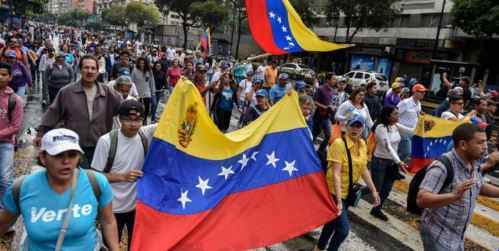
venezuela_protest_dw.de_31jan19

Here are two videos from the Quadriga show on Germany’s international network DW.de —  Aquí hay dos vídeos del programa Cuadriga de la red internacional alemana DW.de

Espanol, 28 febrero 2019:  https://p.dw.com/p/3EHYo  (… luego desplácese hasta el video)

English 31 January 2019 : https://p.dw.com/p/3CVxR (… then scroll down to the video)

Continue reading

Germany backs small-scale LNG import terminals despite opposition [my King’s College/EUCERS paper]

Here is my detailed analysis of the decision by Angela Merkel’s government to begin “small-scale” Liquid Natural Gas (LNG) imports to address greenhouse gas emissions and competitiveness issues in Germany’s heavy-road transport and maritime-shipping sectors.  Read it below (via Scribid) or go directly to EUCERS.  [This peer-reviewed paper appears in the King’s College-London, Newsletter of the European Centre for Energy and Resource Security (EUCERS), Issue 77, July 2018.] – Tom O’D.

Germany’s Real LNG Policy [My BPJ analysis]

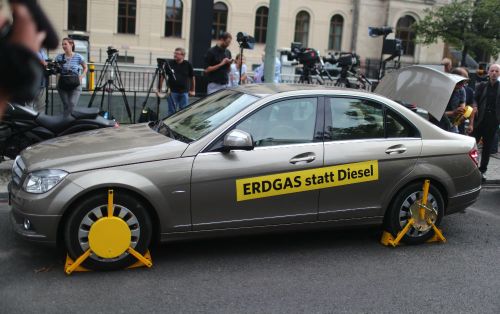
bpj_erdgas_statt_diesel_c-reuters_28jun18

“Natural gas instead of Diesel” © REUTERS/Hannibal Hanschke

My latest at: Berlin Policy Journal (German Council on Foreign Relations), June 28, 2018:

Germany’s Real LNG Policy
Germany’s government has endorsed imports of liquid natural gas for the first time—but not because of Russia and Nord Stream 2. 

The German federal government has decided in favor of building liquid natural gas (LNG) import terminals and infrastructure. In March, Chancellor Angela Merkel’s CDU/CSU-SPD government, in its “coalition contract,” pledged to “Make Germany the site for LNG infrastructure.” This is a notable policy change, because in Germany the opposition to LNG imports and use has been so much stronger than anywhere else in Europe.

The aim of this new endorsement is to reduce maritime and roadway heavy-transport emissions. However, many in Germany argue that using “small-scale” LNG in this way, as a “bridging” fossil fuel, is “wasted investment”. They contend that Energiewende-mandated electric vehicles can and will rapidly de-carbonize heavy transport. Still others oppose LNG imports on the grounds that they would unnecessarily diversify Germany’s gas suppliers with the aim of offsetting increasing reliance on Russian pipeline gas. They insist that Russian pipeline gas has been “historically reliable” and is cheaper for Germany than building large-scale import terminals for LNG.
Continue reading

Putin’s OPEC tactics: Iran sanctions and the Saudis [IBD cites me]

dc-Cover-p9fbkcs8ccuhvnnnubuhqc2fn7-20161201210531.Medi

June 2018 OPEC meeting’s key players (AP)

Last week, Gillian Rich at Investor’s Business Daily (Washington), asked me (Berlin) and others about the OPEC’s 20-21 June meeting. Below here, I give my views in more detail, including the tie-in to the Trump project to isolate Iran and my comment about Putin likely betraying the Iranians again.  The IBD piece is here: Trump Could Make OPEC’s Next Meeting As Dysfunctional As G-7 Summit. 15 June ’18.

We spoke about market and geopolitical aspects. On the latter, I emphasized both the Trump Administration’s evolving plan to sanction and isolate Iran, and Russia’s new role as a central player with OPEC ever since the 2016 joint Russian-OPEC decision to raise production.

That’s when Putin played a new role for any Russian leader. Not only did he coordinate Russian oil policy with OPEC’s, he got personally involved in heated discussions, getting on the phone late in the last night with Iranian and Saudi leaders to get the deal sealed. Continue reading

A Comment on: “A Trans-Atlantic Manifesto in Times of Trump – A German Perspective,” by foreign policy experts

I sent this today to European and American contacts – apologies for duplications.

Dear Colleagues and Friends,

I read with interest the declaration: “In spite of it all, America: A Trans-Atlantic Manifesto in Times of Donald Trump – A German Perspective,” signed by a number of leading German foreign policy experts today in Die Zeit and translated in the NYTimes.
Point 10 is of particular interest and much welcomed as – at long last – a frank characterization in Germany of the Nord Stream 2 project for what it plainly is: “a geopolitical project:”  Quoting:
10. Energy security policy — giving up Nord Stream 2 is in Germany’s interest
There is one more policy area in which the German government should reconsider its position to open the door for productive cooperation: energy security policy. The United States has identified Nord Stream 2, the planned pipeline running through the Baltic Sea to Russia, as a geostrategic project. They are correct. More important: This pipeline project is not in the joint European interest. Nord Stream 2 contradicts a policy of greater energy independence and undermines the envisaged European Energy Union. We should try to identify a joint approach with our European partners and the United States. (emphasis added – T.O’D.)

Continue reading

“Neue Neue Ostpolitik” My BPJ piece on German fury at Senate NS2 sanctions

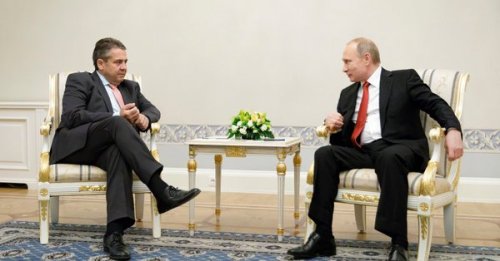
putin_gabriel_schroeder_dinner with an old acquaintance-der_spiegel_07jun17_U637TtLQ

The US Senate’s decision to expand sanctions against Russia triggered indignation in Berlin, throwing Germany’s geopolitical ambitions over the Nord Stream 2 project into sharp relief.  Read below or get the App.   My other articles at Berlin Policy Journal  

“Neue Neue Ostpolitik”  

Berlin – July 21, 2017    By: Thomas O’Donnell —  On June 15, the US Senate approved an act to sharply expand sanctions imposed on Russia in retaliation for its intervention in eastern Ukraine and annexation of Crimea in 2014. The broadly bi-partisan move that enshrined Barack Obama’s earlier executive orders – intended as a response to Moscow’s alleged cyber interference in US elections – was a stunning rebuke to US President Donald Trump’s Russia policy, essentially taking a broad swath of foreign policy out of his hands. Continue reading

Putin’s new OPEC role reflects the toll of low oil prices on Russia [IBD quotes me]

I was interviewed by Gillian Rich at Investors Business Daily (Washington, DC) on non-OPEC Russia’s role in the production cut.  The article of December 9, is below. A few points first:

1: President Putin and his minister of energy Alexander Novak‘s participation in the OPEC decision – actually making middle-of-the-night phone calls to mediate between Iran and Saudi Arabia, plus publicly promising to cut Russian production – is totally unprecedented. Never did the Soviets, nor  post-Soviet Russia  ever do any such thing previously. Why now?

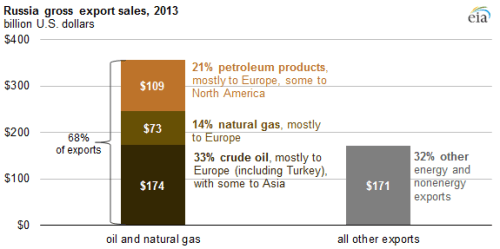
2: As Rich quotes me as saying, oil prices below $60/barrel impose severe constraints on the Russian state’s income. Indeed, the federal budget has actually been based on $50/barrel, and yet the difficulties are apparent. Although Russian oil production is now at a post-Soviet all-time high, low prices have caused the state’s oil and gas income to severely drop. Here is the EIA’s assessment as of October 2016, showing the correlation of Brent price fall (in both dollars and Rubles) on the left, and the decline in oil and gas federal budget revenue on the right:eia_russia_oil_20oct16

But, how much of Russian national export revenue is derived from oil and gas revenue? The EIA (in 2014) puts this at 68%. Here’s the breakdown:  eia_russian_oil_gas_exprot_revenue201300

Continue reading

My CNNMoney quote & 3 points: OPEC v shale, Russia’s new role & Trump-buddy Hamm is pro Saudi price band


160928163540-opec-algeria-384x216I was interviewed by Matt Egan of CNNMoney. Three points, if I may:

  1. This story echoes my message in Berlin Policy Journal earlier this week and my RTRadio interview: OPEC now has to live with a new oil-market paradigm where shale  won’t disappear (for now its in the US, but soon elsewhere too).  It is a technology more akin to manufacturing than traditional oil extraction and so more amenable to technological and operating innovation in a low-price regime (or in a price war such as the Saudis et al have just given up on waging against it). And, being much smaller-in-scale means it can ramp up at much lower initial costs and more rapidly than traditional oil fields. The CNNMoney story is below here, or here’s the CNN ink .
  2. Another totally new phenomena seen in this OPEC deal was that a Russian leader was deeply involved in the tense OPEC negotiations, specifically between Iran and Saudi Arabia. Russia has never done this before. Historically, it has also never carried through on previous promises to support an OPEC cut, instead free-riding on higher prices effected by OPEC/Saudi cuts.  In this case, Putin was instrumental in getting the Saudi’s to agree, as they always have before, to swallow most of the cuts. But, Putin has agreed to cut too (in ambiguous language, but repeatedly). We shall now see if he and Igor Sechin (CEO of Rosneft, that produces 40% of Russian oil, and who is, by the way, a great friend of Venezuela’s miserably failing chavista leadership, where his company is now the biggest foreign oil producer) … do as they have promised OPEC and the Saudis. If they do not, the fallout with Saudis and their allies will be significant.
  3. Now, also, we shall see how US shale responds. Of course, IEA head, Fatih Birol, has understandably predicted that US shale and other producers, will likely hike production if oil reaches $60/barrel and simply eat up the present OPEC cuts in about nine months or so. (Aside: of course, the present output cuts, even if they ‘fail’ in the long run to sustain higher prices, would still have had been a significant cash-boosting relief to all OPEC states and to Russia while they lasted.)  However, take a look at the Bloomberg video link at the end of my Berlin Policy Journal piece – an interview with Howard Hamm, Trump’s billionaire fracking close-ally (who has just turned down an offer to run the Department of Energy). He had told Bloomberg he expects OPEC to make a deal because “it makes sense” and, further, that he expects/hopes his US fracking colleagues will show ‘discipline’ after the price rise, i.e., not expanding too fast so as to keep prices up.  An interesting, de facto recognition that price wars, in the end (in the long run), do not benefit either side, and goes on to approvingly say that the Saudi’s want to once again maintain prices “in a band” as they used to do. It is clear from Hamm that this would all be very welcomed from the US side. (Note, Hamm’s Continental Energy company made $3 billion in just three hours after the OPEC deal boosted prices! ) Indeed, in light of such everlasting market realities, it is difficult to imagine Trump’s attitude to the Saudi’s will be much different than other US president’s over the years. Which has geopolitical implications for Iran, of course, as the Saudi-Iranian geopolitical competition for regional influence and their parallel oil-market competition both continue to heat up.

Here’s the CNNMoney piece by M. Egan of 1 December 2016 (with my quote highlighted): Continue reading

An Oil-Price War´s Surprise Ending -My BPJ article on OPEC, Shale, Trump, Market & Geopolitics

bpj-oil-price-war-end-29nov16Here`s my latest at Berlin Policy Journal:  about  OPEC`s 30 Novermber meeting, US shale and the geopolitics from the  Trump Administration towards Iran and the Saudis. – Tom O`D.

An Oil-Price War’s Surprise Ending

No one expected shale producers to survive extended low oil prices.
, NOVEMBER 29, 2016 
The oil market’s oversupply – and the low prices that followed – was supposed to drive shale producers out of business. Instead, the economies of several large national producers have been upended, and the next act could prove even more destabilizing.

OPEC’s 171st meeting in Vienna on November 30 reflects the new paradigm of the global oil market. After two years, the Saudi-led price war to drive American shale and other “high cost” producers from the market has ended. However, to the surprise of many – not least the Saudis – shale has survived. What now?

The United States Energy Information Agency (EIA) expects persistent market oversupply to have been quenched by the second half of 2017. The Saudis view the diminishing oversupply as an opportunity to cut production by 600,000 or more barrels per day – although about twice this amount would be optimal – boosting prices from under $50 per barrel to $60 or more. The Saudis have worked intensely to reach an agreement at the OPEC summit to coordinate this production cut with Russia; any failure to achieve this highly anticipated deal would sink market confidence, pushing prices into the $30s.

The key obstacle to the Saudi plan is that Iran has refused to participate in any cut, insisting it should first be allowed to re-establish production it lost under years of sanctions. In response, the Saudis have threatened to boost their own production, punishing Iran by collapsing prices and by denying them market share. The Financial Times’ Nick Butler correctly characterizes this as “playing with fire,” and not only because of the severe pain this would impose on weaker OPEC states, but also for the geopolitical retaliation it might provoke from the new US administration as the Saudis would also bankrupt numerous shale producers in the US.

However, even if Russia, Iran, and the rest of OPEC agree to the Saudis’ cuts, US shale is widely expected to expand into the void, re-depressing prices by later next year. In all these scenarios, the future remains extremely difficult for OPEC, for Russia, and for other oil-dependent states.

A Price War Backfires

The prolonged high price of oil, starting to rise in 2002 and then dipping during the financial crisis before rising again till mid-2014, encouraged the emergence of new unconventional shale production. Driven by technical innovations in hydraulic fracturing plus abundant venture capital, by 2014 the US had added more new oil to the global market than what was lost in the Arab Spring and subsequent wars in Libya, Iraq, and Syria. By mid-2014, some two million excess barrels-per-day (bpd) were flowing into storage, and the price collapsed. Continue reading