Category Archives: Energy and Geopolitics

Putin’s OPEC tactics: Iran sanctions and the Saudis [IBD cites me]

dc-Cover-p9fbkcs8ccuhvnnnubuhqc2fn7-20161201210531.Medi

June 2018 OPEC meeting’s key players (AP)

Last week, Gillian Rich at Investor’s Business Daily (Washington), asked me (Berlin) and others about the OPEC’s 20-21 June meeting. Below here, I give my views in more detail, including the tie-in to the Trump project to isolate Iran and my comment about Putin likely betraying the Iranians again.  The IBD piece is here: Trump Could Make OPEC’s Next Meeting As Dysfunctional As G-7 Summit. 15 June ’18.

We spoke about market and geopolitical aspects. On the latter, I emphasized both the Trump Administration’s evolving plan to sanction and isolate Iran, and Russia’s new role as a central player with OPEC ever since the 2016 joint Russian-OPEC decision to raise production.

That’s when Putin played a new role for any Russian leader. Not only did he coordinate Russian oil policy with OPEC’s, he got personally involved in heated discussions, getting on the phone late in the last night with Iranian and Saudi leaders to get the deal sealed. Continue reading

A Comment on: “A Trans-Atlantic Manifesto in Times of Trump – A German Perspective,” by foreign policy experts

I sent this today to European and American contacts – apologies for duplications.

Dear Colleagues and Friends,

I read with interest the declaration: “In spite of it all, America: A Trans-Atlantic Manifesto in Times of Donald Trump – A German Perspective,” signed by a number of leading German foreign policy experts today in Die Zeit and translated in the NYTimes.
Point 10 is of particular interest and much welcomed as – at long last – a frank characterization in Germany of the Nord Stream 2 project for what it plainly is: “a geopolitical project:”  Quoting:
10. Energy security policy — giving up Nord Stream 2 is in Germany’s interest
There is one more policy area in which the German government should reconsider its position to open the door for productive cooperation: energy security policy. The United States has identified Nord Stream 2, the planned pipeline running through the Baltic Sea to Russia, as a geostrategic project. They are correct. More important: This pipeline project is not in the joint European interest. Nord Stream 2 contradicts a policy of greater energy independence and undermines the envisaged European Energy Union. We should try to identify a joint approach with our European partners and the United States. (emphasis added – T.O’D.)

Continue reading

China’s big NOCs slash prices to take market from private oil refiners ~ I’m quoted in “China Oil Week”

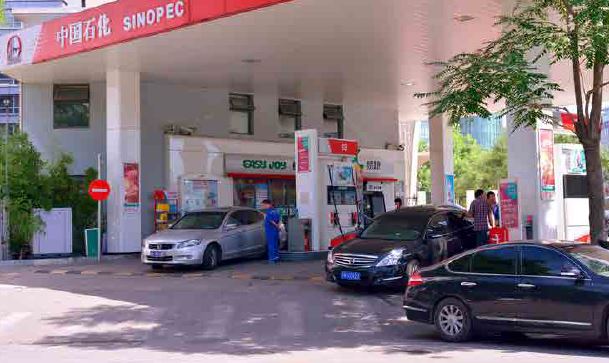
sinopec_station_china_newsbase_21jul17

A Sinopec station in China.  Sinopec and other big NOC’s are slashing prices to take business from Chna’s small private “Tea Pot” refiners.

Last week, I was quoted on my assessment of how China’s “Tea Pot” refineries (small, private outfits) will fare in the face of  China’s big National Oil Companies (NOCs) cutting  prices to grab the Tea Pots’ business.  My main point to Newsbase reporter Saw Wright was that China is far from a completely “free market” and the state can be expected to weigh in on one side or another, complicating any outcome predictions based on market and/or tech strengths and weaknesses.  I’m quoted a couple times near the article’s end, here:
Continue reading

“Neue Neue Ostpolitik” My BPJ piece on German fury at Senate NS2 sanctions

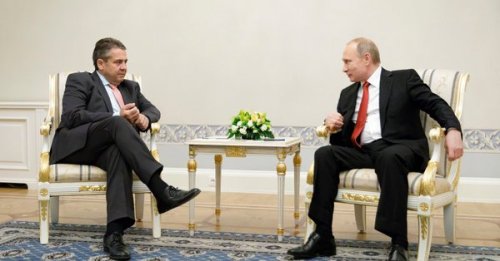
putin_gabriel_schroeder_dinner with an old acquaintance-der_spiegel_07jun17_U637TtLQ

The US Senate’s decision to expand sanctions against Russia triggered indignation in Berlin, throwing Germany’s geopolitical ambitions over the Nord Stream 2 project into sharp relief.  Read below or get the App.   My other articles at Berlin Policy Journal  

“Neue Neue Ostpolitik”  

Berlin – July 21, 2017    By: Thomas O’Donnell —  On June 15, the US Senate approved an act to sharply expand sanctions imposed on Russia in retaliation for its intervention in eastern Ukraine and annexation of Crimea in 2014. The broadly bi-partisan move that enshrined Barack Obama’s earlier executive orders – intended as a response to Moscow’s alleged cyber interference in US elections – was a stunning rebuke to US President Donald Trump’s Russia policy, essentially taking a broad swath of foreign policy out of his hands. Continue reading

Trump’s promise to “stay totally independent” of OPEC is populist hype [My IBD interview]

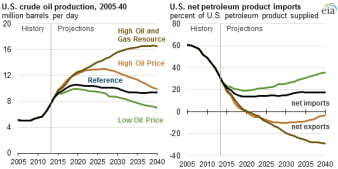
eia_apr15_us_oil_prod-importsContrary to his campaign hype (see article below), Trump-as-president will not do anything to interfere with the free flow of oil or gas to or from the USA.  As I pointed out in the Investors Business Daily interview (Gillian Rich’s story is below), people central to Trump’s administration – such as Rex Tillerson, his designated secretary of state and former CEO of Exxon, and Harold Hamm, Trump’s fracking billionaire friend he wanted for secretary of energy – are global-market-oriented businessmen who would never agree to disconnect the USA from global energy markets.
The free flow of petroleum through the unified global market traded in US dollars – what I call the “Global Barrel” – is central to the business model of every private as well as every national oil company.  Today there is essentially one, global oil price. If you break up the global market by limiting imports or exports, you get national markets with national prices.  Then what?

If the US price went higher than the global price due to keeping out cheap foreign oil, Trump’s popular approval would dive. And, if the U.S. price went lower due to a domestic production glut of fracked oil, then his support among business would tank.

Moreover, the unified global market serves as the key element in the world’s collective energy-security system by guaranteeing equal access and prices to all suppliers and consumers.   Continue reading

Putin’s new OPEC role reflects the toll of low oil prices on Russia [IBD quotes me]

I was interviewed by Gillian Rich at Investors Business Daily (Washington, DC) on non-OPEC Russia’s role in the production cut.  The article of December 9, is below. A few points first:

1: President Putin and his minister of energy Alexander Novak‘s participation in the OPEC decision – actually making middle-of-the-night phone calls to mediate between Iran and Saudi Arabia, plus publicly promising to cut Russian production – is totally unprecedented. Never did the Soviets, nor  post-Soviet Russia  ever do any such thing previously. Why now?

2: As Rich quotes me as saying, oil prices below $60/barrel impose severe constraints on the Russian state’s income. Indeed, the federal budget has actually been based on $50/barrel, and yet the difficulties are apparent. Although Russian oil production is now at a post-Soviet all-time high, low prices have caused the state’s oil and gas income to severely drop. Here is the EIA’s assessment as of October 2016, showing the correlation of Brent price fall (in both dollars and Rubles) on the left, and the decline in oil and gas federal budget revenue on the right:eia_russia_oil_20oct16

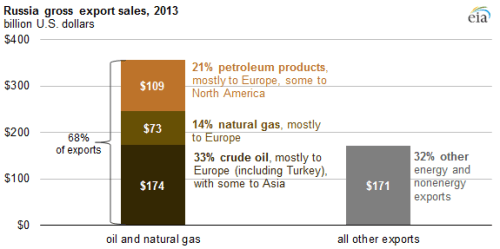
But, how much of Russian national export revenue is derived from oil and gas revenue? The EIA (in 2014) puts this at 68%. Here’s the breakdown:  eia_russian_oil_gas_exprot_revenue201300

Continue reading

My CNNMoney quote & 3 points: OPEC v shale, Russia’s new role & Trump-buddy Hamm is pro Saudi price band


160928163540-opec-algeria-384x216I was interviewed by Matt Egan of CNNMoney. Three points, if I may:

  1. This story echoes my message in Berlin Policy Journal earlier this week and my RTRadio interview: OPEC now has to live with a new oil-market paradigm where shale  won’t disappear (for now its in the US, but soon elsewhere too).  It is a technology more akin to manufacturing than traditional oil extraction and so more amenable to technological and operating innovation in a low-price regime (or in a price war such as the Saudis et al have just given up on waging against it). And, being much smaller-in-scale means it can ramp up at much lower initial costs and more rapidly than traditional oil fields. The CNNMoney story is below here, or here’s the CNN ink .
  2. Another totally new phenomena seen in this OPEC deal was that a Russian leader was deeply involved in the tense OPEC negotiations, specifically between Iran and Saudi Arabia. Russia has never done this before. Historically, it has also never carried through on previous promises to support an OPEC cut, instead free-riding on higher prices effected by OPEC/Saudi cuts.  In this case, Putin was instrumental in getting the Saudi’s to agree, as they always have before, to swallow most of the cuts. But, Putin has agreed to cut too (in ambiguous language, but repeatedly). We shall now see if he and Igor Sechin (CEO of Rosneft, that produces 40% of Russian oil, and who is, by the way, a great friend of Venezuela’s miserably failing chavista leadership, where his company is now the biggest foreign oil producer) … do as they have promised OPEC and the Saudis. If they do not, the fallout with Saudis and their allies will be significant.
  3. Now, also, we shall see how US shale responds. Of course, IEA head, Fatih Birol, has understandably predicted that US shale and other producers, will likely hike production if oil reaches $60/barrel and simply eat up the present OPEC cuts in about nine months or so. (Aside: of course, the present output cuts, even if they ‘fail’ in the long run to sustain higher prices, would still have had been a significant cash-boosting relief to all OPEC states and to Russia while they lasted.)  However, take a look at the Bloomberg video link at the end of my Berlin Policy Journal piece – an interview with Howard Hamm, Trump’s billionaire fracking close-ally (who has just turned down an offer to run the Department of Energy). He had told Bloomberg he expects OPEC to make a deal because “it makes sense” and, further, that he expects/hopes his US fracking colleagues will show ‘discipline’ after the price rise, i.e., not expanding too fast so as to keep prices up.  An interesting, de facto recognition that price wars, in the end (in the long run), do not benefit either side, and goes on to approvingly say that the Saudi’s want to once again maintain prices “in a band” as they used to do. It is clear from Hamm that this would all be very welcomed from the US side. (Note, Hamm’s Continental Energy company made $3 billion in just three hours after the OPEC deal boosted prices! ) Indeed, in light of such everlasting market realities, it is difficult to imagine Trump’s attitude to the Saudi’s will be much different than other US president’s over the years. Which has geopolitical implications for Iran, of course, as the Saudi-Iranian geopolitical competition for regional influence and their parallel oil-market competition both continue to heat up.

Here’s the CNNMoney piece by M. Egan of 1 December 2016 (with my quote highlighted): Continue reading

An Oil-Price War´s Surprise Ending -My BPJ article on OPEC, Shale, Trump, Market & Geopolitics

bpj-oil-price-war-end-29nov16Here`s my latest at Berlin Policy Journal:  about  OPEC`s 30 Novermber meeting, US shale and the geopolitics from the  Trump Administration towards Iran and the Saudis. – Tom O`D.

An Oil-Price War’s Surprise Ending

No one expected shale producers to survive extended low oil prices.
, NOVEMBER 29, 2016 
The oil market’s oversupply – and the low prices that followed – was supposed to drive shale producers out of business. Instead, the economies of several large national producers have been upended, and the next act could prove even more destabilizing.

OPEC’s 171st meeting in Vienna on November 30 reflects the new paradigm of the global oil market. After two years, the Saudi-led price war to drive American shale and other “high cost” producers from the market has ended. However, to the surprise of many – not least the Saudis – shale has survived. What now?

The United States Energy Information Agency (EIA) expects persistent market oversupply to have been quenched by the second half of 2017. The Saudis view the diminishing oversupply as an opportunity to cut production by 600,000 or more barrels per day – although about twice this amount would be optimal – boosting prices from under $50 per barrel to $60 or more. The Saudis have worked intensely to reach an agreement at the OPEC summit to coordinate this production cut with Russia; any failure to achieve this highly anticipated deal would sink market confidence, pushing prices into the $30s.

The key obstacle to the Saudi plan is that Iran has refused to participate in any cut, insisting it should first be allowed to re-establish production it lost under years of sanctions. In response, the Saudis have threatened to boost their own production, punishing Iran by collapsing prices and by denying them market share. The Financial Times’ Nick Butler correctly characterizes this as “playing with fire,” and not only because of the severe pain this would impose on weaker OPEC states, but also for the geopolitical retaliation it might provoke from the new US administration as the Saudis would also bankrupt numerous shale producers in the US.

However, even if Russia, Iran, and the rest of OPEC agree to the Saudis’ cuts, US shale is widely expected to expand into the void, re-depressing prices by later next year. In all these scenarios, the future remains extremely difficult for OPEC, for Russia, and for other oil-dependent states.

A Price War Backfires

The prolonged high price of oil, starting to rise in 2002 and then dipping during the financial crisis before rising again till mid-2014, encouraged the emergence of new unconventional shale production. Driven by technical innovations in hydraulic fracturing plus abundant venture capital, by 2014 the US had added more new oil to the global market than what was lost in the Arab Spring and subsequent wars in Libya, Iraq, and Syria. By mid-2014, some two million excess barrels-per-day (bpd) were flowing into storage, and the price collapsed. Continue reading

Saudi & Russia seek oil deal as OPEC fight v US shale fails [My RTRadio Interview]

economonitor-com-putin_and_prince_g20_sept16

RT Radio-Edinburgh’s Jack Foster interviewed me on the upcoming 30 November OPEC summit where the Saudis hope to set a cap on OPEC and Russian production. Here’s the interview:   Listen from time-stamp 9:00-to-17:30 (Streaming MP3) 

This would  mark the first-ever Russian cooperation with OPEC. However, market realities look bleak for OPEC and Russia whether they reach an agreement or not. The reason is the unprecedented continuing challenge from US shale, which has dramatically cut its costs via tech and operational innovations to stay profitable at low prices. Continue reading

Post-election reading list: Trump’s foreign policy portends “world crisis”

euroactive-trump5440390625_feab8a9520_zMuch of the USA – and most of the world – were stunned by Donald J. Trump’s victory over Hillary R. Clinton last night.  His campaign was filled with bombastic claims,  but gave little detail on foreign policy.  However, now “the Donald” will be President and Commander-in-Chief of the superpower at the center of the global security system since WWII.  It is time to look at Trump’s foreign policy program and what it means. Below is an initial reading list I am giving to my students today.

An interesting study of Trump’s foreign policy ideas  has been done by Thomas Wright at Brookings Insitute in Washington in recent months. And, this is the first important point to see:  that Trump indeed has serious and deeply held ideas on foreign policy. Wright identifies three main tenants, as he explained in an interview in the Atlantic:

Trump’s isolationist ideology has three components, according to Wright: 1) opposition to U.S. alliances; 2) opposition to free trade; and 3) support for authoritarianism. In Wright’s view, these three beliefs, if translated into policy in a Trump administration, could do away with the liberal international order that the United States helped design after World War II and has led ever since.

Taken together, Wright argues these portend a change to the world order of a magnitude not seen since the pre-War 1930’s, when the Nazi party won elections in Germany and Continue reading

Bolivarian Venezuela in crisis: An oil-rich nation collapses? Berlin, 10 October

8oz7x3svenezuela_food_line

Bolivarian Venezuela in crisis: An oil-rich nation collapses? – Panel Discussion (bios follow):

  • Ms. Rita Bitar Deeb  PhD student in Political Science at the Otto-Suhr-Institut of Freie Universität Berlin
  • Dr. Ivo Hernandez  Lecturer in International Relations at the Political Science Institute of Universität Münster
  • Dr. Manuel Silva-Ferrer  John Boulton Foundation Fellow and Lecturer at the Latin-American Institute of Freie Universität Berlin
  • Dr. Thomas W. O’Donnell -Moderator  Guest Lecturer at Hertie School of Governance and the European Studies Program, FU/BEST at Freie Universität Berlin

WHEN: 10 October, 6-7:30 pm. LOCATION:  Hertie School of Governance,  Friedrichstrasse 180 – 10117 Berlin, Germany.  [To attend, please register online.] – Venezuela is currently unable to adequately feed its people, or to provide basic services such as medical care, education, and electricity. Polls indicate about 90% of the population would vote to remove its Chavista president, Nicolas Maduro, if his government allowed a recall referenda to take place this year, which is widely demanded. What will happen in Venezuela: Collapse? Chaos? Democratic renewal?  And, moreover, why is this occurring now?

Since the mid-20th Century, fueled by oil riches, Venezuela has veered from being the leading example of ‘democratic development’ within a continent rife with right-wing dictatorships, to a nation mired in its own economic and political crises. A ‘neo-liberal shock’ in the late-1980’s failed and was roundly rejected by citizens. At the end of the 1990‘s, Hugo Chavez broadly excited the hopes for development of not only Venezuelans but elicited significant sympathy worldwide with Chavismo’s ‘new resource nationalism’ and ’21st Century Bolivarian Socialism’. However, this leftward turn is also demonstrably failing, with the nation again on the brink of disaster. What comes next? Our panel of Venezuelan experts weighs in and will address attendees’ questions.


Rita Bitar Deeb is a PhD student in Political Science at the Otto-Suhr-Institut of the Freie Universität Berlin. She received her Master in Public Policy and Management from the University of Pittsburgh and Graduate Certificate in Latin American Studies. Her research interests are democratization process, social development and gender policy. She has worked for the Inter-American Development Bank (IADB), and several local NGOs as project coordinator in Venezuela (Atenea, Súmate, Red de Apoyo-HHRR). Bitar has taught at the University of Kassel in Germany, and at the Catholic University in Caracas.


Ivo Hernandez is lecturer in International Relations at the Political Science Institute of Universität Münster.  He studied at Universidad Central de Venezuela (UCV) in Caracas, the London School of Economics (LSE), the University of Heidelberg and University of Tübingen in Germany and The National Defense University in Washington D.C. His research interests include oil politics, national oil companies, the logics of terrorism, and Latin American politics and political economy.


Manuel Silva-Ferrer is John Boulton Foundation Fellow – exploring oil, society and culture in 20th-Century Latin America – as well as Lecturer at the Latin-American Institute of Freie Universität Berlin.  Born in Caracas, he is a graduate of the Institute of Communication Studies at Universidad Central de Venezuela (UCV) and earned his PhD from Freie Universität Berlin.  He was Director of the state film foundation Cinemateca Nacional de Venezuela and Head of Cinema and Media at the Ministry of Culture where his work included developing the National Academy of Film and Audiovisual.  Silva-Ferrer led ExtraCámara, a magazine for Latin-American photography, and was co-responsible for the creation of the Centro Nacional de la Fotografía, a public foundation for the promotion of photographic art. During his studies, Silva-Ferrer was Fellow of the Fundación Gran Mariscal de Ayacucho, and awarded a PhD full scholarship from the German Academic Exchange Service (DAAD).


Moderation & comments:

Thomas W. O’Donnell is Guest Lecturer at Hertie School of Governance and the European Studies Program (FU/BEST) at Freie Universität Berlin.  An academic, analyst and consultant in the global energy system and international relations, his work has encompassed especially the role of oil and gas in the EU, Russia, Latin America, Middle East, China and the USA.  His PhD is from the University of Michigan at Ann Arbor in experimental nuclear physics, and he previously studied Political Science and China Studies at the State University of New York and Canisius College.  In 2008-09, he was US Fulbright Scholar and Visiting Professor at the Center for the Study of Development (CENDES) at the Central University of Venezuela (UCV) and in 2015 AICGS (American Institute of Contemporary German Studies) & DAAD Fellow in Washington D.C. O’Donnell has taught post-graduate seminars on energy in international relations and development at The University of Michigan, The Ohio State University, The New School University’s JJ Studley Graduate Program in International Affairs (NYC),and Freie Universität, JFK Institute (Berlin). He is Senior Analyst at Wikistrat and consults with other geopolitical and business-intelligence firms. Before his PhD, O’Donnell gained broad tech experience in U.S. automobile-manufacturing, railway-operations and power-generation industries.  He is author of some 40 peer-reviewed scientific physics papers.


If you wish to attend, please register online.

Pipe Dream? Polish ruling complicates Nord Stream 2 pipeline for Gazprom & EU partners [My Berlin Policy Journal piece]

bpj_online_odonnell_nordstream2_cutHere’s my latest analysis in Berlin Policy Journal (German Council on Foreign Relations -DGAP).Pipe Dream? The Nord Stream 2 pipeline project is in danger of being derailed.
THOMAS W. O’DONNELL , SEPTEMBER 22, 2016 

A pipeline project to double Gazprom’s export capacity to Europe has always been controversial. A recent ruling by Poland’s competition authority could seriously undercut the support it has accrued, leaving its European backers at odds.

The proposed Nord Stream 2 pipeline project has bitterly pitted European states that back the project, including Germany, the Netherlands, Austria, and France, against project opponents, including Ukraine, Poland, and other former Soviet-bloc states. The project aims to double the capacity of the existing huge, 55-billion-cubic-meter-per-year Nord Stream 1 pipeline, running in parallel to it under the Baltic Sea from near St. Petersburg in Russia directly to Greifswald in Germany.

This dispute has exposed two very different views of Gazprom, Russia’s state-owned gas-export monopoly, and of Vladimir Putin’s Russia itself – one side sees it as a “necessary” and “reliable” energy supplier, the other a dangerous and manipulative adversary. This dispute is but one more collision inflicting lasting harm on the European Project.

Polish competition authority rejects project

The latest row involves a ruling in late July by the Polish Office of Competition and Consumer Protection (Urzed Ochrony Konkurencji i Konsumentow, or UOKiK) rejecting an application by five private western European energy firms proposing to partner with Gazprom to build and operate Nord Stream 2. The firms are Germany’s E.ON (soon to be Uniper) and Wintershall, Austria’s OMV, Anglo-Dutch Shell, and France’s Engie.

Shortly before the Polish announcement, the five companies agreed to withdraw their association proposal to avoid UOKiK initiating a legal process against them. The commission’s president, Marek Niechcial, declared categorically on August 12 that the Polish rejection was definitive, asserting “This will stop the [Nord Stream 2] deal.” The five firms have nevertheless made it clear they are seeking a strategy to work around the decision, and expect to proceed as planned. Gazprom has said the same.

So why go through this proceeding in the first place? To understand these events better, I spoke with several experts and diplomats working on these matters in Moscow, Berlin, Washington, Paris, and Warsaw.

Commercial Arguments

An often-heard line of argument is that at least some of the five companies might actually have little commercial interest in the project, but need to preserve their relationships in Russia where they have large investments in energy projects. After all, the Kremlin has a track record of taking over projects from foreign partners with whom it has fallen out. A further theme in this vein is that Nord Stream 2 is not really needed in northwestern Europe, even though the Groningen field in the Netherlands and Norway’s reserves in the North Sea are declining, because future demand in northwestern Europe is overestimated and Liquefied Natural Gas (LNG) will be available from the United States. This view led to press speculation that the five firms likely welcomed the Polish decision, allowing them a graceful exit.

However, virtually all the experts I spoke with had no doubt Nord Stream 2 would be a lucrative commercial enterprise over the long run, and that the five firms seem genuinely enthusiastic. Continue reading

“Energy independence” won’t free the USA from global oil market & geopolitics [I’m cited: CNNMoney]

160809121848-us-oil-imports-shrink-780x439

Credit: CNNMoney, 9 August 2016

Mr. Trump promises he’d use the USA’s shale-oil revolution to deliver “complete” independence from foreign oil, telling voters in May: “Imagine a world in which our foes and the oil cartels (sic) can no longer use energy as a weapon. Wouldn’t that be nice?” But, he is confusing two quite distinct things:

“Energy independence” – in the sense of the USA producing more oil than the country consumes – is indeed possible, even “tantalizingly close” as this CNNMoney article (Aug. 9, 2016, by Matt Egan) makes clear, citing myself and other experts.  For clarity, I’ll call this “net oil-exporter status.”

However, Donald Trump asks us to “imagine” he can use this net oil exporter status, to make the US independent of the global oil market and oil in geopolitics where our “foes” and “cartels” have leverage. Continue reading

How fast can Libyan oil recover? (I’m quoted by CNN)

160719181131-chart-libya-oil-production-780x439

CNN 20 July 2016

The oil market remains glutted, with price in the mid-$40’s.  Despite furtive hopes over recent weeks  by the business press about “imminent re-balancing” of global supply v. demand and about “draw downs” of record-high global storage inventories, data reveal only incremental re-balancing has occurred since fall of 2014 when this all began. (And, from November 2014,  the Saudi’s responded by fighting for their market-share rather than for boosting price, which would have been impossible for OPEC to do on its own given the huge supply glut.)

Continue reading

New US tech squeezing oilfields & rivals [IBD quotes me]

U.S. oil companies are developing new technologies and techniques to produce oil cheaper and faster.Gillian Rich at Investors’ Business Daily News (17 June 2016) writes a quite informative survey of the many new technological methods pushing the cost of US shale production ever downward. Here’s Gillian’s article. She asked me about the impact on OPEC producers and my central point (my quotes are below) was that it will be the high-tech, most-efficient producers (such as US shale) and NOT necessarily those with the largest and easiest-to-access proven reserves (e.g., countries such as Venezuela and much of OPEC, many corrupt Russian and Chinese state-dominated firms, etc.)  that will set the pace in the new oil order

If the latter actors can’t find ways to innovate in technology and operational methods they will be at a disadvantage because shale production looks more like manufacturing than  traditional oil extraction.  Many OPEC and other state-owned firms never had to think like a combination of Henry Ford and Silicon Valley, but could instead count on huge, low-cost reserves, inefficient exploration and production and cheap local labor.

Eventually, the new shale methods will of course spread to promising shale fields in Argentina, China, Eastern/Central Europe and elsewhere; but this will require big advances in local infrastructure, training and government regulatory capacity. Again, things those countries must think about very seriously. Here are my quotes (from near the end of her long article).

New Oil Order

…. OPEC countries like Nigeria and Venezuela that haven’t invested in newer technology will be hurt by advances in the U.S., said Thomas O’Donnell, a senior energy analyst at the consulting firm Wikistrat. Russia also can’t exploit shale and Arctic assets because of economic sanctions that limit Westerners from helping develop the new fields.

Meanwhile, Saudi Arabia has low-cost production fields, and state-run oil company Saudi Aramco can bring in foreign experts knowledgeable about fracking and new technologies, he added.

Still, OPEC must now grapple with U.S. shale producers on the rebound, which could lead to volatility, O’Donnell said. “The oil order has changed. It’s conventional oil on one side, and new shale oil on the other.”