Tag Archives: USA

Yo en radio en vivo: TRUMP, RUSIA, UCRANIA: ¿PAZ? | Buenos Aires, Londres, Paris, Madrid, Berlin, Sao Paulo, La Paz y Washington (EN transcript added)

El día de Pascua, 20.04, me entrevistaron en directo por radio, en muchas ciudades de Europa y del hemisferio occidental. On Easter Sunday, April 20, 2025, I was interviewed live in several cities of Europe and the Western Hemisphere. The interview was in Spanish. An English Google translation is below (RHS column). The topic was the negotiations of the Trump USA administration between Russia and Ukraine to end the war. Tom OD.)

Mi agradecimiento por la invitación de María Eugenia Plano, productora del programa radial Corresponsales en Línea, realizado por las corresponsales de los diarios Clarín y La Nación en París y Londres (María Laura Avignolo), París (Danielle Raymond), Madrid (Silvia Pisani), Berlin (Araceli Viceconte), Washington ( Paula Lugones) y San Pablo (Cristina Veiga) con la conducción de Silvia Naishtat (Editora de Economía de Clarín). en vivo y en directo para Radio Ciudad en Buenos Aires, los días domingos de 10 a 12 AM Hora Argentina. My thanks for the invitation from María Eugenia Plano, producer of the radio program Corresponsales en Línea, made by the correspondents of the newspapers Clarín and La Nación in Paris and London (María Laura Avignolo), Paris (Danielle Raymond), Madrid (Silvia Pisani), Berlin (Araceli Viceconte), Washington (Paula Lugones) and Sao Paulo (Cristina Veiga) hosted by Silvia Naishtat (Economics Editor of Clarín). live and direct for Radio Ciudad in Buenos Aires, Sundays from 10 to 12 AM Argentine time.

Continue reading →

My Al Watan(Cairo): Iran would seek global energy crisis if an Israeli/USA strike threatened regime survival | IEA warns on EU winter gas

ENGLISH Interview | Al Watan, Cairo.  Thurs 10Oct24. 15 minutes
ARABIC Interview

At first, we focused on IEA warnings of a possible EU winder gas shortage due to supply-and-demand mismatches. I agree and expand on the IEA points.

Second, I explained that if Israel retaliates against Iran so strongly that it threatens the regimes survival, or is seen as intending to provoke regime change, then the Iranian leadership will have “nothing to lose” by in-turn escalating to the maximum. Aside from unleashing the maximum response of its proxies surrounding Israel, Tehran’s most potent weapon would be to spark a global oil and gas crisis.

Consider oil: Iran can either shut down the Straights of Hormuz (or simply make them unsafe for tankers) and/or, it can use missiles and drones to destroy significant parts of Saudi, UAE and other Gulf oil facilities, including perhaps even Azerbaijan’s as some Iranian propagandists have threatened.

Consider natural gas: Shutting the Straights or directly hitting Qatar’s massive LNG exports infrastructure would immediately stop Qatari LNG exports. As the world’s second largest LNG exporter, this would immediately cause a separate global natural gas crisis.

Continue reading →

My Newsweek interview (USA): India won’t buy Russia’s USA-sanctioned ‘Arctic LNG2.’ A big blow to Putin.

Below, I am quoted repeatedly (marked in bold -TO’D), by Newsweek’s intrepid Brendan Cole, reporting from London on Russia and Ukraine. I was on the Berlin-Warsaw express, heading to the Warsaw Security Forum. At the end are links to several other-language versions. Read on …

Putin’s Arctic Project Suffers Blow From Top Trade Ally

By Brendan Cole Senior News Reporter FOLLOW

India has refused to buy liquefied natural gas (LNG) from Vladimir Putin‘s flagship Arctic energy project delivering a “major blow” to Moscow’s fuel exports, an energy analyst has told Newsweek.

India’s oil secretary, Pankaj Jain, has said that New Delhi is “not touching” any commodity from the Arctic LNG 2 project due to sanctions that followed Putin’s full-scale invasion of Ukraine aimed at stifling Russian energy revenues, which the United States stepped up this month.

Putin had high hopes for the seaborne resource after losing the lucrative European market for pipeline gas due to sanctions and the president’s move to weaponize the fuel, which only spurred countries to find other suppliers.

Following huge losses, Gazprom cut its fuel production while a proposed Power of Siberia 2 pipeline to transport increasingly stranded Russian gas resources to China remains delayed amid haggling over price.

However, attempts by state firm Novatek to get Russia’s gas to market through the Arctic LNG 2 project have so far failed after Jain said last Friday, “We are not buying any sanctioned commodity.”

Newsweek reached out to Novatek for comment.

Berlin-based energy analyst Tom O’Donnell said Russia’s switch to boosting LNG exports has been fraught with difficulties due to sanctions.

“They have had to considerably cut back because they can’t get either the equipment to build it or the ships to transport it,” he told Newsweek.

“LNG from the new Arctic LNG 2 project was very important for Putin to be able to ship it to India and to China,” he said. “With India dropping out, this will be a major blow.”

Russia plans to triple its LNG exports by 2030 to 100 million tons. The country is expected to play a key role in India’s energy strategy, which has built terminals to receive the fuel.

Continue reading →

Jerusalem Post asked me: “Why can’t Israel make unilateral decisions on its multifront war?”

I was asked by Debbie Mohblatt for the Jerusalem Post on Thursday: Why can’t Israel make unilateral decisions [i.e., as to whether and how to attack Iran]? Two other geopolitical experts interviewed were Jack Kennedy, head of Middle East and North Africa Country Risk at S&P Global Market Intelligence, and Noa Meir, founder of the Gideon Meir Diplomacy Center. My quoted remarks follow, the full article is here, and farther below I put today’s performative Israeli response in perspective..

Israel dependent on American decisions

Dr. Thomas O’Donnell, a global fellow of the Woodrow Wilson Center in Washington who teaches in Berlin, told The Media Line that Israel was very dependent on American decisions. He added that in this case, Israel could carry out some small-scale symbolic response that would not necessarily draw an additional Iranian attack leading to escalation.

“Israel has always gotten huge amounts of support from the United States—military and otherwise. It’s quite clear that it [Israel] can’t sustain a protracted war, especially a protracted war of the nature it would be against Iran, without the United States’ support, and there’s no other country that is capable or willing to give that support,” he said.

O’Donnell added that very few of the world’s countries can make these kinds of decisions without considering their allies. “A small country can go to war with another small country. But if this is going to bring in larger powers, they have to be very careful,” he continued.

… O’Donnell explained that ever since President George W. Bush’s administration, which came before Presidents Barack Obama and Donald Trump, the United States has been very clear that it made a mistake by putting too many boots on the ground in the Middle East and that it must get out of the region. “It has to focus on great power competition against Russia and China. And this is becoming more urgent by the day,” he continued, explaining part of the rationale behind the US not wanting a major escalation between Israel and Iran. (Read the entire article for the others’ comments.)

Continue reading →

“Is Europe winning the energy war?” Roundtable views: (i) Russian oil-price cap failing; anti-trust tax could help. (ii) Green-energy inflation & subsidies plus low oil & gas development disarm Europe.

Berlin Energy Roudtable. L to R: Ben Aris, Tom O’Donnell, Morten Frisch & Andriy Kobolyev (video link from Kyiv) 24 October 2023, Haus der Bunderpresskonferenz – PHOTO GALLERY BELOW (Divan staff)

On 24 October, I was honored to moderate a great roundtable in Berlin with three European energy experts, sponsored by Der Divan Kulturehaus. SUGGESTION: While listening, open up that speaker’s file below. You’ll find Ben Aris’ data-slides on Russian price-cap failings, Andriy Kobolyev’s proposal to tax Moscow’s oil & Morten Frisch’s slides on EU renewable shortcomings & continued oil and gas needs.

Continue reading →

My Al Jazeera: EU debates where to set Russian oil price cap. Over time this price “will be lowered as [new oil] comes online,” shrinking Russia’s market. “The Americans just don’t want a shock removal.”

English Audio above — Arabic video below

This interview (Arabic video; English audio above) was recorded the evening of 29nov22 as the EU struggled over how low to set the price cap.

Soon, it will be agreed, and will gradually become devastating for Russia.

As new non-Russian oil resources are developed (e.g., in Guyana, Suriname, UAE, Iraqi and other fields) and/or oil fields come back online (e.g., Venezuela, Libya, …), the EU and G7 will feel confident to further lower the price further and further below the price of Brent and WTI crude.

Continue reading →

My Al Jazeera: Defaulting, Putin becomes “Hugo Chavez with nukes.” EU sanctions on Russian oil would force discounted sales “out the back door” to China et al … killing the initial global price spike [English audio. Arabic video]

Above: English Audio – translator asking question (low) and my (louder) answers.
Al Jazeera interview, Doha [Arabic] on the ramifications of the Russian Central Bank default due to USA sanctions. (13 Mar 2022, 22:40, from Berlin).

Note: It is indeed possible for the EU – including Germany too – to immediately cut Russian oil imports to zero and not suffer prolonged high oil prices. How? I will explain in a coming post. This is a topic I have been working on intensively the past couple weeks.

I mention some of my (and others’) rationale for saying this in my answer to the second question from Al Jazeera. NOTE: A very good reference on this is: Christof Rühl speaking last week to bne inelligence. I strongly concur with him. (this note added 15 Mar.)

Continue reading →

My TRT TV-London: Cold War espionage in Berlin? Plus Russia’s “unique influence & penetration” of German society

Watch the Roundtable discussion

Is this a revival of Cold War espionage?

Aug 24, 2021 Roundtable (20.9K subscribers)
Following the arrest of a British employee at its Berlin embassy as a Russian spy, it’s been suggested that Russia has tried to infiltrate Germany in particular because of its role at the centre of Europe and because of its ties to Moscow. A former MI5 agent-recruiter, Annie Machon, plus UK academic expert Dr. Jenny Mathers at Aberystwyth University, and Dr. Tom O’Donnell, at Hertie School of Governance in Berlin are here to tell us if we’re witnessing a return to the Cold War ways of spying.

Some comments on the show: First off, my fellow panelists are experts on human espionage and Russian spy craft – which I am not – and were extremely informative In this discussion on David Foster’s Roundtable.

An overview and elaboration of my points: I stressed, besides a Cold-War-like level of Russian espionage in Berlin, there is a general openness in Germany to economic and political interpenetration and integration with Russia. In plain sight one sees everyday what I called the “unique influence and penetration” of German society as compared to any other EU or NATO ally.

I stressed energy-sector examples – most especially Nord Stream 1 and, now, Nord Stream 2 pipelines, built by German partnerships with Putin’s Russia, aiming to avoid Russian gas having to transit Ukraine to arrive in Germany and beyond. The degree of this open integration with Russia is unique in the EU. Consider: the Germany’s pre-Merkel chancellor, Schröder, heads the boards of both Gazprom and Rosneft; that an x-German Stazi secret-police officer is the CEO of Gazprom-owned Nord Stream 2 AG, and that overwhelming numbers of German experts “consult’ for Gazprom, including even the 2005-06 German Federal State Secretary for Defense(!) – who is a member of Merkel’s CDU/CSU party.

David Foster’s Roundtable, TRT-London
Continue reading →

China & Russia stick with Venezuela’s Maduro for the same reason the USA stuck with S. Viet Nam [My Energy Analytics Institute Q&A]

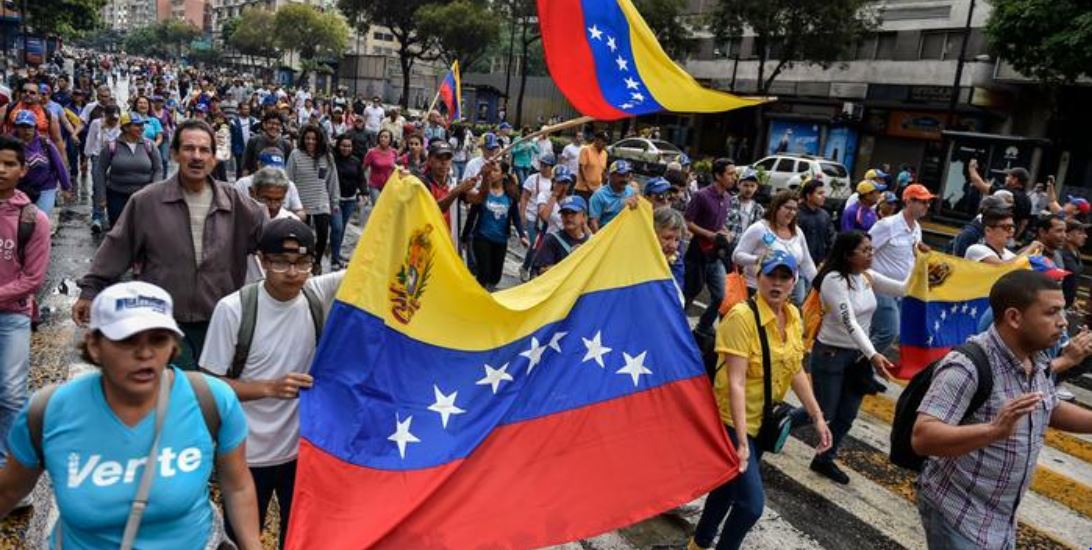
Venezuelan protest, 31 January 2019. Photo credit Deutsche Welle, German public broadcaster.

I was very happy to be interviewed for the Latin American “Energy Analytics Institute” (EAI), a Houston-based consultancy and news service. I’ve followed its work for years.

With Biden in and Trump out, everyone is debating how to deal with Maduro and his chavista regime that’s brought such misery and ruin in Venezuela. It’s not only the USA’s new LatAm team of Biden, Blinken and Nichols, but the EU, Norway, the OAS, the Lima Group, who are all looking for a new strategy. And so has the Venezuelan opposition, plus an increasingly important actor: the growing and doggedly persistent civil society organizations. Increasingly suffering forced-isolation from abroad, this array of social, cultural, media, medical, educational, nutrition, economic and political resistance groups do largely self-sufficient work to replace basic necessities and social-services, which the chavista government and ruined private sector can no longer provide.

However, in this brief Q&A what was addressed was not strategy per se; but a key underlying issue to understand in framing a strategy: the interests of both Moscow and Beijing as key obstacles to removal of the chavista regime. Read at EAI site (free) or Read below – Tom O’D.

China, Russia, Venezuela: Q&A With Thomas O’Donnell

(Energy Analytics Institute, 13.Feb.2021) — China and Russia continue to push around their might in Venezuela. Thomas O’Donnell with the Hertie School of Governance & Freie Universität-Berlin weighs in briefly here.

Energy Analytics Institute: What might China and Russia be willing to do this year to assist Venezuela’s President Nicolas Maduro?

Thomas O’Donnell, PhD: Beijing’s original (and perhaps still) plan for Venezuela was deep vertical integration mirroring PDVSA-Citgo Petroleum: new Faja upgraders, a pipeline to Colombia’s Pacific coast, dedicated ships, dedicated domestic Chinese refineries, etc. All very rational and lucrative for both sides. China became alarmed with Hugo Chavez’ unreliability and incompetence within a few years and with Maduro’s incapacity to reform within a year or so. The entire “oil-for-loans” history was a fallback strategy for Beijing – at least secure an oil stream with minimized risk. I have no doubt the Chinese Communist Party wants a new Caracas regime it can work with.

Continue reading →

Could Nord Stream 2 be axed? My guest appearance on Roundtable -TRT TV, London

This 10 February half-hour roundtable on TRT Television, London looked at the possibility of Nord Stream 2 being stopped by US sanctions. My thanks to host David Foster for the invite.

Today is 20 February, and I should add that since this was recorded, the Biden-Harris-Blinken administration has surprised Congress by sanctioning significantly fewer ships than it expected to be sanctioned for assisting Gazprom to lay pipe in Danish and German waters.

This White House attempt to generate goodwill with Berlin and with Merkel’s ruling coalition is generating bipartisan objections in Congress. Upcoming posts will analyze this development . Tom O’D. Below is the text from TRT network’s promotion of the show. and guests’ names and affiliations.

Continue reading →

The FT quotes my critique on: “German green foundation joins efforts to complete Nord Stream 2”

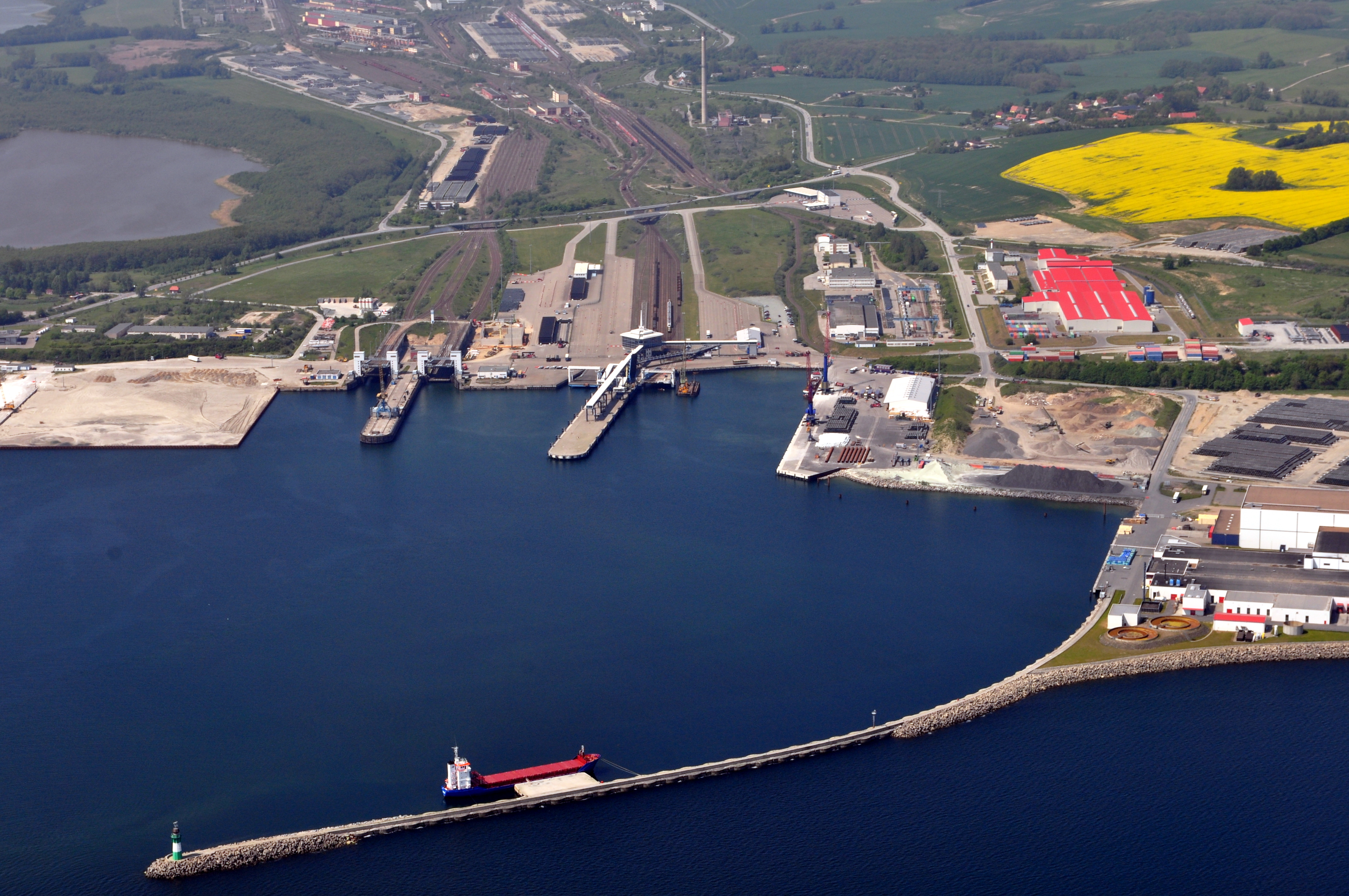
Baltic Sea Port of Mukran, Mecklenburg-West Pomerania.. Logistic center for building Nord Stream 2 pipeline. – By Klugschnacker – Own work, CC BY-SA 3.0, https://commons.wikimedia.org/w/index.php?curid=15320681

“This is either a conscious Russian disinformation scheme to collect supplies from naive firms, or it’s a really irresponsible move by the foundation,” said Thomas O’Donnell, energy and geopolitics analyst at Hertie School of Governance. (“German green foundation joins efforts to complete Nord Stream 2,” Financial Times, 21 Jan 2020, see here, or PDF here.)

The FT’s Erika Solomon interviewed me about the fake “climate-protection” foundation established by the legislature of the German state of Mecklenburg-West Pomerania (German initials MV).  State officials stated intent is to help Gazprom, the Russian state gas monopoly, overcome US sanctions to finish building the Nord Stream 2 pipeline. Their new foundation is financed with €20 million from Gazprom (sole owner of Nord Stream 2 AG), and €200,000 from the state government.

The strategy is for the foundation to purchase “rare and hard to find” equipment Nord Stream 2 AG will need to finish the pipeline, but which firms cannot sell directly to it because of US sanctions against the project. MV politicians have called their foundation a “clever mechanism” to protect firms from sanctions.  According to the state’s energy minister, Mr. Christian Pegel (SPD), the foundation will be a “type of hardware-store shelf” (“Baumarktregal-Variante“) that then supplies the Gazprom operation. The strategy here is that with the “climate-protection” foundation acting as the middleman, German firms will both not deal directly with Gazprom’s sanctioned Nord Stream 2 project, and the foundation’s purchases will be completed “before the deadline” when sanctions are applied.  

However, there are no such loopholes to be exploited.

Continue reading →

My EuroNews Q&A: All German parties back Nord Stream 2 except Greens; USA says it frees Putin to subvert Ukraine & Belarus

My EuroNews live Morning Show interview today (9 Dec 20) with Rosie Wright:

I explains why the German far-right AfD party, which went to Moscow yesterday to show Lavrov their party’s support for Nord Stream 2, supports the project. The AfD supports it along with all other German parties, from “far-right to far-left, and those in the middle, except the Greens.”

Also, I explain how Europe’s dependence on Russian gas will require decades to escape.

However, what are the strategic objectives of Moscow in building Nord Stream 2? I explain Putin wants to build Nord Steam 2 through the Baltic Sea to Germany as well as to complete the Turk Stream (formerly South Stream) pipeline across the Black Sea and Turkey and on into the Balkans and then into Central Europe, and also west to Italy. The reason for this is so that Gazprom does not have to send Russian gas to Europe via Ukraine and Belarus, countries that are in rebellion against Russian dominance.

Continue reading →

My EuroNews live interview: Contrary to Moscow’s disinformation & bravado, Nord Stream 2 pipeline is dead.

Host Rosie Wright, of EuroNews Morning Show interviewed me today. I explain how Nord Stream 2 AG’s plan to lay 2.6 kilometers of pipe in shallow German waters actually shows that US sanctions have effectively killed this German-Russian mega natural gas project designed to help both countries avoid shipping/receiving gas that transits Ukraine (mostly), Belarus and Poland.

The pipeline is not bringing “new” gas to Europe, but is designed to end Gazprom’s (the Russian-state gas export monopoly) having to ship its gas exported to Europe across regions which Putin’s regime wants to subvert and pressure (including by military means) back into the Russian orbit. Ukraine and Belarus.

Berlin for its part, does not want to risk the EU’s gas supply by standing up to Moscow’s subversion against Ukraine and Belarus. The USA (i.e., Congress, on a bipartisan basis, and not Trump) has imposed harsh sanctions that are succeeding in stopping completion of the project. The Biden administration will not alter this reality; Biden has opposed this project and always championed the cause of Ukraine reform and independence from Russian dominance, in favor of moving towards the EU.

Note: EuroNews is the most watched news in Europe, reaching 135 million viewers/month. — Comments and critiques most welcomed, either below, or privately to twod-at-umich.edu. — Best, Tom O’D.

Nord Stream 2: Berlin-Washington Mutual Intransigence Shows Transatlantic Divide on Russia | My AICGS Analysis

Credit: Gerd Fahrenhorst via Wikimedia Commons

My analysis of the US-German crisis over Nord Stream 2 and policy towards Russia, published in Washington by the American Institute for Contemporary German Studies (AICGS), 8 October 2020. Read it at AICGS website\. Or, continue here. Comments & Critiques welcomed (below or via email)

Nord Stream 2: Allies’ Crisis

Two decades of Washington-Berlin collisions over the Nord Stream 1 and now the Nord Stream 2 pipelines have come to crisis.

The U.S. Congress stopped Nord Stream 2 construction in December 2019 by enacting sanctions under the Protecting Europe’s Energy Security Act (PEESA), and is poised to enact a much harsher “Clarification” of PEESA, sanctioning any entity that resumes or aids in resuming construction in the Baltic Sea. German officials insist the project will, nonetheless, be completed, denouncing U.S. sanctions as “extraterritorial” interference in “European sovereignty.”

In reality, the project appears dead. Statements by businesses interests, as opposed to political actors, support this.[1] To resume construction, companies, ports, officials, and insurers would require guarantees against ruin, including being personally sanctioned, which is difficult to imagine the German state providing. And there is no evidence of preparations to do so. Nevertheless, Russia’s Gazprom continues preparations to resume work.[2]

Complicating matters, the U.S. Congress, having mandated sanctions against the pipeline, would have to approve any compromise. On the other side, the German Bundestag roundly “savaged” a motion by the Green Party to abandon Nord Stream 2 in response to Navalny’s poisoning, unprecedentedly uniting the CDU/CSU of Chancellor Merkel and her SPD coalition partners with both the far-left Die Linke and far-right Alternative for Deutschland.[3]

Continue reading →

EE UU v. Alemania: Sanciones y el oleoducto ruso Nord Stream 2 | Fui invitado en “El Fundo” de DW TV

capture.-dw-ns2-15aug20aAquí abajo se puedan ver la grabación de la tortulia del 15 de agosto entre dos expertos y yo en el programa “El Fondo” de la red alemana de Deutschewelle (DE.de TV) sobre “la lucha entre aliados” de los EE. UU. y Alemania en la que Washington ha amenazado con fuertes sanciones contra su aliado de la OTAN, Berlín, por su participación en el proyecto del gasoducto ¨Nord Stream 2¨ con Rusia.  Gracias a DW y su moderadora venezolana Silvia Cabrera.

El video: https://www.dw.com/embed/640/av-54570546 |  Descargar MP4 |  Enlace permanente https://p.dw.com/p/3gyI6

Tenga en cuenta que estas no son sanciones del presidente Trump, sino sanciones impuestas por el Congreso en contra de los deseos de Trump y con el amplio apoyo de ambos partidos. Hay mucha ira en el Congreso contra Rusia por sus malas actividades en Europa en materia de suministro de gas natural al continente por parte de Moscú de forma geoestratégica, pero también por su invasión de Ucrania en 2014, y sus extensas actividades contra las democracias del Oeste.

Para Estados Unidos, este proyecto es una peligrosa colaboración de Alemania con Rusia contra los intereses y la independencia energética de la UE y especialmente de Ucrania, un país con partes de su territorio ocupadas por Rusia desde 2014.

De la propaganda del programa El Fondo de DW.de:

“¡Extorsión!” “¡Guerra comercial!” que traería gas de Rusia a Alemania. ¿Se dañará la relación entre Alemania y Estados Unidos? ¿Definirá Estados Unidos la política energética alemana?