The title and brief interview is rather self-explanatory. The interview starts after a brief intro, after 30 seconds.
Thanks to Daniel Winters, German national broadcaster Deutsche Welle’s (DW.de) English language Business News host for this invitation. We spoke, in Berlin, only a few hours after the cap was announced in Moscow.
Al Jazeera asked for an online commentary within an hour of Putin’s announcement. These were my initial thoughts.
I also spoke to AJ Arabic, and a couple hours later, on Germany’s Deutsche Welle’s English language service elaborated on these points (see video, next blog post).
The question is where will the EU-USA-g7 western alliance go from here. If they stepwise lower the cap, and also work hard to get new oil online (from OPEC and the USA), they can gradually keep lowering Russia’s market share. However, as I indicated, the coming recession – esp. in Europe – and the uncertainties of Chinese demand as it exits COVID shutdowns in early 2023, complicate calculations of whether the globala oil market will be short or long on supplies and if the price will spike or not. I said this will be “a chess game.”
My comments are at (1) 4:19, (2) 16:20, and at (3) the end 23:15.
Guests:
Nicholas Lokker, Research Assistant at the Centre for a New American Security
Marie Jourdain, Visiting Fellow at the Atlantic Council’s Europe Center
Dr. Thomas O’Donnell: Energy and Geopolitics Analyst
Host: Philip Hampsheir, sitting in for David Foster.
From the TRT YouTube page blurb:
Dec 7, 2022 – Top European Union officials are accusing the United States of profiting from the war in Ukraine through high natural gas prices and weapons sales, while Europe struggles with rampant inflation and a cost of living crisis. Amidst rising tensions, a meeting between French President Emmanuel Macron and his American counterpart in Washington saw both attempt to send a message of unity.
This interview (Arabic video; English audio above) was recorded the evening of 29nov22 as the EU struggled over how low to set the price cap.
Soon, it will be agreed, and will gradually become devastating for Russia.
As new non-Russian oil resources are developed (e.g., in Guyana, Suriname, UAE, Iraqi and other fields) and/or oil fields come back online (e.g., Venezuela, Libya, …), the EU and G7 will feel confident to further lower the price further and further below the price of Brent and WTI crude.
This interview with Artur Ciechanowich (Polish Associated Press-PAP, Brussels) appeared on Sunday, 25 November 2022 in several Polish press, TV and radio outlets (links below this post). Polish & English (via Google Translate) versions follow:
ENGLISH – via Google Translate
Europe without gas and oil from Russia? An expert gives a possible date
If the European Union does not bow to the Russian energy attack, it may completely replace gas and oil imports from this country with raw materials from other sources within four to six years, said Thomas O’Donnell, an energy market analyst and lecturer at a university in Berlin …..
Russia is waging an energy war against Europe, which is part of a larger war between Russia and Ukraine. We see that the war on the battlefield is not going Russia’s way, so the Kremlin is counting on its energy policy to cause enough economic problems for Europeans to divide the EU and withdraw from solidarity with Ukraine, says O’Donnell.
The question of replacing gas and oil imports from Russia
Vladimir Putin has a much greater influence on Europe through the supply of gas than oil. This is because gas is mainly supplied by pipelines. Around 2027, Europe, the United States, Qatar and others will increase the export capacity of liquefied natural gas enough to replace the EU’s dependence on Russian gas and allow gas prices in the EU to fall to levels close to the low prices in the US, the analyst predicts.
However, he does not hide that before this happens, citizens of EU countries will have to go through a more difficult period. “This is an energy war, and in a war both sides suffer – consumers and businesses in the EU will suffer. It will take at least four years to implement huge new LNG export projects from the US and Qatar, he cautions, adding that the EU will also need to receive as much gas as possible from Algeria, Egypt and Norway.
This year Europe filled up its gas storages. It will be harder next year. It should be understood that the storage facilities – under normal conditions – have never been used to provide normal gas supplies to consumers. They’re just too small for that. They were created with the idea of storing the raw material saved in the summer and using it in the winter, when the Russian and Norwegian pipelines could not keep up with the demand, explains Thomas O’Donnell.
He points out that, therefore, Germany has repealed the regulations requiring the maintenance of a minimum temperature in homes, and in some EU countries there are debates about power cuts for citizens. – Europe has become dependent not only on Russian gas, but also on completely unpredictable wind energy. If the wind is weak – as in the 2020-21 season – combined with the lack of appropriate transmission networks and the lack of technical capacity to store electricity on a large scale, it can mean a disaster. These are the facts. In times of war, citizens must know the whole truth, the expert argues.
PAP He emphasizes that Russia is waging an energy war against Europe in order to break its solidarity towards Ukraine. – In the US and Qatar, but also in Norway, Algeria, Azerbaijan, Israel, Egypt and so on, there are plenty of new gas reserves, financing opportunities, technologies and functioning markets. In four to six years, Europe’s dependence on Russia will be completely replaced by imports from other directions. This also applies to crude oil. Russia, meanwhile, will be reduced from an energy superpower to an OPEC second or third tier country, concludes O’Donnell.
TVN24 live – watch on TVN24 GO The material is part of the TVN24 GO website Author:kris/ToL
Source: PAP
Main photo source: Marcin Bielecki/PAP
POLISH – as from PAP
Europa bez gazu i ropy z Rosji? Ekspert podaje możliwy termin
Jeżeli Unia Europejska nie ugnie się przed rosyjskim atakiem energetycznym, to w czasie od 4 do 6 lat może całkowicie zastąpić import gazu i ropy naftowej z tego kraju surowcami z innych kierunków – stwierdził Thomas O’Donnell, analityk rynku energetycznego i wykładowca na prywatnej berlińskiej uczelni ….
Rosja prowadzi przeciwko Europie wojnę energetyczną, która jest częścią większej wojny Rosji z Ukrainą. Widzimy, że wojna na polu bitwy nie idzie po myśli Rosji, więc Kreml liczy na to, że jej polityka energetyczna wywoła u Europejczyków wystarczające problemy ekonomiczne, by podzielić UE i odstąpić od solidarności z Ukrainą – mówi O’Donnell.
Kwestia zastąpienia importu gazu i ropy z Rosji
Władimir Putin ma znacznie większy wpływ na Europę poprzez dostawy gazu niż ropy naftowej. Dzieje się tak, ponieważ gaz dostarczany jest głównie rurociągami. Około 2027 roku Europa, Stany Zjednoczone, Katar i inne kraje zwiększą możliwości eksportowe skroplonego gazu ziemnego na tyle, aby zastąpić zależność UE od rosyjskiego gazu i pozwolić na obniżenie cen gazu w UE do poziomu zbliżonego do niskich cen w USA – przewiduje analityk.
Nie ukrywa jednak, że zanim to się stanie, to obywatele państw Unii będą musieli przejść przez trudniejszy okres. – To wojna energetyczna, a na wojnie obie strony ponoszą ofiary – ucierpią konsumenci i firmy w UE. Co najmniej cztery lata zajmie wdrożenie ogromnych nowych projektów eksportu LNG z USA i Kataru – zastrzega, dodając, że UE będzie musiała otrzymywać jak najwięcej gazu także z Algierii, Egiptu i Norwegii.
W tym roku Europa napełniła swoje magazyny gazu. W przyszłym roku będzie trudniej. Należy rozumieć, że magazyny – w normalnych warunkach – nigdy nie służyły do zapewniania normalnych dostaw gazu konsumentom. Są na to po prostu za małe. Powstawały z myślą przechowania surowca zaoszczędzonego latem i wykorzystania go zimą, kiedy rosyjskie i norweskie rurociągi nie nadążały z zaspokojeniem popytu – tłumaczy Thomas O’Donnell.
Zwraca uwagę, że w związku z tym, Niemcy uchylili przepisy nakazujące utrzymywanie w domach minimalnej temperatury, a w niektórych krajach Unii toczą się debaty na temat przerw w dostawach prądu dla obywateli. – Europa uzależniła się nie tylko od rosyjskiego gazu, ale postawiła też na całkowicie nieprzewidywalną energię wiatrową. Jeśli wiatr będzie słaby – jak w sezonie 2020-21 – to w połączeniu z brakiem odpowiednich sieci przesyłowych i brakiem technicznych możliwości magazynowania prądu na wielką skalę, może to oznaczać katastrofę. Takie są fakty. W czasie wojny obywatele muszą znać całą prawdę – przekonuje ekspert.
PAP Podkreśla, że Rosja prowadzi wojnę energetyczną przeciwko Europie, aby rozbić jej solidarność wobec Ukrainy. – W USA i Katarze, ale też w Norwegii, Algierii, Azerbejdżanie, Izraelu, Egipcie i tak dalej, istnieje mnóstwo nowych rezerw gazu, możliwości finansowania, technologii i funkcjonujących rynków. Za cztery do sześciu zależność Europy od Rosji zostanie całkowicie zastąpiona importem z innych kierunków. Dotyczy to również ropy naftowej. Rosja tymczasem zostanie zredukowana z supermocarstwa energetycznego do drugoligowego lub trzecioligowego kraju OPEC – konkluduje O’Donnell.
TVN24 na żywo – oglądaj w TVN24 GO Materiał jest częścią serwisu TVN24 GO Autor:kris/ToL
Źródło: PAP
Źródło zdjęcia głównego: Marcin Bielecki/PAP
Here are links to some of the Polish media where the PAP interview was published:
1 day ago — … 4 do 6 lat może całkowicie zastąpić import gazu i ropy naftowej z tego kraju surowcami z innych kierunków – stwierdził Thomas O’Donnell, …
21 hours ago — Rosja tymczasem zostanie zredukowana z supermocarstwa energetycznego do drugoligowego lub trzecioligowego kraju OPEC” – konkluduje O’Donnell. Z …
1 day ago — Jeśli Unia Europejska nie ugnie się przed atakiem energetycznym ze strony Rosji, to w ciągu 4-6 lat zastąpi całkowicie import gazu i ropy …
1 day ago — Jeśli Unia Europejska nie ugnie się przed atakiem energetycznym ze strony Rosji, to w ciągu 4-6 lat zastąpi całkowicie import gazu i ropy …
1 day ago — Jeśli Unia Europejska nie ugnie się przed atakiem energetycznym ze strony Rosji, to w ciągu 4-6 lat zastąpi całkowicie import gazu i ropy …
27 Sept 2022 — Czy Europa jest wystarczająco silna, aby poradzić sobie bez ropy i gazu z Rosji? … Polska, podobnie jak pozostałe państwa Unii Europejskiej, …
Ile lat potrzeba UE aby uniezależnić się od importu ropy i gazu z Rosji? Ekspert wyjaśnia. Jeśli Unia Europejska nie ugnie się przed atakiem energetycznym …
Ekspert: Polska jest dobrze przygotowana na odcięcie dostaw gazu z Rosji, … sprawę z takiego niebezpieczeństwa – mówi w rozmowie z PAP Thomas O’Donnell, …Open document settingsOpen publish panel
The abstract is below. However, first, I must say how impressed I was by the respect and support attendees extended to the Ukrainian ambassador,, Mr. Kuzmenko Andrii, who was in attendance, as were other Ukrainian diplomats (photo below)
I was also impressed by the solidarity expressed by the great majority of academic and business participants, mostly from the Gulf and larger MENA Region, for the people of Ukraine in fighting Russian aggression. Many heartfelt analogies were made to Gulf and MENA-Region nations’ who have suffered invasions, especially citing Kuwait, Afghanistan, and Iraq.
I was interviewed (Tuesday 01nov22) on the new gas-price cap plan the German government is expected to approve tomorrow.
I was asked four questions by DW’s host Kate Ferguson:
-1- Thomas, it`s interesting to see the government attach conditions to these price caps for companies. How worried is it about a corporate exodus?
-2- German chancellor Olaf Scholz is visiting a BASF factory today – just days after the company announced major cost cutting – complaining that gas prices were up to six times higher at home than in the US. Are these caps enough to prevent OTHER companies from following suit?
– 3- Managing gas prices is one thing. But with a recession looming what ELSE does the German government need to do to keep companies afloat?
-4- The EU hasn`t been able to agree on a COMMON gas price cap. How damaging is it for countries to go it alone? I was not particularly optimistic.
The above were not especially technical energy-sector questions, so my answers combine assessments of energy-sector facts facing Germany with geopolitical and geo-economic assessments of the deep crisis facing German industry, citizens and the political establishment. Read more on my blog: http:GlobalBarrel.com . Continue reading →
We began at timestamp 1:00 minute, after TRT’s lead-in story.
With guests:
Dr. Thomas O’Donnell: Energy Analyst, in Berlin
Eser Özdil of Glocal Group Consulting; and Former President of The Turkish Petroleum and Natural Gas Platform Association. He is also an external fellow of the Atlantic Council in Washington, DC.
and Host Ayse Suberker of TRT TV’s Straight Talk from Istanbul.
We analyzed what Putin aims to achieve, and why President Erdogan of Turkey has so rapidly accepted this proposal. This is obviously, I said, a scheme by Putin to try to save his natural gas business to Europe.
Lucia Scripcari Analyst on Moldovan Domestic and Foreign Policy
Thomas O’Donnell Energy and Geopolitics Analyst, and academic, in Berlin.
The energy security of Moldova, a small, pro-EU state boarding Romania, is precarious and under various and comlpex threats from Russia. This includes direct threats to its gas supplies, which overwhelmingly come from Gazprom.
Meanwhile, Moldova’s 70% of its electricity comes from its region of Transnistria, which is illegally occupied by Russia, and this electricity is produced by gas imported across Moldova by Gazprom.
The remaining 30% of its electricity comes from Ukraine, where recent Russian missile strikes have hit power plants and apparently forced a cut off the Ukrainian electricity supplies to Moldova on the day before we recorded this show.
Left: Dr. Tom O’Donnell, interviewed on the Berlin meeting, Right, Portuguese PM Costa and Chancellor Scholz in Berlin. Spain’s PM Sánchez also attended.
Given the wartime energy emergency in Europe, it is perhaps astonishing that President Macron of France continues to block completion of the Midcat Pipeline.
Completion of this pipeline, whose construction was interrupted well before the Ukraine War began, would enable Portugal and Spain, located on the Iberian Peninsula, to send much of the abundance of LNG and pipeline gas these countries are able to import on northward, across the Pyrenees Mountains, across France and into Germany and other northern and eastern EU Member states, which are being starved of natural gas by Russia.
I am asked for my theory as to why President Macron would block this obviously much needed pipeline from crossing his country. We discuss several other related issues as well.
Is this even a real proposal? Nowadays, after becoming so unreliable a supplier of gas to Europe, in fact having weaponized Russian gas deliveries, it is difficult for anyone to take this proposal seriously. Erdogan may have many significant problems; however he and Turkey are not so naieve as to do what Germany and Austria forced the European Union to do, i.e., become overdependent on Russian gas, especially given the deep energy crisis Europe is currently going through.
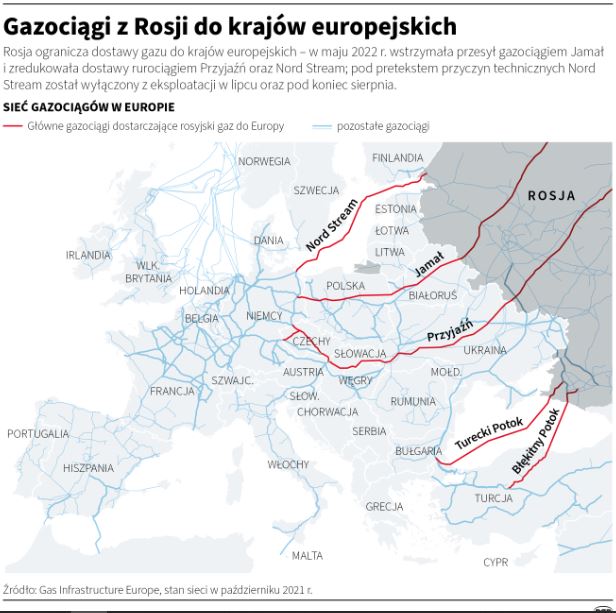
But, also consider this (as I explained towards the end): This proposal of sending Nord Stream gas, originating in Northern Urengoy province, above the Artic Circle, would also require a big, new pipeline laying project, running at least from perhaps near the Ukrainian border south towards the Black Sea and then onto Turkey. This would have a significant cost. And, by the time this could be finished – in perhaps five or more years – the world will have moved on. By that time, new LNG and natural gas production potential in the USA, Qatar, Australia, Algeria, Norway, Israel (sent to Egypt for liquification) and likely many others’, will have been developed and be on the global market. On this time horizon, there would be plenty of diverse sources of gas fully able to replace Russian export capacities.
I also explained the history of the South Stream Pipeline …
Video: 2BS (To Be Secure) Forum, Budva, Montenegro, 08Oct22 (excerpted from Forum video at link.)
My thanks to Jasmina Kos (Al Jazeera, Balkans) for moderating our panel, and to my friend and colleague Prof. Alan Riley, who joined us via video link from Brussels.
Also my thanks to the 12th Annual 2BS Forum, especially Azra Karastanovi, executive director of the Atlantic Council of Montenegro for the invitation. The Forum was an informative and especially sober event (i.e., more on how the state-crisis of Montenegro’s politically split ruling coalition played out even during the conference sessions in another post, soon.)
As for our panel, we discussed in some detail the reasons for Putin’s energy war against Europe, the likely reasons Russia would sabotage the Nord Stream pipelines, the status of the European struggle to replace Russian gas with other sources – and how bad might the crisis be during this and the next few winters, the question of the role of renewables, the role of conservation of gas and electricity use, and the potential for new-build nuclear power in Europe. Comments, corrections and critiques are most welcomed.
Dr. Thomas O’Donnell with the former Director of Montenegro’s National Security Agency Savo Kentera. Photo credit: Jason Jay Smart, Kyiv Post. [Note: At a reception hosted by Montenegro’s Defense Minister during the 2BS Forum in Budva, a few hours after the Prime Minister had fired Kantera, who had expelled Russian spies without the PM’s permission. The following interview took place the same day, at the 2BS conference. T. O’D.]
To read the interview at Kyiv Post, which I recommend, go to this link. My thanks to Jason Smart for the interview. – If the link is down, here is the interview:
Dr. Thomas O’Donnell is an American energy and geopolitics expert, based for the last decade in Berlin. He has been deeply engaged in analysis and critique of the German-Russian gas partnership and continues to undertake work on geopolitics surrounding global oil markets and OPEC/OPEC+ states.
A nuclear physicist by training, O’Donnell is a proponent of a European nuclear renaissance over the perceived dangerous illusions of “100 percent renewables and no nuclear” policies. He blogs at GlobalBarrel.com and his Twitter handle is @twodtwod.
He spoke to Kyiv Post’s Jason Jay Smart about Russia’s weaponizing of energy supplies, how long that can go on, and the outlook for winters to come in Europe.
What do you make of the bombing of the underwater Nord Stream pipelines?
We must be clear when we talk about the bombing of Nord Stream 1 and Nord Stream 2 pipelines – Europe is being subjected to an energy war by Russia, which is part of the larger Russian war against Ukraine. We see that the battlefield war isn’t going well for Russia, so Russia is betting on its energy policies being able to cause enough economic pain for Europeans to divide Europe, with hopes that Europe will then abandon its solidarity with Ukraine.
Which is more strategically valuable to Russia and why: Gas or oil?Continue reading →