“US Expert Perspectives on German Energy Vulnerabilities” – My AICGS/Washington Project

merkel_putin_dw_17481033

German Chancellor Merkel listens to Russian President Putin [Photo: dw.de 29.4.14]

Throughout April and May I’m researching US Expert Perspectives on German [and EU] Energy Vulnerabilities – as a visiting fellow of the American Institute for Contemporary German Studies (AICGS) in Washington, DC, funded by the German DAAD.  You can read the proposal below.  But, first, I’d like to ask Global Barrel readers for two things:

(1) Is there anyone you feel I should interview here in Washington–the idea is to interview US energy experts, government officials and business people?

(2) What is your opinion of German and EU energy policies and their geopolitical implications. This includes issues ranging from German/EU dependence on Russian gas, the Ukraine and Turkey as gas-transit states, the new European “Energy Union,”  the German Energiewende, and more—no matter on which side of the Atlantic you live. 

[I’ve deleted the names of people I propose to interview, as not all will agree to have their remarks made public. I’m happy to keep opinions private and use them in general summaries of my findings.]

Paralyzed on Economic Reforms, Venezuela Will Mortgage Citgo [My Americas Quarterly analysis]

listverse.com-28jan15-178789073

Photo:: Listverse.com

[My post at Americas Quarterly, 5 Feb 2015]  Since before the death of Venezuelan President Hugo Chávez in March 2013, his successor, Nicolás Maduro, has remained paralyzed to enact reforms needed to escape the economic dysfunction Chávez left behind.

In his latest national address on the economy on January 21, Maduro finally acknowledged the recession and shortages faced by Venezuelan citizens. Yet, he failed again to clearly implement any of the pragmatic economic reforms[1] advocated by Rafael Ramírez, the former minister of energy and former president of Petróleos de Venezuela, S.A. (Petroleum of Venezuela—PDVSA)— such as a de facto bolívar-to-dollar devaluation via unification of Venezuela’s multi-tier foreign exchange (FX) system, measures to attract more foreign financing for oil production, and removing internal price controls, especially for gasoline.  Meanwhile, in September 2014, Ramírez was demoted to foreign minister, and then to UN ambassador several months later.

According to insiders, Maduro’s failure to implement pragmatic reforms stems principally from two sources.
Continue reading →

Oil Price Collaterals: Saudi strategy shakes Russia, Iran & Venezuela, but they’re not targets

Obama and Saudi King in Saudi Arabia after the death of previous king

Falling oil prices are not a US-EU-Saudi plot against Russia, Iran and Venezuela… though their effect is certainly not unwelcomed..Foto: REUTERS/Jim Bourg


[Printed in IP Journal, German Council on Foreign Affairs] Pin-pointing the reason for the dramatic – and continuing – fall in the price of oil is relatively easy: OPEC held its 166th conference in late-November 2014 to decide on a strategy to address oil prices, which had been falling at five to ten percent per month since July. Rather than pursue a production cut

Continue reading →

[Spanish] Mi opinión en Petroquía: China se involucra en los principales proyectos de América Latina

Here’s my piece [in Spanish] in Petroguía 2015, the oil-&-gas sector catalog for Latin America  Note: Hemispheric integration (e.g., energy infrastructure) was endlessly promoted by Hugo Chavez.  In the end, he built none. The region’s resources continue going mainly to develop other regions, such as China. Continue reading →

Watch: Falling Oil Price & Geopolitics – Saudis & OPEC, Russia, USA, .. | My Real News Network interview

A wide-ranging interview on the “perfect storm” of low prices from low demand plus rising production, the Saudi market strategy and some geopolitical implications.

My IP JOURNAL article | EU’s “Stress Test” of a Russian gas cutoff: Official optimism?

EC's Gas Stress Test: Would solidarity suffice to cope with any concerted Russian use of gas as a geopolitical weapon?  REUTERS/Wojciech Kardas/Agencja Gazeta

EC’s Gas Stress Test: Could the EU cope with a Russian use of gas as a geopolitical weapon?  REUTERS/Wojciech Kardas/Agencja Gazeta

What if Russia cuts off gas exports to EU states this winter?  This is a very possible means for Russian President Putin to escalate pressure on the EU and USA over the future of Ukraine. What could the EU do? The European Commission has just released the results of a simulation it ordered, involving 38 EU and neighboring states.   Here’s my analysis for the IP Journal of The German Council on Foreign Relations:

“Venezuela: Petroleum, Politics & Economics in the Post-Chavez Era”–My Columbia U. talk, with Luiz Pinto, 9 October

If you’re in New York:  Luiz Pinto and I speak at Columbia University’s Institute for Latin American Studies (ILAS) on post-Chavez Venezuela, 12-noon, Thursday, 9 October: ilas_venezuela_columbia_talk_09oct14

“Oil & the US-Iran Crisis” – My talk at American University, Washington DC:

If you are in Washington, DC, this historical overview of the US-Iran Crisis and the role of oil might be of interest:
american_u_iran_talk_01oct14JPG

Estoy citado en “Dinero”: La caída en la acción de Ecopetrol de Colombia no se debe únicamente a los ataques guerrilleros

Javier Gutiérrez Presidente de Ecopetrol  - La compañía tiene la meta de alcanzar el millón de barriles diarios de producción en 2015. Es claro que esa cifra está lejos de ser cumplida.

Javier Gutiérrez Presidente de Ecopetrol – La compañía tiene la meta de alcanzar el millón de barriles diarios de producción en 2015. Es claro que esa cifra está lejos de ser cumplida. (Dinero)

English Summary (Resumen en Inglés): I am quoted at length by Dinero  (Publicaciones Semana,  Bogotá) on the steep fall in value of the stocks of Colombia’s national oil company and largest corporation, Ecopetrol.  This had been blamed on FARC and ELN guerrilla attacks on pipelines this year. However, while attacks are up versus 2013, they are significantly below the numbers in several prior years.  Others blame the fall on a failure to expand reserves. Indeed, Ecopetrol has a very low exploration-drilling success rate. However,  I stressed that discovery of new reserves is not so much the problem as is the need to begin employing enhanced oil production (EOP) methods to Ecopetrol’s existing fields.  The percentage of oil Ecopetrol extracts is low.  To get more oil out of existing reserves, Ecopetrol needs to learn how to do EOP.  And, in certain formations, it has to learn how to drill much deeper.  Here is the article …

DINERO | 8/21/2014:   No solo violencia

La caída en la acción de Ecopetrol no se debe únicamente a los ataques guerrilleros. El principal problema de la compañía es operativo: no ha podido encontrar nuevas reservas.

Continue reading →

My IP Journal latest: “A firm US-EU partnership on Iran came at great cost, and made a deal possible”

EU and Iranian foreign ministers (foto: Austrian Foreign Ministry)

EU and Iranian foreign ministers in Vienna (Austrian Foreign Ministry)

My latest at the IP Journal of the German Council on Foreign Relations (DGAP): US-EU Cooperate on Iranian Nonproliferation:  Agreement positions Tehran as regional leader — IP Journal 14/08/2014 

Although negotiators failed to reach agreement on Iran’s nuclear program by the late-July deadline set last November, as Iran’s Foreign Minister Mohammad Javad Zarif put it: “We have made enough headway to be able to tell our political bosses that this is a process worth continuing. … I am sure Secretary Kerry will make the same recommendation.” Indeed, Washington, Brussels, and Tehran readily agreed on a four-month extension.

This represents a sea change in tone from the period prior to November 2013, Continue reading →

Aside

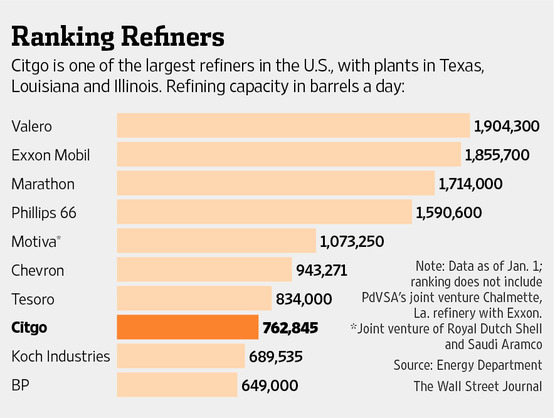
Last week, I was quoted in the Wall Street Journal on why Petróleos de Venezuela SA (PDVSA) is looking to sell its Citgo refining affiliate in the USA. The key motivation, in my estimation, is to finance projects critical to PDVSA-president Rafael Ramirez’ plans to rebuild PDVSA. My analysis follows the WSJ  link …

Cash-Poor Venezuela Weighs Sale of Citgo – Wall Street Journal

wsj_chart_MK-CO266_CITGO_G_20140730190004“By closing Citgo they would free up a lot of oil going to the United States and continue to service China,” said Thomas O’Donnell, a visiting Energy …


ANALYSIS:  Raising cash quickly to complete key oil and gas (O&G) projects is critical to PDVSA president Rafael Ramirez’ plan for the company’s recovery.

(Two additional motivations have been offered by analysts: To send more oil to China, and to avoid Citgo’s assets being seized to pay compensation that might soon be awarded to companies PDVSA nationalized while Chavez was alive. However, these are not  fundamental reasons, and actually there are various holes in their logic. I elaborate in an upcoming article.)

The driving interest here is to get cash.  And,  right now it’s a seller’s market for Continue reading →

My talk on Iran, NYC | After an Iran-USA deal: A Mideast without democracy, run by Iran & Saudi Arabia?

Figure 1.  Ayatollah Hashemi Rafsanjani (R) exchanges greetings with the new Saudi Arabian ambassador to Iran, Abdulrahman Bin Groman Shahri in Tehran, April 22, 2014. (photo by Twitter/ISNA)    Read more: http://www.al-monitor.com/pulse/originals/2014/04/rafsanjani-saudi-ambassador-kiss-controversy.html#ixzz32ktJuoKR

Kiss between Rafsanjani and Saudi ambassador stirs controversy   Former Iranian President, Ayatollah Hashemi Rafsanjani (R) exchanges greetings with the new Saudi Arabian ambassador to Iran, Abdulrahman Bin Groman Shahri in Tehran, Al Monitor, April 22, 2014. (photo by Twitter/ISNA)

Appreciation: I am honored to again be invited by my Iranian colleagues in New York, Professors Reza Ghorashi, Hamidah Zangeneh and Hamid Sedghi, to join this panel and discuss the geopolitics of US-Iranian relations.  And, my thanks to Prof. Sedghi for reading my paper as I am teaching in Berlin and cannot be with you today. I only ask that those who dislike my message, kindly refrain from shooting the messenger.

Introduction

The US-Iran nuclear confrontation finally appears close to resolution.  This is because both Presidents Obama and Rouhani desire a diplomatic solution, and both countries need to move on. With such an agreement, it is possible that relations will slowly become normalized.

Of particular note—as a direct consequence—are the recent secret negotiations between Iran and Saudi Arabia towards a rapprochement.  These were initially facilitated by Oman (e.g. see reports here, here, and here). Until very recently the Saudis had remained fiercely opposed to any US deal with Iran.  However, the Saudi’s are realists, and know when it is time to adapt.  Figure 1. is a photo of kisses exchanged on 22 April between ex-President Rafsanjani of Iran and King Abdullah’s ambassador to Iran, which caused quite a stir in the region. Agreements reached in these recently revealed negotiations have already significantly affected the presidential-succession crisis in Lebanon, sectarian conflicts in Iraq, and the conflict in Yemen. Next the two sides are expected to negotiate regarding their interests in the Syrian conflict.

In addition, the nature of the US-Saudi relationship is changing, transferring much more responsibility on the Kingdom and its Gulf partners for their own defense–albeit strongly supported with US weapons and logistics. This is part of the US disengagement from direct regional interventions, which will be significantly furthered by a successful US-Iran agreement (e.g., see here and here, and this report on Saudi defense buildup from Balfour at Harvard).

How are these new developments to be understood? Continue reading →

USA Oil Seminar 5.0 | USA as Rising Energy Superpower?

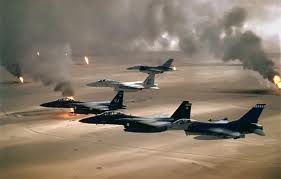
us_air_force_jets_oil_buring_iraqNote: These “USA Oil Seminar” posts are extra readings for my students to better understand how US energy policy is developed and to hear the views of US experts.  The seminar is: “The Global Oil System & US Policy” at JFK Institute of FU-Berlin. 

RECOMMENDATIONS:

  1. This Friday, watch live (or the recording later on): Is the U.S. a Rising Energy Superpower? Implications for Global Markets and Asia, the Middle East, Russia, and Europe.  CSIS upcoming talk by Fereidun Fesharaki.  FRIDAY, MAY 16, 2014 | 10:00 AM – 11:30 AM .  Moderated by David Pumphrey.
  2. Read the paper: Fueling a New Order? The New Geopolitical and Security Consequences of Energy |April 15, 2014. By: Bruce Jones, David Steven and Emily O’Brien.  Brookings Institute; Washington, DC.

BACKGROUND:  This week, the class reading assignments are a couple conference papers I wrote a few years ago on the history and structure of today’s global oil system, and how it grew to replace the neo-colonial oil system. Continue reading →

My IP Journal article | Addressing Europe’s Energy Dependence on Russia: Gas globalization?

 25371_460x259Globalizing gas market, creating OECD strategic reserves could make embargoes history | By Thomas W. O’Donnell  6May14| Post-war Western Europe was twice the target of energy embargoes, each dramatically altering its energy landscape. A lesson for today is that Europe’s present natural gas dependence on Russia can be addressed with a gas policy like that adopted by the OECD for oil in 1973 – one that launched today’s collective, market centered, and embargo-proof global oil security system.

Russian President Vladimir Putin wrote a letter made public April 10, 2014, warning several EU heads of state that Ukraine must pay its past due gas bill of $2.2 billion or Russian energy giant, Gazprom, “will completely or partially cease gas deliveries” to the country and be “compelled” to insist on payments one month in advance for any future deliveries – including $5 billion to refill Ukraine’s gas reserves before next winter.  CONTINUE READING AT:  odonnell-addressing_europes_energy_eependence_on_russia_IP_Journal-06may14


USA Oil 3.0 | US energy experts on Europe, Russia & Ukraine

Note: I’m teaching a post-graduate course “The Global Oil System & US Policy” at JFK Institute of Freie U. in Berlin. In order to give students a feel for how US energy policy is developed–and to see the views of important US actors–I’m sending them frequent e-mails with supplemental readings and videos  from US think tanks, US government offices and from the US media on energy topics.

These are not my own in-depth analysis like I usually post on GlobalBarrel.com.  However I think they are worthwhile sharing with especially non-USA followers of my blog.  I’ll title these posts “USA OIL” plus a number to label them).  I hope these are useful.  Here’s today’s ‘optional material’ I sent to my students:

How is US energy policy developed? You might find this video of interest.

Some background: The CSIS (Center for Study of International Security) is a non-partisan (i.e., not Democratic or Republican) think tank in Washington, DC. It performs an important role in US foreign policy. Continue reading →