This is a brief live-on-air commentary just after the G7 announced that it would release 100M barrels of diesel fuel to supply markets that are tight due to the Hormuz crisis. This will go a long way to keep inflation in the US, Europe and Asian allies down, protecting consumers and economies.
While Hormuz is already, as I said, transiting as much CRUDE OIL as before the Iranian regime closed it – i.e., Tehran has lost control of the Straight to the US military, which is successfully escorting ships out even in daylight now.
Meanwhile, the amount of REFINED OIL products flowing out has not yet gotten up to pre-war levels, and so we see the present refined-fuel-market shortages and high prices.
This is part 1.0 of a series on the US-Iran war and the present US global energy offensive. Hormuz developments are altering some elements of the one, “Global Barrel” market-centered collective energy-security model that dates to 1973, and which I named this blog after 15 years ago (after I had apparently coined that name).
I will have No. 2.0 of this Iran series soon. Here is 1.0, my brief BBC interview of last night, with some comments below here.
This was my fourth interview with BBC Persian Service, London in recent months. It feels important to get things clear when I have the opportunity to speak directly to Iranians or to Ukrainians.
Comments:
The larger USA global oil-sector offensive involves Russia, Iran, Venezuela, India, and other countries. I’ve seen these each as USA “shaping operations” aimed at preparing the energy landscape favorably to the US and its allies before any future armed conflict with China might begin – or to prevent one.
As I explained earlier (e.g., Jerusalem Post interview), a problem for the Islamic Republic of Iran, in deciding to take control of Hormuz, is that its control can only degrade over time under US pressure.
In the past few weeks, as it’s grip was loosened by the US military, it needed to find a further lever. In the past few weeks Tehran tried two things to reverse its weakening Hormuz position:
Yesterday, I had a long talk with ‘Post’ Mideast reporter Danielle Greyman-Kennard. My thanks to her. – Tom O’D.
Although 14 to 15 million barrels of oil passed through Hormuz per day before the war, an expert told the Post that it was entirely possible to manage without much of that supply.
27 Aug. 2026, updated 28 Aug. – Though the Islamic Republic of Iran has established a “sophisticated panoply” to protect itself against the possibility of regime change, its trump card, the Strait of Hormuz, is losing its strategic value and will continue to do so, former Wilson Center global fellow Thomas O’Donnell told The Jerusalem Post on Thursday. (Continue reading at GlobalBarrel.com or at Jerusalem Post here)
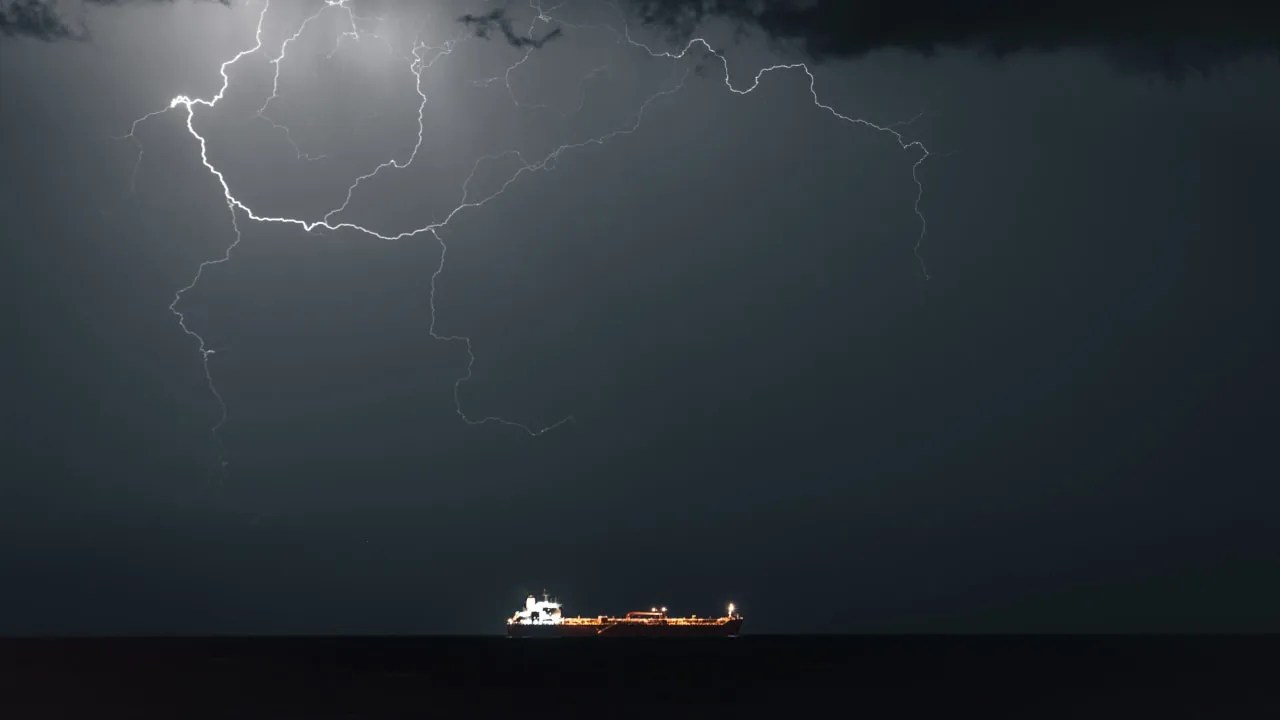
Lightning occurs when META 4, an Oil Products Tanker, sails into Muscat Anchorage on March 21, 2026 at Sultan Qaboos Port in Muscat, Oman.President Donald Trump had threatened to attack Iran’s energy infrastructure if it did not end its de facto blockade of the Strait of Hormuz by March 23.(photo credit: Elke Scholiers/Getty Images)
With many of the regime’s regional proxies degraded over years of war with Israel and its nuclear ambitions delayed after the 12 Day War in June last year, Tehran only has its rockets, drones, and ability to threaten the Strait of Hormuz left as an insurance policy against attempts to topple the regime, he noted.
These remaining elements will be used to dissuade action while it restores the others, but they are losing the weight they once carried, O’Donnell added.
Though 14 to 15 million barrels of oil traveled through Hormuz per day before the war, he argued that it was very possible to manage without much of that supply.
Saudi Arabia’s East-West Crude Oil Pipeline moves around five million barrels per day for non-domestic use, while the United Arab Emirates moves an average of 1.5 to 1.8m. bpd through its own pipeline, he calculated.
Some 400m. barrels of oil and refined petroleum products were unanimously approved for release by the 32 member nations of the International Energy Agency (IEA), while the US government committed 172 million barrels from its Strategic Petroleum Reserve.
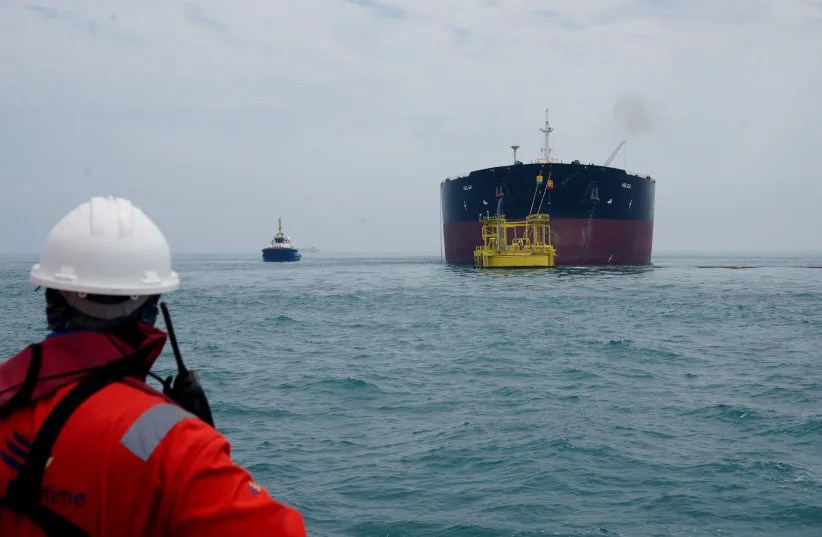
Oil tanker HELGA is moored at one of Iraq’s southern offshore oil terminals near Basra as it prepares to load crude oil, becoming the second vessel to arrive since the closure of the Strait of Hormuz, April 24, 2026. (credit: REUTERS/Mohammed Aty/File Photo)
None of this even touches on the oil supplied by the Western Hemisphere, where roughly 32% to 40% of the world’s total oil originates.
“There’s more production in other places, but [the disruption of] oil has not been anything like it would have been 20 years ago if they closed the strait,” he said, explaining how the US’s own oil and fracking industries have helped mitigate much of the damage.
Could Iran’s weakening control of Hormuz force a deal with the US?
“The oil price, it’ll go up and down. The fact that it went over $100 [a barrel], and the next day it was $80, that means that’s geostrategic variability. That’s not fundamental.”
ENGLISH version. Sky News (UAE), 20 August 2026, Dr. Tom O’Donnell (in Berlin).
I told Sky (UAE), Hormuz is now “a game of chicken” – who can wait the longest and bear the most pain. I tried to look objectively at the two sides.
a) On the Iran side, oil exports are reportedly zero since about 15 July. None of Iran’s oil ships seem to have left Hormuz. A massive accumulation of Iranian oil cargo sits on ships near Malaysia and Singapore, while perhaps 53 loaded ships are stuck in the Gulf due to the US Navy blockade. For a petrostate, this is devastating.
In addition, all Iranian ports are blocked form exporting or importing anything.
What oil can perhaps leave by train to China, say 70,000 barrels per train taking two weeks, is painfully small and costly.
Trump has now declared a push to block any payments or financial transfers to and from Iran. But, if no one is selling anything in either direction, there will be less and less financial flows to block.
For the regime, this is dire. It does not mean Iran will surrender, or even talk, but it is clearly devastating.
Pakistan TV, 9 Aug. We discussed the Trump administration’s two retreats from forcefully reopening Hormuz. This is not so simple as who is winning and who is losing.
The first of two key factors to note: It was GCC allies who sharply blocked Trump from executing planned big assaults on Iran to facilitate reopening Hormuz, on fear of Iranian missile punishment which would continue until the US military finished silencing most of Iran’s missile capacities. The Saudis and Qataris were most sharply opposed to accepting this punishment. What are the implications?
a) On the one hand, their refusal to allow Trump to use force to resolve the Hormuz crisis is a de facto success for the Iranian strategy of attacking all GCC states expecting them to then oppose USA military action against Iran.
b) On the other hand, I suspect the Trump-Vance response to GCC allies caving in to Iranian missiles was similar to the attitude the administration took to Europe and NATO in early 2025, for being seen as unwilling to really fight for either Ukraine or their own nations’ security, assuming the bulk of the task would be performed by the USA. Trump’s comments that Gulf allies should “pay the United States” for protecting them once the Straight is reopened, seems a reflection of this mindset.
Interestingly, we then see the rapid emergence of a new “Islamic NATO” mutual defense alliance between Saudi Arabia, Turkey, Pakistan, and perhaps soon Egypt. And simultaneously the Saudi-led new 19-country Red Sea defense league.
These are a striking departure from past Gulf practice. They should be seen, among other things, as an urgent Saudi recognition that the USA either refuses and/or is incapable of continuing to bear the burden of their defense, especially via American “boots on the ground.” I recall when the Obama administration told the Saudis the same, and indeed the Saudis made some military adjustments, including in Yemen, but obviously nothing anywhere like these alliances.
Now, with its new military alliances, the Saudis and their Gulf allies will increasingly be capable of fighting and be expected to actually join in any fight against Iran’s push for hegemony in Hormuz, in the Gulf Region and MENA generally.
The second large factor to note: I also explained how the Iranian leadership’s key lever, their ability to disrupt and partially close Hormuz, is seen by the US administration as a diminishing lever. There are two main indications of this:
First, the absence of what had been widely predicted to be astronomical oil price spikes after Hormuz was closed and,
Second, agreements are now in place in several Gulf states that four or five new oil pipelines to be built in the next couple years to bypass the Straight.
In fact, Sec. Bessent said exactly this shortly after my interview where I had anticipated this USA attitude. He (characteristically over-) confidently declared these pipelines mean the Straight will become “irrelevant”. And, shortly thereafter, Sec. of Energy Chris Wright was insistent that USA forces are now escorting eight or nine million barrels per day (mbd) of oil out of the Straight, implying a decreasing capacity of Iran to interrupt shipping.
As I have said before here, this tells the administration that it objectively has much more leeway, timewise, for resolving this crisis than any other administration would have before. This is part of their calculation that they can now, in effect pause any significant offensive military operations and focus on a new (really a second) “economic war” against Iran, to undermine it. However, IMHO, this in-itself cannot, with this particular IRGC-led regime, be sufficient to resolve the Hormuz crisis. In the end, this will require with the use of substantial USA force to accomplish physical occupation, with troops and electronically, of the shore-region of the Straight, and significant further erosion of Iranian missile and drone stocks and capacities to import and/or produce these. Alternatively, a USA back-down, a partial “surrender” is required, which would be almost impossible for any president to accept considering Iranian demands at present, which are hardly conciliatory.