Category Archives: China

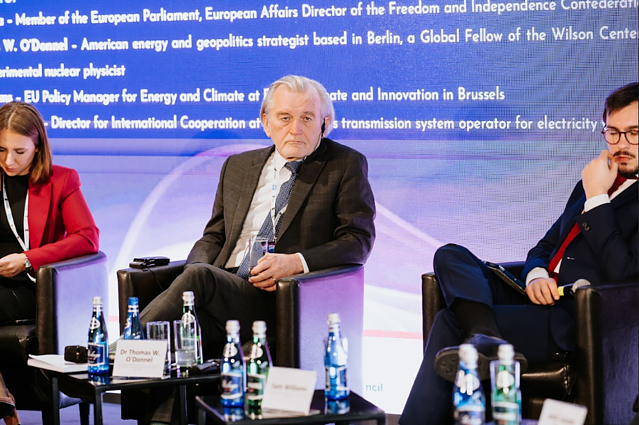
NUCLEAR ENERGY IN CENTRAL ASIA, Opportunity Institute, Warsaw, 4-5 Sept.  I will co-chair.

No alternative text description for this image

Register at Opportunity Institute for Foreign Affairs | A two-day expert seminar in Warsaw. Agenda below. I’m honored to be invited to co-chair.

See the agenda below. If of interest, please register. Space is limited – acceptance is not guaranteed. Here’s the info, then the agenda:

⚛️ NUCLEAR ENERGY IN CENTRAL ASIA: REGIONAL ASPIRATIONS AND GLOBAL STAKES 🌍
On 4–5 September 2025, Warsaw will host a closed seminar focused on one of the key topics for the security and development of the region – nuclear energy in Central Asia.
During the two-day seminar, experts will discuss:
✅ the aspirations of the region’s countries related to the development of nuclear energy,
✅ the political, economic and environmental implications for the region,
✅ the prospects for international cooperation and further development.
The event is organised by The Opportunity Institute for Foreign Affairs and is closed to the public, but it is possible to register to attend using the registration form. A select group of invited guests will have the opportunity to participate in the discussion.

Continue reading

My Ukraine Ch24 TV: Seeing Trump can kill his oil sales, Putin asked talks | “Bone-crushing” tariffs on Russian-oil buyers during a market glut can be very effective

This Friday, Trump and Putin will talk in Alaska about the future of Ukraine. Why has Putin asked for this meeting?

The two have spoken repeatedly on the phone …. but, something changed. As I indicated in my previous post (here), Trump has turned from his preferred plan to end the war, to one of confrontation and coercion of Putin (what I have called “Plan B”), aiming to force him into halting his war of aggression and seriously discuss peace proposals.

It was an honor to speak with Natalia Lutsenko of Channel 24 TV in Kyiv, and the Ukrainian national audience on these heavy issues of war and peace. The video interview – about 34 minutes long – goes into some detail of my analysis of the balance of forces.

Continue reading

Analysis: The USA & China each have failings preparing for a trade war (from Poznan)

Xi Jinping has still not built China’s domestic market to escape its trade-war vulnerabilities from over-dependence on exports, a weakness he openly discussed back in February 2012 on his USA tour before becoming premier.

For the USA, Trump had apparently planned to have resolved the Ukraine war and in some way undermined the Russia-China alliance, inducing Russia to move closer to the USA before going after China. But, ending the war has proven far more difficult than he anticipated. His lack of success with Russia will weigh on his ability to negotiate from a position of strength with all the countries he is competing to win away from China’s geoeconomics orbit such as India, Viet Nam, Cambodia, Philippines, Thailand and etc. — the states that Treasury Secretary would say are in the “yellow zone” as opposed to the USA#s closest allies such as Japan, South Korea, Taiwan, in the so-called “green zone.” For details – see this post on my blog,

Continue reading

My Asharq-Bloomberg: (1)Trump is following Miran’s tariff strategy (2)My reply to Jeff Sachs on US dollar role (3)Tariffs boost EU deindustrialization & (4)turbocharge German auto-crisis (5)Trump’s EU energy-purchase demands

Here’s my interview and a written elaboration – in lieu of a transcript:

  1. Trump’s “tariff shock” on everyone was intended mainly to force negotiations. Especially this is to insure no country:
    • Functions as a transit state for Chinese exports to get into the USA without paying crippling tariffs, or
    • Provides a Chinese-owned manufacturing site in their country with the same aim of accessing the USA market without crippling tariffs..
      • Trump’s Chair of the Council of Economic Advisers Miran and Treasury Secretary Bessent have been fairly clear about this, if one listens in detail.
  2. Trump Tariffs’ impact on Europe – Deindustrialization. German auto sector as an example.
    • While Trump and his circle militate against “deindustrialization” of the USA accomplished over the past few decades by the growth of Chinese manufacturing capacity and the export of these products into the USA market, Europe has an immediate problem, however, with the current advance of its “deindustrialization” or, as some more optimistically say, its new industrial “evolution”. [Some references from major German economic institutes on deindustrialization: IFO Institute, IW Institute, Kiel Institute, the latter of which has evolved a bit on this].
    • Taking the German auto industry as an example, it was already suffering from well known, chronic problems of Germany’s own making. These include two decades of low infrastructure investments, poor digitalization, high taxes, and being subjected to arbitrary government mandates to reduce diesel sales and increase battery electric vehicle production, and etc. ON top of this, German industry has also suffered high energy prices due to the countries exceptionally complex all-renewables energy transition model. On top of this came suddenly, from 2021, the Russian energy war, which denied Europe half of the cheap gas that European, and especially German industry was relying on to compensate for the high-cost of the all-renewables transition.
    • This energy war – and on the heels of the Covid shock – was devastating to German manufacturing and heavy industries, providing the proverbial straw that broke the camel’s back. In my assessment at the time, this was the point at which German industry’s problems of multi-faceted uncompetitiveness morphed into a form of deindustrialization,
    • Germany is in its third year of recession. However, this is not just a recession. Note that the VW, the German auto firm, for example, in September 2024, began mass layoffs for the first time in 87 years in September 2024. BASF is in a similar conundrum. In my view this is a systemic, secular problem over and above any present economic downturn.
    • So, the point of painting this detailed picture of the crisis of German automobile manufacturing, as an example, is that one can now really only imagine what a sharp knock-on effect Trump’s auto tariffs and his other tariffs might have on top of all this.  This is devastating. Already the CEO of Mercedes has said if the tariffs continue he will move the production of the cheaper models to the USA. Already one of the largest exporters of cats from the USA is a German factory.
  3. My response (critique) of Jeff Sacks‘ dollar-decline predictions
    • I was asked to listen to a clip from Asharq/Bloomberg’s earlier on-air interview with Nobel Prize economist, Jeffry Sachs, about his prediction that the US dollar would lose its reserve currency status in this decade and be replaced by regional currencies.
    • My take was that there was little new (or old) factual evidence of this, plus Trump’s tariff shock is not necessarily a long-term tactic. So, I commented that Sachs has had this theory for a long time, an it is nothing new. (I think it is fair to say he is quite sympathetic to China in various interviews, for some years now.) So, I simply said I was not surprised he says this, as he has for a long time.
    • However, I explained (with a bit more factual detail than Sachs, I hope) that indeed, even Trump’s theorist Miran and Bessent too agree that the tariffs strategy is designed to reduce the value of the dollar (its aims is precisely a weak dollar), and this should normally mean that the dollar loses its reserve currency status, its preferred use in the world, that these Trump theorists have a plan for a “Mar-a-Lago” or similar accord for states that are seen as being key, close allies, who would agree to peg their currencies to the dollar, and that they should be expected to agree as they need to trade into the USA market.. This is based on the observation that the USA market has a special status in the world. If this were to pass, they theorize that this would in fact preserve the special, preferred reserve status of the US dollar.  Trump likes this as he has said that if this status is lost, then the destiny of the USA is to be a “third world” economy. **Continued at GlobalBarrel.com ….
Continue reading

My Al Jazeera: The EU will retaliate against Trump’s arbitrary tariffs | Attacking allies, Trump dilutes fight vs. real threats from highly subsidized Chinese exports.

Last night, I was live on Al Jazeera’s evening news to give an “EU perspective” on Trump’s sweeping tariffs on the EU and have a bit of a debate with Hon. Robert Arlett, Sussex County Council, Delaware, USA – a MAGA supporter. I was happy to do so.

I think I made several decent points of criticism about how the entire premise for “retaliation” against the EU on trade was “made up” under an “arbitrary” formula that “makes no sense.” I allowed that, as is often the case with Trump, much of this, the “retaliatory” portion, might be a pressure tactic for some other, still-to-be-revealed concession Trump is aiming for from Europe.

Of course, this is the geo-economic side to Trump’s geostrategic undermining of a unified USA-EU approach to facing Russia over its invasion of Ukraine. (However exactly how that new geostrategic relationship with Europe and NATO might all fit into Trump’s larger, global security strategy is still mostly up in the air, a matter still taking shape.)

However, as for these massive tariffs on Europe and Asian allies, these are a systematic attempt to dismantle globalization as we have known it and instead to focus on the subordination of European and Asian allies to a system where hegemon is unwilling to pay certain costs of maintaining its allies within its system.

Trump envisions a system where the USA makes no sacrifices or pays no communal costs, but must profit at every step from each and every ally. Indeed, the USA has powerful tools afforded it from its geo-economic dominance, tools which Trump seeks to exploit to unilaterally shape international economic and geopolitical relations, while forcing its allies to pay for the privilege and advantages of belonging to the USA-hegemon-maintained system.

Continue reading

My interview at Lithuania’s LRT: Trump could seriously harm Russia if he wants to | Trumpas, jeigu tik norėtų, galėtų stipriai pakenkti Rusijai

My long print interview at Lithuania’s LRT [Lithuanian PDF | English PDF​] with Aleksandra ​Ketlerienė, deputy editor-in-chief of Lithuania’s LRT.lt, published 7January. We spoke in Warsaw, 19 November. My thanks to Aleksandra for her insightful questioning and editorial care. We discussed:

  • The EU’s systemic energy​-policy “own goals” ​since its initial energy-crisis win ​after Moscow began cutting gas exports early in 2021​.
  • Reforming failed/ineffective Russian price-cap sanctions for real sanctions, and how the global oil market is now favorable for “maximum pressure.”
  • Historical perspectives on oil, gas, renewables, and nuclear sectors, essential for realistic policy formation.
  • An historical overview of China’s decades-long effort to overcome its energy security, learning lessons of Japan’s WW2 weaknesses.
  • (​See topics summary))
Continue reading

Part 2: “Does EU Climate Policy Need Evolution or Revolution? What Should We Change in the Green Deal?” My critical remarks at “Energy Security in CEE Conference,” Warsaw

This is a continuation of my remarks in Warsaw, on 18 November. Part 1, which posted on 19 December, reviewed failures to develop critical tech elements required by the EU Green Deal, a program modeled on the German Energiewende. I argued that, after decades of R&D efforts, these technology failures indicate the systemic failure of heavily renewable models, pointing to a need for “radical reform” of the Green Deal. I advocated for the historically proven Messmer model, which succeeded, some 40 years ago, in decarbonizing French electrical generation using nuclear power, without any need for new grids or long-term grid-scale storage tech.

Below, Part 2 (edited for clarity) focuses on the political intransigence of the new Von der Leyen commission, which is doubling down on the Green Deal’s renewable model. I argue this is not “reindustrializing” Europe or making it “more competitive” as claimed, but rather driving it into deindustrialization. This mirrors the process underway in Germany via its continuing push for new “green tech,” on the theory this should spark a broad new European industrial competitiveness. From an historical perspective, this is theoretical and practical nonsense – or so I argue. Critiques are welcomed. (PS, Happy holidays!)

Leon (moderator): So, I’m going to turn to Thomas again. You argued that that some form of radical overhaul is necessary, you know, with regards to the EU Green Deal, if I understand it correctly, and you’ve cited one of the issues is the complexity of the fact that there are certain technologies that haven’t emerged over the last 30 years that have just been growing incrementally rather than rapidly to meet our needs. But at the same time there’s seems to be some sort of political rationale for why this sort of revolutionary approach. How would you respond to that?

Tom: Yes, politically, I do think the new Commission presents a big problem for European competitiveness, for energy policy and security.

The new commission is anti-energy-policy reform

Firstly this is because Ms. Teresa Ribera, from Spain, is President Von der Leyen’s new chief executive vice-president.  She is in charge of attaining both the Green Deal and has also been given responsibility for “industrialization of Europe,” for making it competitive again.

The problem is, Ms. Ribera is a true believer in all-renewable energy systems, I would say a career-long renewable fundamentalist.

For example, she’s said to be so good at negotiating that she managed to get the Spanish nuclear industry and civil society to agree on a timetable to close all the Spanish nuclear power plants, and she’s very proud of this. This is politically and ideologically identical to what Mr. Robert Habeck, the German Green Party leader, who is energy and economics minister, carried out with the approval of Chancellor Scholz of the SPD-party. Habeck closed Germany’s last three nuclear power plants during a wartime, Russian-instigated, European energy crisis.

The fact that Von der Leyen fought hard to appoint Ribera and then put her in charge of the Green Deal and of European industrialization, and made her the most powerful commissioner, the executive vice president of the commission, shows that Von der Leyen, a member of the German conservatives, the CDU, has no interest in reform of the renewables model despite its suffering technological failures on several key aspects.

The problem is not that Europe has not had an industrial policy. Europe has had an industrial policy, one that has failed

Continue reading

My CGTN live: Merkel put Biden in a “damned if you do, damned if you don’t” bind on Nord Stream 2 deal

My live interview (22 July 2021) on the Nord Stream 2 deal between Germany and USA. with CGTN (London office of Chinese state broadcaster. This was not edited, or I would not post it here.)

I explain the bind which Berlin had put the Biden administration in for agreeing to waive sanctions on Nord Stream 2 (NS2) in return for this bad deal. The German side was playing hardball. Berlin had made clear to Washington (well before Biden arrived in office) that the pipeline would be finished regardless of sanctions.

The German (and the Danish) side had already allowed Gazprom-owned North Stream 2 AG to continue construction in their territorial waters even when reputable insurance companies and the reputable construction-commissioning firms had abandoned the project due to the threat of US sanctions; and Berlin had made it clear to the US side that it would be completed regardless of any further sanctions. Sanctions on German firms could be circumvented by Berlin continuing to allow Russian firms to do any work that German firms were prevented from performing. And, sanctioning German firms, or NS2 AG, would cause outrage in every German political party except for the Greens, the only German party clearly opposed to the project. However, the Greens had made clear they did not think US sanctions on German firms was an appropriate measure for an ally to take.

Continue reading

China & Russia stick with Venezuela’s Maduro for the same reason the USA stuck with S. Viet Nam [My Energy Analytics Institute Q&A]

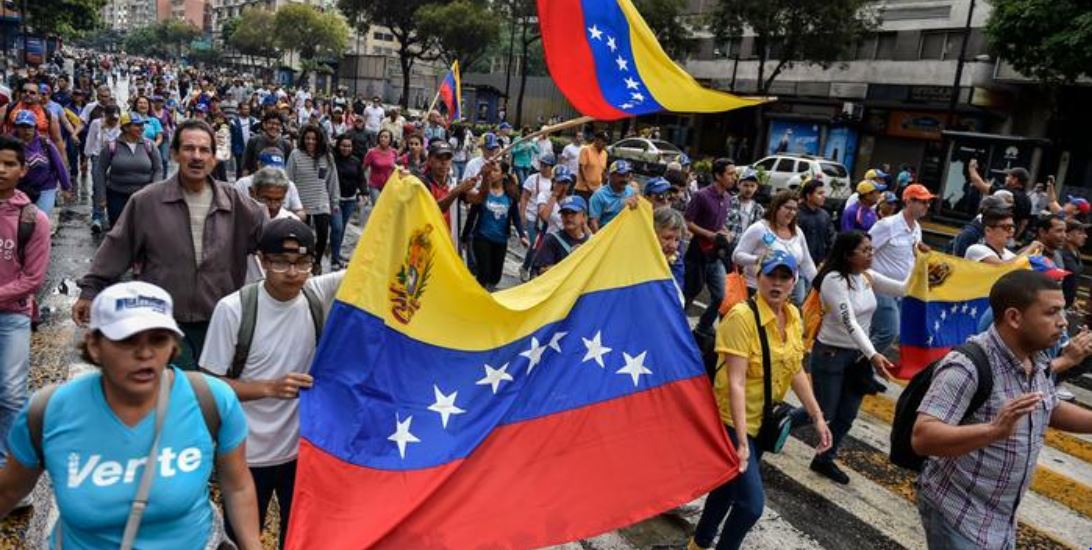
Venezuelan protest, 31 January 2019. Photo credit Deutsche Welle, German public broadcaster.

I was very happy to be interviewed for the Latin American “Energy Analytics Institute” (EAI), a Houston-based consultancy and news service. I’ve followed its work for years.

With Biden in and Trump out, everyone is debating how to deal with Maduro and his chavista regime that’s brought such misery and ruin in Venezuela. It’s not only the USA’s new LatAm team of Biden, Blinken and Nichols, but the EU, Norway, the OAS, the Lima Group, who are all looking for a new strategy. And so has the Venezuelan opposition, plus an increasingly important actor: the growing and doggedly persistent civil society organizations. Increasingly suffering forced-isolation from abroad, this array of social, cultural, media, medical, educational, nutrition, economic and political resistance groups do largely self-sufficient work to replace basic necessities and social-services, which the chavista government and ruined private sector can no longer provide.

However, in this brief Q&A what was addressed was not strategy per se; but a key underlying issue to understand in framing a strategy: the interests of both Moscow and Beijing as key obstacles to removal of the chavista regime. Read at EAI site (free) or Read below – Tom O’D.

China, Russia, Venezuela: Q&A With Thomas O’Donnell

(Energy Analytics Institute, 13.Feb.2021) — China and Russia continue to push around their might in Venezuela. Thomas O’Donnell with the Hertie School of Governance & Freie Universität-Berlin weighs in briefly here.

Energy Analytics Institute: What might China and Russia be willing to do this year to assist Venezuela’s President Nicolas Maduro?

Thomas O’Donnell, PhD: Beijing’s original (and perhaps still) plan for Venezuela was deep vertical integration mirroring PDVSA-Citgo Petroleum: new Faja upgraders, a pipeline to Colombia’s Pacific coast, dedicated ships, dedicated domestic Chinese refineries, etc. All very rational and lucrative for both sides. China became alarmed with Hugo Chavez’ unreliability and incompetence within a few years and with Maduro’s incapacity to reform within a year or so. The entire “oil-for-loans” history was a fallback strategy for Beijing – at least secure an oil stream with minimized risk. I have no doubt the Chinese Communist Party wants a new Caracas regime it can work with.

Continue reading

Decoding the Oil Price War 2: My Wikistrat webinar “Oil Price War & COVID Crisis” transcript

covid-oil_war_2bd-cropped-graphic_wikistrat_12apr20_captureMy Wikistrat webinar transcript “Oil Price War & COVID” from a couple weeks ago is now available on their website as a PDF.  Issues discussed include:

  • Why did Moscow declare the “war”? [Note: Putin & Sechin’s initial boasts Russia would hold out for “years”, kill shale & end sanctions all stopped in only a couple days!]
  • The Saudi response was sharply focused against Russian oil-pipeline markets in W Europe (Druzhba) & Asia.  [I believe this focused Mr. Putin’s attention on economic realities as opposed to Mr. Sechin’s anger-driven desire for revenge against US sanctions that had inflated his (self-)image of Rosneft and Russian oil-market prowess when up against a concerted Saudi counter-war, and the prospects of various US responses.  Reports are that Putin spend three days on the phone to undo this fiasco and, in the end, had to accept significant cuts to Russian output.  See my GlobalBarrel.com post of last week explaining the initial, flawed Russian strategy.]
  • The options Trump had to choose from undermine his long antipathy to OPEC. (Did he secretly offer Putin any Nord Stream 2, Ukraine or Venezuela sanctions relief? If so, Congress won’t approve.) Also: Big Oil (American Petroleum Institute) and W. Texas/other independent producers are pulling at Trump in two very different policy directions re. OPEC, tariffs, production controls, etc
  • And more (esp. in the Q&A): probable impact on carbon mitigation policies, the China market for LNG, US shale’s financial and production future, etc.

Continue reading

China’s big NOCs slash prices to take market from private oil refiners ~ I’m quoted in “China Oil Week”

sinopec_station_china_newsbase_21jul17

A Sinopec station in China.  Sinopec and other big NOC’s are slashing prices to take business from Chna’s small private “Tea Pot” refiners.

Last week, I was quoted on my assessment of how China’s “Tea Pot” refineries (small, private outfits) will fare in the face of  China’s big National Oil Companies (NOCs) cutting  prices to grab the Tea Pots’ business.  My main point to Newsbase reporter Saw Wright was that China is far from a completely “free market” and the state can be expected to weigh in on one side or another, complicating any outcome predictions based on market and/or tech strengths and weaknesses.  I’m quoted a couple times near the article’s end, here:
Continue reading

Latin American Oil: Beijing Still Lending, But for How Long? – I’m quoted by Energy Compass

energy_intelligence_tom_od2_13may16

Last week, Energy Intelligence (EI) quoted me on China’s continued appetite for oil and gas investments in Latin America even with its own  economic slowdown and LatAm’s many political upheavals. (Sincere thanks to EI for a PDF of their proprietary Energy Compass to share on my blog. You can access it below here.)

Some thoughts on China’s strategy: In the case of Venezuela, as the price of oil fell, Beijing quickly eased up on PDVSA’s repayment terms for its huge outstanding loans which are repayable in oil. This shows some willingness to help Venezuela cope with the falling market value of oil. Why? Because, mainly, it is the oil that China has always been laser-focused on – not making interest on these loans.

Generally, it is clear that new Chinese investments or loans are still possible in Latin America. In Venezuela however, Continue reading

My AQ piece: “Russia Is Beating China to Venezuela’s Oil Fields”

map_aq_russia-pdvsa_oil_a

Russian Production & Stakes in Venezuelan Oil Projects (40% stake is limit)

Last October & November I succeeded in interviewing several people in the Venezuelan private sector directly knowledgeable of Russian oil projects with PDVSA. Many Venezuelans wonder what all the Russians-known for their secrecy-are up to there.  Some of my key findings are in Americas Quarterly‘s Winter 2016 edition. Read on … 

Russia Is Beating China to Venezuela’s Oil Fields – By THOMAS W. O’DONNELL

The profits, politics and luck behind Russia’s growing footprint.

Russian companies produce more oil in joint projects with PDVSA than their Chinese counterparts This article is adapted from our 1st print issue of 2016. 

The late Venezuelan President Hugo Chávez, had long envisioned China becoming Venezuela’s biggest oil-sector production partner. So when Rafael Ramírez, then president of Petróleos de Venezuela, S.A. (PDVSA), announced in January 2013 that Russia would produce enough oil with PDVSA by 2021 to become “the biggest petroleum partner of our country,” very few people believed him. It sounded like empty hype.

Yet it turns out that Ramírez was serious. Three years later, Russian companies are already producing more oil in joint projects with PDVSA than their Chinese counterparts. Official figures are either unreliable or unavailable, but according to field data provided by Global Business Consultants (GBC), a Caracas-based energy consulting firm, Russia-Venezuela production as of late 2015 was 209,000 barrels per day (bpd), compared to China-Venezuela’s at a bit over 171,000 bpd.

Continue reading

“The Road to Paris: COP21 …” Berlin HEEN Conference

heen_logoCOP21 begins soon in Paris.  A very interesting discussion of the issues, with diplomats from EU states and China, takes place tomorrow, Friday evening, at Hertie School of Governance in Berlin to open the Hertie Energy & Environmental Network’s (HEEN) conference. I’ll be moderating the session. The session is open to those interested. Read on:

Opening remarks by German Undersecretary of State, ret. Rolf-Dieter Schnelle, fellows & friends of the Hertie Foundation

Panelists:
• Philippe Etienne, Ambassador of France to Germany
• Friis Arne Petersen, Ambassador of Denmark to Germany
• Wang Tianling, Counsellor, Embassy of the People’s Republic of China in Berlin
• Iwona Jakuszko-Dudka, First Secretary to the Embassy of Poland to Germany
• Dr. Jan Minx, Professor for Science Policy and Sustainable Development, Hertie School of Governance, Head of Working Group on Applied Sustainability Science, Mercator Research Institute on Global Commons and Climate Change

• Moderation by Dr. Thomas O’Donnell, Hertie School of Governance

Please register until 25 November 2015 via the following link https://docs.google.com/f

Background

In December 2015, the COP 21 climate conference in Paris will bring together world leaders, scientists, pressure groups and United Nations agencies, with the task to craft an agreement at the highest political level to tackle global warming. The representatives from 196 countries must reach an agreement to replace the Kyoto protocol. The COP 15 summit in Copenhagen (2009) is remembered more for the difficulty of reaching a global consensus than for tangible progress.

What will the legacy of COP 21 in Paris be?

  •  Is putting a price on carbon worldwide politically feasible?
  •  Is the gap between the cost of energy produced from fossil fuels and energy produced from renewable energy sources narrowing as much as to be a game-changer?
  •  How would policy proposals that raise the cost of energy go down with national leaders from the developing world, under pressure to deliver standard-of-living improvements?
  •  How will Intended Nationally Determined Contributions (INDC) impact the negotiations?
  •  How will China’s early pledge to peak emissions ahead of 2030, and the USA’s commitment to deep reductions by 2025 shape what is globally possible?
  •  Will the European Commission get a critical mass of support for the Paris Protocol?
  •  Will all parties arrive at an robust enough agreement?
  •  What is the future of the Green Climate Fund?
  •  How will the financing volume necessary to keep global warming below 2 degrees be secured?

Speakers will provide their take on the above, and engage in a lively and dynamic discussion with the audience about the major challenges which will be tackled at the COP 21 in Paris in December 2015.

The Hertie Energy and Environment Network (HEEN) is an established platform bringing together fellows of the Gemeinnützige Hertie-Stiftung with professional experience in the field of Energy and Environment (E&E) in the public, private, academic or civil society sector. HEEN’s purpose is to facilitate dialogue, knowledge-sharing and learning, to provide a trust-based environment for career path reflection, and to facilitate the development of lasting professional connections among outstanding individuals of diverse backgrounds who share a common interest and motivation for further professional development in the E&E field.

cop21_logo

The EU-US “Oil Weapon”: Putin’s overtures to OPEC, China & Iran reveal desperation

Foto: Presidents Rouhani of Iran and Putin of Russia holding discussions Presidents Rouhani of Iran and Putin of Russia holding discussions

(AICGS Analysis, by Tom O’Donnell)  Since Russia’s president, Vladimir Putin, decided to annex Crimea and back east Ukrainian separatists with troops, many have worried he might use his “energy weapon” to counter U.S.-EU sanctions, as Russia supplies around a third of the EU’s natural gas imports.  But what about Russian retaliation in the oil sector?

That’s hard to imagine. While gas is marketed in bi-lateral, pipeline-mediated relationships, oil is not. It’s liquid, fungible, and marketed in a unified open market—“the global barrel” [and name of this blog, T.O’D.]—which means there are no bi-lateral oil dependencies.

So, when EU leaders were cajoled by Germany’s Angela Merkel into joining the United States in applying sanctions, Russia could do little to retaliate from within the oil sector.  In reality, it is the EU and the U.S., not Russia, that have an “oil weapon” in hand.  And, the flurry of Russian oil diplomacy with OPEC, Iran and China over the past couple of weeks has a distinct whiff of desperation to it. Continue reading