MY COMMENTS: 1) USA long-planned surprise strategy 2) Iran leaders’ 20-year nukes brinkmanship strategy aimed for USA ssecurity-guarantee deal
ALL GUESTS – TRT-London, USA bombing
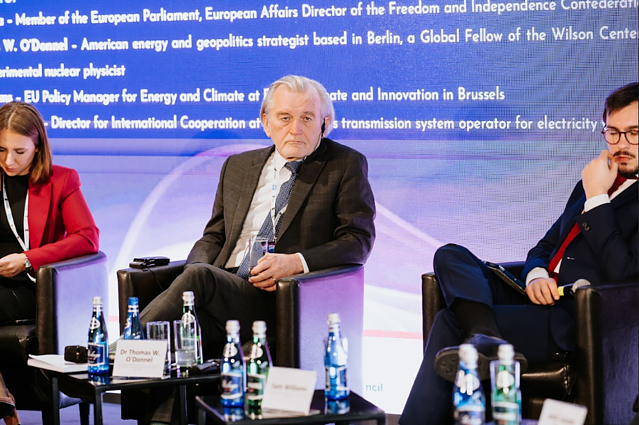
I was invited on TRT-World, London, 24 June, for a panel after US strikes on Iranian nuclear sites (see the panelist lineup below. I answered two questions at some length – see the 2nd video.)
In summary: Trump claims USA Operation Midnight Hammer “obliterated” the country’s nuclear capacity, but how much have they really been degraded?
My analysis is that it does not matter. If the USA decides to bomb again at will, without Iran having air defenses the USA and Israel can destroy or disrupt most any renewed Iranian work on its nuclear or conventional missile program. If, as he stated, repeat bombings as needed are Trump’s intention, then this should be the case. This now leaves Iran very little negotiating leverage. The regional proxies it always intended to use for retaliation in just such a scenario have been decimated by Israel.
Therefore, there is a high likelihood Iran will be forced by Trump to negotiate from a now much weaker position. If Tehran resists, it could fall back to rely on state-sponsored terrorist methods, which are of limited usefulness for maintaining a modern functioning state and economy.
Overall, I emphasize that this “12 Day War” has been especially motivated, by Trump, to assure USA Gulf allies that they can now safely enter into the Abraham Accords with Israel and the USA, establishing a new regional security structure. Trump will be constrained to do whatever is necessary, militarily and in negotiations, to insure the Iranian threat these allies have felt acutely remains under control. In turn, if these accords, which Trump’s chief negotiator, Steve Witkoff, was reportedly already working on among the USA’s Gulf Arab allies immediately after the USA bombing is intended to allow the USA to move on, focusing more squarely on Great Power competition elsewhere.
This is my general assessment. There are many details and some possible derailments here, of course. – Tom O’D.
In the last two weeks, I was in Warsaw twice. First, for the Three Seas One Opportunity conference (3S1O) on 27 April, organized by the Opportunity Think Tank, where I co-chaired a session. This was an official side event of the Three Seas Summit (a ministerial conference). Second, for the Warsaw Security Forum’s Public Dialogue. (WSF) 7 May. I will soon post here about both these very interesting events.
However, I was asked by TVP, the Polish national broadcaster, to come to their Warsaw studios on 8 May, the day after the WSF, for a live-on-air commentary on the recent drama in the German Bundestag (parliament) where the new Chancellor, Fredrich Merz, embarrassingly failed to get the necessary votes on the first ballot. He finally succeeded on second ballot, after intense politicking and consultations within his party, the center-right CDU, in its Bavarian sister party, the CSU, and in his coalition-partner party, the center-left SPD.
So, first; I was asked to explain this surprising electoral fiasco for the new chancellor, Merz, and his party, and how it may have weakened his new government.
Secondly, Merz immediately, after being sworn in, undertook a one-day whirlwind trip to Paris and then Warsaw, to visit his prospective main partners in the European Union, President Macron of France and Prime Minister Tusk of Poland. (Continued ….)
El día de Pascua, 20.04, me entrevistaron en directo por radio, en muchas ciudades de Europa y del hemisferio occidental. On Easter Sunday, April 20, 2025, I was interviewed live in several cities of Europe and the Western Hemisphere.The interview was in Spanish. An English Google translation is below (RHS column). The topic was the negotiations of the Trump USA administration between Russia and Ukraine to end the war. Tom OD.)
Mi agradecimiento por la invitación de María Eugenia Plano, productora del programa radial Corresponsales en Línea, realizado por las corresponsales de los diarios Clarín y La Nación en París y Londres (María Laura Avignolo), París (Danielle Raymond), Madrid (Silvia Pisani), Berlin (Araceli Viceconte), Washington ( Paula Lugones) y San Pablo (Cristina Veiga) con la conducción de Silvia Naishtat (Editora de Economía de Clarín). en vivo y en directo para Radio Ciudad en Buenos Aires, los días domingos de 10 a 12 AM Hora Argentina. My thanks for the invitation from María Eugenia Plano, producer of the radio program Corresponsales en Línea, made by the correspondents of the newspapers Clarín and La Nación in Paris and London (María Laura Avignolo), Paris (Danielle Raymond), Madrid (Silvia Pisani), Berlin (Araceli Viceconte), Washington (Paula Lugones) and Sao Paulo (Cristina Veiga) hosted by Silvia Naishtat (Economics Editor of Clarín). live and direct for Radio Ciudad in Buenos Aires, Sundays from 10 to 12 AM Argentine time.
Above: Audio of my comments to (various) press on 22 April 25, on the impact of falling oil prices on Russia’s capacity to war on Ukraine. Also, a scenario I have discussed for over a year, first privately and then publicly, of how the USA could shut down the great majority of Russia’s seaborne oil exports, to devastating consequences for its oil sector and capacity to continue the war. In the present market situation of oversupply and anticipated continued weak demand, this could be done in a way that does not spike global oil prices.
This will only be done if Trump decides he needs to use harsh coercion to force Putin into an acceptable peace deal with Ukraine, AND if Trump were willing to impose lasting harm on the older Russian oil fields.
Xi Jinping has still not built China’s domestic market to escape its trade-war vulnerabilities from over-dependence on exports, a weakness he openly discussed back in February 2012 on his USA tour before becoming premier.
For the USA, Trump had apparently planned to have resolved the Ukraine war and in some way undermined the Russia-China alliance, inducing Russia to move closer to the USA before going after China. But, ending the war has proven far more difficult than he anticipated. His lack of success with Russia will weigh on his ability to negotiate from a position of strength with all the countries he is competing to win away from China’s geoeconomics orbit such as India, Viet Nam, Cambodia, Philippines, Thailand and etc. — the states that Treasury Secretary would say are in the “yellow zone” as opposed to the USA#s closest allies such as Japan, South Korea, Taiwan, in the so-called “green zone.” For details – see this post on my blog,
Here’s my interview and a written elaboration – in lieu of a transcript:
Trump’s “tariff shock” on everyone was intended mainly to force negotiations. Especially this is to insure no country:
Functions as a transit state for Chinese exports to get into the USA without paying crippling tariffs, or
Provides a Chinese-owned manufacturing site in their country with the same aim of accessing the USA market without crippling tariffs..
Trump’s Chair of the Council of Economic Advisers Miran and Treasury Secretary Bessent have been fairly clear about this, if one listens in detail.
Trump Tariffs’ impact on Europe – Deindustrialization. German auto sector as an example.
While Trump and his circle militate against “deindustrialization” of the USA accomplished over the past few decades by the growth of Chinese manufacturing capacity and the export of these products into the USA market, Europe has an immediate problem, however, with the current advance of its “deindustrialization” or, as some more optimistically say, its new industrial “evolution”. [Some references from major German economic institutes on deindustrialization: IFO Institute, IW Institute, Kiel Institute, the latter of which has evolved a bit on this].
Taking the German auto industry as an example, it was already suffering from well known, chronic problems of Germany’s own making. These include two decades of low infrastructure investments, poor digitalization, high taxes, and being subjected to arbitrary government mandates to reduce diesel sales and increase battery electric vehicle production, and etc. ON top of this, German industry has also suffered high energy prices due to the countries exceptionally complex all-renewables energy transition model. On top of this came suddenly, from 2021, the Russian energy war, which denied Europe half of the cheap gas that European, and especially German industry was relying on to compensate for the high-cost of the all-renewables transition.
This energy war – and on the heels of the Covid shock – was devastating to German manufacturing and heavy industries, providing the proverbial straw that broke the camel’s back. In my assessment at the time, this was the point at which German industry’s problems of multi-faceted uncompetitiveness morphed into a form of deindustrialization,
Germany is in its third year of recession. However, this is not just a recession. Note that the VW, the German auto firm, for example, in September 2024, began mass layoffs for the first time in 87 years in September 2024. BASF is in a similar conundrum. In my view this is a systemic, secular problem over and above any present economic downturn.
So, the point of painting this detailed picture of the crisis of German automobile manufacturing, as an example, is that one can now really only imagine what a sharp knock-on effect Trump’s auto tariffs and his other tariffs might have on top of all this. This is devastating. Already the CEO of Mercedes has said if the tariffs continue he will move the production of the cheaper models to the USA. Already one of the largest exporters of cats from the USA is a German factory.
My response (critique) of Jeff Sacks‘ dollar-decline predictions
I was asked to listen to a clip from Asharq/Bloomberg’s earlier on-air interview with Nobel Prize economist, Jeffry Sachs, about his prediction that the US dollar would lose its reserve currency status in this decade and be replaced by regional currencies.
My take was that there was little new (or old) factual evidence of this, plus Trump’s tariff shock is not necessarily a long-term tactic. So, I commented that Sachs has had this theory for a long time, an it is nothing new. (I think it is fair to say he is quite sympathetic to China in various interviews, for some years now.) So, I simply said I was not surprised he says this, as he has for a long time.
However, I explained (with a bit more factual detail than Sachs, I hope) that indeed, even Trump’s theorist Miran and Bessent too agree that the tariffs strategy is designed to reduce the value of the dollar (its aims is precisely a weak dollar), and this should normally mean that the dollar loses its reserve currency status, its preferred use in the world, that these Trump theorists have a plan for a “Mar-a-Lago” or similar accord for states that are seen as being key, close allies, who would agree to peg their currencies to the dollar, and that they should be expected to agree as they need to trade into the USA market.. This is based on the observation that the USA market has a special status in the world. If this were to pass, they theorize that this would in fact preserve the special, preferred reserve status of the US dollar. Trump likes this as he has said that if this status is lost, then the destiny of the USA is to be a “third world” economy. **Continued at GlobalBarrel.com ….
Last night, I was live on Al Jazeera’s evening news to give an “EU perspective” on Trump’s sweeping tariffs on the EU and have a bit of a debate with Hon. Robert Arlett, Sussex County Council, Delaware, USA – a MAGA supporter. I was happy to do so.
I think I made several decent points of criticism about how the entire premise for “retaliation” against the EU on trade was “made up” under an “arbitrary” formula that “makes no sense.” I allowed that, as is often the case with Trump, much of this, the “retaliatory” portion, might be a pressure tactic for some other, still-to-be-revealed concession Trump is aiming for from Europe.
Of course, this is the geo-economic side to Trump’s geostrategic undermining of a unified USA-EU approach to facing Russia over its invasion of Ukraine. (However exactly how that new geostrategic relationship with Europe and NATO might all fit into Trump’s larger, global security strategy is still mostly up in the air, a matter still taking shape.)
However, as for these massive tariffs on Europe and Asian allies, these are a systematic attempt to dismantle globalization as we have known it and instead to focus on the subordination of European and Asian allies to a system where hegemon is unwilling to pay certain costs of maintaining its allies within its system.
Trump envisions a system where the USA makes no sacrifices or pays no communal costs, but must profit at every step from each and every ally. Indeed, the USA has powerful tools afforded it from its geo-economic dominance, tools which Trump seeks to exploit to unilaterally shape international economic and geopolitical relations, while forcing its allies to pay for the privilege and advantages of belonging to the USA-hegemon-maintained system.
I felt greatly honored to speak in Ireland, the home of my ancestors, at a high-level Irish-Polish event, invited by the Polish embassy as part of Poland’s Presidency of the European Council. [Spoiler alert: my assessment of the Green Deal’s impact on EU energy security and competitiveness was highly critical. And, I called for a radical reform, modeled on the 1970-80’s French Messmer nuclear program, the response to a similarly dire European energy and competitiveness crisis.]
For Ireland we had Secretary General Oonagh Buckley and Wind Energy Ireland CEO Noel Cunniffee; for Poland, Daniel Piekarsky, Head of Energy Security Unit in the Foreign Ministry, and myself, Global Fellow of the Wilson Center, Washington (external) working in Europe, from Berlin.
Our moderator, from the Polish Embassy, Dublin, was the Polish diplomat and patriot, Dr. Jacek Rosa — a good friend, with whom I had the great pleasure of closely collaborating, for several years, in opposition to the Russian-German Nord Stream 2 gas-pipeline partnership, before the 2022 full-scale invasion of Ukraine. Below is the lineup, the initial invitation and some pictures. The event was off-the-record, so I show here only my own, slightly redacted talk.
Opening of Nord Stream1 pipeline, 2011. Gazprom via PAP
Below are links to 12 articles that appeared in the Polish press in the last few months, interviewing or quoting me on four topics I feel are important. The topics are listed in the title above.
The links are below, sorted by topic. The first or left column has English translations of the titles, and the second or right column has the original Polish — which unfortunately I don’t speak! If you follow the links, Google Translate or Deepl will translated the Polish articles pretty well into English. My special thanks to the intrepid Polish journalist, Artur Ciechanowicz at BiznesAlert in Warsaw for his interviews in the list. (I also had about 33 quotes or interviews in several other languages since December [1]).
ENGLISH titles and links:
On German (far-right) & USA (Trump) each plotting a Russian gas return to Germany
A former Stasi agent lobbies for the resumption of Nord Stream. Expert: One of the gas pipeline lines ready to be launched,, By,:Artur Ciechanowicz, March 3, 2025, biznesAlert.pl
Some EU countries believed that Gazprom gas would be in Europe forever BiznesAlert.pl
“Like a Drug Addict Returning to Heroin.” Analyst on the Idea of Unblocking Gas Imports from Russia to Europe, Author: Artur Ciechanowicz, February 1, 2025, 07:21
Failures of EU Green Deal on technology and energy security.
American expert: recommendation to reduce emissions by 90 percent by 2040 is “fantasy” | Energetyka24
Expert: EC recommendation to reduce gas emissions is fantasy wpolityce.pl
Unrealistic EU climate plan. Expert opinion crushes – Super Business
“Rearranging deckchairs on the sinking Titanic”. Expert slams the eco-target dictates of Brussels Eurocrats – PCH24.pl
Trump, EU & Poland: Ukraine War crisis.
First talk with Putin. Trump has visions of ending the war in Ukraine | Newsweek Jan 21
How Trump Can Bring Down the Russian Economy: Analysts: He Has an Arsenal of Means to Do It, By Artur Ciechanowicz, Jan 24, 2025 | Biznes Alert
Trump may use [oil] sanctions to finish off Moscow, which is running out of money for the National Welfare Fund. – 16 January 2026 UBN
Expert: Washington, London, Warsaw should work quickly. Kiev can’t afford to be patient – Dziennik.pl
German deindustrialization: Energy & economic crisis
Major shoe retailer goes bankrupt A sharp increase in bankruptcies in Germany
Polish titles and links:
First topic.
Agent Stasi lobbuje za wznowieniem Nord Stream. Ekspert: Jedna z nitek gazociągu gotowa do uruchomienia biznesalert.pl
Część krajów Unii uwierzyła, że gaz z Gazpromu będzie w Europie na zawsze BiznesAlert.pl
“Jak powrót narkomana do heroiny”. Analityk o pomyśle odblokowania importu gazu z Rosji do Europy | BizNes Alert
2nd Topic
Amerykański ekspert: zalecenie redukcji emisji o 90 proc. do 2040 r. to „fantastyka” | Energetyka24
Ekspert: Zalecenie KE redukcji emisji gazów to fantastyka wpolityce.pl
Nierealny plan klimatyczny UE. Opinia eksperta miażdży – Super Business
“Przestawianie leżaków na tonącym Titanicu”. Ekspert nie zostawia suchej nitki na eko-dyktaturze brukselskich eurokratów – PCH24.pl
Third topic
Donald Trump chce uchronić świat przed III wojną światową | Newsweek
Jak Trump może złamać rosyjską gospodarkę?
Trump may use [oil] sanctions to finish off Moscow, which is running out of money for the National Welfare Fund. – UBN
Ekspert: Waszyngton, Londyn, Warszawa powinny szybko działać. Kijowa nie stać na cierpliwość – Dziennik.pl
[1] Other than being cited/interviewed in Poland, I was also quoted elsewhere about 33 times so far in 2025, mainly in the USA, with many then translated to languages of Europe, Asia and Latin America. I never know what to do with all these print interviews. Here at GlobalBarrel.com, I often publish videos of some of my live-on-air expert commentary, usually accompanied by a detailed blog post. So, my idea is I will make a new tab at the top of the GlobalBarrel.com site, next to the “About Me” tab, where I can simply list link to my recent press citations or Op-Eds. [Back to text]
TRT asked me to be ready to comment, live, on the Oval Office meeting just before it blew up. I said Vance acted “infantile”. What I should have stressed, however, is that understanding Vance’s decision to blow up the meeting is key to understanding Trump’s strategy towards Russia, Ukraine, and Europe. (So, in this post the written analysis is the main thing, not the video.)
My TRT quick take, 28 Feb. See my later analysis, in the blog post.
There is plenty of facile analyses of this clash. Many say the blowup reflected “chaos” in Trump’s policy on Ukraine and Russia, or that Trump has an “impulsive” strategy, that he “dislikes Ukraine”, he’s “pro-Russian,” or that the blowup was a “prearranged ambush” to “humiliate” Zelensky, or similar.
Too few consider the possibility that the rebuke is consistent with a well-defined USA strategy. What quickly becomes clear from listening, at face value, to multiple statements by Trump himself and his team is that they have a consistent strategy. This is clearly not the first Trump administration. This second administration is different in its unity and consistency on its Ukraine, Russia, and Europe policies.
What was the purpose of the “minerals” deal that Zelensky came to sign?
The weeks-long USA-Ukrainian clash over this deal has reflected their geostrategic differences on a peace deal with Russia. After heated exchanges and compromises, clearly the Ukrainian side was not pleased with the issues it had had to give up in the minerals deal. Nevertheless, Zelensky’s Council of Ministers voted to endorse the deal, and Zelensky went to DC explicitly to sign it.
Interestingly, just before he went to the White House, President Zelensky met with a group of Republican and Democratic senators, who had “… all told him sign the deal and don’t get into an argument.” (War on the Rocks, timestamp 7:58-8:19, 06.03.25). Alas, if one watches Zelensky’s public argumentation, from the start of the press conference, and his telling Trump that a deal without a US security guarantee won’t work, all of which is in contradiction to the deal he is about to sign, it is clear that he precipitated the breakdown. In my reading of the event, he seemed to not be able to restrain himself, seemingly out of an understandable deep anguish at being about to sign an accord contrary to his better judgment.
What did each side want in the “minerals” deal, and who got what?
Everything I found to have been said by the actors on the USA and Ukrainian sides as to what each wanted in the document is quite consistent.
On the Ukrainian side, the big one was a USA security guarantee for any deal Trump makes with Putin. The Ukrainians certainly welcome the willingness of European allies to extend security guarantees for any deal, especially the public commitments made by both the UK and France to contribute troops, but they were clear that they did not think this can substitute for a USA guarantee standing behind theirs. Related to this, the Ukrainians opposed taking NATO membership for them off the table. Another was a seat at the table for Ukraine and the Europeans during negotiations with Russia (Trump wants something more like a shuttle diplomacy between the two.) Related to this, is that the USA should not negotiate a cease fire deal without them. Still another was refusing to agree beforehand to give up any Ukrainian territory that has been occupied by Russia.
Obviously the USA disagreed and de facto or openly refused all these conditions. However, the disagreement over the security guarantee seemed to be the most hot-button issue between them. Trump flatly refused. His reasoning, as explained to the press was interesting, revealing a lot about his philosophy or method for negotiating a peace deal. He said that the two sides obviously hated one another and he had to go between the two to negotiate anything. (Read Trump’s own words, in the transcript below.)
The Trump concept of economic interests and security interests
He also said that they had to trust him, saying that it just would not work if he first gave a security guarantee, taking Ukraine’s side so clearly beforehand. He also said that the ultimate security guarantee “is the easy part” and getting the deal “is the hard part.” He said the guarantees can “come later.” It became clear that, in his approach, this minerals deal was to be the signal to Putin that the USA would have long-term economic interests in Ukraine and would, of course, in Trump’s view of how the world works, defend against any threats to those economic interests.
This approach is clearly seen as highly risky by Ukraine, which has been abandoned once before under what was an explicit security guarantee, the Bucharest Memorandum, extended in return for giving up its nuclear weapons in the 1990’s. As Zelensky recounted for Trump, no signatories of the Minsk Accords extended security guarantees after Russia’s 2014 aggression, and Putin broke them constantly
The text of the final document, the one the Ukrainian ministers approved, is known; it was published in Kyiv two days before the Oval Office meeting. (The full text of the Ukraine-US Minerals Agreement, European Pravda, Kyiv, 26.02.25). So, it is easy to see that Kyiv didn’t get its main demands, although the USA did compromise, in a sense, on one of them, agreeing to an explicit mention of a “security guarantee.” However, the USA did not extend one as a quid-pro-quo for the minerals deal, rather in Section 10. the wording is:
The Government of the United States of America supports Ukraine’s efforts to obtain security guarantees needed to establish lasting peace. Participants will seek to identify any necessary steps to protect mutual investments, as defined in the Fund Agreement.
So, the USA vision of security, to “protect mutual investments,” is asserted in association..
This is in English, after Eugene Romer of Układ Sił media introduces me in Polish. This was at the “3 Seas -1 Opportunity Forum” in Gdansk, last June 4-5, 2024. I have been wanting to post it ever since, as the questions remain relevant. My thanks to Eugene and his team, and to his Opportunity Think Tank colleagues.
My panel at the forum was on problems of relying on energy security that arrives via the sea. So, think Poland and Lithuania’s LNG terminals, of the many sub-sea pipelines, power and communications cables between Baltic and Nordic states. And, since June, all the incidents where ships leaving Russian ports “accidentally” dragged their anchors, cutting such vital links. So, this conference was rather prescient. My sincere thanks to our hosts The Opportunity Institute for Foreign Affairs.
My long print interview at Lithuania’s LRT [Lithuanian PDF | English PDF] with Aleksandra Ketlerienė, deputy editor-in-chief of Lithuania’s LRT.lt, published 7January. We spoke in Warsaw, 19 November. My thanks to Aleksandra for her insightful questioning and editorial care. We discussed:
The EU’s systemic energy-policy “own goals” since its initial energy-crisis win after Moscow began cutting gas exports early in 2021.
Reforming failed/ineffective Russian price-cap sanctions for real sanctions, and how the global oil market is now favorable for “maximum pressure.”
Historical perspectives on oil, gas, renewables, and nuclear sectors, essential for realistic policy formation.
An historical overview of China’s decades-long effort to overcome its energy security, learning lessons of Japan’s WW2 weaknesses.
ENGLISH Interview | Al Watan, Cairo. Thurs 10Oct24. 15 minutes
ARABIC Interview
At first, we focused on IEA warnings of a possible EU winder gas shortage due to supply-and-demand mismatches. I agree and expand on the IEA points.
Second, I explained that if Israel retaliates against Iran so strongly that it threatens the regimes survival, or is seen as intending to provoke regime change, then the Iranian leadership will have “nothing to lose” by in-turn escalating to the maximum. Aside from unleashing the maximum response of its proxies surrounding Israel, Tehran’s most potent weapon would be to spark a global oil and gas crisis.
Consider oil: Iran can either shut down the Straights of Hormuz (or simply make them unsafe for tankers) and/or, it can use missiles and drones to destroy significant parts of Saudi, UAE and other Gulf oil facilities, including perhaps even Azerbaijan’s as some Iranian propagandists have threatened.
Consider natural gas: Shutting the Straights or directly hitting Qatar’s massive LNG exports infrastructure would immediately stop Qatari LNG exports. As the world’s second largest LNG exporter, this would immediately cause a separate global natural gas crisis.
Below, I am quoted repeatedly (marked in bold -TO’D), by Newsweek’s intrepid Brendan Cole, reporting from London on Russia and Ukraine. I was on the Berlin-Warsaw express, heading to the Warsaw Security Forum. At the end are links to several other-language versions. Read on …
Putin’s Arctic Project Suffers Blow From Top Trade Ally
India has refused to buy liquefied natural gas (LNG) from Vladimir Putin‘s flagship Arctic energy project delivering a “major blow” to Moscow’s fuel exports, an energy analyst has told Newsweek.
India’s oil secretary, Pankaj Jain, has said that New Delhi is “not touching” any commodity from the Arctic LNG 2 project due to sanctions that followed Putin’s full-scale invasion of Ukraine aimed at stifling Russian energy revenues, which the United States stepped up this month.
Putin had high hopes for the seaborne resource after losing the lucrative European market for pipeline gas due to sanctions and the president’s move to weaponize the fuel, which only spurred countries to find other suppliers.
Following huge losses, Gazprom cut its fuel production while a proposed Power of Siberia 2 pipeline to transport increasingly stranded Russian gas resources to China remains delayed amid haggling over price.
However, attempts by state firm Novatek to get Russia’s gas to market through the Arctic LNG 2 project have so far failed after Jain said last Friday, “We are not buying any sanctioned commodity.”
Newsweek reached out to Novatek for comment.
Berlin-based energy analyst Tom O’Donnell said Russia’s switch to boosting LNG exports has been fraught with difficulties due to sanctions.
“They have had to considerably cut back because they can’t get either the equipment to build it or the ships to transport it,” he told Newsweek.
“LNG from the new Arctic LNG 2 project was very important for Putin to be able to ship it to India and to China,” he said. “With India dropping out, this will be a major blow.”
Russia plans to triple its LNG exports by 2030 to 100 million tons. The country is expected to play a key role in India’s energy strategy, which has built terminals to receive the fuel.
First, a personal note: As some of you know, this is an idea I’ve been floating in Berlin since well before Corona. Then, last October, I had an experimental test run, a one-off, sponsored by the Qatari embassy’s Divan – and it went very well.
However, the biggest success from that event was that Ben Aris, co-founder and editor-in-chief of bne IntelliNews enthusiastically joined me to found the Berlin Energy Forum as a regular monthly sort of membership club. Amongst the longest serving foreign correspondents in Eastern Europe, Ben has been covering Russia since 1993, with stints in the Baltics and Central Asia. He is a former Moscow bureau chief for the Daily Telegraph and was a contributing editor at The Banker and Euromoney for a decade amongst writing for many other publications. He is also a professional photographer, and nowadays based in Berlin.
Ben is one of those rare people who relishes doing analysis and data-driven writing (non-stop!), AND who knows how to do business – and thoroughly enjoys doing it. Just the partner for this endeavor.
My model and inspiration for this forum was always the New York Energy Forum, which has run for over 40 years now. I happily attended while teaching in NYC. My experience with that forum, plus familiarity with a few top DC think tanks, and various foreign diplomats (esp. in NYC/UN), is how, as an academic, I got to know a broad spectrum of USA oil and gas executives, journalists, financial-institution analysts and government officials. Those personal connections have, over the years, anchored my assessments of USA, of OPEC MENA-and-Latin American members’, and of Russian and Chinese strategy. This sort of community doesn’t exist in Europe in such a focused manner, save perhaps in London. Perhaps we can now bring a bit of that world to Berlin with our new BEF.




 The Global Barrel