

My analysis of the US-German crisis over Nord Stream 2 and policy towards Russia, published in Washington by the American Institute for Contemporary German Studies (AICGS), 8 October 2020. Read it at AICGS website\. Or, continue here. Comments & Critiques welcomed (below or via email)
Nord Stream 2: Allies’ Crisis
Two decades of Washington-Berlin collisions over the Nord Stream 1 and now the Nord Stream 2 pipelines have come to crisis.
The U.S. Congress stopped Nord Stream 2 construction in December 2019 by enacting sanctions under the Protecting Europe’s Energy Security Act (PEESA), and is poised to enact a much harsher “Clarification” of PEESA, sanctioning any entity that resumes or aids in resuming construction in the Baltic Sea. German officials insist the project will, nonetheless, be completed, denouncing U.S. sanctions as “extraterritorial” interference in “European sovereignty.”
In reality, the project appears dead. Statements by businesses interests, as opposed to political actors, support this.[1] To resume construction, companies, ports, officials, and insurers would require guarantees against ruin, including being personally sanctioned, which is difficult to imagine the German state providing. And there is no evidence of preparations to do so. Nevertheless, Russia’s Gazprom continues preparations to resume work.[2]
Complicating matters, the U.S. Congress, having mandated sanctions against the pipeline, would have to approve any compromise. On the other side, the German Bundestag roundly “savaged” a motion by the Green Party to abandon Nord Stream 2 in response to Navalny’s poisoning, unprecedentedly uniting the CDU/CSU of Chancellor Merkel and her SPD coalition partners with both the far-left Die Linke and far-right Alternative for Deutschland.[3]
Continue reading Aquí abajo se puedan ver la grabación de la tortulia del 15 de agosto entre dos expertos y yo en el programa “El Fondo” de la red alemana de Deutschewelle (DE.de TV) sobre “la lucha entre aliados” de los EE. UU. y Alemania en la que Washington ha amenazado con fuertes sanciones contra su aliado de la OTAN, Berlín, por su participación en el proyecto del gasoducto ¨Nord Stream 2¨ con Rusia. Gracias a DW y su moderadora venezolana Silvia Cabrera.


 My Wikistrat webinar transcript “Oil Price War & COVID” from a couple weeks ago is


 What are US experts’ and officials’ views on the increasingly conflictive energy and geostrategic relations between Russia, Germany, Poland and Ukraine?


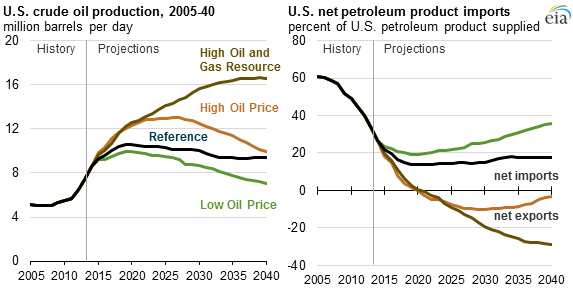 Contrary to his campaign hype (see article below), Trump-as-president will not do anything to interfere with the free flow of oil or gas to or from the USA. As I pointed out in the Investors Business Daily interview (Gillian Rich’s story is below), people central to Trump’s administration – such as Rex Tillerson, his designated secretary of state and former CEO of Exxon, and Harold Hamm, Trump’s fracking billionaire friend he wanted for secretary of energy – are global-market-oriented businessmen who would never agree to disconnect the USA from global energy markets.
 Here`s my latest at Berlin Policy Journal: about OPEC`s 30 Novermber meeting, US shale and the geopolitics from the Trump Administration towards Iran and the Saudis. – Tom O`D.
 Much of the USA – and most of the world – were stunned by Donald J. Trump’s victory over Hillary R. Clinton last night. His campaign was filled with bombastic claims, but gave little detail on foreign policy. However, now “the Donald” will be President and Commander-in-Chief of the superpower at the center of the global security system since WWII. It is time to look at Trump’s foreign policy program and what it means. Below is an initial reading list I am giving to my students today.
 The Global Barrel
