Category Archives: The USA

Germany’s Real LNG Policy [My BPJ analysis]

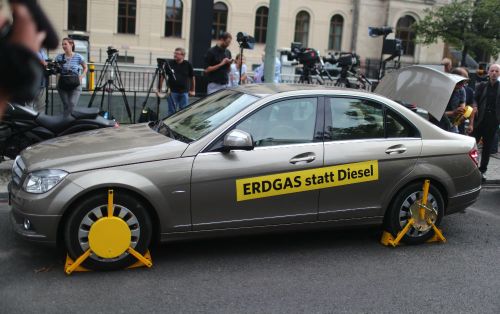
bpj_erdgas_statt_diesel_c-reuters_28jun18

“Natural gas instead of Diesel” © REUTERS/Hannibal Hanschke

My latest at: Berlin Policy Journal (German Council on Foreign Relations), June 28, 2018:

Germany’s Real LNG Policy
Germany’s government has endorsed imports of liquid natural gas for the first time—but not because of Russia and Nord Stream 2. 

The German federal government has decided in favor of building liquid natural gas (LNG) import terminals and infrastructure. In March, Chancellor Angela Merkel’s CDU/CSU-SPD government, in its “coalition contract,” pledged to “Make Germany the site for LNG infrastructure.” This is a notable policy change, because in Germany the opposition to LNG imports and use has been so much stronger than anywhere else in Europe.

The aim of this new endorsement is to reduce maritime and roadway heavy-transport emissions. However, many in Germany argue that using “small-scale” LNG in this way, as a “bridging” fossil fuel, is “wasted investment”. They contend that Energiewende-mandated electric vehicles can and will rapidly de-carbonize heavy transport. Still others oppose LNG imports on the grounds that they would unnecessarily diversify Germany’s gas suppliers with the aim of offsetting increasing reliance on Russian pipeline gas. They insist that Russian pipeline gas has been “historically reliable” and is cheaper for Germany than building large-scale import terminals for LNG.
Continue reading

A Comment on: “A Trans-Atlantic Manifesto in Times of Trump – A German Perspective,” by foreign policy experts

I sent this today to European and American contacts – apologies for duplications.

Dear Colleagues and Friends,

I read with interest the declaration: “In spite of it all, America: A Trans-Atlantic Manifesto in Times of Donald Trump – A German Perspective,” signed by a number of leading German foreign policy experts today in Die Zeit and translated in the NYTimes.
Point 10 is of particular interest and much welcomed as – at long last – a frank characterization in Germany of the Nord Stream 2 project for what it plainly is: “a geopolitical project:”  Quoting:
10. Energy security policy — giving up Nord Stream 2 is in Germany’s interest
There is one more policy area in which the German government should reconsider its position to open the door for productive cooperation: energy security policy. The United States has identified Nord Stream 2, the planned pipeline running through the Baltic Sea to Russia, as a geostrategic project. They are correct. More important: This pipeline project is not in the joint European interest. Nord Stream 2 contradicts a policy of greater energy independence and undermines the envisaged European Energy Union. We should try to identify a joint approach with our European partners and the United States. (emphasis added – T.O’D.)

Continue reading

“Neue Neue Ostpolitik” My BPJ piece on German fury at Senate NS2 sanctions

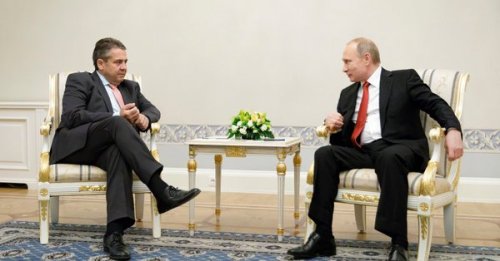
putin_gabriel_schroeder_dinner with an old acquaintance-der_spiegel_07jun17_U637TtLQ

The US Senate’s decision to expand sanctions against Russia triggered indignation in Berlin, throwing Germany’s geopolitical ambitions over the Nord Stream 2 project into sharp relief.  Read below or get the App.   My other articles at Berlin Policy Journal  

“Neue Neue Ostpolitik”  

Berlin – July 21, 2017    By: Thomas O’Donnell —  On June 15, the US Senate approved an act to sharply expand sanctions imposed on Russia in retaliation for its intervention in eastern Ukraine and annexation of Crimea in 2014. The broadly bi-partisan move that enshrined Barack Obama’s earlier executive orders – intended as a response to Moscow’s alleged cyber interference in US elections – was a stunning rebuke to US President Donald Trump’s Russia policy, essentially taking a broad swath of foreign policy out of his hands. Continue reading

Trump’s promise to “stay totally independent” of OPEC is populist hype [My IBD interview]

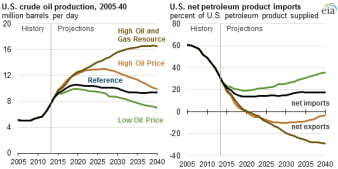
eia_apr15_us_oil_prod-importsContrary to his campaign hype (see article below), Trump-as-president will not do anything to interfere with the free flow of oil or gas to or from the USA.  As I pointed out in the Investors Business Daily interview (Gillian Rich’s story is below), people central to Trump’s administration – such as Rex Tillerson, his designated secretary of state and former CEO of Exxon, and Harold Hamm, Trump’s fracking billionaire friend he wanted for secretary of energy – are global-market-oriented businessmen who would never agree to disconnect the USA from global energy markets.

The free flow of petroleum through the unified global market traded in US dollars – what I call the “Global Barrel” – is central to the business model of every private as well as every national oil company.  Today there is essentially one, global oil price. If you break up the global market by limiting imports or exports, you get national markets with national prices.  Then what?

If the US price went higher than the global price due to keeping out cheap foreign oil, Trump’s popular approval would dive. And, if the U.S. price went lower due to a domestic production glut of fracked oil, then his support among business would tank.

Moreover, the unified global market serves as the key element in the world’s collective energy-security system by guaranteeing equal access and prices to all suppliers and consumers.   Continue reading

My CNNMoney quote & 3 points: OPEC v shale, Russia’s new role & Trump-buddy Hamm is pro Saudi price band


160928163540-opec-algeria-384x216I was interviewed by Matt Egan of CNNMoney. Three points, if I may:

  1. This story echoes my message in Berlin Policy Journal earlier this week and my RTRadio interview: OPEC now has to live with a new oil-market paradigm where shale  won’t disappear (for now its in the US, but soon elsewhere too).  It is a technology more akin to manufacturing than traditional oil extraction and so more amenable to technological and operating innovation in a low-price regime (or in a price war such as the Saudis et al have just given up on waging against it). And, being much smaller-in-scale means it can ramp up at much lower initial costs and more rapidly than traditional oil fields. The CNNMoney story is below here, or here’s the CNN ink .
  2. Another totally new phenomena seen in this OPEC deal was that a Russian leader was deeply involved in the tense OPEC negotiations, specifically between Iran and Saudi Arabia. Russia has never done this before. Historically, it has also never carried through on previous promises to support an OPEC cut, instead free-riding on higher prices effected by OPEC/Saudi cuts.  In this case, Putin was instrumental in getting the Saudi’s to agree, as they always have before, to swallow most of the cuts. But, Putin has agreed to cut too (in ambiguous language, but repeatedly). We shall now see if he and Igor Sechin (CEO of Rosneft, that produces 40% of Russian oil, and who is, by the way, a great friend of Venezuela’s miserably failing chavista leadership, where his company is now the biggest foreign oil producer) … do as they have promised OPEC and the Saudis. If they do not, the fallout with Saudis and their allies will be significant.
  3. Now, also, we shall see how US shale responds. Of course, IEA head, Fatih Birol, has understandably predicted that US shale and other producers, will likely hike production if oil reaches $60/barrel and simply eat up the present OPEC cuts in about nine months or so. (Aside: of course, the present output cuts, even if they ‘fail’ in the long run to sustain higher prices, would still have had been a significant cash-boosting relief to all OPEC states and to Russia while they lasted.)  However, take a look at the Bloomberg video link at the end of my Berlin Policy Journal piece – an interview with Howard Hamm, Trump’s billionaire fracking close-ally (who has just turned down an offer to run the Department of Energy). He had told Bloomberg he expects OPEC to make a deal because “it makes sense” and, further, that he expects/hopes his US fracking colleagues will show ‘discipline’ after the price rise, i.e., not expanding too fast so as to keep prices up.  An interesting, de facto recognition that price wars, in the end (in the long run), do not benefit either side, and goes on to approvingly say that the Saudi’s want to once again maintain prices “in a band” as they used to do. It is clear from Hamm that this would all be very welcomed from the US side. (Note, Hamm’s Continental Energy company made $3 billion in just three hours after the OPEC deal boosted prices! ) Indeed, in light of such everlasting market realities, it is difficult to imagine Trump’s attitude to the Saudi’s will be much different than other US president’s over the years. Which has geopolitical implications for Iran, of course, as the Saudi-Iranian geopolitical competition for regional influence and their parallel oil-market competition both continue to heat up.

Here’s the CNNMoney piece by M. Egan of 1 December 2016 (with my quote highlighted): Continue reading

An Oil-Price War´s Surprise Ending -My BPJ article on OPEC, Shale, Trump, Market & Geopolitics

bpj-oil-price-war-end-29nov16Here`s my latest at Berlin Policy Journal:  about  OPEC`s 30 Novermber meeting, US shale and the geopolitics from the  Trump Administration towards Iran and the Saudis. – Tom O`D.

An Oil-Price War’s Surprise Ending

No one expected shale producers to survive extended low oil prices.
, NOVEMBER 29, 2016 
The oil market’s oversupply – and the low prices that followed – was supposed to drive shale producers out of business. Instead, the economies of several large national producers have been upended, and the next act could prove even more destabilizing.

OPEC’s 171st meeting in Vienna on November 30 reflects the new paradigm of the global oil market. After two years, the Saudi-led price war to drive American shale and other “high cost” producers from the market has ended. However, to the surprise of many – not least the Saudis – shale has survived. What now?

The United States Energy Information Agency (EIA) expects persistent market oversupply to have been quenched by the second half of 2017. The Saudis view the diminishing oversupply as an opportunity to cut production by 600,000 or more barrels per day – although about twice this amount would be optimal – boosting prices from under $50 per barrel to $60 or more. The Saudis have worked intensely to reach an agreement at the OPEC summit to coordinate this production cut with Russia; any failure to achieve this highly anticipated deal would sink market confidence, pushing prices into the $30s.

The key obstacle to the Saudi plan is that Iran has refused to participate in any cut, insisting it should first be allowed to re-establish production it lost under years of sanctions. In response, the Saudis have threatened to boost their own production, punishing Iran by collapsing prices and by denying them market share. The Financial Times’ Nick Butler correctly characterizes this as “playing with fire,” and not only because of the severe pain this would impose on weaker OPEC states, but also for the geopolitical retaliation it might provoke from the new US administration as the Saudis would also bankrupt numerous shale producers in the US.

However, even if Russia, Iran, and the rest of OPEC agree to the Saudis’ cuts, US shale is widely expected to expand into the void, re-depressing prices by later next year. In all these scenarios, the future remains extremely difficult for OPEC, for Russia, and for other oil-dependent states.

A Price War Backfires

The prolonged high price of oil, starting to rise in 2002 and then dipping during the financial crisis before rising again till mid-2014, encouraged the emergence of new unconventional shale production. Driven by technical innovations in hydraulic fracturing plus abundant venture capital, by 2014 the US had added more new oil to the global market than what was lost in the Arab Spring and subsequent wars in Libya, Iraq, and Syria. By mid-2014, some two million excess barrels-per-day (bpd) were flowing into storage, and the price collapsed. Continue reading

Saudi & Russia seek oil deal as OPEC fight v US shale fails [My RTRadio Interview]

economonitor-com-putin_and_prince_g20_sept16

RT Radio-Edinburgh’s Jack Foster interviewed me on the upcoming 30 November OPEC summit where the Saudis hope to set a cap on OPEC and Russian production. Here’s the interview:   Listen from time-stamp 9:00-to-17:30 (Streaming MP3) 

This would  mark the first-ever Russian cooperation with OPEC. However, market realities look bleak for OPEC and Russia whether they reach an agreement or not. The reason is the unprecedented continuing challenge from US shale, which has dramatically cut its costs via tech and operational innovations to stay profitable at low prices. Continue reading

“Energy independence” won’t free the USA from global oil market & geopolitics [I’m cited: CNNMoney]

160809121848-us-oil-imports-shrink-780x439

Credit: CNNMoney, 9 August 2016

Mr. Trump promises he’d use the USA’s shale-oil revolution to deliver “complete” independence from foreign oil, telling voters in May: “Imagine a world in which our foes and the oil cartels (sic) can no longer use energy as a weapon. Wouldn’t that be nice?” But, he is confusing two quite distinct things:

“Energy independence” – in the sense of the USA producing more oil than the country consumes – is indeed possible, even “tantalizingly close” as this CNNMoney article (Aug. 9, 2016, by Matt Egan) makes clear, citing myself and other experts.  For clarity, I’ll call this “net oil-exporter status.”

However, Donald Trump asks us to “imagine” he can use this net oil exporter status, to make the US independent of the global oil market and oil in geopolitics where our “foes” and “cartels” have leverage. Continue reading

New US tech squeezing oilfields & rivals [IBD quotes me]

U.S. oil companies are developing new technologies and techniques to produce oil cheaper and faster.Gillian Rich at Investors’ Business Daily News (17 June 2016) writes a quite informative survey of the many new technological methods pushing the cost of US shale production ever downward. Here’s Gillian’s article. She asked me about the impact on OPEC producers and my central point (my quotes are below) was that it will be the high-tech, most-efficient producers (such as US shale) and NOT necessarily those with the largest and easiest-to-access proven reserves (e.g., countries such as Venezuela and much of OPEC, many corrupt Russian and Chinese state-dominated firms, etc.)  that will set the pace in the new oil order

If the latter actors can’t find ways to innovate in technology and operational methods they will be at a disadvantage because shale production looks more like manufacturing than  traditional oil extraction.  Many OPEC and other state-owned firms never had to think like a combination of Henry Ford and Silicon Valley, but could instead count on huge, low-cost reserves, inefficient exploration and production and cheap local labor.

Eventually, the new shale methods will of course spread to promising shale fields in Argentina, China, Eastern/Central Europe and elsewhere; but this will require big advances in local infrastructure, training and government regulatory capacity. Again, things those countries must think about very seriously. Here are my quotes (from near the end of her long article).

New Oil Order

…. OPEC countries like Nigeria and Venezuela that haven’t invested in newer technology will be hurt by advances in the U.S., said Thomas O’Donnell, a senior energy analyst at the consulting firm Wikistrat. Russia also can’t exploit shale and Arctic assets because of economic sanctions that limit Westerners from helping develop the new fields.

Meanwhile, Saudi Arabia has low-cost production fields, and state-run oil company Saudi Aramco can bring in foreign experts knowledgeable about fracking and new technologies, he added.

Still, OPEC must now grapple with U.S. shale producers on the rebound, which could lead to volatility, O’Donnell said. “The oil order has changed. It’s conventional oil on one side, and new shale oil on the other.”

What’s keeping foreign oil firms out of Iran? IRG? [CNNMoney quotes me]

iran_oil_production-sanctioneffect_17jun16

To put Iran’s recent production increases in perspective: On its own, for 37 years, Iran has struggled to produce two-thirds of its pre-revolutionary level of 6 million barrels/day. Now, domestic opposition is again limiting foreign oil companies’ participation to boost production.

Since the Obama-administration’s and Europe’s nuclear sanctions were lifted early this year (marked ‘e’ on the chart), Iran has been expanding its production and exports more rapidly than most experts had expected. Tehran has actually tripled exports since late-2015 (see point ‘f’).  But, here’s the big question: Can Iran sustain this years’ production gains?
If to, this could seriously undermine Saudi Arabia’s global oil-market share, and boost Iran’s sanctions-damaged economy to a long-awaited recovery.
The short answer: Now that foreign sanctions are finally lifted, the battle to boost Iran’s oil exports has shifted to a domestic clash over whether to allow foreign oil companies to have significant upstream involvement. This is a domestic Iranian issue with a long history.
Historical perspective
Let’s start with some historical perspective: The Iranian National Oil Company (NIOC) can only do so much on its own to boost production. After decades of sanctions, it lacks the needed technology and finance.  I told CNNMoney‘s Matt Egan, on Wednesday, that the faster Iran expands on its own, the faster production will plateau. (His CNNMoney article today quotes me .).
This was what happened after the 1980-1988 Iran-Iraq war.(‘b’ on the chart). By about 1992, production had plateaued at almost 4 million barrels/day, under 2/3 of the pre-revolutionary, late-1970’s level of roughly 6 million barrels per day. (‘a’ on chart).  The Iranian president at the time, Rafsanjani, argued to religious conservative and nationalist members of the Majilis that only foreign oil companies’ technology and investments could expand production further. However, he only won grudging approval for an offshore project due to fears that foreigners would bring their irreligious ways ashore and/or undermine the hard-won nationalization of Iran’s oil sector.
Continue reading
Aside

Last night Investor’s Business Daily NEWS’ Gillin Rich interviewed me. The title reflects some rumors, but my point of view, as she reports, emphasizes market realities that bode against any output limit – esp. if the Iranians are still intransigent … and … Continue reading

Rate this:

Don’t write off American oil boom despite OPEC – CNNMoney cites my analysis

cnn_money-chart-oil-production-down-slow-01jun16

I was interviewed today by CNNMoney’s Matt Egan on what  OPEC should expect from US shale as they hold their 169th “Ordinary Meeting” in Vienna tomorrow (2 June).  Indeed, at some point oil production and demand will balance (likely in 2017), and then the Saudis and OPEC will have to cautiously test the presently unknown dynamics of high-tech US shale on the rebound. -Egan cites my point  of view in his article. Read on … – Tom O’D.

Don’t bet against the resilience of U.S. oil companies

by Matt Egan @mattmegan5 CNNMoney (New York) June 1, 2016: 12:23 PM ET

Many expected U.S. oil output would collapse under the weight of a lengthy price war with the mighty OPEC, the fractured oil cartel that’s meeting in Vienna Thursday.

The U.S. oil boom, fueled by the shale revolution, has obviously taken a few punches from OPEC’s strategy of all-out pumping. But the latest numbers show that American production continues to remain stubbornly high in recent months despite the crash in crude to as low as $26 a barrel in February.

The U.S. pumped 9.13 million barrels per day in March, down by a miniscule 6,000 barrels from the prior month, according to stats released this week by the U.S. Energy Information Administration. That represents a deceleration from recent monthly declines. By comparison, daily U.S. output dropped by 58,000 barrels in February and by 83,000 barrels in December.

Continue reading

Latin American Oil: Beijing Still Lending, But for How Long? – I’m quoted by Energy Compass

energy_intelligence_tom_od2_13may16

Last week, Energy Intelligence (EI) quoted me on China’s continued appetite for oil and gas investments in Latin America even with its own  economic slowdown and LatAm’s many political upheavals. (Sincere thanks to EI for a PDF of their proprietary Energy Compass to share on my blog. You can access it below here.)

Some thoughts on China’s strategy: In the case of Venezuela, as the price of oil fell, Beijing quickly eased up on PDVSA’s repayment terms for its huge outstanding loans which are repayable in oil. This shows some willingness to help Venezuela cope with the falling market value of oil. Why? Because, mainly, it is the oil that China has always been laser-focused on – not making interest on these loans.

Generally, it is clear that new Chinese investments or loans are still possible in Latin America. In Venezuela however, Continue reading

Wikistrat Report “Saudi Arabia & the Future of Oil” cites my views

Wikistrat - my quote on US continued interestThis Wikistrat Report on the Saudi kingdom’s “reform” plans and the future of oil is from a press webinar I did on 17 May together with Dr. Ariel Cohen (Atlantic Council, Washington) and Prof. Shaul Mishal (Middle East Division, IDC Herzliya & Tel Aviv U.).  A nicely done report on oil market and geopolitical hot topics.

30May16 note: A couple typos I had found have been fixed by Wikistrat since I initially posted this Report.  The latest version is now linked here. – T.O’D.

I’m quoted by MarketWatch: Five key issues for OPEC’s June meet

Oil ministers of Venezuela, Saudi Arabia & Qatar had agreed in February to freeze output if others did too. AFP/Getty Images

After a Wikistrat Webinar I did, MarketWatch asked me about Saudi & OPEC policy, ond US Shale. Read on here, or at MarketWactch! – Tom O’D.

5 key issues OPEC must wrestle with at its June meeting

Oil output freeze is needed to ‘create a firm price floor’: analyst

The oil market has given members of the Organization of the Petroleum Exporting Countries a reason to crack a cautious smile when they meet June 2 in Vienna.

Signs of a more stable oil market have emerged since the cartel members last held a regularly-scheduled meeting. Oil prices CLN6, +0.04% LCON6, -0.38%  have gained more than 30% so far this year. And both West Texas Intermediate, the U.S. benchmark, and Brent crude, the global benchmark, briefly traded above $50 on Thursday.

Global production is falling following a larger-than-expected weekly decline in crude supplies, according to a report from the American Petroleum Institute late Tuesday. The report comes as the number of active-drilling rigs have been in a steady state of decline and oil-company spending cuts, oil-and-gas sector bankruptcies, and recent outages in Africa and North America, have been supportive for crude prices.

“OPEC members are likely to be a little happier going into June’s meeting than they were in December,” Tom Pugh, commodities economist at Capital Economics, said in recent research note.

Oil prices have “surged by about a third since the start of the year,” he said. The “higher prices will have removed some of the pressure on [OPEC] to act to prop up prices.”

But that doesn’t mean major oil producers can sit back and relax when they get together. Oil market supply and demand haven’t fully stabilized and there a lot of factors than can, and probably will, rock OPEC’s boat.

Here’s a rundown of what analysts see as the key issues at hand and possible outcomes for the OPEC summit: Continue reading