Tag Archives: Tom O’Donnell intervieews

“Bone-crushing” & “draconian”: The law that could choke Putin’s oil revenues. [My interview with Norway’s ‘Kapital’]

My thanks to Tor Klaveness at Kapital, Norway’s oldest and leading, business magazine. Below is an English translation, then the Norwegian original. – Tom O’D.

“Bone-crushing” and “draconian”: The law that could choke Putin’s oil revenues

If peace talks between Ukraine and Russia break down, the US Senate is ready to pass a sanctions package that could strangle Russia’s oil exports. In that case, it could significantly strengthen the oil market.

Energy Published 29 Nov. | Paywall removed, Updated 9 Dec.

By: Tor Klaveness

“President Trump said this weekend, ‘Send me the bill.’ So we have to send him the bill to help end this war.”

Dr. Thomas O’Donnell, energy and geopolitical strategist

This was stated by Republican Senator Lindsey Graham in a panel debate on November 19 with Democratic Senator Richard Blumenthal. The debate was moderated by Clayton Seigle, a senior fellow at the think tank Center for Strategic and International Studies (CSIS), which also organized the debate.

The bill Graham referred to is the Sanctioning Russia Act , which he is co-sponsoring with Blumenthal. The bill already has the support of 85 of the 100 US senators and would give US authorities the right to impose punitive tariffs of no less than 500 percent on countries importing Russian energy.
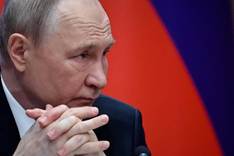
PHOTO: Alexander Kazakov, Sputnik, Kremlin Pool Photo via AP/NTB

With a stick and a carrot

Dr. Thomas O’Donnell is an energy and geopolitical strategist, founder of GlobalBarrel.com and former global fellow at the Wilson Center in Washington, D.C. He believes Congress is now poised to give President Trump an extremely potent weapon.

The proposal is being described as “bone-crushing” and “draconian,” and is set to be voted through almost unanimously in the Senate.

Continue reading

My Kyiv Kanal24: Ukraine’s drones hit Russian refineries hard. USA apparently blocks hits on oil ports. Why?

Dear colleagues and friends — there are two key energy aspects in this detailed interview with Nataliia Lutsenko of Channel 24, an all-news TV channel from Kyiv: (1) Ukraine’s attritional war on Russia’s domestic oil sector and (2) whether Ukrainian long-range drone capacities will be called upon (viz., permitted by the USA) to accomplish what the new US policy of ending Russian oil exports seeks to accomplish through secondary tariffs. Elaborating:

(1) Domestic Russian oil refining capacities: I explained that, If Ukraine can sustain these new drone attacks at a faster rate than Russia can repair them, this will be a major blow to the supply of diesel fuel required by the Russian war economy, especially to war industries, railways (i.e., to locomotive fuel), for harvesting of crops this fall, and to supply the war front and occupied Ukraine. The last time this was tried on a large scale, roughly two years ago, Ukraine caused significant hardships to Russian refining, but ultimately it did not achieve sustained damage at a rate necessary to collapse Russia’s immense national refining capacity. However, as I pointed out to Nataliia, Ukraine’s drone production and sophistication is now greater, and chances of success therefore better. We should know in some weeks or perhaps a few months if Ukraine can now overwhelm Russia’s repair capacities.

Already, fuel prices have spiked in Russia, with Moscow deciding to insure refiners receive a special subsidy they would otherwise not get due to high prices they are charging for fuel, to address difficulties with the renewed drone war. (Russian Refiners Hit Rough Patch, Hope for State Support, E.I., 20August25, [paywall].)

(2) Russian oil export capacities: Why does Ukraine’s war on the Russian oil sector not include destruction of Russia’s three westward facing oil ports, the terminals it uses to export the overwhelming bulk of its oil exports? These are Ust-Luga and Primorsk in the Baltic, and Novorossiya on the Black Sea. Why has the oil export capacities of these ports essentially never been hit?

Continue reading

My Asharq-Bloomberg: (1)Trump is following Miran’s tariff strategy (2)My reply to Jeff Sachs on US dollar role (3)Tariffs boost EU deindustrialization & (4)turbocharge German auto-crisis (5)Trump’s EU energy-purchase demands

Here’s my interview and a written elaboration – in lieu of a transcript:

  1. Trump’s “tariff shock” on everyone was intended mainly to force negotiations. Especially this is to insure no country:
    • Functions as a transit state for Chinese exports to get into the USA without paying crippling tariffs, or
    • Provides a Chinese-owned manufacturing site in their country with the same aim of accessing the USA market without crippling tariffs..
      • Trump’s Chair of the Council of Economic Advisers Miran and Treasury Secretary Bessent have been fairly clear about this, if one listens in detail.
  2. Trump Tariffs’ impact on Europe – Deindustrialization. German auto sector as an example.
    • While Trump and his circle militate against “deindustrialization” of the USA accomplished over the past few decades by the growth of Chinese manufacturing capacity and the export of these products into the USA market, Europe has an immediate problem, however, with the current advance of its “deindustrialization” or, as some more optimistically say, its new industrial “evolution”. [Some references from major German economic institutes on deindustrialization: IFO Institute, IW Institute, Kiel Institute, the latter of which has evolved a bit on this].
    • Taking the German auto industry as an example, it was already suffering from well known, chronic problems of Germany’s own making. These include two decades of low infrastructure investments, poor digitalization, high taxes, and being subjected to arbitrary government mandates to reduce diesel sales and increase battery electric vehicle production, and etc. ON top of this, German industry has also suffered high energy prices due to the countries exceptionally complex all-renewables energy transition model. On top of this came suddenly, from 2021, the Russian energy war, which denied Europe half of the cheap gas that European, and especially German industry was relying on to compensate for the high-cost of the all-renewables transition.
    • This energy war – and on the heels of the Covid shock – was devastating to German manufacturing and heavy industries, providing the proverbial straw that broke the camel’s back. In my assessment at the time, this was the point at which German industry’s problems of multi-faceted uncompetitiveness morphed into a form of deindustrialization,
    • Germany is in its third year of recession. However, this is not just a recession. Note that the VW, the German auto firm, for example, in September 2024, began mass layoffs for the first time in 87 years in September 2024. BASF is in a similar conundrum. In my view this is a systemic, secular problem over and above any present economic downturn.
    • So, the point of painting this detailed picture of the crisis of German automobile manufacturing, as an example, is that one can now really only imagine what a sharp knock-on effect Trump’s auto tariffs and his other tariffs might have on top of all this.  This is devastating. Already the CEO of Mercedes has said if the tariffs continue he will move the production of the cheaper models to the USA. Already one of the largest exporters of cats from the USA is a German factory.
  3. My response (critique) of Jeff Sacks‘ dollar-decline predictions
    • I was asked to listen to a clip from Asharq/Bloomberg’s earlier on-air interview with Nobel Prize economist, Jeffry Sachs, about his prediction that the US dollar would lose its reserve currency status in this decade and be replaced by regional currencies.
    • My take was that there was little new (or old) factual evidence of this, plus Trump’s tariff shock is not necessarily a long-term tactic. So, I commented that Sachs has had this theory for a long time, an it is nothing new. (I think it is fair to say he is quite sympathetic to China in various interviews, for some years now.) So, I simply said I was not surprised he says this, as he has for a long time.
    • However, I explained (with a bit more factual detail than Sachs, I hope) that indeed, even Trump’s theorist Miran and Bessent too agree that the tariffs strategy is designed to reduce the value of the dollar (its aims is precisely a weak dollar), and this should normally mean that the dollar loses its reserve currency status, its preferred use in the world, that these Trump theorists have a plan for a “Mar-a-Lago” or similar accord for states that are seen as being key, close allies, who would agree to peg their currencies to the dollar, and that they should be expected to agree as they need to trade into the USA market.. This is based on the observation that the USA market has a special status in the world. If this were to pass, they theorize that this would in fact preserve the special, preferred reserve status of the US dollar.  Trump likes this as he has said that if this status is lost, then the destiny of the USA is to be a “third world” economy. **Continued at GlobalBarrel.com ….
Continue reading

My LRT.lt Lithuania interview: As Baltic states quit Russia’s grid, someone’s cutting their undersea cables & pipes | Baltics: Beware German-style overdependence on variable renewables

Credit: Vėjo jėgainė | J. Stacevičiaus / LRT nuotr.

My gratitude to LRT.lt journalist Vaida Kalinkaitė-Matuliauskienė for this in-depth print interview. We spoke just after Baltic states had disconnected from the Russian-Belarus electrical grid, BRELL, and had connected with the European grid. This was a complex and costly project, executed rapidly and flawlessly. [My comment continue below, after the English (first link) and Lithuanian (second link) versions:]

If you had stayed in BRELL, it would have been much easier for Russia
[a Google translation PDF]12 Mar 2025 — Of course, this zone is not only yours, it is connected to the European Union (EU). Thomas O’Donnell | Warsaw Conference “Energy Security in the Middle and… || LRThttps://www.lrt.lt › Verslas ||

jeigu būtumėte likę BRELL, Rusijai būtų daug lengviau
12 Mar 2025 — Žinoma, ši zona ne tik jūsų, ji sujungta su Europos Sąjunga (ES). Thomas O’Donnell | Varšuvos konferencijos „Energetinis saugumas Vidurio ir… || LRThttps://www.lrt.lt › Verslas || Translate this

The Baltic states’ impetus was obvious: a deep mistrust of Russia after its 2022 cutoff of half of all European gas imports intended to pressure EU states to abandon solidarity with Ukraine as Russia invaded it. So, switching to the European grid is a great relief. However, the dangers haven’t ended.

Continue reading

My Al Jazeera: The EU will retaliate against Trump’s arbitrary tariffs | Attacking allies, Trump dilutes fight vs. real threats from highly subsidized Chinese exports.

Last night, I was live on Al Jazeera’s evening news to give an “EU perspective” on Trump’s sweeping tariffs on the EU and have a bit of a debate with Hon. Robert Arlett, Sussex County Council, Delaware, USA – a MAGA supporter. I was happy to do so.

I think I made several decent points of criticism about how the entire premise for “retaliation” against the EU on trade was “made up” under an “arbitrary” formula that “makes no sense.” I allowed that, as is often the case with Trump, much of this, the “retaliatory” portion, might be a pressure tactic for some other, still-to-be-revealed concession Trump is aiming for from Europe.

Of course, this is the geo-economic side to Trump’s geostrategic undermining of a unified USA-EU approach to facing Russia over its invasion of Ukraine. (However exactly how that new geostrategic relationship with Europe and NATO might all fit into Trump’s larger, global security strategy is still mostly up in the air, a matter still taking shape.)

However, as for these massive tariffs on Europe and Asian allies, these are a systematic attempt to dismantle globalization as we have known it and instead to focus on the subordination of European and Asian allies to a system where hegemon is unwilling to pay certain costs of maintaining its allies within its system.

Trump envisions a system where the USA makes no sacrifices or pays no communal costs, but must profit at every step from each and every ally. Indeed, the USA has powerful tools afforded it from its geo-economic dominance, tools which Trump seeks to exploit to unilaterally shape international economic and geopolitical relations, while forcing its allies to pay for the privilege and advantages of belonging to the USA-hegemon-maintained system.

Continue reading

My Q1 Polish press: |1|Does Germany want Russian gas back? |2|Green Deal model has a tech problem. |3|German deindustrialization: bankruptcies up. |4|Warsaw, Paris & London must act fast for Ukraine!

Opening of Nord Stream1 pipeline, 2011. Gazprom via PAP

Below are links to 12 articles that appeared in the Polish press in the last few months, interviewing or quoting me on four topics I feel are important. The topics are listed in the title above.

The links are below, sorted by topic. The first or left column has English translations of the titles, and the second or right column has the original Polish — which unfortunately I don’t speak! If you follow the links, Google Translate or Deepl will translated the Polish articles pretty well into English. My special thanks to the intrepid Polish journalist, Artur Ciechanowicz at BiznesAlert in Warsaw for his interviews in the list. (I also had about 33 quotes or interviews in several other languages since December [1]).

ENGLISH titles and links:

  1. On German (far-right) & USA (Trump) each plotting a Russian gas return to Germany
    • A former Stasi agent lobbies for the resumption of Nord Stream. Expert: One of the gas pipeline lines ready to be launched,, By,: Artur Ciechanowicz, March 3, 2025, biznesAlert.pl
    • Some EU countries believed that Gazprom gas would be in Europe forever BiznesAlert.pl
    • “Like a Drug Addict Returning to Heroin.” Analyst on the Idea of ​​Unblocking Gas Imports from Russia to Europe, Author: Artur Ciechanowicz, February 1, 2025, 07:21
  2. Failures of EU Green Deal on technology and energy security.
    • American expert: recommendation to reduce emissions by 90 percent by 2040 is “fantasy” | Energetyka24
    • Expert: EC recommendation to reduce gas emissions is fantasy wpolityce.pl
    • Unrealistic EU climate plan. Expert opinion crushes – Super Business
    • “Rearranging deckchairs on the sinking Titanic”. Expert slams the eco-target dictates of Brussels Eurocrats PCH24.pl
  3. Trump, EU & Poland: Ukraine War crisis.
    • First talk with Putin. Trump has visions of ending the war in Ukraine | Newsweek Jan 21
    • How Trump Can Bring Down the Russian Economy: Analysts: He Has an Arsenal of Means to Do It, By Artur Ciechanowicz, Jan 24, 2025 | Biznes Alert
    • Trump may use [oil] sanctions to finish off Moscow, which is running out of money for the National Welfare Fund. – 16 January 2026 UBN
    • Expert: Washington, London, Warsaw should work quickly. Kiev can’t afford to be patient – Dziennik.pl
  4. German deindustrialization: Energy & economic crisis
    • Major shoe retailer goes bankrupt A sharp increase in bankruptcies in Germany

Polish titles and links:

  1. First topic.
    • Agent Stasi lobbuje za wznowieniem Nord Stream. Ekspert: Jedna z nitek gazociągu gotowa do uruchomienia biznesalert.pl
    • Część krajów Unii uwierzyła, że gaz z Gazpromu będzie w Europie na zawsze BiznesAlert.pl
    • “Jak powrót narkomana do heroiny”. Analityk o pomyśle odblokowania importu gazu z Rosji do Europy | BizNes Alert
  2. 2nd Topic
    • Amerykański ekspert: zalecenie redukcji emisji o 90 proc. do 2040 r. to „fantastyka” | Energetyka24
    • Ekspert: Zalecenie KE redukcji emisji gazów to fantastyka wpolityce.pl
    • Nierealny plan klimatyczny UE. Opinia eksperta miażdży – Super Business
    • “Przestawianie leżaków na tonącym Titanicu”. Ekspert nie zostawia suchej nitki na eko-dyktaturze brukselskich eurokratów – PCH24.pl
  3. Third topic
    • Donald Trump chce uchronić świat przed III wojną światową | Newsweek
    • Jak Trump może złamać rosyjską gospodarkę?
    • Trump may use [oil] sanctions to finish off Moscow, which is running out of money for the National Welfare Fund. – UBN
    • Ekspert: Waszyngton, Londyn, Warszawa powinny szybko działać. Kijowa nie stać na cierpliwość – Dziennik.pl
  4. Fourth topic

Notes:

  • [1] Other than being cited/interviewed in Poland, I was also quoted elsewhere about 33 times so far in 2025, mainly in the USA, with many then translated to languages of Europe, Asia and Latin America. I never know what to do with all these print interviews. Here at GlobalBarrel.com, I often publish videos of some of my live-on-air expert commentary, usually accompanied by a detailed blog post. So, my idea is I will make a new tab at the top of the GlobalBarrel.com site, next to the “About Me” tab, where I can simply list link to my recent press citations or Op-Eds. [Back to text]

My TVP: To cripple Putin, Trump can sanction oil ports, let Ukraine strike them / Seeking a new North Stream deal is Merkel 2.0; realism is a new, nuclear ‘Green’ Deal

[TWO “discoveries” just after this interview:

First, Bloomberg reported Ukraine had destroyed an oil pumping station on the pipeline feeding Russia’s big Ust Luga oil export terminal on the Baltic Sea. This is the first time Kyiv has shutdown a Russian oil port, … which is exactly what I advocated in the interview above and since early-2024 as a military tactic to accompany imposition of “real” USA-EU oil sanctions on the three Russian west-facing oil ports, replacing the failed “oil price cap” policy.

Second, Christof Ruhl, former-BP VP, and -World Bank Moscow rep., now at the Columbia U. Energy Center, had an OP-ED in the FT, with a similar argument that Russian oil can be replaced with OPEC crude. I recommend it: Trump should call on Opec in his bid to negotiate with Putin Ukraine’s western allies must join forces with the oil cartel to really squeeze Russia’s war economy” Christof Ruhl, 30jan25.]

There are two topics in this interview with Diana Skya of Poland’s national broadcaster, TVP:

  1. Putin’s oil export income can be slashed via new sanctions and military policies, in line with Trump’s interest in forcing a “deal”
  2. EU member states that seek a new Putin gas partnership are dysfunctionally replaying Merkel-ism and avoiding the real solution of reforming the Green Deal to put nuclear energy in the center. (See: “EU debates return to Russian gas as part of Ukraine peace deal. Advocates say reopening pipelines could help settlement with Moscow and cut energy costs” Henry Foy and Alice Hancock in Brussels and Christopher Miller in Kyiv, FT, 30jan25)
  1. OIL SANCTIONS:

I have argued for three years that the rationale behind the USA-EU imposition of a Russian “oil-price cap” rather than simply imposing real oil sanctions has been flawed, and the policy has failed.

It was conceived in early-2022, apparently by former-central-banker Mario Draghi of Italy and taken up by then-USA-Treasury-head Janet Yellen, neither of whom understood global oil trade sufficiently to see how easily the Russians could get around this scheme, as they have with a “shadow fleet” of oil tankers insured by Chinese, Russian or other non-EU, non-UK firms.

Continue reading