Following the arrest of a British employee at its Berlin embassy as a Russian spy, it’s been suggested that Russia has tried to infiltrate Germany in particular because of its role at the centre of Europe and because of its ties to Moscow. A former MI5 agent-recruiter, Annie Machon, plus UK academic expert Dr. Jenny Mathers at Aberystwyth University, and Dr. Tom O’Donnell, at Hertie School of Governance in Berlin are here to tell us if we’re witnessing a return to the Cold War ways of spying.
Some comments on the show: First off, my fellow panelists are experts on human espionage and Russian spy craft – which I am not – and were extremely informative In this discussion on David Foster’s Roundtable.
An overview and elaboration of my points: I stressed, besides a Cold-War-like level of Russian espionage in Berlin, there is a general openness in Germany to economic and political interpenetration and integration with Russia. In plain sight one sees everyday what I called the “unique influence and penetration” of German society as compared to any other EU or NATO ally.
I stressed energy-sector examples – most especially Nord Stream 1 and, now, Nord Stream 2 pipelines, built by German partnerships with Putin’s Russia, aiming to avoid Russian gas having to transit Ukraine to arrive in Germany and beyond. The degree of this open integration with Russia is unique in the EU. Consider: the Germany’s pre-Merkel chancellor, Schröder, heads the boards of both Gazprom and Rosneft; that an x-German Stazi secret-police officer is the CEO of Gazprom-owned Nord Stream 2 AG, and that overwhelming numbers of German experts “consult’ for Gazprom, including even the 2005-06 German Federal State Secretary for Defense(!) – who is a member of Merkel’s CDU/CSU party.
My Op-Ed on German motives for Nord Stream 2 appeared in the Dziennik Gazeta Pravwna 4 Aug. 2021 (no. 149 dziennik.pl, forsal.pl), derived from an English interview (below here) with Artur Ciechanowiicz (PAP, Brussels). [Polish Op-Ed link]
Read the Polish Op-Ed (PDF) “Germany is not afraid of Russia. It fears risks coming from Ukraine”
Here is my full English interview, expanded for clarity:
1) [AC] What are the consequences of the Nord Stream 2 deal between Washington and Berlin?
[T O’D] Stepping back a bit: this deal marks a victory by Berlin in its long and intensifying contest with its ally, the USA, over which of these two biggest transatlantic powers will decide the alliance’s strategy with respect to Russia and China. The two allies deeply disagree on this matter.
In the USA, both Democrats and Republicans have agreed since the Obama administration that “Great Power Competition” must be the strategy for the alliance versus Russia and China. The Americans strongly feel it is necessary to “decouple” from globalism’s deep trade and tech integration with China and Russia, that these states must either change their disrespect for global trade rules and moderate their increasingly aggressive geopolitical activities, or be isolated and forcibly contained.
Germany, with almost 50% of its GDP from global trade, deeply disagrees with this US strategy [i.e., German exports provide 46.9% of GDP, the USA’s only 11.7%]. Berlin likes global rules; but its unbalanced economy cannot afford trade decoupling and it broadly opposes forceful military containment of China and Russia. Instead, it wants only negotiations and occasional sanctions.
So, Nord Stream 2 is an iconic example of this clash, this “leadership fight” between the USA and Germany over the transatlantic alliance’s strategy towards Russia. Berlin wants to maintain energy ties at all costs, while the USA has long advocated maximum European energy independence from Russia, and to constrain Russia (and defend Ukraine) by forcing Putin to continue having to send gas across Ukraine to reach his European customers.
Russia, for its part, wants to re-incorporate former-Soviet Ukraine [plus Belarus, Moldova and Georgia, and minimally keep them outside of the EU and NATO], and has wanted to avoid having to send its gas to Europe via Ukraine. Moscow’s transit dependence on Ukraine not only provided income for Ukraine, this constrained Russian subversion and military aggression there, for fear that the transit pipelines could be interrupted by either Ukrainian state or non-state actors.
For Germany, the “insecurity” of having to import Russian gas through Ukraine deeply alarmed Berlin. And so it made a strategic decision over 20 years ago to partner with Russia, to build new pipelines to bring gas directly from Russia to Germany [via Nord Stream 1 and Nord Stream 2] and on to European customers long supplied with the same Russian gas but via Ukraine. The aim was to make Germany the new hub for distribution of Russian gas in Europe.
Given Berlin’s logic, the 2014 Russian war on Ukraine and its annexation of Crimea only made it more sure than ever of the dangers of relying on Russian gas imports that have to transit Ukraine, and it redoubled its efforts to complete NS2, notwithstanding this would undermine German relations with three consecutive US administrations and with many of its EU allies, esp. Poland and East-Central Europe – a region where its much-prized soft power has been sacrificed.
My live interview (22 July 2021) on the Nord Stream 2 deal between Germany and USA. with CGTN (London office of Chinese state broadcaster. This was not edited, or I would not post it here.)
I explain the bind which Berlin had put the Biden administration in for agreeing to waive sanctions on Nord Stream 2 (NS2) in return for this bad deal. The German side was playing hardball. Berlin had made clear to Washington (well before Biden arrived in office) that the pipeline would be finished regardless of sanctions.
The German (and the Danish) side had already allowed Gazprom-owned North Stream 2 AG to continue construction in their territorial waters even when reputable insurance companies and the reputable construction-commissioning firms had abandoned the project due to the threat of US sanctions; and Berlin had made it clear to the US side that it would be completed regardless of any further sanctions. Sanctions on German firms could be circumvented by Berlin continuing to allow Russian firms to do any work that German firms were prevented from performing. And, sanctioning German firms, or NS2 AG, would cause outrage in every German political party except for the Greens, the only German party clearly opposed to the project. However, the Greens had made clear they did not think US sanctions on German firms was an appropriate measure for an ally to take.
I told DW that the key reason the US has always opposed Nord Stream 2 (NS2) was that it undermines Ukraine’s security – as well as Poland’s and other eastern European and Baltic states’ security.
I told DW that one can argue with the Biden-Blinken assessment (as I have) that they “had to” waive sanctions on the Russian-owned NS2 company, insisting that the pipeline was going to be completed anyway. Indeed, German and Dutch regulators had already allowed work to proceed even when the insurance firm and commissioning firm had left due to sanction threats, and Berlin had promised it would be completed no matter the sanctions.
However, the additional factor, which US spokesmen cite only obliquely, is that Merkel’s government was evidently willing to deny Biden a show of transatlantic unity from which to confront Putin. This shows the extreme lengths Merkel’s government had gone to to insure success in her partnership with Putin to finish NS2..
For Moscow, the essential aim of this partnership has been to avoid the “risk” (as Russian officials have put it) of having to export its gas across Ukraine, a country Putin wants to annex and is now at war with.
For Berlin, the most essential aim of this partnership is to avoid the “risk” (as I have been told repeatedly) of having to import Russian gas via what has long been seen by German political and economic elites as an “insecure” Ukraine (although it is obviously Moscow responsible for this “insecurity”), and as an “unreliable” Ukraine (i.e., German elites had lost confidence in Ukraine to reform itself, or at least the willingness to risk the process).
This German pipeline partnership with Putin,, in other words, is a decision to pursue narrow-national interests. It elevates protection of Germany’s Russian gas supplies for its troubled domestic energy system, and protection of Russian gas supplies for its principal EU trading partners, above the interests of Ukraine’s security and independence as Putin pushes to reincorporate Ukraine into the Russian Federation.
Rather than showing solidarity by forcing Putin to continue shipping his gas to Germany and to other EU sates via Ukraine, the gas will now come directly to Germany. Germany will become the principal hub for distribution of Russian gas to Europe, and Berlin will “handle” any difficulties with Moscow and Putin. Of course, Berlin never consulted with the other EU Member states, much less Kyiv, on what amounts to its narrow-nationalist energy-security plan for Europe.
It was my pleasure to be with Thierry Bros of Sciences Po University, Paris, and Peter Zalmayev, Ukrainian security analyst and executive director of Eurasian Democracy Initative on David Foster’s Roundtable on TRT World, London, broadcast 9 June 2021.
I discussed Biden’s apparent reasoning for waiving Nord Stream 2 sanctions:
First off, the German government of Angela Merkel simply would not cooperate otherwise. Allowing her pet energy project to go forward was the price she had demanded for trans-Atlantic “unity” before Biden’s summit with Putin.
(Aside: My research in Berlin and elsewhere has convinced me that, at no point from the late-Trump administration through Biden’s six months in office, did the German side actually engage in any meaningful “negotiation” or discussions with the US side to seek to find some compromise or to initiate a moratorium on construction. Not until Biden waived sanctions on Nord Stream 2 AG, and decided not to sanction any German firms inolved in construction did Merkel show any real interest in discussions. She emphasized her change of attitude on negotiating with Biden about: “what now are also the necessary commonalities in the relationship with Russia” in comments during a German national broadcast interview immediately following Biden’s sanctions waiver. Until this waiver, she had held up any real discussion of the pressing issues of trans-Atlantic unity-in-general, whcih urgently needed attention.
Secondly, as the EU and NATO allies all realize, Biden has to have this summit with Putin for a number of reasons. As I indicated on the show, the summit is needed to discuss:
Here are four issues on the Biden-Blinkin sanctions decision I discussed with EuroNews and other news media in the last few days:
-1- Regarding Biden’s waiving of sanctions on the company Nord Stream 2 AG and its head Matthias Warnig (former Stazi officer):
These sanctions would be unlikely to stop NS2, though it would cause difficulty for the firm and the European oil and gas firms that are partnering with it.
I am not surprised, however, in light of the upcoming Biden-Putin summit. It should be noted that the Russian side (e.g., their ambassador here in Berlin) has made clear, publicly, that sanctions would kill the Biden-Putin summit — which both sides need on many hot issues (see my comments of yesterday, on Iran negotiations, and US necessity to withdraw on-the-ground forces from the Middle East, and to focus on “Great Power Competition” vs. especially China, and Russia).
-2- As for effect of the new sanctions on the pipeline’s construction, and what options the US has:
The English version is below here | Mein Op-Ed-Artikel wurde am 6. April 2021 im Tagesspiegel Background in Berlin gedruckt.
Die Ukraine als „Zentralbank“ für europäische Energie
Thomas O’Donnell, Hertie School of Governance
Wie kann die Gasdominanz Russlands strategisch eingehegt werden? Der Wissenschaftler Thomas O’Donnell von der Hertie School of Governance prüft in seinem Standpunkt die Möglichkeit, die Ukraine mit ihren großen Gasspeichern zu einer Art „Zentralbank“ für europäische Energie zu machen und sie als Puffer zu nutzen. Zusammen mit weiteren Alternativen zu den Nord-Stream-Pipelines verbessere das die Versorgungssicherheit stark.
Der Chef des ukrainischen Gastransportsystems, Sergiy Makogon, hat vorgeschlagen, dass Europa die Ukraine als flexiblen und strategischen Energieknotenpunkt akzeptiert und dabei die Vorteile ihrer einzigartigen Gastransport- und -speicherinfrastruktur nutzt.
Was dieses Konzept glaubwürdig macht, ist, dass die Ukraine seit 2014, kurz nachdem die Maidan-Revolution und die russische Aggression begannen, ihren Gassektor erfolgreich in diese Richtung umgestaltet hat. Mit Hilfe der EU rüstete die Ukraine rasch die Exportpipelines in die Slowakei, nach Polen, Ungarn und Rumänien um, um Rückflüsse (Reverse-Flow) zu ermöglichen. Das befreite Kiew schnell von der Notwendigkeit, russisches Gas zu kaufen, und stellte sicher, dass ein solcher „Handel“ in Zukunft nicht dazu genutzt werden kann, Moskau zugeneigte Oligarchen zu fördern.
Op-Ed: Ukraine as “Central Bank” of European energy
Dr. Thomas O’Donnell, Hertie School of Governance | Published in: Tagesspiegel Background, Berlin. 6 April 2021
How can Russia’s gas dominance be strategically contained? Dr. Thomas O’Donnell of the Hertie School of Governance, Berlin, examines the possibility of turning Ukraine with its large gas storage facilities into a kind of “central bank” for European energy and using it as a buffer. Together with other alternatives to the Nord Stream pipelines, this will greatly improve European security of supply.
The CEO of Ukrainian’s gas transmission pipeline system, Mr. Sergiy Makogon, has proposed that Europe embrace Ukraine as a flexible and strategic energy hub, taking advantage of its unique gas-transport and -storage infrastructure.
What makes this concept credible is that Ukraine has been successfully re-shaping its gas sector in this direction since 2014, shortly after its Maidan Revolution and Russia’s aggression began. With EU assistance, Ukraine rapidly retooled export pipelines to Slovakia, Poland, the Czech Republic and Hungary to permit reverse flows. This rapidly freed Kyiv from buying Russian gas and assured this “trade” could not be used in future to cultivate pro-Moscow oligarchs.
This 10 February half-hour roundtable on TRT Television, London looked at the possibility of Nord Stream 2 being stopped by US sanctions. My thanks to host David Foster for the invite.
Today is 20 February, and I should add that since this was recorded, the Biden-Harris-Blinken administration has surprised Congress by sanctioning significantly fewer ships than it expected to be sanctioned for assisting Gazprom to lay pipe in Danish and German waters.
This White House attempt to generate goodwill with Berlin and with Merkel’s ruling coalition is generating bipartisan objections in Congress. Upcoming posts will analyze this development . Tom O’D. Below is the text from TRT network’s promotion of the show. and guests’ names and affiliations.
My DW Business live, with host Chris Kober, Feb 12,
In this live interview with Deutsche Welle (DW.de) on 12 February, I told host Christoph Kober, that this pipeline is clearly “geopolitical”.
Without Nord Stream 2, Putin can’t significantly escalate his war inside Ukraine; he’d risk his lucrative gas-export business with EU. That’s because, without Nord Stream 2, most of the gas Russia exports to EU countries currently has to arrive via pipelines transiting Ukraine that belong to its finance ministry (the remainder Russia pipes to EU states arrives via Belarus-Poland).
I pointed out that, by invading Ukraine in 2014, Putin created his own worries about his lucrative gas business with the EU. Unfortunately for Ukraine, Germany’s government also frets about this gas, fully 40% of all EU imports, having to pass through Ukraine. And so, Berlin made a “realpolitik” decision in 2015, to assist Russia’s Gazprom to build a huge new a detour pipeline around Ukraine. (I analyzed this policy, in 2017, as a “Neue Neue Ost Politik” and here – i.e., the New New Eastern Politics, a third historical iteration of German elites’ reorientations towards Moscow.)
“This is either a conscious Russian disinformation scheme to collect supplies from naive firms, or it’s a really irresponsible move by the foundation,” said Thomas O’Donnell, energy and geopolitics analyst at Hertie School of Governance. (“German green foundation joins efforts to complete Nord Stream 2,” Financial Times, 21 Jan 2020, see here, or PDF here.)
The FT’s Erika Solomon interviewed me about the fake “climate-protection” foundation established by the legislature of the German state of Mecklenburg-West Pomerania (German initials MV). State officials stated intent is to help Gazprom, the Russian state gas monopoly, overcome US sanctions to finish building the Nord Stream 2 pipeline. Their new foundation is financed with €20 million from Gazprom (sole owner of Nord Stream 2 AG), and €200,000 from the state government.
The strategy is for the foundation to purchase “rare and hard to find” equipment Nord Stream 2 AG will need to finish the pipeline, but which firms cannot sell directly to it because of US sanctions against the project. MV politicians have called their foundation a “clever mechanism” to protect firms from sanctions. According to the state’s energy minister, Mr. Christian Pegel (SPD), the foundation will be a “type of hardware-store shelf” (“Baumarktregal-Variante“) that then supplies the Gazprom operation. The strategy here is that with the “climate-protection” foundation acting as the middleman, German firms will both not deal directly with Gazprom’s sanctioned Nord Stream 2 project, and the foundation’s purchases will be completed “before the deadline” when sanctions are applied.
However, there are no such loopholes to be exploited.
15 januqry 2021: The Russia-led Nord Stream 2 consortium on Friday said work to complete the subsea gas pipeline to Germany could go ahead. But will US sanctions prevent that?
DW asked energy system analyst Dr. Thomas O’Donnell.
(My post-interview self-critique: Perhaps less coffee before the next interview 😉
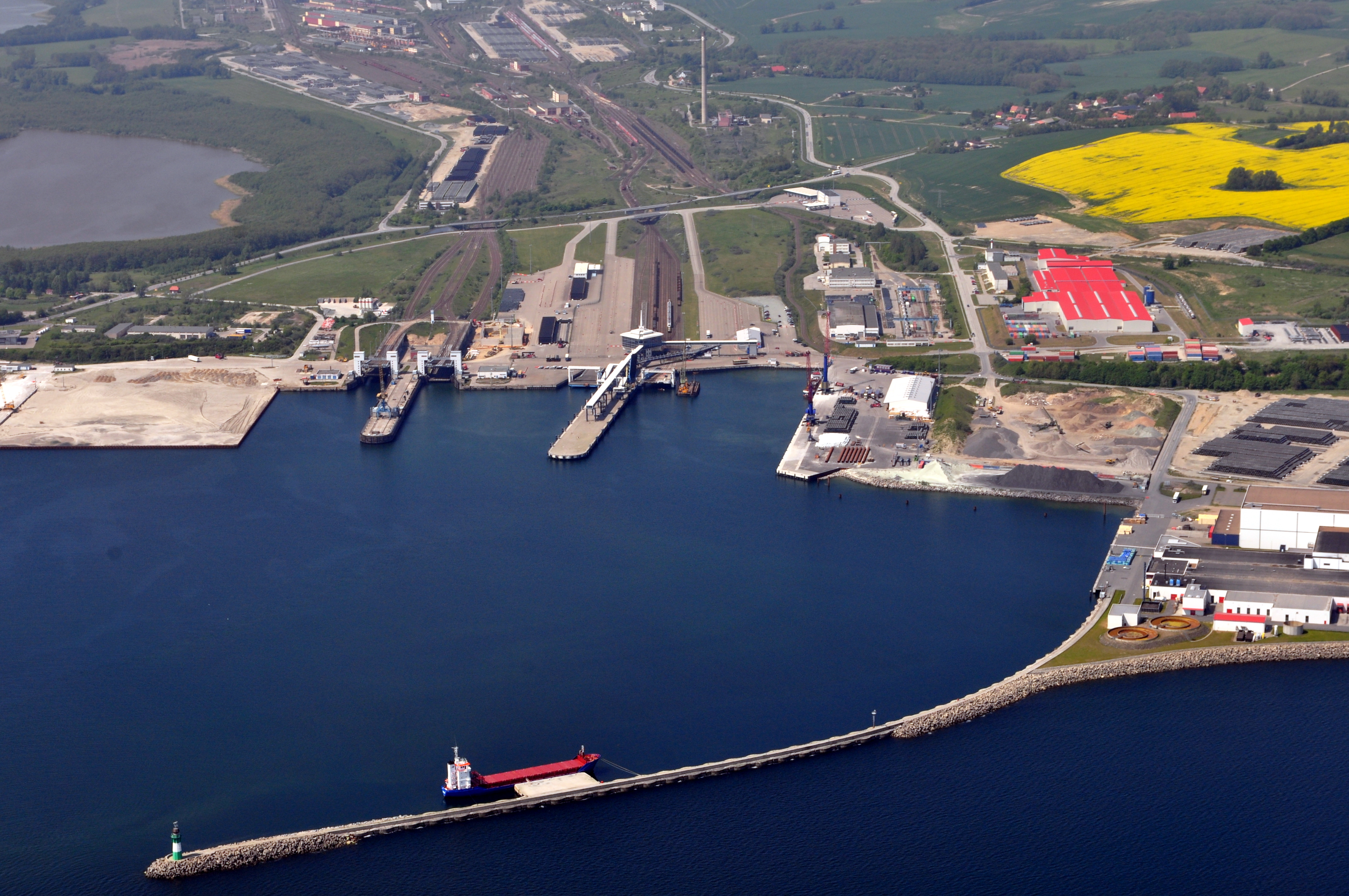
Nord Stream 1 and 2 pipelines’ Russia=to-Germany routes, via the Baltic Sea, aiming to avoid Russian gas transiting Ukraine (Gazprom)
These two interviews critique the new “environmental foundation” founded by a local German state, and paid for 99% by Russia’s Gazrpom, as a self-described “clever loophole” to circumvent US sanctions. The publicly admitted scheme is to have the foundation purchase materials and equipment from the specialty companies able to supply them, and have the foundation later supply these materials directly to Gazprom, enabling Gazprom to finish building the pipeline beneath the Baltic Sea. The foundation” is telling firms this will protect them from being sanctioned for selling directly to Gazprom. However, the US sanctions specifically target “circumvention” of sanctions, and I explain that German firms are ill-advised or naïve to cooperate, risking ruinous sanctions.
Tagesspiegel Background „Nur Naive verkaufen an die Nord-Stream-2-Stiftung” by Jakob Schlandt, 8 January 2020. [“Only Naive (businesses) will sell to the Nord Stream 2 Foundation” Free registration required)
The permit from Denmark has been received and new pipes for Nord Stream 2 could soon be laid. However, it is more questionable than ever whether the American sanctions threats can be circumvented.
The completion of Nord Stream 2 remains uncertain. 94 percent of the Baltic Sea gas pipeline has been laid, but the last few meters are still stuck. After the departure of the Dutch-Swiss laying vessels in December 2019, progress was only brief when 2.6 kilometers were erected a few weeks ago . It was not a breakthrough: the pipeline consists of two parallel strands with a total length of around 2,460 kilometers. 30 kilometers are still missing in German, 120 kilometers in Danish waters.
Theoretically, things could continue this week on Friday for the construction consortium Nord Stream 2 AG, a subsidiary of the Russian state group Gazprom. From January 15th it has a permit from the Danish Maritime Administration, and the Russian ship Fortuna is authorized for the work. But according to reports, only preliminary work is planned.
My 3rd EuroNews Nord Stream 2 sanctions interview, 6 January 2021 (After 30-seconds intro)
[This post is a dey late due to the violent attack on the US Capitol orchestrated by the outgoing-president and his followers. This assault has been defeated and the election is being certified by Congress. Trump will soon leave and Biden will take office in accordance with the Constitution and laws. T. O’D.]
The EuroNews Morning Show asked me [yesterday 6 January,] again about the Nord Stream 2 pipeline. Two key points made in the earlier interviews were:
That the plans of Nord Stream 2 AG (NS2 AG) to restart pipelaying before the holidays in German waters was a propaganda exercise (viz, “a disinformation campaign”) orchestrated by Moscow and Gazprom to create the impression the pipeline can be finished.
Despite this new pipelaying “bravado”, the pipeline was effectively “dead” because of the US sanctions.
These points were an assessment of the impact of the new sanctions law, which was about to be enacted by the US Congress. This is the “Clarifications” of the Protecting Europe’s Energy Security Act, or PEESCA, which was enacted December 2021, despite a veto by President Trump. These PEESCA sanctions have been added to the previous PEESCA (December 2002) sanctions and the Countering America’s Adversaries Through Sanctions Act (CAATSA, initially 2017) sanctions against NS2.
My EuroNews live Morning Show interview today (9 Dec 20) with Rosie Wright:
I explains why the German far-right AfD party, which went to Moscow yesterday to show Lavrov their party’s support for Nord Stream 2, supports the project. The AfD supports it along with all other German parties, from “far-right to far-left, and those in the middle, except the Greens.”
Also, I explain how Europe’s dependence on Russian gas will require decades to escape.
However, what are the strategic objectives of Moscow in building Nord Stream 2? I explain Putin wants to build Nord Steam 2 through the Baltic Sea to Germany as well as to complete the Turk Stream (formerly South Stream) pipeline across the Black Sea and Turkey and on into the Balkans and then into Central Europe, and also west to Italy. The reason for this is so that Gazprom does not have to send Russian gas to Europe via Ukraine and Belarus, countries that are in rebellion against Russian dominance.
Host Rosie Wright, of EuroNews Morning Show interviewed me today. I explain how Nord Stream 2 AG’s plan to lay 2.6 kilometers of pipe in shallow German waters actually shows that US sanctions have effectively killed this German-Russian mega natural gas project designed to help both countries avoid shipping/receiving gas that transits Ukraine (mostly), Belarus and Poland.
The pipeline is not bringing “new” gas to Europe, but is designed to end Gazprom’s (the Russian-state gas export monopoly) having to ship its gas exported to Europe across regions which Putin’s regime wants to subvert and pressure (including by military means) back into the Russian orbit. Ukraine and Belarus.
Berlin for its part, does not want to risk the EU’s gas supply by standing up to Moscow’s subversion against Ukraine and Belarus. The USA (i.e., Congress, on a bipartisan basis, and not Trump) has imposed harsh sanctions that are succeeding in stopping completion of the project. The Biden administration will not alter this reality; Biden has opposed this project and always championed the cause of Ukraine reform and independence from Russian dominance, in favor of moving towards the EU.
Note: EuroNews is the most watched news in Europe, reaching 135 million viewers/month. — Comments and critiques most welcomed, either below, or privately to twod-at-umich.edu. — Best, Tom O’D.



 The Global Barrel