Tag Archives: Maduro

My ntv.de| So schwer ist es, Venezuelas Ölinfrastruktur zu retten| How hard is it to restore Venezuela’s oil infrastructure

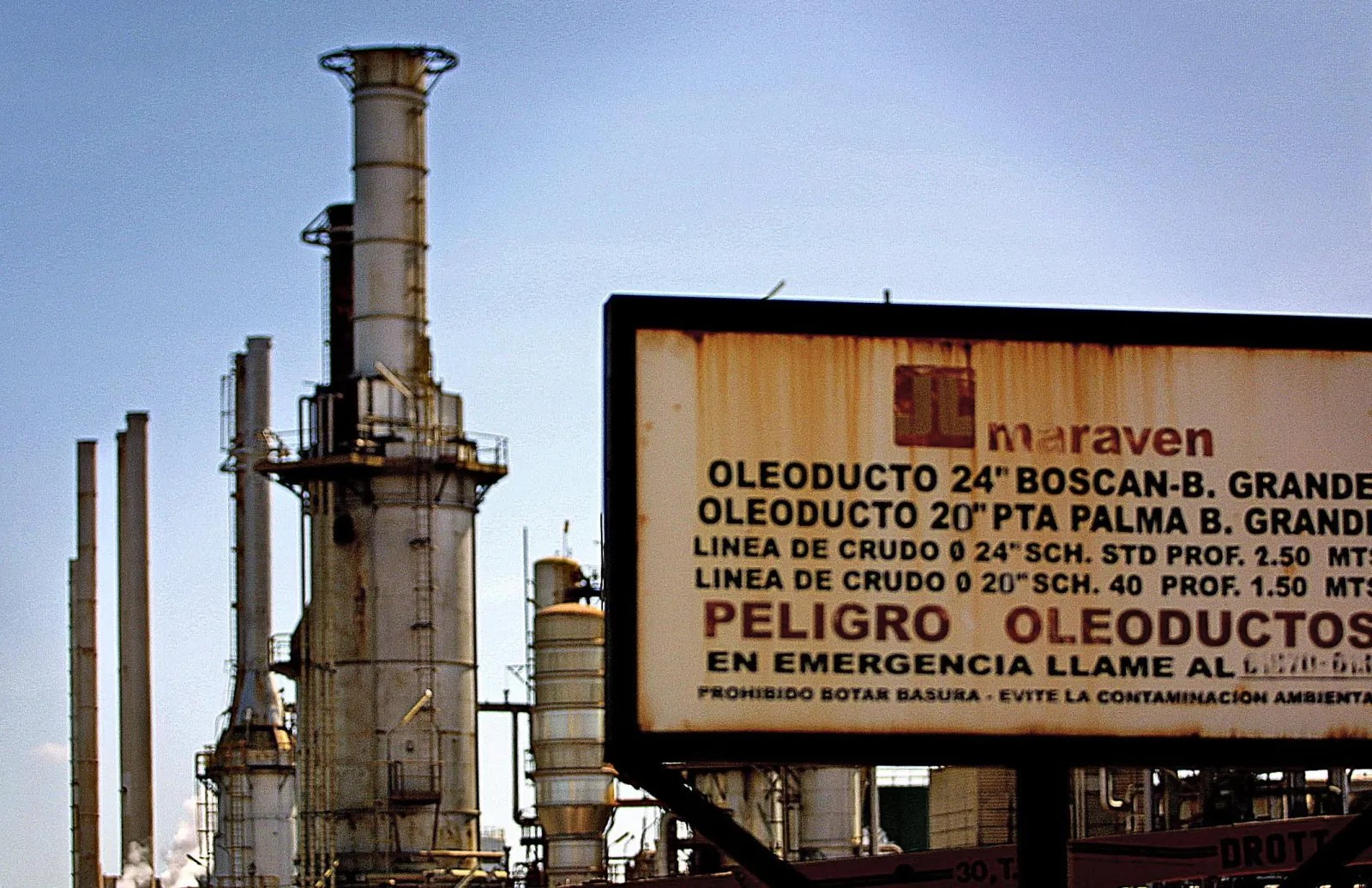
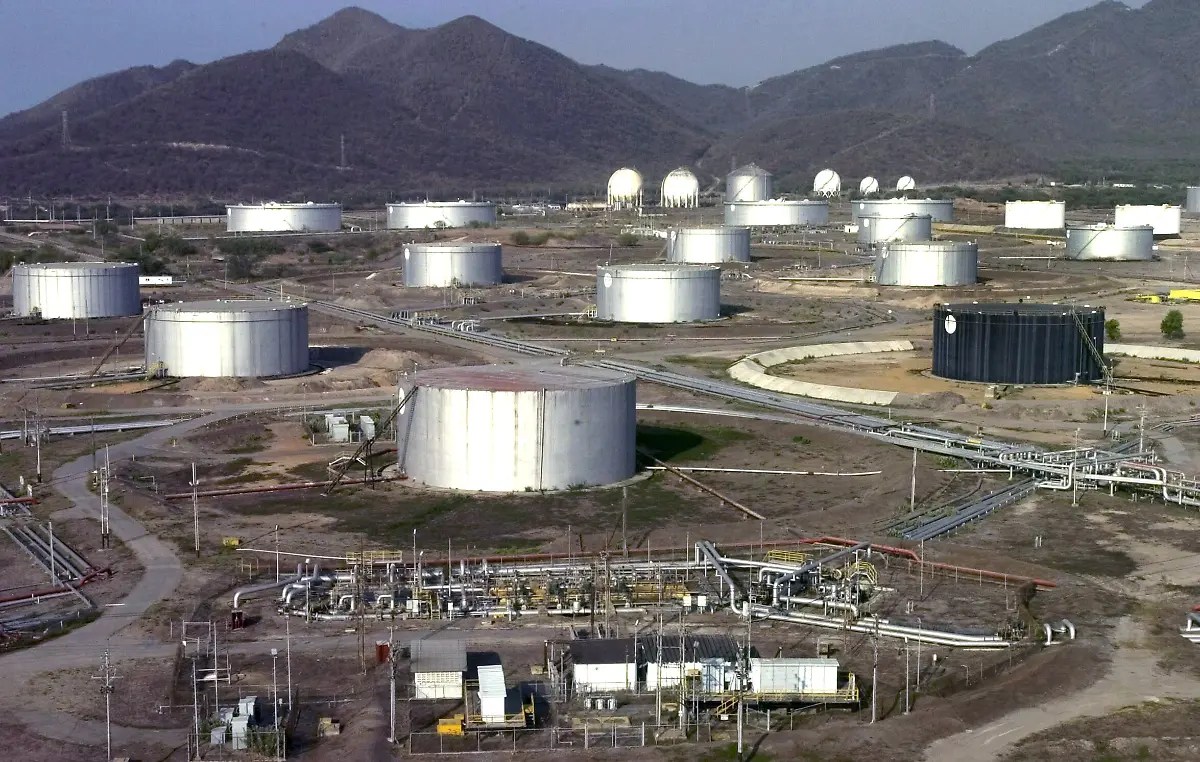
Investitionswillige Unternehmen stehen in Venezuela vor großen Hürden: Sicherheitsrisiken, eine verfallene Infrastruktur, ungeklärte Rechtsfragen zum US-Einsatz und die Gefahr langfristiger politischer Unruhen. (Foto: IMAGO/IlluPics)

Trumps Plan klingt ambitioniert: US-Ölkonzerne sollen nach Venezuela zurückkehren und Milliarden in die stark beschädigte Infrastruktur investieren. Im Interview erklärt Energiestratege Thomas O’Donnell, wie schnell das Land nach Jahren politischer und wirtschaftlicher Krise wieder zu alter Stärke finden kann.

ntv.de: Trumps Versprechen klingt vollmundig: US-Ölkonzerne sollen nach dem Angriff auf Venezuela ins Land zurückkehren und Milliarden von Dollar investieren, die stark beschädigte Ölinfrastruktur reparieren und damit beginnen, Geld zu verdienen. Wird dieser Plan aufgehen?

Continue reading

I was interviewed 05 Jan. by Juliane Kipper, Business Editor at Germany’s ntv.de, for this print article. Lies es Auf DeutschRead In English (from Google Translate). Or, read at ntv.de.

Investitionswillige Unternehmen stehen in Venezuela vor großen Hürden: Sicherheitsrisiken, eine verfallene Infrastruktur, ungeklärte Rechtsfragen zum US-Einsatz und die Gefahr langfristiger politischer Unruhen. (Foto: IMAGO/IlluPics)

Trumps Plan klingt ambitioniert: US-Ölkonzerne sollen nach Venezuela zurückkehren und Milliarden in die stark beschädigte Infrastruktur investieren. Im Interview erklärt Energiestratege Thomas O’Donnell, wie schnell das Land nach Jahren politischer und wirtschaftlicher Krise wieder zu alter Stärke finden kann.

ntv.de: Trumps Versprechen klingt vollmundig: US-Ölkonzerne sollen nach dem Angriff auf Venezuela ins Land zurückkehren und Milliarden von Dollar investieren, die stark beschädigte Ölinfrastruktur reparieren und damit beginnen, Geld zu verdienen. Wird dieser Plan aufgehen?

Continue reading

My bTV| On the Trump administration’s Venezuela logic: drugs, migration & oil (partly vs Russia). Both Maduro’s regime & Machado’s opposition sit & wait.

I was interviewed by David Karalvanov at bTV (Bulgaria) on the US-Venezuela confrontation under Trump and Maduro (01Dec). David used excerpts for a documentary and kindly gave me the full video here. An outline of the five questions and answers is below here.

Three Asides:

  1. I recall vividly how Trump and co., in his first term, easily misled a naively dependent Venezuelan opposition into believing that the USA was planning to forcibly remove Maduro. In turn, the opposition convinced the country’s population that the USA was preparing to forcibly liberate them. This belief was deeply corrosive to advancing any self-reliant domestic anti-Maduro pro-democracy movement. In the end, the Trump administration tried a poorly prepared putsch. John Bolton, Trump’s then-National Security Advisor, the organizer, was embarrassingly gamed by the Venezuelan regime’s intelligence police. Meanwhile, the present Venezuelan opposition has long been unwilling to organize or endorse any popular movement to forcibly restore democracy from below.
  2. In a recent CNN interview I spoke about Trump rationales for the present confrontation. See: “Why Trump wants a Venezuelan oil boom …“) and dangers of not preparing for the day-after possibilities of chaotic events, terrorism or resistance by armed pro-Chavista military or collectivo groups, and/or x-Colombian guerilla groups long active in the country.
  3. I’ve written for 20 years on Venezuela, Chavismo and oil, including two years as visiting professor, Universidad Central de Venezuela’s UCV/CENDES, Caracas.–I’m happy to speak or consult on Ven.-US-China-Russia-Iran-Colombian-EU-… and/or Ven. domestic matters in English or Spanish.- Tom O’D

David’s five questions and some of my answers:

Continue reading

My CNN live: Why Trump wants a Venezuelan oil boom | Venezuelans, living in misery, just want Maduro gone; eight million have fled.

I was interviewed on CNN International’s “Newsroom” with host Kim Brunhuber – live, Friday, 12 Dec. 2025. The transcript is below. Kim asked about Venezuela’s oil industry, the impact of sanctions, what stricter enforcement could do to the Venezuelan economy, and what the US stands to gain if it ultimately gains greater access to the country’s oil reserves? He also wanted to know what Venezuelans are saying. / CNN says: “The show is broadcast around the world on CNN International, and in the US on our new platform All Access.”

Transcript:

0:01 I want to bring in Thomas O’Donnell, an

0:03 energy and geopolitics strategist at

0:05 GlobalBarrel.com. He’s also a former

0:07 visiting professor at the Central

0:09 University of Venezuela and he joins us

0:11 from Berlin. Thank you so much for being

0:13 here with us. Uh so this seizure, a

0:16 clear escalation here. Uh the White

0:19 House says more tanker seizures could be

0:22 coming. If that happens, I mean, what

0:23 would that do to the Venezuelan economy?

0:28 Well, there’s there’s two aspects here.

Continue reading

China & Russia stick with Venezuela’s Maduro for the same reason the USA stuck with S. Viet Nam [My Energy Analytics Institute Q&A]

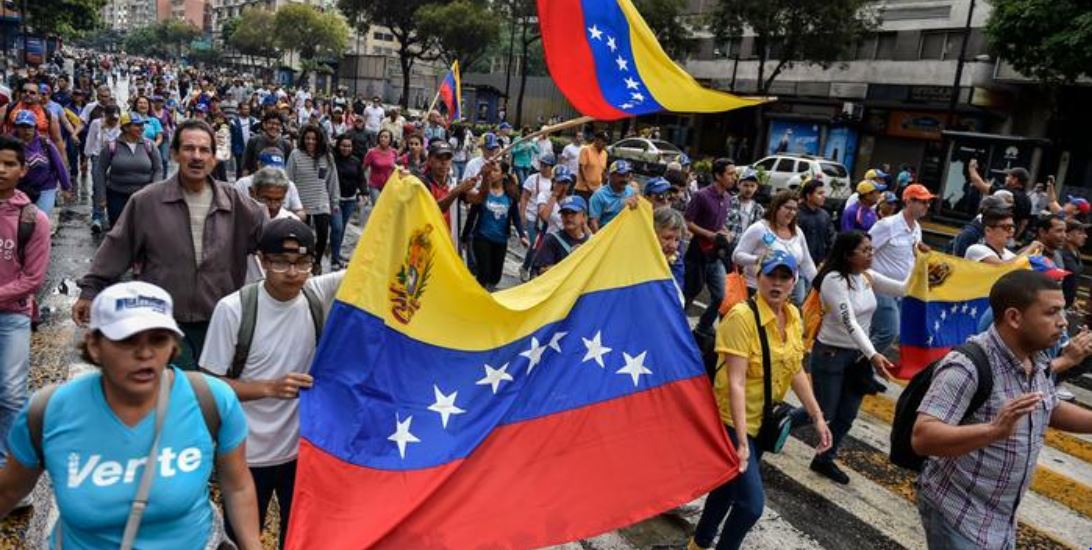
Venezuelan protest, 31 January 2019. Photo credit Deutsche Welle, German public broadcaster.

I was very happy to be interviewed for the Latin American “Energy Analytics Institute” (EAI), a Houston-based consultancy and news service. I’ve followed its work for years.

With Biden in and Trump out, everyone is debating how to deal with Maduro and his chavista regime that’s brought such misery and ruin in Venezuela. It’s not only the USA’s new LatAm team of Biden, Blinken and Nichols, but the EU, Norway, the OAS, the Lima Group, who are all looking for a new strategy. And so has the Venezuelan opposition, plus an increasingly important actor: the growing and doggedly persistent civil society organizations. Increasingly suffering forced-isolation from abroad, this array of social, cultural, media, medical, educational, nutrition, economic and political resistance groups do largely self-sufficient work to replace basic necessities and social-services, which the chavista government and ruined private sector can no longer provide.

However, in this brief Q&A what was addressed was not strategy per se; but a key underlying issue to understand in framing a strategy: the interests of both Moscow and Beijing as key obstacles to removal of the chavista regime. Read at EAI site (free) or Read below – Tom O’D.

China, Russia, Venezuela: Q&A With Thomas O’Donnell

(Energy Analytics Institute, 13.Feb.2021) — China and Russia continue to push around their might in Venezuela. Thomas O’Donnell with the Hertie School of Governance & Freie Universität-Berlin weighs in briefly here.

Energy Analytics Institute: What might China and Russia be willing to do this year to assist Venezuela’s President Nicolas Maduro?

Thomas O’Donnell, PhD: Beijing’s original (and perhaps still) plan for Venezuela was deep vertical integration mirroring PDVSA-Citgo Petroleum: new Faja upgraders, a pipeline to Colombia’s Pacific coast, dedicated ships, dedicated domestic Chinese refineries, etc. All very rational and lucrative for both sides. China became alarmed with Hugo Chavez’ unreliability and incompetence within a few years and with Maduro’s incapacity to reform within a year or so. The entire “oil-for-loans” history was a fallback strategy for Beijing – at least secure an oil stream with minimized risk. I have no doubt the Chinese Communist Party wants a new Caracas regime it can work with.

Continue reading

Beijing ups Venezuelan oil investments, but refuses Chavista leaders’ plea for a cash bailout

folha_header_08apr13folha_quote of the day_venez-and-china_08apr13Back in April, Brazil’s Folha de SaoPaulo ran an article entitled: The Future of Venezuela Depends on China and highlighted this quote:  Translation: “If Maduzo wins, he’ll have to regain the confidence of the Chinese.”  TOM O’DONNELL, petroleum consultant

Indeed, it is now clear that the short-term strategy of the post-Chavez Maduro-Cabello administration was to escape the country’s severe dollar crisis: convincing Beijing to extend it a $5 billion cash loan alleviating food-import shortages before 8 December elections.  In particular, the cash was to fund a new dollar exchange system (see El Nacional,25 Sept 2013). Continue reading