Category Archives: EU gas

Deutsche Welle News live: Will Nord Stream 2 ever be completed?

15 januqry 2021: The Russia-led Nord Stream 2 consortium on Friday said work to complete the subsea gas pipeline to Germany could go ahead. But will US sanctions prevent that?

DW asked energy system analyst Dr. Thomas O’Donnell.

(My post-interview self-critique: Perhaps less coffee before the next interview 😉

My interviews: Tagesspiegel & Frankfurter Allgemeine (FAZ). Nord Stream 2 won’t avoid US sanctions using a phony “environmental foundation.”

These two interviews critique the new “environmental foundation” founded by a local German state, and paid for 99% by Russia’s Gazrpom, as a self-described “clever loophole” to circumvent US sanctions. The publicly admitted scheme is to have the foundation purchase materials and equipment from the specialty companies able to supply them, and have the foundation later supply these materials directly to Gazprom, enabling Gazprom to finish building the pipeline beneath the Baltic Sea. The foundation” is telling firms this will protect them from being sanctioned for selling directly to Gazprom. However, the US sanctions specifically target “circumvention” of sanctions, and I explain that German firms are ill-advised or naïve to cooperate, risking ruinous sanctions.

  1. Tagesspiegel BackgroundNur Naive verkaufen an die Nord-Stream-2-Stiftung” by Jakob Schlandt, 8 January 2020. [“Only Naive (businesses) will sell to the Nord Stream 2 Foundation” Free registration required)
  2. Frankfurter Allegemine Zeitung (FAZ). “Umstrittene Gas Pipeline: Wird Nord Stream 2 am Freitag weitergebaut? By Katharina Wagner and Niklas Záboji, 13 January.2021.
    • Or, English via Google Translate:

CONTROVERSIAL GAS PIPELINE:Will Nord Stream 2 continue to be built on Friday?

The permit from Denmark has been received and new pipes for Nord Stream 2 could soon be laid. However, it is more questionable than ever whether the American sanctions threats can be circumvented.

The completion of Nord Stream 2 remains uncertain. 94 percent of the Baltic Sea gas pipeline has been laid, but the last few meters are still stuck. After the departure of the Dutch-Swiss laying vessels in December 2019, progress was only brief when 2.6 kilometers were erected a few weeks ago . It was not a breakthrough: the pipeline consists of two parallel strands with a total length of around 2,460 kilometers. 30 kilometers are still missing in German, 120 kilometers in Danish waters.

Theoretically, things could continue this week on Friday for the construction consortium Nord Stream 2 AG, a subsidiary of the Russian state group Gazprom. From January 15th it has a permit from the Danish Maritime Administration, and the Russian ship Fortuna is authorized for the work. But according to reports, only preliminary work is planned.

Use of Russian “letter box companies”?

Continue reading

My EuroNews #3: US Sanctions killing Nord Stream 2. Yet Berlin persists trying, with Moscow.

My 3rd EuroNews Nord Stream 2 sanctions interview, 6 January 2021 (After 30-seconds intro)

[This post is a dey late due to the violent attack on the US Capitol orchestrated by the outgoing-president and his followers. This assault has been defeated and the election is being certified by Congress. Trump will soon leave and Biden will take office in accordance with the Constitution and laws. T. O’D.]

The EuroNews Morning Show asked me [yesterday 6 January,] again about the Nord Stream 2 pipeline. Two key points made in the earlier interviews were:

  1. That the plans of Nord Stream 2 AG (NS2 AG) to restart pipelaying before the holidays in German waters was a propaganda exercise (viz, “a disinformation campaign”) orchestrated by Moscow and Gazprom to create the impression the pipeline can be finished.
  2. Despite this new pipelaying “bravado”, the pipeline was effectively “dead” because of the US sanctions.

These points were an assessment of the impact of the new sanctions law, which was about to be enacted by the US Congress.  This is the “Clarifications” of the Protecting Europe’s Energy Security Act, or PEESCA, which was enacted December 2021, despite a veto by President Trump. These PEESCA sanctions have been added to the previous PEESCA (December 2002) sanctions and the Countering America’s Adversaries Through Sanctions Act (CAATSA, initially 2017) sanctions against NS2.

Continue reading

My EuroNews Q&A: All German parties back Nord Stream 2 except Greens; USA says it frees Putin to subvert Ukraine & Belarus

My EuroNews live Morning Show interview today (9 Dec 20) with Rosie Wright:

I explains why the German far-right AfD party, which went to Moscow yesterday to show Lavrov their party’s support for Nord Stream 2, supports the project. The AfD supports it along with all other German parties, from “far-right to far-left, and those in the middle, except the Greens.”

Also, I explain how Europe’s dependence on Russian gas will require decades to escape.

However, what are the strategic objectives of Moscow in building Nord Stream 2? I explain Putin wants to build Nord Steam 2 through the Baltic Sea to Germany as well as to complete the Turk Stream (formerly South Stream) pipeline across the Black Sea and Turkey and on into the Balkans and then into Central Europe, and also west to Italy. The reason for this is so that Gazprom does not have to send Russian gas to Europe via Ukraine and Belarus, countries that are in rebellion against Russian dominance.

Continue reading

My EuroNews live interview: Contrary to Moscow’s disinformation & bravado, Nord Stream 2 pipeline is dead.

Host Rosie Wright, of EuroNews Morning Show interviewed me today. I explain how Nord Stream 2 AG’s plan to lay 2.6 kilometers of pipe in shallow German waters actually shows that US sanctions have effectively killed this German-Russian mega natural gas project designed to help both countries avoid shipping/receiving gas that transits Ukraine (mostly), Belarus and Poland.

The pipeline is not bringing “new” gas to Europe, but is designed to end Gazprom’s (the Russian-state gas export monopoly) having to ship its gas exported to Europe across regions which Putin’s regime wants to subvert and pressure (including by military means) back into the Russian orbit. Ukraine and Belarus.

Berlin for its part, does not want to risk the EU’s gas supply by standing up to Moscow’s subversion against Ukraine and Belarus. The USA (i.e., Congress, on a bipartisan basis, and not Trump) has imposed harsh sanctions that are succeeding in stopping completion of the project. The Biden administration will not alter this reality; Biden has opposed this project and always championed the cause of Ukraine reform and independence from Russian dominance, in favor of moving towards the EU.

Note: EuroNews is the most watched news in Europe, reaching 135 million viewers/month. — Comments and critiques most welcomed, either below, or privately to twod-at-umich.edu. — Best, Tom O’D.

Nord Stream 2: Berlin-Washington Mutual Intransigence Shows Transatlantic Divide on Russia | My AICGS Analysis

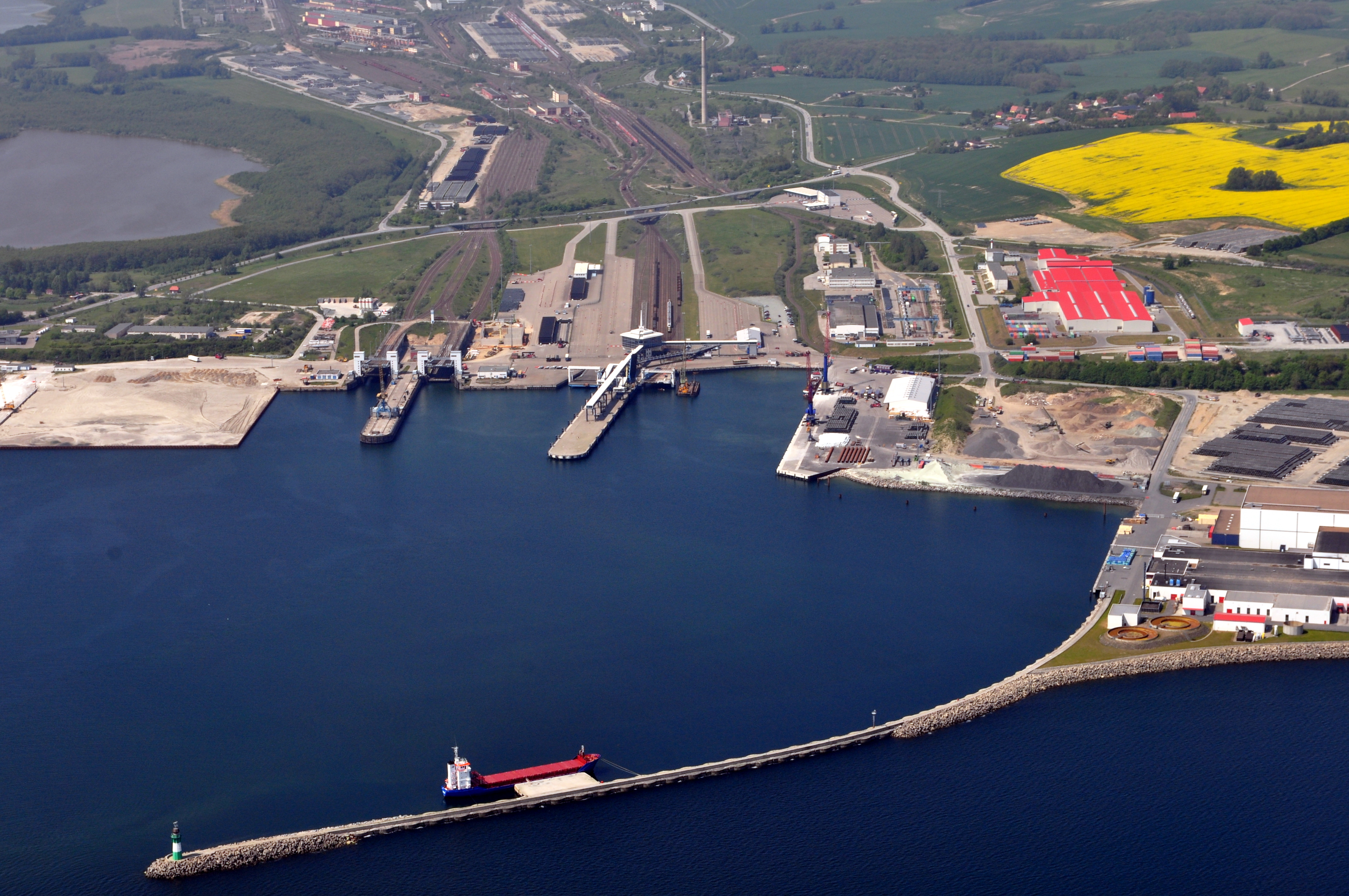
Credit: Gerd Fahrenhorst via Wikimedia Commons

My analysis of the US-German crisis over Nord Stream 2 and policy towards Russia, published in Washington by the American Institute for Contemporary German Studies (AICGS), 8 October 2020. Read it at AICGS website\. Or, continue here. Comments & Critiques welcomed (below or via email)

Nord Stream 2: Allies’ Crisis

Two decades of Washington-Berlin collisions over the Nord Stream 1 and now the Nord Stream 2 pipelines have come to crisis.

The U.S. Congress stopped Nord Stream 2 construction in December 2019 by enacting sanctions under the Protecting Europe’s Energy Security Act (PEESA), and is poised to enact a much harsher “Clarification” of PEESA, sanctioning any entity that resumes or aids in resuming construction in the Baltic Sea. German officials insist the project will, nonetheless, be completed, denouncing U.S. sanctions as “extraterritorial” interference in “European sovereignty.”

In reality, the project appears dead. Statements by businesses interests, as opposed to political actors, support this.[1] To resume construction, companies, ports, officials, and insurers would require guarantees against ruin, including being personally sanctioned, which is difficult to imagine the German state providing. And there is no evidence of preparations to do so. Nevertheless, Russia’s Gazprom continues preparations to resume work.[2]

Complicating matters, the U.S. Congress, having mandated sanctions against the pipeline, would have to approve any compromise. On the other side, the German Bundestag roundly “savaged” a motion by the Green Party to abandon Nord Stream 2 in response to Navalny’s poisoning, unprecedentedly uniting the CDU/CSU of Chancellor Merkel and her SPD coalition partners with both the far-left Die Linke and far-right Alternative for Deutschland.[3]

Continue reading

EE UU v. Alemania: Sanciones y el oleoducto ruso Nord Stream 2 | Fui invitado en “El Fundo” de DW TV

capture.-dw-ns2-15aug20aAquí abajo se puedan ver la grabación de la tortulia del 15 de agosto entre dos expertos y yo en el programa “El Fondo” de la red alemana de Deutschewelle (DE.de TV) sobre “la lucha entre aliados” de los EE. UU. y Alemania en la que Washington ha amenazado con fuertes sanciones contra su aliado de la OTAN, Berlín, por su participación en el proyecto del gasoducto ¨Nord Stream 2¨ con Rusia.  Gracias a DW y su moderadora venezolana Silvia Cabrera.

El video: https://www.dw.com/embed/640/av-54570546 |  Descargar MP4 |  Enlace permanente https://p.dw.com/p/3gyI6

Tenga en cuenta que estas no son sanciones del presidente Trump, sino sanciones impuestas por el Congreso en contra de los deseos de Trump y con el amplio apoyo de ambos partidos. Hay mucha ira en el Congreso contra Rusia por sus malas actividades en Europa en materia de suministro de gas natural al continente por parte de Moscú de forma geoestratégica, pero también por su invasión de Ucrania en 2014, y sus extensas actividades contra las democracias del Oeste.

Para Estados Unidos, este proyecto es una peligrosa colaboración de Alemania con Rusia contra los intereses y la independencia energética de la UE y especialmente de Ucrania, un país con partes de su territorio ocupadas por Rusia desde 2014.

De la propaganda del programa El Fondo de DW.de:

“¡Extorsión!” “¡Guerra comercial!” que traería gas de Rusia a Alemania. ¿Se dañará la relación entre Alemania y Estados Unidos? ¿Definirá Estados Unidos la política energética alemana?

I’m quoted by the FT | “Germany warns new US sanctions endanger Nord Stream 2 pipeline. (As) serious interference in European sovereignty”

BD74709B-4105-41E6-AB80-97377F9D6ADE_w1200_r1

Chancellor Merkel, x-Chancellor Schroeder, Gazprom and Russian officials et al open valve for earlier Nord Stream 1 pipeline, 11 Nov. 2011. (Radio Free Europe)

Here is the link to the Financial Times article of 2 July 2020. (pay wall likely). However, a plain-text version is also below, at the end of this post (for which I beg the FT’s indulgence).

Comment on deteriorating US-German relations over the Nord Stream 2 project

As my brief FT quote indicates, the new PEESA Clarification Act sanctions now before Congress are intended to be so severe as to convince German officials to abandon any further attempts to complete the pipeline with Russia, killing it permanently.

This is essentially an ultimatum, which, as such, will of course be taken badly by the German side. However, German leaders’ and experts’ widely held perceptions that these sanctions are motivated primarily from the mercantilist and transactional approach to US-German relations touted by Trump — such as demands to purchase US LNG — are sorely missing the message emanating from Congress, and not least because US opposition to these projects long predates its shale gas revolution and emergence as an LNG-exporting country.

These sanctions are not flowing from Trump’s complaints against Germany.  In fact, this will be the third time Congress, on a bipartisan basis, has imposed sanctions on Russian interests contrary to Trump’s wishes.

The first instance was the codification into law of President Obama’s executive sanctions on Russia, which Obama had imposed after the Russian invasion of Ukraine in 2014.  These were made into a law in June 2017 which passed with so many votes that Trump could not veto the bill.  This was done precisely because Trump was not trusted to keep in place Obama’s sanctions, considering Trump’s demonstrated affinity for Putin.

These 2017 measures also gave Trump presidential authority to sanction Nord Stream 2; however he refused to do so.  Therefore, Congress imposed mandatory sanctions on Nord Stream 2 in December 2019, known as the PEESA act, as part of the National Defense Authorization Act (NDAA) of 2019. These were the sanctions which had the effect of immediately halting construction of the pipeline.

However, in response, both the Russian and German governments have repeatedly made clear their resolve to complete construction regardless of these 2019 sanctions.  And, once again, since Trump refuses to take further action to stop the pipeline’s construction, Congress is expect to soon enact the very severe PEESA Clarifications Act presently under consideration.

In short, US congressional sanctioning of Nord Stream 2 construction cannot be seen as simply a product of Trump’s presidency, of his nationalist-mercantalist bombast against Chancellor Merkel et al. Although various members have a range of motivations, overall these sanctions reflect a long-evolving bipartisan resolve within Congress that this pipeline project, contrary to the objections of  the German government, is harmful to the energy security of Europe. Russia’s unrelenting cyber, military, assassination, election-interference and propaganda outrages only increases the sense of urgency in Congress.

It should be noted that this is a position supported by many other European allies, who also disagree with Berlin on this matter, and have actively fought to block or, with some successes, hinder the project via legal and political channels within the European Union.

Continue reading

Europe’s Gas Crunch:  The Pending Crisis Around Nordstream 2 & Ukraine Transit

My public talk in Washington, 12 June:

pic_my_12jun_kennan_talk_european_gas_crisis

Despite Berlin and Moscow’s rush to make the Nordstream 2 (NS2) pipeline construction through the Baltic Sea a fait accompli, opposition from several EU states has stalled its completion. Meanwhile, Gazprom’s transit contract with Ukraine will expire in January and Moscow has put unacceptable preconditions on negotiating a new one. Once again, Europe must brace itself for a Russian gas-supply crisis. Professor Thomas O’Donnell will discuss European states’ various interests and heightened energy anxieties, the prospects for the NS2 pipeline, and Russia’s strategy.

Speaker:  Thomas O’Donnell, 

Instructor, Hertie School of Governance, Berlin;  Title VIII Short-term Scholar, Kennan Institute — Scholar’s Research-Project Page at Kennan

RSVP Now

Wednesday, June 12, 2019
2:00pm-3:00pm  –   5th Floor Conference Room

Directions

Wilson Center
Ronald Reagan Building and
International Trade Center
One Woodrow Wilson Plaza
1300 Pennsylvania, Ave., NW
Washington, D.C. 20004   Phone: 202.691.4000    kennan@wilsoncenter.org

Washington interviews: Energy Relations of Russia, Germany, Poland & Ukraine (Kennan Fellow)

g7-trump-merkel-round-9jun18-jezco_denzel_ger_gov_photo.jpgWhat are US experts’ and officials’ views on the increasingly conflictive energy and geostrategic relations between Russia, Germany, Poland and Ukraine? 

Greetings. I’m in Washington as a “Title VIII” fellow of the Kennan Institute in the Woodrow Wilson Center, interviewing people in think tanks and government (legislative and executive) on these topics. I’ll also give a public talk on this at Wilson on 12 June, at 2 PM (more info soon). putin_wink-round-hnewkremlinstooge-wordpress

I’m interested to hear anything readers think should be asked and of whom.  Don’t hesitate to write me at twod(at)umich.edu or my (temp) Wilson email: thomas.odonnell(at) wilsoncenter.org

A central issue: why is Germany so adamantly for Nordstream 2 despite the negative security consequences for Ukraine and despite the tremendous hit this project is causing to German soft-power not only with Poland, but with most Central and Eastern European (CEE) and Nordic states?  (Here’s my own analysis.)  How do US experts see this? Continue reading

Germany backs small-scale LNG import terminals despite opposition [my King’s College/EUCERS paper]

Here is my detailed analysis of the decision by Angela Merkel’s government to begin “small-scale” Liquid Natural Gas (LNG) imports to address greenhouse gas emissions and competitiveness issues in Germany’s heavy-road transport and maritime-shipping sectors.  Read it below (via Scribid) or go directly to EUCERS.  [This peer-reviewed paper appears in the King’s College-London, Newsletter of the European Centre for Energy and Resource Security (EUCERS), Issue 77, July 2018.] – Tom O’D.

Germany’s Real LNG Policy [My BPJ analysis]

bpj_erdgas_statt_diesel_c-reuters_28jun18

“Natural gas instead of Diesel” © REUTERS/Hannibal Hanschke

My latest at: Berlin Policy Journal (German Council on Foreign Relations), June 28, 2018:

Germany’s Real LNG Policy
Germany’s government has endorsed imports of liquid natural gas for the first time—but not because of Russia and Nord Stream 2. 

The German federal government has decided in favor of building liquid natural gas (LNG) import terminals and infrastructure. In March, Chancellor Angela Merkel’s CDU/CSU-SPD government, in its “coalition contract,” pledged to “Make Germany the site for LNG infrastructure.” This is a notable policy change, because in Germany the opposition to LNG imports and use has been so much stronger than anywhere else in Europe.

The aim of this new endorsement is to reduce maritime and roadway heavy-transport emissions. However, many in Germany argue that using “small-scale” LNG in this way, as a “bridging” fossil fuel, is “wasted investment”. They contend that Energiewende-mandated electric vehicles can and will rapidly de-carbonize heavy transport. Still others oppose LNG imports on the grounds that they would unnecessarily diversify Germany’s gas suppliers with the aim of offsetting increasing reliance on Russian pipeline gas. They insist that Russian pipeline gas has been “historically reliable” and is cheaper for Germany than building large-scale import terminals for LNG.
Continue reading

A Comment on: “A Trans-Atlantic Manifesto in Times of Trump – A German Perspective,” by foreign policy experts

I sent this today to European and American contacts – apologies for duplications.

Dear Colleagues and Friends,

I read with interest the declaration: “In spite of it all, America: A Trans-Atlantic Manifesto in Times of Donald Trump – A German Perspective,” signed by a number of leading German foreign policy experts today in Die Zeit and translated in the NYTimes.
Point 10 is of particular interest and much welcomed as – at long last – a frank characterization in Germany of the Nord Stream 2 project for what it plainly is: “a geopolitical project:”  Quoting:
10. Energy security policy — giving up Nord Stream 2 is in Germany’s interest
There is one more policy area in which the German government should reconsider its position to open the door for productive cooperation: energy security policy. The United States has identified Nord Stream 2, the planned pipeline running through the Baltic Sea to Russia, as a geostrategic project. They are correct. More important: This pipeline project is not in the joint European interest. Nord Stream 2 contradicts a policy of greater energy independence and undermines the envisaged European Energy Union. We should try to identify a joint approach with our European partners and the United States. (emphasis added – T.O’D.)

Continue reading

“Neue Neue Ostpolitik” My BPJ piece on German fury at Senate NS2 sanctions

putin_gabriel_schroeder_dinner with an old acquaintance-der_spiegel_07jun17_U637TtLQ

The US Senate’s decision to expand sanctions against Russia triggered indignation in Berlin, throwing Germany’s geopolitical ambitions over the Nord Stream 2 project into sharp relief.  Read below or get the App.   My other articles at Berlin Policy Journal  

“Neue Neue Ostpolitik”  

Berlin – July 21, 2017    By: Thomas O’Donnell —  On June 15, the US Senate approved an act to sharply expand sanctions imposed on Russia in retaliation for its intervention in eastern Ukraine and annexation of Crimea in 2014. The broadly bi-partisan move that enshrined Barack Obama’s earlier executive orders – intended as a response to Moscow’s alleged cyber interference in US elections – was a stunning rebuke to US President Donald Trump’s Russia policy, essentially taking a broad swath of foreign policy out of his hands. Continue reading

Pipe Dream? Polish ruling complicates Nord Stream 2 pipeline for Gazprom & EU partners [My Berlin Policy Journal piece]

bpj_online_odonnell_nordstream2_cutHere’s my latest analysis in Berlin Policy Journal (German Council on Foreign Relations -DGAP).Pipe Dream? The Nord Stream 2 pipeline project is in danger of being derailed.
THOMAS W. O’DONNELL , SEPTEMBER 22, 2016 

A pipeline project to double Gazprom’s export capacity to Europe has always been controversial. A recent ruling by Poland’s competition authority could seriously undercut the support it has accrued, leaving its European backers at odds.

The proposed Nord Stream 2 pipeline project has bitterly pitted European states that back the project, including Germany, the Netherlands, Austria, and France, against project opponents, including Ukraine, Poland, and other former Soviet-bloc states. The project aims to double the capacity of the existing huge, 55-billion-cubic-meter-per-year Nord Stream 1 pipeline, running in parallel to it under the Baltic Sea from near St. Petersburg in Russia directly to Greifswald in Germany.

This dispute has exposed two very different views of Gazprom, Russia’s state-owned gas-export monopoly, and of Vladimir Putin’s Russia itself – one side sees it as a “necessary” and “reliable” energy supplier, the other a dangerous and manipulative adversary. This dispute is but one more collision inflicting lasting harm on the European Project.

Polish competition authority rejects project

The latest row involves a ruling in late July by the Polish Office of Competition and Consumer Protection (Urzed Ochrony Konkurencji i Konsumentow, or UOKiK) rejecting an application by five private western European energy firms proposing to partner with Gazprom to build and operate Nord Stream 2. The firms are Germany’s E.ON (soon to be Uniper) and Wintershall, Austria’s OMV, Anglo-Dutch Shell, and France’s Engie.

Shortly before the Polish announcement, the five companies agreed to withdraw their association proposal to avoid UOKiK initiating a legal process against them. The commission’s president, Marek Niechcial, declared categorically on August 12 that the Polish rejection was definitive, asserting “This will stop the [Nord Stream 2] deal.” The five firms have nevertheless made it clear they are seeking a strategy to work around the decision, and expect to proceed as planned. Gazprom has said the same.

So why go through this proceeding in the first place? To understand these events better, I spoke with several experts and diplomats working on these matters in Moscow, Berlin, Washington, Paris, and Warsaw.

Commercial Arguments

An often-heard line of argument is that at least some of the five companies might actually have little commercial interest in the project, but need to preserve their relationships in Russia where they have large investments in energy projects. After all, the Kremlin has a track record of taking over projects from foreign partners with whom it has fallen out. A further theme in this vein is that Nord Stream 2 is not really needed in northwestern Europe, even though the Groningen field in the Netherlands and Norway’s reserves in the North Sea are declining, because future demand in northwestern Europe is overestimated and Liquefied Natural Gas (LNG) will be available from the United States. This view led to press speculation that the five firms likely welcomed the Polish decision, allowing them a graceful exit.

However, virtually all the experts I spoke with had no doubt Nord Stream 2 would be a lucrative commercial enterprise over the long run, and that the five firms seem genuinely enthusiastic. Continue reading