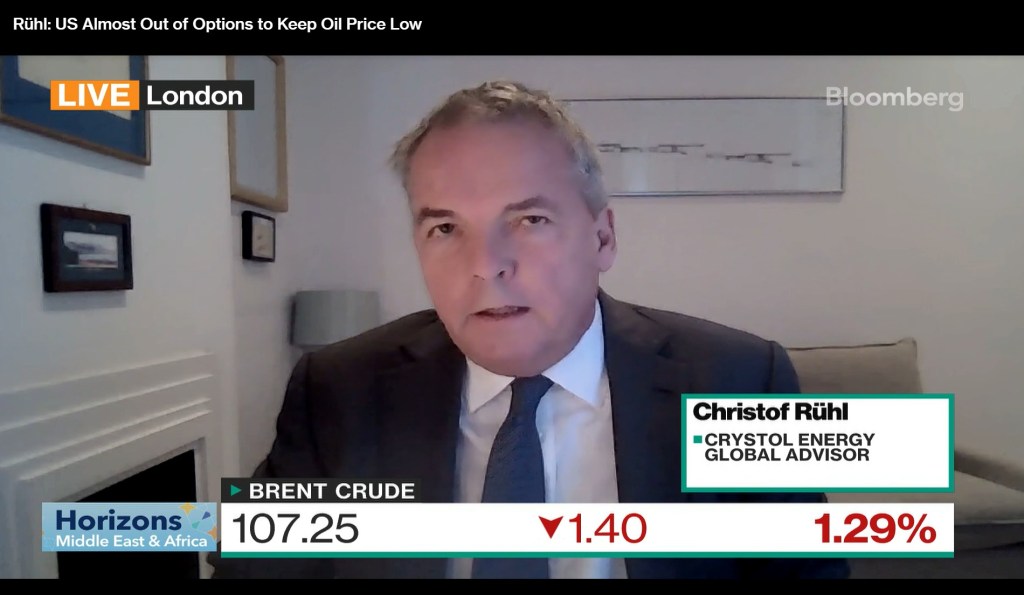
Both Christof Rühl (bio) and Jack Kemp (bio) had great, data-driven media this past week. I too addressed these issues (spoiler: I assess Trump is not bluffing on Iran talks, and oil supply remains adequate.) My conflict-trajectory take differs a bit from Chrisof, perhaps closer to Jack K here.. My Al Jazeera was just after Trump announced talks.
MY COMMENTS: 1) USA long-planned surprise strategy 2) Iran leaders’ 20-year nukes brinkmanship strategy aimed for USA ssecurity-guarantee deal
ALL GUESTS – TRT-London, USA bombing
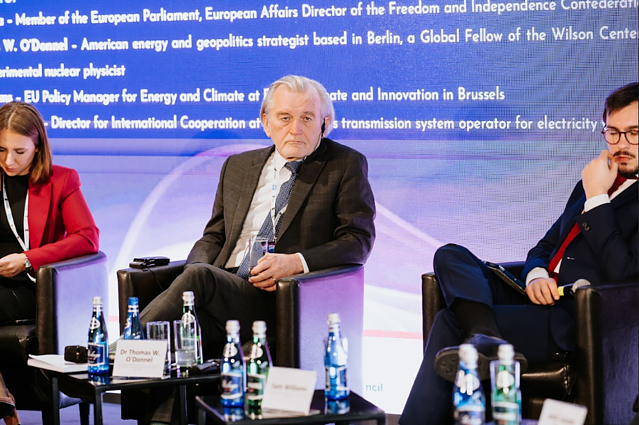
I was invited on TRT-World, London, 24 June, for a panel after US strikes on Iranian nuclear sites (see the panelist lineup below. I answered two questions at some length – see the 2nd video.)
In summary: Trump claims USA Operation Midnight Hammer “obliterated” the country’s nuclear capacity, but how much have they really been degraded?
My analysis is that it does not matter. If the USA decides to bomb again at will, without Iran having air defenses the USA and Israel can destroy or disrupt most any renewed Iranian work on its nuclear or conventional missile program. If, as he stated, repeat bombings as needed are Trump’s intention, then this should be the case. This now leaves Iran very little negotiating leverage. The regional proxies it always intended to use for retaliation in just such a scenario have been decimated by Israel.
Therefore, there is a high likelihood Iran will be forced by Trump to negotiate from a now much weaker position. If Tehran resists, it could fall back to rely on state-sponsored terrorist methods, which are of limited usefulness for maintaining a modern functioning state and economy.
Overall, I emphasize that this “12 Day War” has been especially motivated, by Trump, to assure USA Gulf allies that they can now safely enter into the Abraham Accords with Israel and the USA, establishing a new regional security structure. Trump will be constrained to do whatever is necessary, militarily and in negotiations, to insure the Iranian threat these allies have felt acutely remains under control. In turn, if these accords, which Trump’s chief negotiator, Steve Witkoff, was reportedly already working on among the USA’s Gulf Arab allies immediately after the USA bombing is intended to allow the USA to move on, focusing more squarely on Great Power competition elsewhere.
This is my general assessment. There are many details and some possible derailments here, of course. – Tom O’D.
El día de Pascua, 20.04, me entrevistaron en directo por radio, en muchas ciudades de Europa y del hemisferio occidental. On Easter Sunday, April 20, 2025, I was interviewed live in several cities of Europe and the Western Hemisphere.The interview was in Spanish. An English Google translation is below (RHS column). The topic was the negotiations of the Trump USA administration between Russia and Ukraine to end the war. Tom OD.)
Mi agradecimiento por la invitación de María Eugenia Plano, productora del programa radial Corresponsales en Línea, realizado por las corresponsales de los diarios Clarín y La Nación en París y Londres (María Laura Avignolo), París (Danielle Raymond), Madrid (Silvia Pisani), Berlin (Araceli Viceconte), Washington ( Paula Lugones) y San Pablo (Cristina Veiga) con la conducción de Silvia Naishtat (Editora de Economía de Clarín). en vivo y en directo para Radio Ciudad en Buenos Aires, los días domingos de 10 a 12 AM Hora Argentina. My thanks for the invitation from María Eugenia Plano, producer of the radio program Corresponsales en Línea, made by the correspondents of the newspapers Clarín and La Nación in Paris and London (María Laura Avignolo), Paris (Danielle Raymond), Madrid (Silvia Pisani), Berlin (Araceli Viceconte), Washington (Paula Lugones) and Sao Paulo (Cristina Veiga) hosted by Silvia Naishtat (Economics Editor of Clarín). live and direct for Radio Ciudad in Buenos Aires, Sundays from 10 to 12 AM Argentine time.
TRT asked me to be ready to comment, live, on the Oval Office meeting just before it blew up. I said Vance acted “infantile”. What I should have stressed, however, is that understanding Vance’s decision to blow up the meeting is key to understanding Trump’s strategy towards Russia, Ukraine, and Europe. (So, in this post the written analysis is the main thing, not the video.)
My TRT quick take, 28 Feb. See my later analysis, in the blog post.
There is plenty of facile analyses of this clash. Many say the blowup reflected “chaos” in Trump’s policy on Ukraine and Russia, or that Trump has an “impulsive” strategy, that he “dislikes Ukraine”, he’s “pro-Russian,” or that the blowup was a “prearranged ambush” to “humiliate” Zelensky, or similar.
Too few consider the possibility that the rebuke is consistent with a well-defined USA strategy. What quickly becomes clear from listening, at face value, to multiple statements by Trump himself and his team is that they have a consistent strategy. This is clearly not the first Trump administration. This second administration is different in its unity and consistency on its Ukraine, Russia, and Europe policies.
What was the purpose of the “minerals” deal that Zelensky came to sign?
The weeks-long USA-Ukrainian clash over this deal has reflected their geostrategic differences on a peace deal with Russia. After heated exchanges and compromises, clearly the Ukrainian side was not pleased with the issues it had had to give up in the minerals deal. Nevertheless, Zelensky’s Council of Ministers voted to endorse the deal, and Zelensky went to DC explicitly to sign it.
Interestingly, just before he went to the White House, President Zelensky met with a group of Republican and Democratic senators, who had “… all told him sign the deal and don’t get into an argument.” (War on the Rocks, timestamp 7:58-8:19, 06.03.25). Alas, if one watches Zelensky’s public argumentation, from the start of the press conference, and his telling Trump that a deal without a US security guarantee won’t work, all of which is in contradiction to the deal he is about to sign, it is clear that he precipitated the breakdown. In my reading of the event, he seemed to not be able to restrain himself, seemingly out of an understandable deep anguish at being about to sign an accord contrary to his better judgment.
What did each side want in the “minerals” deal, and who got what?
Everything I found to have been said by the actors on the USA and Ukrainian sides as to what each wanted in the document is quite consistent.
On the Ukrainian side, the big one was a USA security guarantee for any deal Trump makes with Putin. The Ukrainians certainly welcome the willingness of European allies to extend security guarantees for any deal, especially the public commitments made by both the UK and France to contribute troops, but they were clear that they did not think this can substitute for a USA guarantee standing behind theirs. Related to this, the Ukrainians opposed taking NATO membership for them off the table. Another was a seat at the table for Ukraine and the Europeans during negotiations with Russia (Trump wants something more like a shuttle diplomacy between the two.) Related to this, is that the USA should not negotiate a cease fire deal without them. Still another was refusing to agree beforehand to give up any Ukrainian territory that has been occupied by Russia.
Obviously the USA disagreed and de facto or openly refused all these conditions. However, the disagreement over the security guarantee seemed to be the most hot-button issue between them. Trump flatly refused. His reasoning, as explained to the press was interesting, revealing a lot about his philosophy or method for negotiating a peace deal. He said that the two sides obviously hated one another and he had to go between the two to negotiate anything. (Read Trump’s own words, in the transcript below.)
The Trump concept of economic interests and security interests
He also said that they had to trust him, saying that it just would not work if he first gave a security guarantee, taking Ukraine’s side so clearly beforehand. He also said that the ultimate security guarantee “is the easy part” and getting the deal “is the hard part.” He said the guarantees can “come later.” It became clear that, in his approach, this minerals deal was to be the signal to Putin that the USA would have long-term economic interests in Ukraine and would, of course, in Trump’s view of how the world works, defend against any threats to those economic interests.
This approach is clearly seen as highly risky by Ukraine, which has been abandoned once before under what was an explicit security guarantee, the Bucharest Memorandum, extended in return for giving up its nuclear weapons in the 1990’s. As Zelensky recounted for Trump, no signatories of the Minsk Accords extended security guarantees after Russia’s 2014 aggression, and Putin broke them constantly
The text of the final document, the one the Ukrainian ministers approved, is known; it was published in Kyiv two days before the Oval Office meeting. (The full text of the Ukraine-US Minerals Agreement, European Pravda, Kyiv, 26.02.25). So, it is easy to see that Kyiv didn’t get its main demands, although the USA did compromise, in a sense, on one of them, agreeing to an explicit mention of a “security guarantee.” However, the USA did not extend one as a quid-pro-quo for the minerals deal, rather in Section 10. the wording is:
The Government of the United States of America supports Ukraine’s efforts to obtain security guarantees needed to establish lasting peace. Participants will seek to identify any necessary steps to protect mutual investments, as defined in the Fund Agreement.
So, the USA vision of security, to “protect mutual investments,” is asserted in association..
My long print interview at Lithuania’s LRT [Lithuanian PDF | English PDF] with Aleksandra Ketlerienė, deputy editor-in-chief of Lithuania’s LRT.lt, published 7January. We spoke in Warsaw, 19 November. My thanks to Aleksandra for her insightful questioning and editorial care. We discussed:
The EU’s systemic energy-policy “own goals” since its initial energy-crisis win after Moscow began cutting gas exports early in 2021.
Reforming failed/ineffective Russian price-cap sanctions for real sanctions, and how the global oil market is now favorable for “maximum pressure.”
Historical perspectives on oil, gas, renewables, and nuclear sectors, essential for realistic policy formation.
An historical overview of China’s decades-long effort to overcome its energy security, learning lessons of Japan’s WW2 weaknesses.
I was asked by Debbie Mohblatt for the Jerusalem Post on Thursday: Why can’t Israel make unilateral decisions [i.e., as to whether and how to attack Iran]? Two other geopolitical experts interviewed were Jack Kennedy, head of Middle East and North Africa Country Risk at S&P Global Market Intelligence, and Noa Meir, founder of the Gideon Meir Diplomacy Center. My quoted remarks follow, the full article is here, and farther below I put today’s performative Israeli response in perspective..
Israel dependent on American decisions
Dr. Thomas O’Donnell, a global fellow of the Woodrow Wilson Center in Washington who teaches in Berlin, told The Media Line that Israel was very dependent on American decisions. He added that in this case, Israel could carry out some small-scale symbolic response that would not necessarily draw an additional Iranian attack leading to escalation.
“Israel has always gotten huge amounts of support from the United States—military and otherwise. It’s quite clear that it [Israel] can’t sustain a protracted war, especially a protracted war of the nature it would be against Iran, without the United States’ support, and there’s no other country that is capable or willing to give that support,” he said.
O’Donnell added that very few of the world’s countries can make these kinds of decisions without considering their allies. “A small country can go to war with another small country. But if this is going to bring in larger powers, they have to be very careful,” he continued.
… O’Donnell explained that ever since President George W. Bush’s administration, which came before Presidents Barack Obama and Donald Trump, the United States has been very clear that it made a mistake by putting too many boots on the ground in the Middle East and that it must get out of the region. “It has to focus on great power competition against Russia and China. And this is becoming more urgent by the day,” he continued, explaining part of the rationale behind the US not wanting a major escalation between Israel and Iran. (Read the entire article for the others’ comments.)



 The Global Barrel