Tag Archives: Venezuela

Venezuela: Default risks grow (I’m quoted in Platts)

PDVSA president, Eulogio Del Pino, leads a meeting to

PDVSA president, Eulogio Del Pino, meets to “consolidate the new PDVSA.” (‏@delpinoeulogio Aug 11)

Mery Mogollon quotes me several times on PDVSA’s trajectory in Platt’s September Energy Economist.  Here it is:

Venezuela, South America’s biggest oil producer, has seen the value of its oil exports fall to its lowest level since 2004. The economy faces hyperinflation and increasing shortages of basic goods. Debt default seems highly likely. State oil company PDVSA has neither the institutional capacity nor the funds to expand oil production. It is a downward spiral that will lead to political change.  Continue reading

The EU-US “Oil Weapon”: Putin’s overtures to OPEC, China & Iran reveal desperation

Foto: Presidents Rouhani of Iran and Putin of Russia holding discussions Presidents Rouhani of Iran and Putin of Russia holding discussions

(AICGS Analysis, by Tom O’Donnell)  Since Russia’s president, Vladimir Putin, decided to annex Crimea and back east Ukrainian separatists with troops, many have worried he might use his “energy weapon” to counter U.S.-EU sanctions, as Russia supplies around a third of the EU’s natural gas imports.  But what about Russian retaliation in the oil sector?

That’s hard to imagine. While gas is marketed in bi-lateral, pipeline-mediated relationships, oil is not. It’s liquid, fungible, and marketed in a unified open market—“the global barrel” [and name of this blog, T.O’D.]—which means there are no bi-lateral oil dependencies.

So, when EU leaders were cajoled by Germany’s Angela Merkel into joining the United States in applying sanctions, Russia could do little to retaliate from within the oil sector.  In reality, it is the EU and the U.S., not Russia, that have an “oil weapon” in hand.  And, the flurry of Russian oil diplomacy with OPEC, Iran and China over the past couple of weeks has a distinct whiff of desperation to it. Continue reading

Paralyzed on Economic Reforms, Venezuela Will Mortgage Citgo [My Americas Quarterly analysis]

listverse.com-28jan15-178789073

Photo:: Listverse.com

[My post at Americas Quarterly, 5 Feb 2015]  Since before the death of Venezuelan President Hugo Chávez in March 2013, his successor, Nicolás Maduro, has remained paralyzed to enact reforms needed to escape the economic dysfunction Chávez left behind.

In his latest national address on the economy on January 21, Maduro finally acknowledged the recession and shortages faced by Venezuelan citizens. Yet, he failed again to clearly implement any of the pragmatic economic reforms[1] advocated by Rafael Ramírez, the former minister of energy and former president of Petróleos de Venezuela, S.A. (Petroleum of Venezuela—PDVSA)— such as a de facto bolívar-to-dollar devaluation via unification of Venezuela’s multi-tier foreign exchange (FX) system, measures to attract more foreign financing for oil production, and removing internal price controls, especially for gasoline.  Meanwhile, in September 2014, Ramírez was demoted to foreign minister, and then to UN ambassador several months later.

According to insiders, Maduro’s failure to implement pragmatic reforms stems principally from two sources.
Continue reading

Oil Price Collaterals: Saudi strategy shakes Russia, Iran & Venezuela, but they’re not targets

Obama and Saudi King in Saudi Arabia after the death of previous king

Falling oil prices are not a US-EU-Saudi plot against Russia, Iran and Venezuela… though their effect is certainly not unwelcomed..Foto: REUTERS/Jim Bourg


[Printed in IP Journal, German Council on Foreign Affairs] Pin-pointing the reason for the dramatic – and continuing – fall in the price of oil is relatively easy: OPEC held its 166th conference in late-November 2014 to decide on a strategy to address oil prices, which had been falling at five to ten percent per month since July. Rather than pursue a production cut

Continue reading

[Spanish] Mi opinión en Petroquía: China se involucra en los principales proyectos de América Latina

Here’s my piece [in Spanish] in Petroguía 2015, the oil-&-gas sector catalog for Latin America  Note: Hemispheric integration (e.g., energy infrastructure) was endlessly promoted by Hugo Chavez.  In the end, he built none. The region’s resources continue going mainly to develop other regions, such as China. Continue reading

“Venezuela: Petroleum, Politics & Economics in the Post-Chavez Era”–My Columbia U. talk, with Luiz Pinto, 9 October

If you’re in New York:  Luiz Pinto and I speak at Columbia University’s Institute for Latin American Studies (ILAS) on post-Chavez Venezuela, 12-noon, Thursday, 9 October: ilas_venezuela_columbia_talk_09oct14

Aside

Last week, I was quoted in the Wall Street Journal on why Petróleos de Venezuela SA (PDVSA) is looking to sell its Citgo refining affiliate in the USA. The key motivation, in my estimation, is to finance projects critical to … Continue reading

Rate this:

My AQ piece: Maduro’s Conundrum as UNASUR Starts Venezuelan Peace Talks

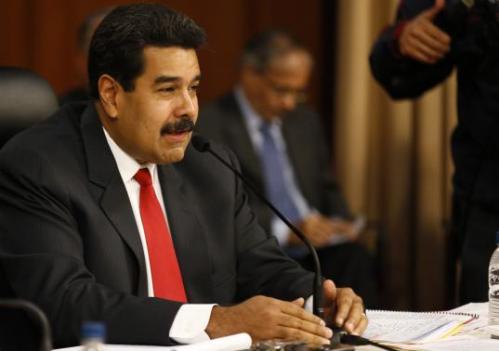
Venezuela Pres. Nicolas Maduro during first UNASUR-and-Vatican mediated peace talk with opposition in Caracas 10 April (Reuters)

Venezuelan President Nicolas Maduro speaking during the first UNASUR-and-Vatican mediated peace talks with the opposition in Caracas 10 April (Reuters)

Here’s my commentary at Americas Quarterly today, 11 April:

A delegation of foreign ministers from the Union of South American Nations (UNASUR) returned to Caracas on April 7 and 8, securing an agreement to hold peace talks to calm political polarization and protests in Venezuela.  The talks are being mediated by the foreign ministers of Colombia, Brazil and Ecuador, plus a Vatican representative.

The UNASUR delegation first visited in late March, recommending that Venezuelan President Nicolás Maduro and leaders of the opposition’s Mesa de Unidad Democrática (MUD) enter into a dialogue.  The U.S. State Department had expressed support, as had Organization of American States (OAS) General Secretary José Miguel Insulza.

However, UNASUR’s plan will be complicated by Maduro’s reliance on paramilitaries within his Partido Socialista Unido de Venezuela (United Socialist Party of Venezuela—PSUV), whose loyalty requires his polarizing words and deeds. This conundrum already wrecked a previous dialogue.

In early February, before protests broke out, a highly placed government official explained to me,  …  CLICK to Continue Reading at Americas Quarterly. Continue reading

Petrobras of Brazil v. Pdvsa of Venezuela – Reply to press interns in Sao Paulo

Lula and Petrobras

Lula and Petrobras

I had a pleasant exchange with an intern – in the end a class of interns – at the Brazilian newspaper “O Estado de São Paulo” a couple of weeks ago.  The questions were insightful. I tried to answer in an informative and direct manner.  Indeed, things are not going well at Petrobras lately, and looking at the politics of Pdvsa and Petrobras next to one another is a useful exercise. Here’s the interview.

1) Do you agree that PDVSA and Petrobras have both had political mishaps in their administrations? Why?

Yes. Hugo Chavez used Pdvsa as the “goose that lays the golden eggs.” However, he took so much from Pdvsa — especially to support his frequent election campaigns, before each of which he increased public spending to win votes — that the “goose” has been left to starve.

Chavez’ revolution was, in his own words, an “oil revolution” and “oil socialism.” However, he did not understand how to run the national oil company. While he distributed largess from the country’s oil wealth to the poor, he was incapable of introducing a new, higher productivity of labor in Venezuelan society, which is what any real social revolution requires for success. He left the country in a very dangerous situation with a shortage of foreign exchange. If the price of oil falls further due to a US & EU accord with Iran and/or an improvement in the oil production situation in Libya, and Iraq, then Venezuela will face a deep crisis.

Petrobras too, under Lula, began to be viewed as a cash cow after it discovered the pre-salt. As a president. Lula was much more competent organizationally and in economic matters than Hugo Chavez. However, Continue reading

China y América Latina: ¿Quién gana y quién pierde? – Petroguía 2014 (Spanish)

Inversiones energéticos de  China en Latino américa.  Nota que Venezuela está en tercer lugar, en contra de las intenciones iniciales de Beijing en 2007-08.

Inversiones energéticos de China en Latino américa. Nota que Venezuela está en cuatro lugar, en contra de las intenciones iniciales de Beijíng en 2007-08. HAZ CLICK para magnificar. (Grafico por T.O’D.)

[English readers: This post is an analysis I did in Spanish for Petroguía 2014 – the annual hard-copy guide for the LatAm petroleum sector – of China’s oil and gas investments in LatAm and the Carribean.  For Beijing’s other investments, or a presentation, etc. drop me a line. ]

NOTA: La siguiente es mi análisis publicado en Petroguía 2014, la guía anual para el sector petrolífero latinoamericano.  Soy agradecido a los directores del Petroguía por haberme permitido publicar el artículo aquí.  El artículo es una resumen de una investigación que hizo sobre todas las inversiones de China en Latino américa. Si tienen interés en una reportaje o presentación detallada, por favor contactarme.

China y América Latina: ¿Quién gana y quién pierde?

Sumario. El mercado de hidrocarburos ya no está en el norte de América sino hacia el este,  y la mejor estrategia de intercambio con esa plaza la lleva Brasil, mientras que Venezuela y Argentina están a la zaga.

Por Thomas W. O’Donnell

El petróleo y el gas que exportará América Latina en las décadas venideras irán mayormente a China y otras partes de Asia. Y eso es por el efecto combinado de menores necesidades de energía importada en Estados Unidos, gracias a la utilización de los nuevos métodos de fractura hidráulica (fracking) que produce cada vez más petróleo liviano, y por el tope que ha alcanzado su demanda doméstica. Continue reading

Beijing ups Venezuelan oil investments, but refuses Chavista leaders’ plea for a cash bailout

folha_header_08apr13folha_quote of the day_venez-and-china_08apr13Back in April, Brazil’s Folha de SaoPaulo ran an article entitled: The Future of Venezuela Depends on China and highlighted this quote:  Translation: “If Maduzo wins, he’ll have to regain the confidence of the Chinese.”  TOM O’DONNELL, petroleum consultant

Indeed, it is now clear that the short-term strategy of the post-Chavez Maduro-Cabello administration was to escape the country’s severe dollar crisis: convincing Beijing to extend it a $5 billion cash loan alleviating food-import shortages before 8 December elections.  In particular, the cash was to fund a new dollar exchange system (see El Nacional,25 Sept 2013). Continue reading

AQ Follow-up | Caracas & Maracaibo: Venezuela’s Private Sector Anxious to Invest if PDVSA Builds Confidence

Americas Quarterly today carries a followup that to my 29 August piece on Post-Chavez changes at PDVSA.

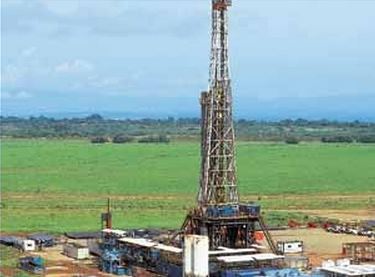
Drilling rig (PDVSA)

Drilling rig (PDVSA)

NOTE:  During the past couple weeks, while in Maracaibo and Caracas, I was repeatedly told of a new offshore payment mechanism that PDVSA has begun offering to its Joint Venture foreign partners.  Venezuelan private sector leaders took credit  for the general idea. Continue reading

My AS/COA piece: PDVSA Post-Chavez: Will Partnerships with the Private Sector and Chinese Experts Boost PDVSA Oil Production?

PDVSA oil rigs in Venezuela (TalCual)

PDVSA oil rigs in Venezuela (TalCual)

Throughout 2012, and especially after President Hugo Chávez’ death in early March 2013, Venezuela’s national oil firm, Petróleos de Venezuela S.A. (PDVSA), has taken measures beyond anything done in the past decade to raise its lagging production. While the likely impact merits cautious analysis, the drivers of the Bolivarian Republic’s scramble for increased oil revenues are clear.  … Continue reading

Competing with China in Latin America: Is Germany losing its high-tech advantage?

Wilfredo R. Rodriguez H., CC BYAn article I wrote for the IP Journal of the German Council on Foreign Relations is online today. It examines data on China, the EU and Germany’s trade with Latin America and the Caribbean, including in energy. Here’s a quote from near the end:

…  China’s exports to Latin America in the low-, medium-, and  high-tech categories were below those of Germany and the EU in 2003; but in 2012 [China’s exports] exceeded the combined totals of the EU15 in the medium-tech and even in the high-tech categories. The only place the EU15 surpasses China is, rather oddly, in the low-tech manufactured goods …

-> READ THE ARTICLE at GCFP’s IP Journal or Research Gate.

Why is Chinese production in Iraq booming, and in Venezuela lagging?

Iraqi oil production has surged. Source: EIA

[Updated/edited 5 June] The New York Times had an interesting article: “China is reaping biggest benefits of Iraqi oil boom” on June 2, 2013.  The question that comes to mind is …

Why is Chinese production in Iraq booming, and in Venezuela lagging?

As late as 2007 and 2008, China clearly intended its investments in Venezuela to be its largest anywhere, to ramp up development of Venezuela’s huge Faja Orinoco extra-heavy oil reserves.  In those years, Iraq was still mired in sectarian war.  Yet, here we are in 2013, with Chinese production in Iraq surging and its companies’ production in Venezuela lagging.  Why?  Let’s first look at the Chinese relationship and logic in Iraq, then in Venezuela.

Geostrategic interests behind profit issue

The NYT article says that Chinese success in Iraq is largely because their oil companies aren’t especially interested in profits because they don’t have to answer to investors demanding higher returns; they just want to secure oil to bring home.

Yes, but one should see that this is also strongly a geostrategic imperative for Beijing. It is true Chinese firms can get along with lower profits, and they also have much more cash than others, which also helps them get in now at small profits for the long run.  However, unlike other firms, they are under specific instructions by Beijing to persist at getting into countries with huge reserves like Iraq and Venezuela because it is in the geostrategic energy interests of Beijing to do so.

Chinese geostrategic motivations to stick in Iraq (and Venezuela)

Before examining the better situation, on the ground, for Chinese firms dealing with Baghdad as verses Caracas, it is important to recognize Beijing won’t ever give up on either state. Beijing is the one power having serious reservations about too much reliance on the US/Saudi-dominated “global barrel” market-and-security system.  It is the only major power (aside from Russia) with aspirations to project power against the USA and its naval carrier fleets, at least in its near-home waters.  For any such confrontation of any duration, it needs  to have a certain significant percentage of oil brought directly home independent of the USA and the global market the USA dominates.  So, China’s energy firms tend to blend their deepening integration into global oil-market processes with old-fashioned bi-lateral mercantilist relationships with producing states like Iraq and Venezuela. (See also the Addenda below.)

Different contractual and working relationships in Iraq and Venezuela

Venezuelan oil production has lagged. EIA 2012

Chinese firms are clearly more willing to work with the difficult  resource-nationalistic conditions imposed by the Iraqi and Venezuelan states.  However, in many ways Iraq’s are more difficult, yet Chinese–and many others–do better getting production going in Iraqi than Venezuela.  Why? Continue reading