Tag Archives: Venezuela

My AS/COA piece: PDVSA Post-Chavez: Will Partnerships with the Private Sector and Chinese Experts Boost PDVSA Oil Production?

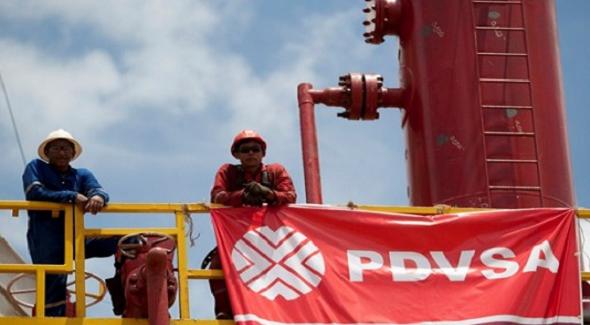
PDVSA oil rigs in Venezuela (TalCual)

PDVSA oil rigs in Venezuela (TalCual)

Throughout 2012, and especially after President Hugo Chávez’ death in early March 2013, Venezuela’s national oil firm, Petróleos de Venezuela S.A. (PDVSA), has taken measures beyond anything done in the past decade to raise its lagging production. While the likely impact merits cautious analysis, the drivers of the Bolivarian Republic’s scramble for increased oil revenues are clear.  … Continue reading

Competing with China in Latin America: Is Germany losing its high-tech advantage?

Wilfredo R. Rodriguez H., CC BYAn article I wrote for the IP Journal of the German Council on Foreign Relations is online today. It examines data on China, the EU and Germany’s trade with Latin America and the Caribbean, including in energy. Here’s a quote from near the end:

…  China’s exports to Latin America in the low-, medium-, and  high-tech categories were below those of Germany and the EU in 2003; but in 2012 [China’s exports] exceeded the combined totals of the EU15 in the medium-tech and even in the high-tech categories. The only place the EU15 surpasses China is, rather oddly, in the low-tech manufactured goods …

-> READ THE ARTICLE at GCFP’s IP Journal or Research Gate.

Why is Chinese production in Iraq booming, and in Venezuela lagging?

Iraqi oil production has surged. Source: EIA

[Updated/edited 5 June] The New York Times had an interesting article: “China is reaping biggest benefits of Iraqi oil boom” on June 2, 2013.  The question that comes to mind is …

Why is Chinese production in Iraq booming, and in Venezuela lagging?

As late as 2007 and 2008, China clearly intended its investments in Venezuela to be its largest anywhere, to ramp up development of Venezuela’s huge Faja Orinoco extra-heavy oil reserves.  In those years, Iraq was still mired in sectarian war.  Yet, here we are in 2013, with Chinese production in Iraq surging and its companies’ production in Venezuela lagging.  Why?  Let’s first look at the Chinese relationship and logic in Iraq, then in Venezuela.

Geostrategic interests behind profit issue

The NYT article says that Chinese success in Iraq is largely because their oil companies aren’t especially interested in profits because they don’t have to answer to investors demanding higher returns; they just want to secure oil to bring home.

Yes, but one should see that this is also strongly a geostrategic imperative for Beijing. It is true Chinese firms can get along with lower profits, and they also have much more cash than others, which also helps them get in now at small profits for the long run.  However, unlike other firms, they are under specific instructions by Beijing to persist at getting into countries with huge reserves like Iraq and Venezuela because it is in the geostrategic energy interests of Beijing to do so.

Chinese geostrategic motivations to stick in Iraq (and Venezuela)

Before examining the better situation, on the ground, for Chinese firms dealing with Baghdad as verses Caracas, it is important to recognize Beijing won’t ever give up on either state. Beijing is the one power having serious reservations about too much reliance on the US/Saudi-dominated “global barrel” market-and-security system.  It is the only major power (aside from Russia) with aspirations to project power against the USA and its naval carrier fleets, at least in its near-home waters.  For any such confrontation of any duration, it needs  to have a certain significant percentage of oil brought directly home independent of the USA and the global market the USA dominates.  So, China’s energy firms tend to blend their deepening integration into global oil-market processes with old-fashioned bi-lateral mercantilist relationships with producing states like Iraq and Venezuela. (See also the Addenda below.)

Different contractual and working relationships in Iraq and Venezuela

Venezuelan oil production has lagged. EIA 2012

Chinese firms are clearly more willing to work with the difficult  resource-nationalistic conditions imposed by the Iraqi and Venezuelan states.  However, in many ways Iraq’s are more difficult, yet Chinese–and many others–do better getting production going in Iraqi than Venezuela.  Why? Continue reading

En Espanol: Venezuela’s “Tal Cual” on my al-Naimi post

For Spanish speakers: below is an article from Tal Cual daily in Venezuela summarizing my blog on Saudi oil minister al-Naimi’s opinons on the “North American tight-oil revolution” and their implications for Venezuela and Iran.  The article is by Jose Suarez Nunez.

Para hispano parlantes: Aquí abajo está un artículo en Español publicado en Tal Cual de Caracas, un resumen de mi blog de la última semana que trató en las opiniones del ministro de energía saudita Sr. al-Naimi, y en las implicaciones para Venezuela e Irán. Continue reading

NYC Lecture: THE LEGACY OF HUGO CHAVEZ: Is ‘Oil-Socialism’ a Sustainable Alternative Development?

English: Hugo Chávez

I’m invited to deliver a public lecture Wednesday, 24 April, at 3:30 in New York City at The New School University‘s Graduate International Affairs. This will be a  critical examination of the legacy of Hugo Chavez’ “oil socialism” as an “alternative developmental model” for Latin America. Continue reading

“Tough Policy Choices Await Chavez Successor”- My viewpoint in Petroleum Intelligence Weekly

Below is a “Special Reprint of Petroleum Intelligence Weekly for The Global Barrel”–I was quoted in three EIG articles last week.

A special thanks to James Bourne, Energy Intelligence’s Senior Editor for Latin America. James is moving on to new challenges in Singapore   His frequent calls with probing questions and insightful analysis of Venezuela and Latin America will be sorely missed here!!  Una buena despidida – mucho éxito en todo! 

tough_choices_after_chavez_energy_intell_11Mar13

Chavez’ Legacy for Venezuela’s poor & institutions: Watch my German TV News Interview

Deutsche Welle, the German international TV service, interviewed me on the
legacy of Hugo Chavez on  their live evening news broadcast Journal  from Berlin.  I tried to relate two, strikingly contradictory aspects of President Chavez legacy:

The outpouring of sincere affection for him from the poor and many others in Caracas, which the world is witnessing, as the embodiment of their liberating political awakening.  And, in contrast, the utter shambles in which Hugo Chavez, as a practical political leader of 14 years, left the Venezuelan state and economic institutions, including PDVSA.  My segment comes at 4:08 minutes into the video stream here:

PDVSA Future Uncertain After Chavez – My views in “Platts” today

PDVSA: Reform?

Venezuela’s troubled national oil company, PDVSA — Post-Chavez Reforms ?

What’s the future of PDVSA post-Hugo Chavez?  My comments to Platts Energy writer Mery Mogollon were quoted in detail today in Oilgram News.  A JPEG  image is below (click it to enlarge).   My thanks for permission to post it here.  Continue reading

Hugo Chavez’ Death | I’ll be on Deutsche Welle news, live in Berlin

Hugo Chavez has passed away.

I’m about to be interviewed (in English), live on Deutsche Welle, the German International Channel, by their news program “Journal” at 20:00, Berlin time (GMT+6;, so, that’s 3 PM in NYC.)

Here is the live-stream link http://mediacenter.dw.de/english/live

Hugo Chavez' final News Conference

Hugo Chavez’ final News Conference

I’m cited: “(BN) Chavez Buys Enemy U.S.’s Fuel While Lauding Iran”

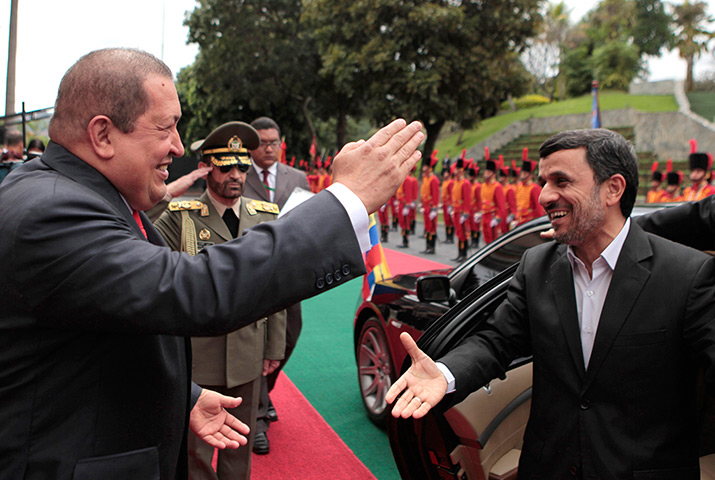
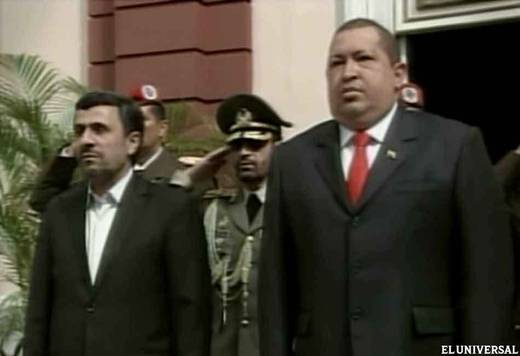
Presidents Chavez and Ahmadinejad met in Caracas in January (here) and June 2012

I was cited a number of times yesterday in a Bloomberg News article by Nathan Crooks in Caracas and Paul Burkhardt in NYC.  I reprint it below because the authors’ research further illustrates an issue I’ve often stressed here.

That is: in spite of President Chavez’ rhetoric promising to stand by Presidents Ahmadinejad of Iran (and Assad of Syria, and previously Qaddafi of Libya), he is actually in no position to withstand the U.S. sanctions that could be imposed on Venezuela for aiding Iran. Continue reading

Iranian National Oil Company & PDVSA Respond to My Exposé?!

A curious announcement in The Tehran Times: “Tehran, Caracas to ink $2 billion oil deal soon” (29 May, web 30 May) followed on the heels of my exposé about this relationship that was published just two weeks prior.  The Tehran Times’ piece was brought to my attention by James Bourne, Senior Latin American Editor at Energy Intelligence NYC, who requested a comment.  Energy Intelligence has kindly provided GlobalBarrel.com a PDF of Bourne’s piece in their subscriber-only Oil Daily of 31 May, which you can read at this link: Continue reading

Bolivarian Venezuela’s Oil Policy & Iran: A Failed Energy Alliance

My study of Iran in Bolivarian Venezuela’s oil sector is just out in the May 2012 edition of Energy and Geopolitical Risk-published by MEES: Middle East Economic Survey.  You can read it here: Venezuela_Iran_failed_energy_alliance-Geopolitical-Risk-May-2012-3. Continue reading

PDVSA ships fuel to Syrian regime: Chavez risks sanctions?

[Edited Tues  630 EDT] The Negra Hipólita, a tanker operated by an affiliate of PDVSA, should be arriving at the Syrian port of Banias after a 15-17 day voyage from the Venezuelan refinery at Puerto La Cruz (El Universal, 17Feb12).

Syrian tanks are seen in Bab Amro near the city of Homs,12Feb12. Photo Reuters

Puerto La Cruz produces about 187k bbl/day and, the Negra Hipólito, if fully loaded, will deliver 47,000 (47k) tonnes of diesel fuel to alleviate reported widespread shortages of fuel in Syria. That’s about 330k barrels of fuel usable as home heating oil, or as fuel for Assad’s Russian tanks “indiscriminately” shelling neighborhoods, as in the city of Homs.  Note:

In Vienna, the U.N. chief demanded the Syrian regime stop using indiscriminate force against civilians caught up in fighting between government troops and Assad’s opponents. “We see neighborhoods shelled indiscriminately,” Ban told reporters. “Hospitals used as torture centers. Children as young as ten years old jailed and abused. We see almost certain crimes against humanity.” (Time World, Syrian Troops Shell Central City with Tanks. 17Feb12).

What, however, is the geopolitical significance of this shipment?  Let’s examine three issues:

  1. Chavez’ motivations: Why risk sanctions?
  2. Is this a significant material assistance to Assad’s regime?
  3. Has Chavez blundered by miscalculation? Continue reading

With a USA-dependent oil sector, Chavez can’t help Ahmadinejad

(Edited, 20 Jan.) President Ahmadinejad of Iran visited Venezuela on January 9, and then three of President Chavez’ closest Latin American allies, to search for help. His tour was part of a flurry of diplomacy in the New Year leading up to the imposition of severe new U.S. sanctions on Iran’s ability to export oil, beginning in June.

Presidents Ahmadinejad and Chavez in Caracas (Photo: El Universal)

While these two presidents met in Caracas, U.S. Treasury Secretary Geithner was visiting South Korea, Japan and China, and other U.S. officials were Continue reading

Part IV: Another $6.5b in loans: The frustrated Beijing-Caracas courtship

(Greetings! It’s good to be back blogging.)  The common perception is that Chinese oil companies in Venezuela are winning big deals on very favorable terms.  However, as I’ve stressed in previous posts, Beijing is actually very frustrated not to be getting the deals it expects for new Faja heavy oil fields, especially considering its big investments in the Bolivarian state.  More evidence continues to emerge.

From 21-23 November the “10th Meeting of the China-Venezuela High-Level Committee” took place in Caracas at the Hotel Gran Meliá, with something like 400 businesses and state representatives coming from China.    Continue reading