

My gratitude to LRT.lt journalist Vaida Kalinkaitė-Matuliauskienė for this in-depth print interview. We spoke just after Baltic states had disconnected from the Russian-Belarus electrical grid, BRELL, and had connected with the European grid. This was a complex and costly project, executed rapidly and flawlessly. [My comment continue below, after the English (first link) and Lithuanian (second link) versions:]
 If you had stayed in BRELL, it would have been much easier for Russia
[a Google translation PDF]12 Mar 2025 — Of course, this zone is not only yours, it is connected to the European Union (EU). Thomas O’Donnell | Warsaw Conference “Energy Security in the Middle and… || LRThttps://www.lrt.lt › Verslas ||
jeigu būtumėte likę BRELL, Rusijai būtų daug lengviau
12 Mar 2025 — Žinoma, ši zona ne tik jūsų, ji sujungta su Europos Sąjunga (ES). Thomas O’Donnell | Varšuvos konferencijos „Energetinis saugumas Vidurio ir… || LRThttps://www.lrt.lt › Verslas || Translate this
The Baltic states’ impetus was obvious: a deep mistrust of Russia after its 2022 cutoff of half of all European gas imports intended to pressure EU states to abandon solidarity with Ukraine as Russia invaded it. So, switching to the European grid is a great relief. However, the dangers haven’t ended.
Continue reading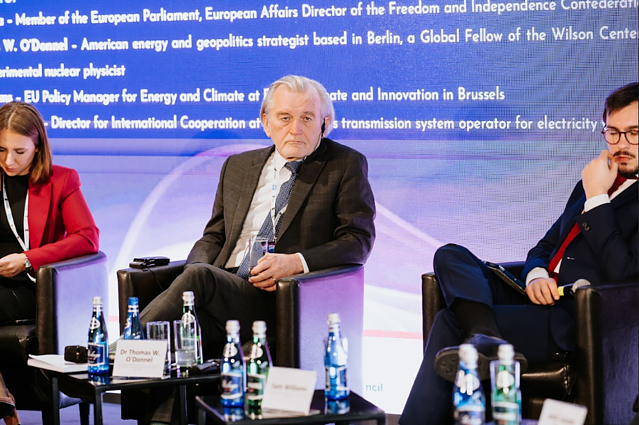


 The Global Barrel