En Espanol: Venezuela’s “Tal Cual” on my al-Naimi post

For Spanish speakers: below is an article from Tal Cual daily in Venezuela summarizing my blog on Saudi oil minister al-Naimi’s opinons on the “North American tight-oil revolution” and their implications for Venezuela and Iran.  The article is by Jose Suarez Nunez.

Para hispano parlantes: Aquí abajo está un artículo en Español publicado en Tal Cual de Caracas, un resumen de mi blog de la última semana que trató en las opiniones del ministro de energía saudita Sr. al-Naimi, y en las implicaciones para Venezuela e Irán. Continue reading →

Listening to Saudi Oil Minister Al Naimi at CISIS in Washington: Bad news for Venezuela & Iran?

Al-Naimi at CSIS

Al-Naimi at CSIS

 Last week in Washington, I attended a talk by Saudi Oil Minister and head of Aramco, Ali al-Naimi, at CSIS.  Energy and foreign policy veterans from Daniel Yergin to Brent Scowcroft and Dr. James Schlesinger were on hand to hear al-Naimi’s views. You can read the transcript here, or watch the video embedded below.

Al-Naimi’s contrasted his central theme: “the enduring relevance of oil,” to the predictions made for many years by the adherents of “peak oil”–a theory that he said had itself “peaked in 2009” and has now been shown to be “utterly incorrect.”

Bad News for Venezuela and Iran?

Listening to him describe the global impact that the U.S.A. tight-oil “revolution” will have on the market,  plus with Alberta’s heavy oil and so many other new sources from around the globe all coming to market, brought to my mind images of the 1980’s.  The 1980’s were the “lost decade” in Latin America. It strikes me that, if he’s right about the trajectory of the global oil sector, the consequences for OPEC’s “price hawk” faction would be sobering. Continue reading →

NYC Lecture: THE LEGACY OF HUGO CHAVEZ: Is ‘Oil-Socialism’ a Sustainable Alternative Development?

English: Hugo Chávez

I’m invited to deliver a public lecture Wednesday, 24 April, at 3:30 in New York City at The New School University‘s Graduate International Affairs. This will be a  critical examination of the legacy of Hugo Chavez’ “oil socialism” as an “alternative developmental model” for Latin America. Continue reading →

“Tough Policy Choices Await Chavez Successor”- My viewpoint in Petroleum Intelligence Weekly

Below is a “Special Reprint of Petroleum Intelligence Weekly for The Global Barrel”–I was quoted in three EIG articles last week.

A special thanks to James Bourne, Energy Intelligence’s Senior Editor for Latin America. James is moving on to new challenges in Singapore   His frequent calls with probing questions and insightful analysis of Venezuela and Latin America will be sorely missed here!!  Una buena despidida – mucho éxito en todo! 

tough_choices_after_chavez_energy_intell_11Mar13

–

Did Iran release Abu Ghaith to show the USA its good faith in February nuclear negotiations?

Abu Graith and Bin Laden after 9-11, video, Oct 7 2001 (Hurriyet, 7feb13)

Abu Ghaith, arrested by the US March 7, after his release by Iran, shown alongside Bin Laden in October 7, 2001 video after 9/11 attacks (credit: Hurriyet)

Is Tehran serious about nuclear negotiations with the P5+1?

If Tehran wants an agreement, how might they demonstrate good faith to Washington? Consider the following:

In the month before the recent round of negotiations held in Almaty, Kazakhstan on February 26 and 27, Iran released into neighboring Turkey Osama Bin Laden’s brother-in-law, Mr. Suleiman Abu Ghaith.  The Islamic Republic of Iran had been detaining him since his capture some 11 years ago, when he entered Iran along with other top Al Qaeda leaders to escape the U.S. invasion of Afghanistan.  His precise date of release into Turkey is not clear, however, according to the English-language Turkish paper, Hürriyet, he was arrested by Turkish authorities in an Ankara “luxury hotel” on a “tip from the CIA.”  Turkey then held him for “33 days” before deporting him to Jordan on March 1, and he was arrested by the U.S. on March 7. Continue reading →

Chavez’ Legacy for Venezuela’s poor & institutions: Watch my German TV News Interview

Deutsche Welle, the German international TV service, interviewed me on the
legacy of Hugo Chavez on  their live evening news broadcast Journal  from Berlin.  I tried to relate two, strikingly contradictory aspects of President Chavez legacy:

The outpouring of sincere affection for him from the poor and many others in Caracas, which the world is witnessing, as the embodiment of their liberating political awakening.  And, in contrast, the utter shambles in which Hugo Chavez, as a practical political leader of 14 years, left the Venezuelan state and economic institutions, including PDVSA.  My segment comes at 4:08 minutes into the video stream here:

PDVSA Future Uncertain After Chavez – My views in “Platts” today

PDVSA: Reform?

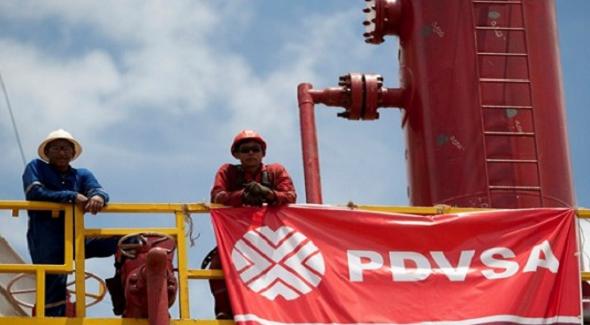
Venezuela’s troubled national oil company, PDVSA — Post-Chavez Reforms ?

What’s the future of PDVSA post-Hugo Chavez?  My comments to Platts Energy writer Mery Mogollon were quoted in detail today in Oilgram News.  A JPEG  image is below (click it to enlarge).   My thanks for permission to post it here.  Continue reading →

Hugo Chavez’ Death | I’ll be on Deutsche Welle news, live in Berlin

Hugo Chavez has passed away.

I’m about to be interviewed (in English), live on Deutsche Welle, the German International Channel, by their news program “Journal” at 20:00, Berlin time (GMT+6;, so, that’s 3 PM in NYC.)

Here is the live-stream link http://mediacenter.dw.de/english/live

Hugo Chavez' final News Conference

Hugo Chavez’ final News Conference

As Chavez’ oil alliance with China gets serious, Beijing holds PDVSA to its word

Groundbreaking at CNPC refinery for PDVSA heavy oil, set tol be China's largest.

Groundbreaking, PetroChina-CNPC refinery for PDVSA heavy oil. It is to be China’s largest. (April 2012)

Over the past few weeks, I have been looking at the state of the Venezuelan-Chinese oil alliance that Hugo Chavez has so fervently championed.  The picture that emerges is not what one might expect. Here is an overview, in qualitative terms. [Correction: I originally wrote Ramirez reported that PDVSA produced “60,000” new barrels of Faja oil in 2013. He actually said “20,000”.]

A. Structural Changes – Vertical Integration with China

Till now, commentators have looked primarily at the obligations of the Bolivarian Republic of Venezuela (BRV) to send oil to China to repay Beijing’s huge loans.  However, there are major changes afoot in the structure of this relationship, no matter who succeeds Hugo Chavez.  Developments on the ground in both countries show an energy infrastructure buildup will soon bring significant cross-border vertical integration.  Soon, Venezuelan oil will not be shipped to China simply to fulfill financial-and-contractual obligations, but also for locked-in infrastructural reasons. 

All indications are that the Chinese side is actively fulfilling the obligations it entered into ca. five years ago (esp. December 2007) to build oil tankers, pipelines and refineries in China in order to import and process Venezuelan heavy crude.

Continue reading →

Succession Crisis #2: Chavez’ non-inauguration: Why violate the “Chavez Constitution”?

The Supreme Court of Venezuela has just made a rather strange decision. Rather than deciding between the two possible scenarios described in the constitution for the case when a president-elect is unable to take the oath of office on the prescribed day of 10 January, they have instead pronounced a third scenario proposed by leaders of Chavez’ party: There is “no temporary absence” of Chavez, and there is “administrative continuity” (i.e., that there is no new administration since he was the previous president).

The decision by the TSJ [press conference 9Jan 2012] seems particularly amazing as it rejects the constitutional option of declaring Chavez  “temporarily absent” that would have kept Chavismo in the presidency without an election for 180 days.

This decision is just as transparently un-constitutional and invented as the rationals of the right-wing Honduran military and congress in 2009 for throwing the president out of their country in his pajamas, rather than pressing whatever grievances or charges they had against him within the framework of the constitution.  There is a habit growing in Latin America of “democracies” being unwilling to fight out political crises within the sphere of the constitution and the nation’s institutions.

Here’s the situation in Venezuela:  The vice-president and acting president, Continue reading →

Venezuelan Succession Crisis? 1: Two men Chavez wants to succeed him

A succession crisis is stalking Venezuelan society. cabello-venezuela--644x362President Chavez of Venezuela is again in Havana, after a complex six-hour surgery, his third in a year for an unspecified form of cancer. Just before the surgery, he returned to Caracas to address the nation. For the first time he spoke about what he wishes to be done if he is unable to return to the presidency.   Continue reading →

Problems of the Global Oil System: Why teach about oil?

Oil pumpjacks in Venezuela (TalCual Digital, Caracas)

Recently, I sent off a proposal for a new course, “Problems of the Global Oil System.”  The introduction asks rhetorically: “Why Teach About Oil?”

Debates in the U.S. over oil and energy policy often resemble election campaigns, fought out with factoids and unconstrained partisanship.  Of course, deciding technical-scientific policy is inherently political.  But there are politics and there are politics.  In the proposal, I argue that  “Oil’s persistent domestic & global centrality” will extend at least another 25-to-30 years, so teaching about oil is necessary to  empower students to participate in forming energy policy democratically.

But, do the facts actually support the conclusion that petroleum’s central role in society–in both domestic and international affairs–will persist for at least 25-30 years hence?  Here is the brief argument in the introduction (and the conceptual outline of the course) for your consideration: Continue reading →

Amuay refinery disaster: Syrian naphtha & Chavez’ “petroleum revolution” in flames

“Methane gas at 24%, H2S gas (hydrogen sulfide) 4%. We’re dying.” 

Late Friday night, 24 August, Rigoberto Colina García, a 29-year-old worker at a lubricant company just outside the Amuay Refinery compound in Venezuela’s Falcon State, had sent this message on his Blackberry. (La República, 28Aug12)  Some hours later, at 1:11 AM Saturday, a tremendous explosion killed over 40 people sleeping or working in buildings beyond the refinery’s perimeter, including Rigoberto and four of his co-workers.

This is the worst disaster in Venezuela’s modern oil history, and one of the worst refinery accidents ever worldwide.  This week, across Venezuela, President Chavez and PDVSA leadership have been targets of public criticism and outrage.

Clearly, industrial and political policies of PDVSA and the Venezuelan state contributed to this disaster.  Meanwhile, yesterday I found a somewhat tangential, but particularly unseemly fact.  It seems that President Chavez’ only recent involvement with Amuay in the months preceding this disaster had nothing to do with improving the productivity of the facility, much less the safety of workers and neighboring citizens. No, rather, his involvement was a scheme to bolster PDVSA’s  material support for the dictatorial regime of Syria’s Assad in suppressing the popular revolution there.  This scheme apparently accounts for the origin of some of the naphtha that burned for four days following the explosion.  But first, the facts of the disaster, in so far as they are known. Continue reading →

I’m cited: “(BN) Chavez Buys Enemy U.S.’s Fuel While Lauding Iran”

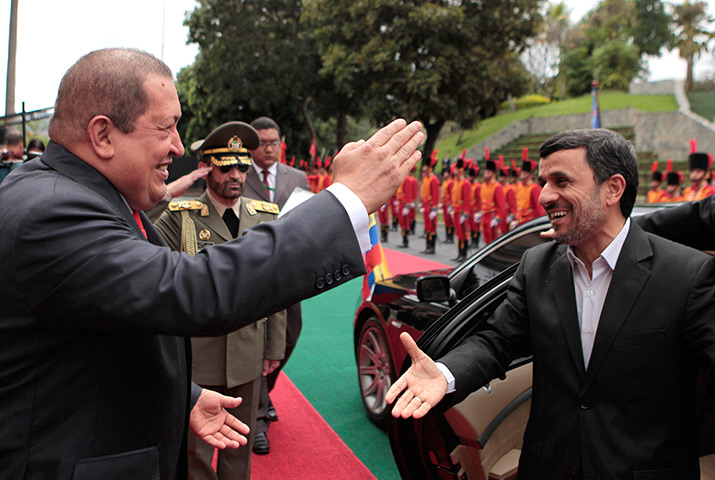
Presidents Chavez and Ahmadinejad met in Caracas in January (here) and June 2012

I was cited a number of times yesterday in a Bloomberg News article by Nathan Crooks in Caracas and Paul Burkhardt in NYC.  I reprint it below because the authors’ research further illustrates an issue I’ve often stressed here.

That is: in spite of President Chavez’ rhetoric promising to stand by Presidents Ahmadinejad of Iran (and Assad of Syria, and previously Qaddafi of Libya), he is actually in no position to withstand the U.S. sanctions that could be imposed on Venezuela for aiding Iran. Continue reading →

Venezuelan Faja Surprise: USA’s Harvest sells not to China but Indonesia

Petrodelta,SA rig in the south of Monagas state, Venezuela (PDVSA 2011 Annual Rept)

In March, U.S.-based Harvest Natural Resources (HNR) had disclosed to shareholders it was in exclusive confidential negotiations with a national oil company (NOC) to sell its 32% stake in Petrodelta SA–a lucrative, mature, medium-heavy Faja oil field in the south of Monagas state, in which PDVSA holds a 60% share.  Thursday evening, Harvest surprised observers by announcing they had signed an agreement with the Indonesian National Oil company, Pertamina.

The big question immediately being asked was: “Indonesia?  Why not China?”  I was quoted at length Friday morning on this question by Bloomberg’s Nathan Crooks in Caracas (See:

Continue reading →