
Again, oil security is determined by both global-market balances and geostrategic realities – at present the Mideast war and Russia’s War on Ukraine. My analyses this weekend were featured in: (a) an AlHurra video (LHS English, RHS Arabic), and below these (b) a detailed BBC-Cairo print interview (LHS English Google Translate, RHS Arabic original). where I make similar points as my Friday video in Warsaw.
My BBC (CAIRO) print interview in Arabic and English (Google Translate):
How could oil prices be affected by Israel’s response to Iran?
Author, Omaima Magdy – BBC News
October 4, 2024
Oil markets are on edge amid speculation that Israel could strike Iranian oil reserves in response to Iranian attacks on Israel, amid fears that a wider escalation of violence could threaten oil facilities in the Middle East.
When US President Joe Biden was asked on Thursday about his position on Israel’s potential targeting of Iranian oil facilities, he replied, “We are discussing it,” leaving the door open to all scenarios. Oil prices rose to their highest level in a month following Biden’s comments, before stabilizing again.
Biden says US support for Israel is ‘rock solid’
What are the future scenarios if the conflict escalates and what impact will it have on the lives of millions around the world, as wars do not only kill on the battlefield, but their effects extend far beyond, to every corner of the world.
What will happen if Israel responds to Iran?
Geopolitical tensions in the Middle East are reflected in oil prices, but they will depend on the extent of Israel’s response to the Iranian attack, explains Medhat Youssef, an expert in petroleum economics and former deputy head of the Egyptian Petroleum Authority.
Iran launched its second direct attack on Israel on October 1, firing about 180 missiles, some of which penetrated Israeli air defenses, in response to two assassinations carried out by Israel; one of the leader of the Lebanese Hezbollah, Hassan Nasrallah, in Beirut, and the other of the head of the Hamas political bureau, Ismail Haniyeh, in Tehran.
Skip suggested stories and continue reading
Suggested stories
Netanyahu and Khamenei
Which has greater firepower, Iran or Israel?
A Sukhoi Su-35S fighter jet performs during the International Military-Technical Forum “Army 2022”
Can Iran rely on Russia in its conflict with Israel?
Areas destroyed in southern Lebanon due to Israeli airstrikes
Can current diplomacy achieve a ceasefire in the Middle East?
From Beirut
The Israeli army orders the evacuation of residential areas south of Beirut, and Hezbollah continues its attacks on northern Israel
Suggested stories End
Israeli Prime Minister Benjamin Netanyahu vowed to respond at the appropriate time, saying that Iran “will pay the price for its great mistake”, while Tehran warned that it would launch a larger attack if it was targeted.
In the wake of the strike, oil prices rose by about 5%, with Brent crude, the international benchmark, exceeding $75 a barrel, while West Texas Intermediate crude exceeded $72, amid warnings from experts of an expanding war.
How does China help Iran circumvent international sanctions?
Medhat Youssef continues to BBC Arabic, “Any tension in the sources of oil and natural gas production, whether due to regional or international conflicts, may lead to the disruption of production or export, which will reduce supply in the market. This will be followed by increasing fears of a halt in oil and gas supplies, which will increase demand to secure needs, which will lead to an increase in prices due to the law of supply and demand that governs the markets.”
Youssef assumes, “If Israel strikes Iran, the fear of a halt in supplies will mean loading and unloading, because 40% of the world’s oil and gas supplies come from the Gulf region. It is a region rich in petroleum resources, and therefore the markets may witness a state of panic due to the halt in shipping ports.”
What if Israel targets Iranian oil facilities?
Skip Worth Attention and Continue Reading
Worth Attention
Worth Attention
A detailed explanation of a prominent story from Akhbar Alyoum, to help you understand the most important events around you and their impact on your life
Episodes
Worth Attention End
Dr. Thomas O’Donnell, an academic and energy and geopolitics expert, says targeting Iranian refineries, which is an option that is being considered and supported by Washington, “is to deprive the Iranian economy of gasoline and diesel, that is, to prevent Iran from refining its crude oil and supplying the domestic market with diesel, gasoline and other products, that is, to hit the domestic economy of Iran.”
O’Donnell believes that this option may have a positive impact on global markets, “because if Iran cannot refine its oil, it may send more oil to the market, which may lead to a decrease in the price of oil.”
Iran currently produces about 3.9 million barrels per day, and exports about half of that, or about 1.7 million barrels per day.
After the Iranian attack, how might Israel respond, and what will Tehran do?
But if Israel targets oil export terminals, “this will prevent a large portion of the 1.7 million barrels per day of exports from reaching the global market, which represents a greater shock to the global market.”
O’Donnell told the BBC that global markets would not be significantly affected if Iranian oil was taken off the market, because OPEC could easily make up the shortfall, especially given that it has at least five or six million barrels of oil a day that it is withholding from the market, and there is also the capacity in the Western Hemisphere to contribute, so it would not be a crisis, although it could lead to a temporary rise,” he said.
O’Donnell believes that the rise in the price of West Texas Intermediate and Brent crude by about a dollar “is not a big jump in prices. But it revives fears of a war in the Middle East.”
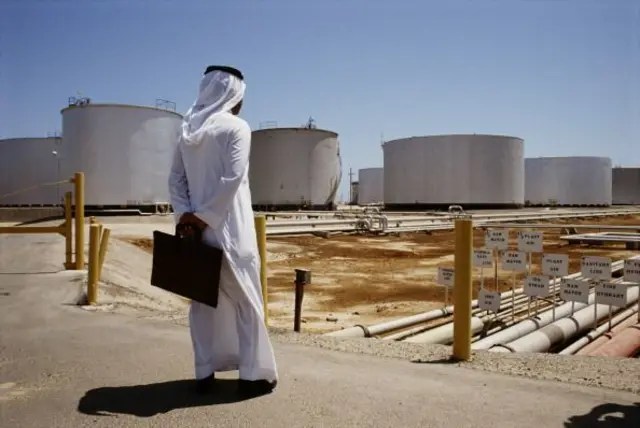
Aramco oil refinery in Saudi Arabia – archive photoImage source: Getty Images
What will happen in the event of an Iranian escalation?
O’Donnell believes that Iran is avoiding a direct confrontation with Israel, and is launching sporadic strikes on targets in Israel, and encouraging its proxies to confront it. The German [i.e., resident in Germany – T.O’D.] researcher says, “It is not in Iran’s interest to enter into a war with Israel, and it is not clear that Israel is seeking to provoke a war, but it may want to punish Iran and deliver a devastating blow to it
“In this case, Iran will be very careful not to fall into this trap,” O’Donnell continues. “One option is for Iran to strike other Gulf states that it sees as allies of the United States and Israel, such as Saudi Arabia and the UAE, which are major oil producers, and attack their ability to export oil. Here, there will not be a war with Israel only, but Iran’s neighbors will join the war and the United States directly and strongly.” However, he ruled out this scenario.
Iran did not threaten to attack Gulf oil facilities, but warned that any direct intervention by those it described as “Israel’s supporters” against Tehran would push Iran to launch a “strong attack
on their bases and interests” in the region.
Who is harmed in the event of an escalation?
Engineer Khaled Al-Awadhi, an energy economics consultant in Ras Al-Khaimah, expects the price of a barrel to increase by 40%, i.e. its price will range between $90-$100, if Israel and Iran exchange responses and target oil facilities.
Al-Awadhi continues, “The market is currently in a state of anticipation and fear, and the increase we have seen cannot be compared to the Russian-Ukrainian war, but in the end, the continuation of the war means increasing the losses over the gains that war merchants benefit from, because the effects will affect all sectors of the economy.”
Iranian missile attack: Will Israel respond to Iran by striking its nuclear reactor?
Medhat Youssef expects that countries will Non-oil producing countries are the most affected by the global price development, and the increase may affect transportation and manufacturing costs, energy bills and commodity prices, as is the case for countries such as Egypt and Jordan, especially since “their price structure has some kind of support and requires an immediate increase.” Countries such as Algeria and Libya are oil-producing countries and therefore depend on local production.
According to estimates by the International Energy Agency, Saudi Arabia accounts for more than a third of OPEC’s production capacity and more than half of its spare production capacity. It is followed in production, in order, by Iraq, the UAE, Kuwait, Qatar, Libya, the Sultanate of Oman, Algeria, and Egypt.
Oil refinery – archive photoImage source: Getty Images
Why are Middle Eastern wars different from the Ukrainian war?
The impact of the Russian-Ukrainian war cannot be compared to the Middle Eastern wars, says Medhat Youssef.
Following the outbreak of the Ukrainian war and the Russian army’s invasion of the country in February 2022, the price of oil rose to its highest levels in 14 years, and the price of a barrel of Brent crude approached the threshold of $140, and the inflation rate soared to record levels that shook all markets in the world, including the markets for commodities, grains, raw materials, and metals.
The oil economics expert says that the European and American decision at the beginning of the Ukrainian war to stop their dependence on Russian oil and gas caused prices to rise significantly, before they fell again, when countries were able to The European Union secures its needs, because all supplies come from the Arabian Gulf region and not from the Black Sea.
The oil economics expert explains that fear leads to an increase in demand until the markets become saturated. Here, if oil floods the markets, prices will fall if we assume that supplies continue in the event of war. Just as happened when the Houthis began their attacks on ships in the Red Sea and threatened commercial navigation in mid-November, because the ships found an alternative shipping lane, oil prices were not affected, but rather the revenues of the Suez Canal were affected.
As for the current situation, as Medhat Youssef explains, “We must not forget that OPEC’s decision to reduce prices at the beginning of 2025 was due to the abundance in the markets, which led to a decrease in prices from $80 per barrel to $70 and $69 per barrel. The biggest fear in the event of fear is the announcement by Israel and the Gulf states to stop shipping from their ports, like what happened in the 1973 war.”
O’Donnell agrees that the price of oil has been falling for more than a year, although OPEC Plus has tried hard to raise the price by withholding about 6 million barrels of oil from the market for most of the year.
He continues, “At their meeting in early October, OPEC decided to continue withholding oil from the market, through voluntary cuts. In fact, things have reached the point where Saudi Arabia now sees a problem. They want the price to be at $90 or $100 a barrel to pay for their country’s needs, but if they can’t keep the current price below $70 a barrel, they will focus on increasing market share. There was a statement by the Saudi minister that it could drop to $50 a barrel, but at least Saudi Arabia will retain a large share of the market. And of course, this is good news for the United States and its allies in Ukraine in their war against Russia, because Russia will lose income. Because it sells at higher prices to both India and China.”
In this case, Russia may have to nationalize its oil industry to deal with the decline in income.
“It’s time to revisit alternative scenarios to OPEC price caps and sanctions on Russian oil,” says strategist O’Donnell.
BBC – Cairo 05Oct2024
كيف يمكن أن تتأثر أسعار النفط بالرد الإسرائيلي على إيران؟

Article information
- Author,أميمة مجدي
- Role,بي بي سي نيوز
- 4 أكتوبر/ تشرين الأول 2024
تسود حالة من الترقب في أسواق النفط، في ظل ما يتردد حول احتمالية توجيه إسرائيل ضربة لاحتياطيات النفط الإيرانية ردا على الهجمات الإيرانية على إسرائيل، وسط مخاوف من أن تصعيدا أوسع نطاقا للعنف قد يهدد منشآت النفط في منطقة الشرق الأوسط.
وحينما سئل الرئيس الأمريكي جو بايدن، الخميس، حول موقفه من استهداف إسرائيل المحتمل للمنشآت النفطية الإيرانية، رد قائلا “نناقش هذا الأمر”، تاركا الباب مفتوحا أمام كل السيناريوهات. وارتفعت أسعار النفط إلى أعلى مستوى خلال شهر، في أعقاب تصريحات بايدن، قبل أن تعود وتستقر مجددا.
فما السيناريوهات المستقبلية في حال تطور الصراع وما تأثيرها على حياة الملايين حول العالم، حيث الحروب لا تقتل فقط في ساحات القتال، بل تمتد آثارها إلى ما هو أبعد، إلى كل زاوية من زوايا العالم.
ماذا سيحدث في حال الرد الإسرائيلي على إيران؟
إن التوترات الجيوسياسية في الشرق الأوسط تنعكس على أسعار النفط ولكنها ستتوقف على مدى رد الفعل الإسرائيلي على الهجوم الإيراني، كما يشرح مدحت يوسف خبير اقتصاديات البترول، ونائب رئيس هيئة البترول المصرية الأسبق.
وشنت إيران هجومها المباشر الثاني على إسرائيل في الأول من أكتوبر/ تشرين الأول بإطلاق نحو 180 صاروخ بعض منها اخترق الدفاعات الجوية الإسرائيلية، وذلك ردا على اغتيالين نفذتهما إسرائيل؛ أحدهما لزعيم حزب الله اللبناني حسن نصر الله في بيروت والآخر لرئيس المكتب السياسي حماس إسماعيل هنية في طهران.
قصص مقترحة نهاية
وتوعد رئيس الوزراء الإسرائيلي بنيامين نتنياهو بالرد في الوقت الذي يراه مناسبا، قائلا إن إيران “ستدفع ثمن خطئها الكبير”، في حين حذرت طهران من أنها ستشن هجوما أكبر إذا تم استهدافها.
وفي أعقاب الضربة ارتفعت أسعار النفط بنحو 5%، تجاوز سعر خام برنت، المؤشر الدولي، 75 دولارا للبرميل في حين تجاوز خام غرب تكساس الوسيط 72 دولارا، وذلك وسط تحذيرات من الخبراء من توسع الحرب.
ويتابع مدحت يوسف لبي بي سي عربي، “أي توتر في منابع إنتاج النفط والغاز الطبيعي سواء بسبب نزاعات إقليمية أو دولية، قد يؤدي إلى تعطيل الإنتاج أو التصدير، مما سيقلل من العرض في السوق. تليها تزايد المخاوف من توقف إمدادات النفط والغاز بالتالي الطلب يزيد لتأمين الاحتياجات، وهو ما يؤدي إلى زيادة الأسعار بسبب قانون العرض والطلب الذي يحكم الأسواق”.
ويفترض يوسف، “إذا ضربت إسرائيل إيران سيكون التخوف من توقف الإمدادات يعنى الشحن والتفريغ، لأن 40 % من إمدادات النفط والغاز في العالم تأتي من منطقة الخليج. وهي منطقة غنية بالموارد البترولية، وبالتالي قد تشهد الأسواق حالة من الهلع بسبب توقف موانئ الشحن”.
ماذا إذا استهدفت إسرائيل المنشآت النفطية الإيرانية؟
تخطى يستحق الانتباه وواصل القراءة

شرح معمق لقصة بارزة من أخباراليوم، لمساعدتك على فهم أهم الأحداث حولك وأثرها على حياتك
الحلقات
يستحق الانتباه نهاية
يشرح د. توماس أودونيل أكاديمي وخبير الطاقة والجغرافيا السياسية، معني استهداف المصافي الإيرانية والذي يعد خيارا مطروحا وتدعمه واشنطن، ويقول “هو حرمان الاقتصاد الإيراني من البنزين والديزل، أي منع إيران من تكرير نفطها الخام وتزويد السوق الداخلي بالديزل والبنزين ومنتجات أخرى، أي ضرب الاقتصاد الداخلي لإيران”.
ويرى أودونيل أن ذلك الخيار ربما يترك تأثيرا إيجابيا على الأسواق العالمية، “لأنه إذا لم تستطع إيران تكرير نفطها، فقد ترسل المزيد من النفط إلى السوق، وهو ما قد يؤدي إلى انخفاض سعر النفط”.
تنتج إيران حاليا حوالي 3.9 مليون برميل يومياً، وتصدر حوالي نصف ذلك، أي ما يقرب من 1.7 مليون برميل يوميا.
ولكن إذا استهدفت إسرائيل محطات تصدير النفط، “فسيؤدي ذلك إلى منع جزء كبير من صادرات الـ1.7 مليون برميل يوميا من الوصول إلى السوق العالمية، وهو ما يمثل صدمة أكبر في السوق العالمية.”
ويقول أودونيل لبي بي سي إن الأسواق العالمية لن تتضرر بالشكل الكبير إذا تم إخراج النفط الإيراني من السوق، لأن منظمة أوبك تستطيع تعويض النقص بسهولة خاصة، في ظل ما لديها مما لا يقل عن خمسة أو ستة ملايين برميل من النفط يوميا تحجبها عن السوق، وهناك أيضا قدرة في نصف الكرة الغربي على المساهمة، لذا لن تكون أزمة، على الرغم من أنها قد تؤدي إلى ارتفاع مؤقت”، بحسبه.
ويري أودونيل، أن ارتفاع سعر خام غرب تكساس الوسيط وبرنت بنحو دولار، “ليس قفزة كبيرة في الأسعار. ولكن يعيد المخاوف من حرب في الشرق الأوسط”.
ماذا سيحدث في حال التصعيد الإيراني؟
ويرى أودونيل أن إيران تتجنب مواجهة مباشرة مع إسرائيل، وتوجه ضربات متفرقة لأهداف في إسرائيل، وتشجع أذرعها على المواجهة، ويقول الباحث الألماني “ليس في مصلحة إيران الدخول في حرب مع إسرائيل، وليس من الواضح أن إسرائيل تسعى لاستفزاز حرب، ولكنها قد ترغب في عقاب إيران وتوجيه ضربة مدمرة لها، وفي هذه الحالة ستكون إيران حذرة جدًا من الوقوع في هذا الفخ”.
ويتابع الخبير الألماني أودونيل، “أحد الخيارات هو أن تضرب إيران دول الخليج الأخرى التي تراها حليفة للولايات المتحدة وإسرائيل، مثل السعودية والإمارات، وهما منتجان رئيسيان للنفط، وتهاجم قدرتهم على تصدير النفط. وهنا لن تكون حربا مع إسرائيل فقط، بل سينضم جيران إيران إلى الحرب والولايات المتحدة بشكل مباشر وقوي”. ولكنه استبعد هذا السيناريو.
ولم تهدد إيران بمهاجمة منشآت نفط خليجية لكنها حذرت من أن أي تدخل مباشر من قبل من وصفتهم بـ”داعمي إسرائيل” ضد طهران من شأنه أن يدفع إيران إلى شن “هجوم قوي
على قواعدهم ومصالحهم” في المنطقة.
من المتضرر في حال التصعيد؟
ويتوقع المهندس خالد العوضي مستشار اقتصاديات الطاقة برأس الخيمة، أن يزيد سعر البرميل بنسبة 40 % أي يتراوح سعره بين 90 – 100 دولار، إذا تبادلت إسرائيل وإيران الرد واستهداف المنشآت النفطية.
ويتابع العوضي، “السوق حاليا في حالة ترقب وخوف والزيادة التي شاهدناها لا يمكن أن تقارن بالحرب الروسية الأوكرانية، ولكن في النهاية استمرار الحرب يعني زيادة الخسائر عن المكاسب التي ينتفع منها تجار الحروب، لأن التأثيرات ستطال جميع قطاعات الاقتصاد”.
ويتوقع مدحت يوسف، أن تكون الدول غير المنتجة للنفط، الأكثر تضررا وفق تطور السعر العالمي، وقد ينسحب الارتفاع على تكاليف النقل والتصنيع، وفواتير الطاقة وأسعار السلع الأساسية، كما الحال بالنسبة لدول مثل مصر والأردن، خاصة أن “تركيبتهم السعرية بها نوع من الدعم وتتطلب زيادة فورية”. أما دول مثل الجزائر وليبيا فهي دول منتجة للبترول وبالتالي تعتمد على الإنتاج المحلي”.
ووفقاً لتقديرات وكالة الطاقة الدولية، فإن السعودية تستحوذ على أكثر من ثلث القدرة الإنتاجية لأوبك وأكثر من نصف طاقة الإنتاج الاحتياطية. يليها في الإنتاج بالترتيب العراق، الإمارات، الكويت، قطر، ليبيا، سلطنة عمان، الجزائر، مصر.

لماذا تختلف حروب الشرق الأوسط عن الحرب الأوكرانية؟
لا يمكن مقارنة تأثير الحرب الأوكرانية الروسية بحروب الشرق الأوسط، كما يقول مدحت يوسف.
عقب انطلاق الحرب الأوكرانية وغزو الجيش الروسي البلاد في فبراير/ شباط 2022 ارتفع وقتها سعر النفط إلى أعلى مستوياته منذ 14 عاماً، واقترب سعر برميل خام برنت من عتبة 140 دولاراً، وحلقت بمعدل التضخم إلى مستويات قياسية هزت كل أسواق العالم، بما فيها أسواق السلع والحبوب والمواد الخام والمعادن.
ويقول خبير اقتصاديات البترول إن القرار الأوروبي والأمريكي في بداية الحرب الأوكرانية بوقف اعتمادهم على النفط والغاز الروسي، تسبب في ارتفاع الأسعار بشكل كبير، قبل أن تعاود الانخفاض، عندما استطاعت الدول الأوروبية تأمين احتياجاتها، لأن الإمدادات كلها تأتي من منطقة الخليج العربي وليس من البحر الأسود”.
ويشرح خبير اقتصاديات البترول أن الخوف يؤدي إلى زيادة الطلب حتى يحدث تشبع للأسواق، هنا إذا غمر النفط الأسواق تنخفض الأسعار اذا افترضنا أن الامدادات ظلت مستمرة في حالة الحرب. مثل ما حدث منذ بدأ الحوثيون هجماتهم على السفن في البحر الأحمر وتهديد الملاحة التجارية في منتصف نوفمبر/ تشرين الثاني الماضي، لأن السفن وجدت ممرا ملاحيا بديلا، لم تتأثر أسعار النفط، بل تأثرت عائدات قناة السويس.
أما الوضع الحالي كما يشرح مدحت يوسف، “لا يجب أن ننسي أن قرار أوبك بتخفيض الأسعار في بداية عام 2025، كان بسبب وجود وفرة في الأسواق وهو ما أدى إلى انخفاض الأسعار من مستويات 80 دولار للبرميل إلى 70 و69 دولار للبرميل. الخوف الأكبر في حالة الخوف هو إعلان إسرائيل ودول الخليج عن إيقاف الشحن من موانئها، مثل ما حدث في حرب 1973”.
يتفق معه أودونيل أن سعر النفط تراجع لأكثر من عام، على الرغم من أن أوبك بلس حاولت جاهدة رفع السعر من خلال حجب حوالي 6 ملايين برميل من النفط عن السوق طوال معظم العام.
ويتابع “في اجتماعهم في أوائل أكتوبر/ تشرين الأول، قررت أوبك الاستمرار في حجب النفط عن السوق، من خلال التخفيضات الطوعية. في الواقع، ووصلت الأمور إلى النقطة التي ترى فيها السعودية الآن أن هناك مشكلة، فهم يريدون أن يكون السعر عند 90 أو 100 دولار للبرميل لدفع متطلبات دولتهم، ولكن إذا لم يتمكنوا من الحفاظ على السعر الحالي أقل من 70 دولار للبرميل، سوف يركزون على زيادة حصة السوق، وكان هناك تصريح للوزير السعودي قال إنه قد ينخفض إلى 50 دولارًا للبرميل، ولكن على الأقل ستحتفظ السعودية بحصة كبيرة من السوق. وبالطبع هو خبر سار للولايات المتحدة وحلفائها في أوكرانيا في حربهم ضد روسيا، لأن روسيا ستفقد الدخل. لأنها تبيع بأسعار أعلى لكل من الهند والصين”.
وفي هذه الحالة قد تضطر روسيا إلى تأميم صناعتها النفطية للتعامل مع انخفاض الدخل.
ويرى المحلل الاستراتيجي أودونيل، “قد حان الوقت لإعادة النظر في سيناريوهات بديلة لسقف سعر دول الأوبك، والعقوبات المفروضة على النفط الروسي”.
 The Global Barrel