
Oil Bosses Hit Trump With Venezuela Setback: ‘Uninvestable’
Published Jan 10, 2026 – By, Brendan Cole, Senior News Reporter
Developing Venezuela’s oil industry following the removal of its leader, Nicolas Maduro, would require major legal and commercial changes, Exxon CEO Darren Woods has told President Donald Trump.
Woods gave a downbeat assessment of the viability of restoring oil production in the South American country believed to hold the world’s largest reserves, telling Trump that at the moment, the country’s industry was “uninvestable.”
Energy industry analyst, Thomas O’Donnell, told Newsweek on Saturday that one approach would be for companies to work on small projects to kickstart production before targeting the oil fields that require heavy investment.
When contacted for comment, the White House told Newsweek in a statement on Saturday after the arrest of Maduro, Trump “brokered a historic energy deal to further strengthen America’s national security in the Western Hemisphere.”
Why It Matters
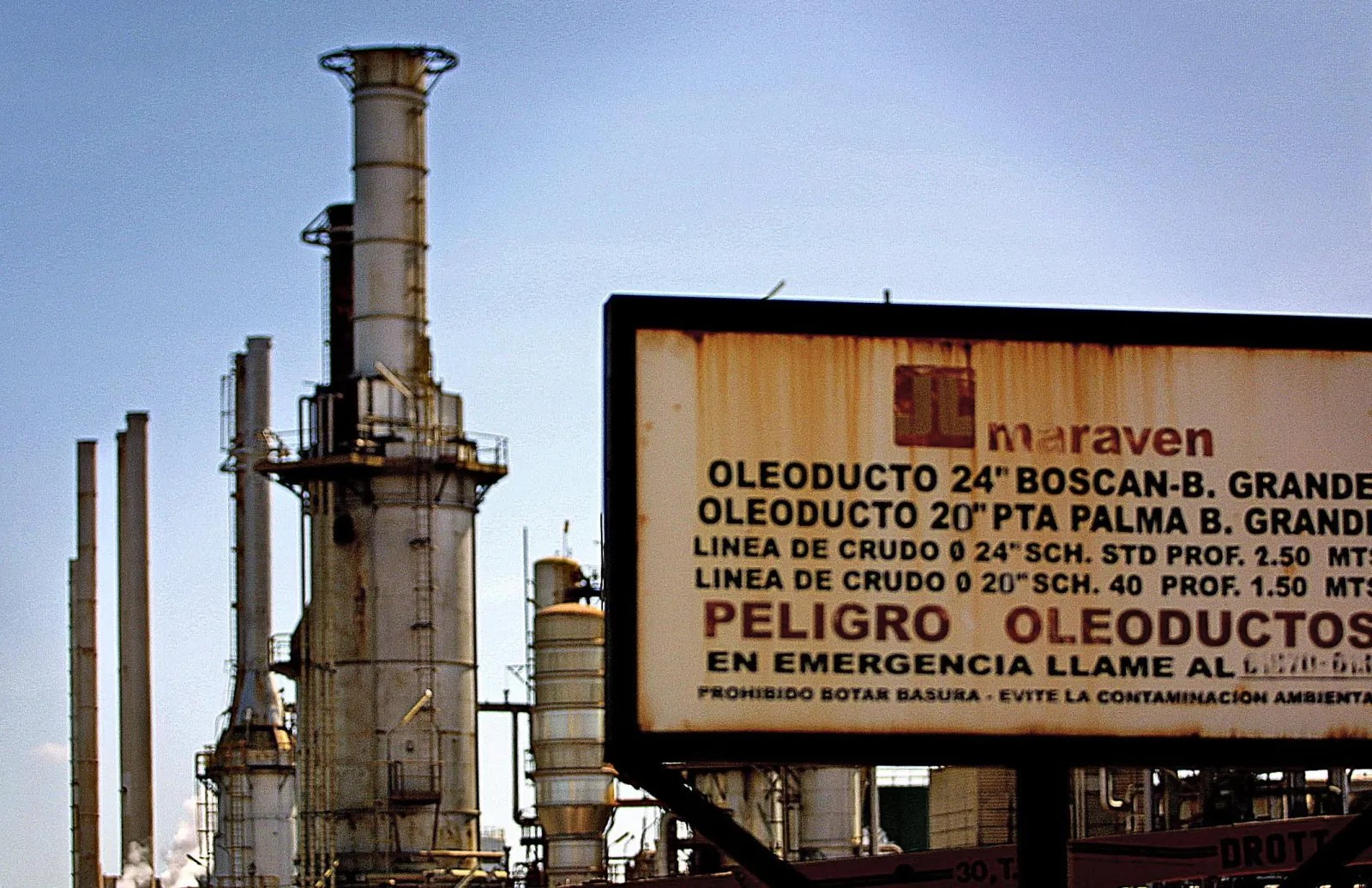
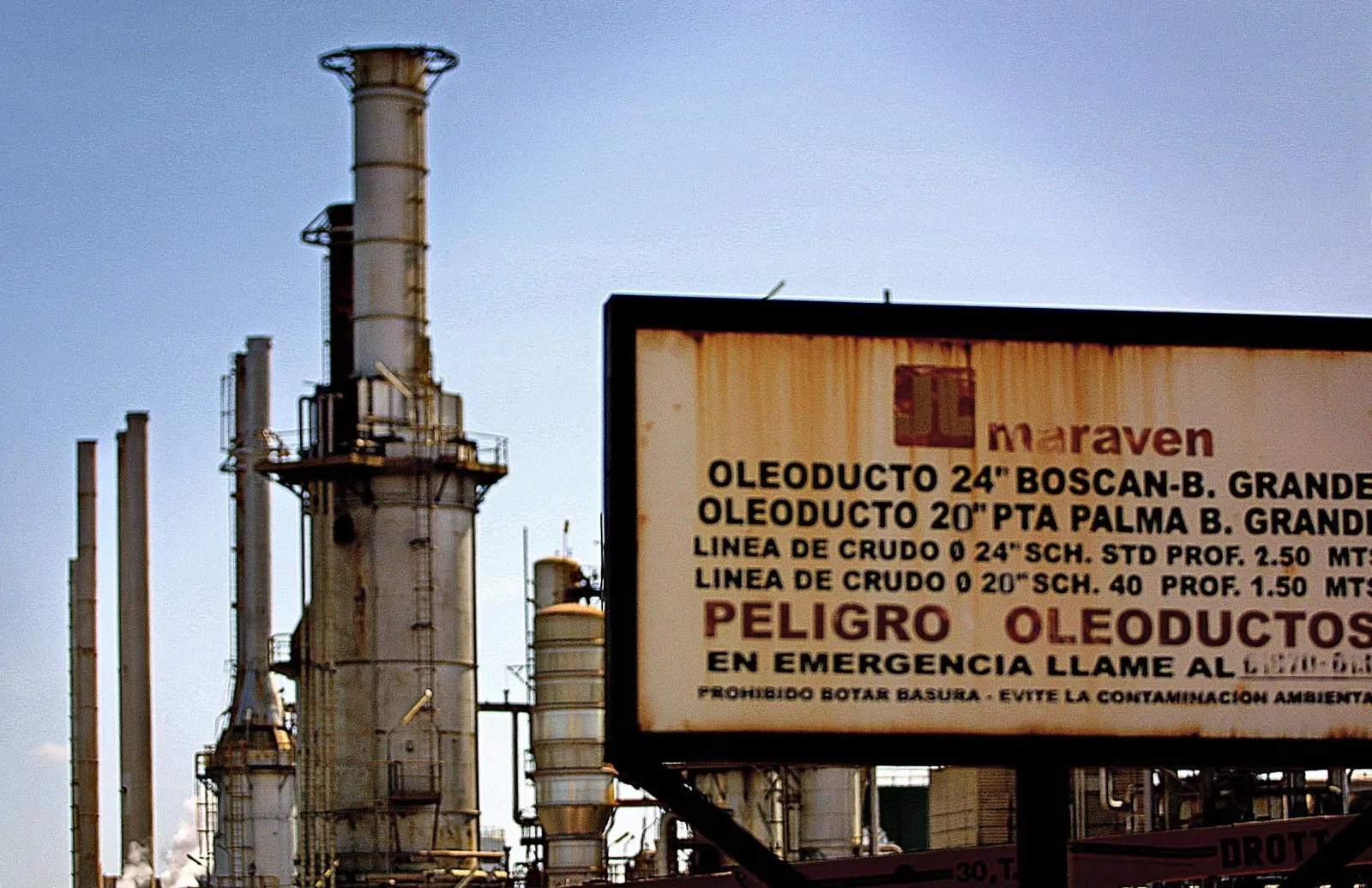
Venezuela is said to have the world’s largest oil reserves, but the infrastructure required to tap these resources is dilapidated.
After the U.S. captured Maduro last week, Trump said U.S. oil producers were ready to spend $100 billion or more in rebuilding the infrastructure which could deliver the mutual benefits of a prosperous future for the Latin American country and a profitable enterprise for energy firms.
However, while energy chiefs have welcomed the removal of Maduro, Woods’ comments show the lack of firm commitment from oil executives to invest, as well as a degree of nervousness regarding the return on investment that could be seen after several years of heavy spending.
What To Know
During a livestreamed event in the White House with the heads of the firms including Exxon Mobil, Chevron and ConocoPhillips, Exxon CEO Darren Woods, said Venezuela was not a good investment unless legal and commercial changes were undertaken.
Woods said there had to be durable investment protections, and there has to be a change to the country’s hydrocarbon laws.
He said that the legal and commercial constructs and frameworks made the country’s oil sector “uninvestable” unless there were “significant changes”, although he added he was confident that the U.S. could make these changes and Exxon would likely soon put a technical team on the ground in Venezuela to assess its oil infrastructure.
Harold Hamm, a fracking executive and Trump ally, told the meeting that the country has challenges which the industry knew how to handle.
Chevron is the only major U.S. oil company still operating in Venezuela. Its vice chairman Mark Nelson told the gathering that it sees a path towards increasing its production by 50 percent in the next two years from its current 240,000 barrels a day with its partner, the Venezuelan state-run oil company, Petróleos de Venezuela SA (PDVSA).
Meanwhile, Jeffery Hildebrand, CEO of independent oil and gas producer Hilcorp Energy said his firm is “fully committed and ready to go to rebuild the infrastructure in Venezuela.”
Different Approaches
O’Donnell, who produces the website Globalbarrel.com, told Newsweek that it’s not just a matter of going into the big fields and making big investments, it could be a gradual process.
Production could be raised immediately by up to 40 percent simply by letting foreign companies back into the country with some minor equipment which would encourage firms to work on small projects, he said.
Another approach would be to focus areas such as around Lake Maracaibo, [or in Monagas where} there are oil fields that began to be exploited in the 1970s but were abandoned. Many of them were not depleted as the government in Caracas had claimed, there was just a lack of capacity and equipment. (I made a correction to my quote. in square brackets, Tom O’D.)
Those mature fields could be recovered rather easily by smaller companies and as there are some pipelines working in those areas which would need to be improved to get that oil to ports, said O’Donnell.
That would raise a significant amount of money and allow time to further develop the sector ahead of the areas that require long-term investment of billions of dollars, such as in the Faja del Orinoco, where the extra heavy oil is.
Companies can go into those regions now but they would need to upgrade the oil to make it lighter so it can flow through pipelines. Heavy oil can be extracted and mixed with dilutants and exported to U.S refineries, which would be a way getting started while the longer-term repairs to the high-tech equipment is undertaken, O’Donnell added.
What People Are Saying
President Donald Trump: “Our giant oil companies will be spending at least $100 billion of their money, not the government’s money.”
Exxon CEO Darren Woods: “If we look at the legal and commercial constructs and frameworks in place today in Venezuela today, it’s uninvestable.”
He added: “There has to be durable investment protections, and there has to be a change to the hydrocarbon laws in the country.”
Fracking executive Harold Hamm: “It is a very exciting country and a lot of reserves—it’s got its challenges and the industry knows how to handle that.”
Blog Post Commentary: In my view, as quoted in the Newsweek article here, from a tech-and-infrastructure point of view, Venezuelan oil production can start being raised, step-wise, rather rapidly. This is not an all-or-nothing process. And, basically all the oil executives at Trump’s White House meeting on Friday, as you can see from Newsweek’s report by Brenden Cole, agree with this. Of course, many pointed out the difficulties with political stability, rule of law, and a democratic transition. Yet they were overwhelmingly willing to get started. It was only the Exxon CEO who raised loud, headline -grabbing objections. In my view, this look3d like a rather transparent ploy to get Trump to agree to hand Exxon federal money as a “backstop” for its investments.
As I explained to Newsweek, there are roughly three distinct Venezuelan oil areas (basins), each with their own opportunities and timelines to get production going again. While, of course, Woods is correct about how the legal environment and investment protections have to be clarified, he seems to me to be purposefully making excuses not to begin.
Where he, and everyone else are correct, is that establishing political stability in the country is key, and then also comes governance competence. Trump clearly agreed on all this, but, correctly pointed out that these oil firm executives “are tough guys” accustomed to operating in quite dangerous security environments.
If a relatively smooth transition takes place, with Chavista-state armed actors (the Guardia National, the Army, and myriad oppressive intelligence services) stand down and/or are disbanded, while non-state armed rural guerrillas, and urban armed collectivos that dominate barrios are mollified somehow, so that there is minimal terrorism and sabotage, then things will develop in the oil sector as rapidly as they ever did in Venezuela over the past 100+ years.
Most importantly, each oil producing region has ample low-hanging opportunities to start increasing production – whether by refurbishing inefficient already-pumping fields or especially by recovering a plethora of supposedly “depleted”, “mature” fields that are merely abandoned and have not had 2-D seismic exploration for almost three decades, nor more-modern 3-D seismic exploration, which likely will find significant, new adjacent medium-heavy reserves.
The two main areas for both rapid improvement are immediate investments in already working fields and, secondly re-entry into mature fields which were shut off but are not actually depleted. These include especially (i) the old Lago de Maracaibo fields, dating from Mene Grande in 1914, and (ii) the Monagas region (Northern Central-East Venezuela) were exploitation began at Quiriquire in 1928, and where new, deeper resources were found and developed in the 1980’s.
In both these older regions, many fields that PDVSA labelled “depleted” are actually fields simply abandoned by Hugo Chavez and Nicolas Maduro’s PDVSA for lack of enhanced oil recovery equipment (EOR), of expertise and investments. As I told Newsweek, even medium or smaller firms can enter these areas and get significant returns fairly rapidly over the next several years, without monstrous investments, as infrastructure is gradually improved – especially electricity supplies. And, it is well known that such oil firms are adapt at bringing in their own on-site power generation, and oil can generally be gotten out to ports via existing pipes until refurbishing progresses.
This was my main point to Newsweek – that there are plenty of ways oil production can begin to be increased rather quickly, while the more complex and big-money investments into the enormous, high-tech projects in the Faja de Orinoco are prepped. (My quote ended up a bit off in the article- perhaps an editor shortened it, ending up conflating the Maracaibo and Monagas regions, but the conclusion is still right).
Two points here. While the title proclaims that Woods declared “Venezuela is un-investible,” if one looks at what almost every other US or European oil executive said, they all of course agreed there are lots of hurdles to overcome, but unlike Exxon, all were willing to get started redeveloping Venezuelan oil.
Exxon, of course, is the heavy weight here. Woods, like Lee Raymond and Rex Tillerson before him at the helm of Exxon, knew well how to work Washington. It seems Trump picked up on Wood’s exaggerations, and has said he wants to deny the oil industry any “guarantee” or “backstop” for their investments into starting production of the oil riches Venezuela has to offer.
In any case, there are two reasons the American administration would want Venezuelan oil rapidly developed. One is to pay for the recouperation of Venezuela itself, as there is almost no productive activity outside of the oil sector in the country. And, secondly, as you can see in several, earlier posts I have made here, it looks to me that the Trump administration has plans to go after the Russian oil sector, shutting down the bulk of its export capacity as a means to constrain Putin’s aggression in Ukraine.
There is now a large glut of extra oil on the market to replace that Russian oil. However, as industrial production picks up globally and there is more oil demand, then Venezuelan oil would be needed to help keep prices for oil low.
 The Global Barrel