Tag Archives: United States

Part I: Venezuelan heavy oil: China’s persistence is finally paying off

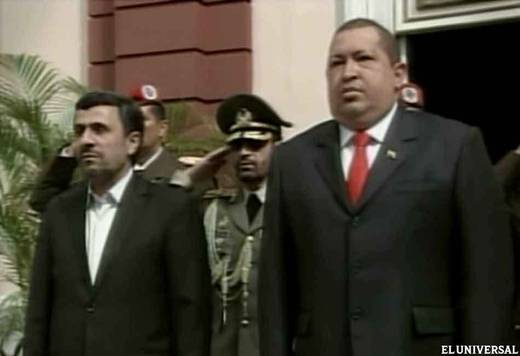
In my travels and interviews in Venezuela this summer, it became clear that there has been a major advance in the relationship between China and the Bolivarian administration of President Chavez.  China’s dogged persistence and large state-sponsored investments in Venezuela – apparently the largest they’ve made to date in any country – are finally beginning to bear fruit.  The new Chinese influence is being simultaneously extended to both oil and non-oil sectors. 

Partly this development is due to the many crises affecting the Bolivarian state, and decisions it has been forced to take to make increasing national oil production a priority.  To advance this program, President Chavez’ administration has made initial moves to grant Beijing access to Venezuelan oil in major ways it had not previously. 

However, there are two sides to this story: on the other side, increasing Chinese participation is also a product of China having step-by-step put some quite sharp demands on PDVSA and the Venezuelan Bolivarian state for financial transparency and accountability, for geopolitical stabilization, and in particular, for Chinese firms being granted large-scale access to new heavy-oil fields in the Faja of the Orinoco River.  The key ingredient here is that Continue reading

Chavez brings Venezuela’s gold home: Iranian, Libyan and Syrian factors

Why did  President Chavez last week order that Venezuela‘s gold reserves held abroad be repatriated  and that international reserve funds held in banks in the U.S., Switzerland, Britain–the global north–be moved to banks in Brazil, Russia and China–to BRIC countries?  The move is being hailed by Chavistas; but, the generalized anti-imperialist and nationalist rationals being cited are not useful as far as a specific geopolitical analysis.  That is , they do not explain why this takes place right now  as opposed to having been done at any given time during the last 12 years of his presidency.

So, why is this being done now?  The idea is obviously to keep these funds in places where they cannot be seized or frozen.  But, WHAT might trigger seizures or freezing of these funds NOW as they lay in U.S., British or Swiss banks? Continue reading

Back from Caracas & Maracaibo: Time for writing and talks

First of all, Greetings!  I have been in Venezuela during July and half of August, talking to contacts and doing research on the present situation.

I was fortunate to have had the benefit of hundreds of hours of heart-to-heart discussions with Venezuelans  from both the pro- and anti-chavista camps, both in and out of government, and some in neither camp.  I also met with several foreign reporters, business people and diplomats.  There are really not many other people from the global north in Venezuela now (I did find one grad student, from Finland). Continue reading

Vietnam-China Naval Confrontation / Beijing reporter’s questions on “China’s Oil Aims in South China Sea”

Buffalo, NY  (on the road)

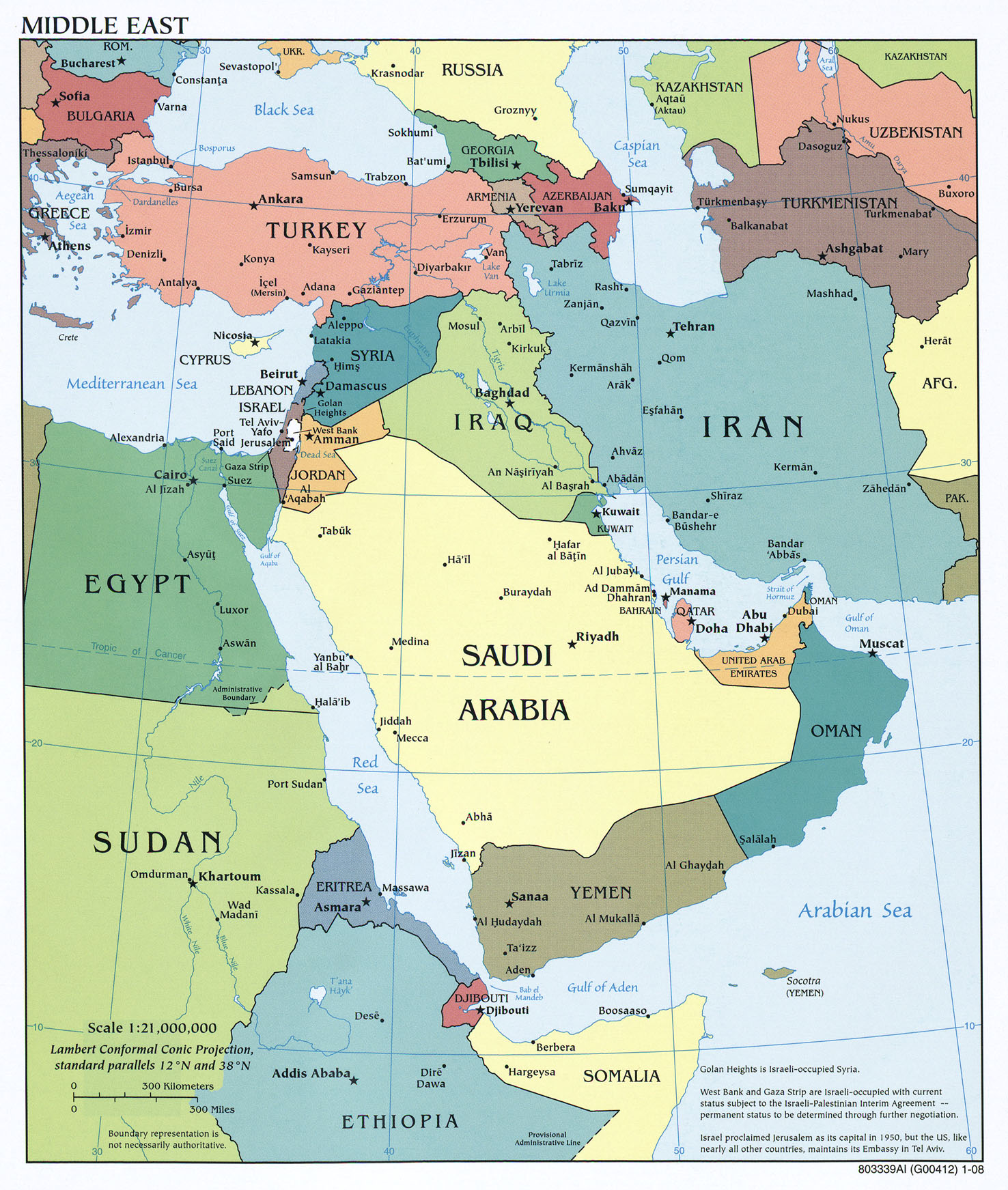
Last week tensions between China and Vietnam flared up over conflicting claims to oil reserves under the South China Sea.  Brunei, China, Malaysia, the Philippines, Taiwan and Vietnam make variously conflicting claims.   But, China is the one that has become increasingly intimidating against other claimants.  This is not to say any Chinese claim is legimitate or not, only that China is the one initiating  confrontation in order to settle disputes in its favor.Map of South China Sea claims by country

VN claimed a Chinese vessel maliciously cut the cables of  one of its Continue reading

Our modern “Fire Water” addiction: From Native American salesmen

The Seneca Nation of Indians  reservation.  NE of Buffalo, NY

Yesterday, I went with my brother from his small farm (en America Latina se dice “una finca” ) to the nearby Seneca Indian Nation Reservation (here is the nation’s official web site), to buy gas for his pickup.  Many of the locals hereabouts do this frequently.  The Seneca are, by treaty with the US federal government, a sovereign nation, so they are not required to charge federal or NY State taxes on gasoline.  So, there are a few very busy gas stations on the Continue reading

Watch my interview: The economic crisis & Impact on energy & environment

It would NOT TAKE ROCKET SCIENCE to make huge increases in energy efficiency and reduction of greenhouse gasses in the USA.   Here is an interview I gave, from Caracas in late 2009, to Erica Dingmann., on what needs to be done in transportation infrastructure and energy to REALLY make some big, practical gains in the USA.  It does NOT require big breakthroughs in technology.

Tell me what you think.

Cracks in OPEC – Political-Economic basis for two factions with two different geopolitical roles

Northampton, MA (Area of “the five colleges,”  UMass Amhers, etc.)

On Thursday, the lead headline story in the WSJ asserted “New Cracks in Oil Cartel: OPEC Fails to Agree on Production Boost Amid Rising Saudi-Iran Tensions.”  The “cracks” may have widened at this meeting, but they are hardly “new.”  Continue reading

Ending U.S. Federal Subsidies for Oil Companies to Drill

Boston, MA (From the road, with visits to Lynn and Marblehead)

I had the unexpected opportunity yesterday to hear the Governor Patrick of the State of Massachusetts and local Boston U.S. Congressman Ed Markey – Chair of the House Select Committee on Energy and Environment –talk to a meeting of union activists who will be canvassing local Boston voters to ascertain their concerns before the next elections.  I spoke briefly with the congressman.

Markey has been instrumental in the recent attempts to repeal Bush-era federal legislation that grants subsidies to oil companies to encourage them to drill for oil in US territory. As he pointed out, this seems especially inappropriate at a time when oil prices are about double what they were when these subsidies were adopted. The congressman explained how he felt there was no need for such encouragement now, especially at taxpayer expense and when there is such concern to reduce the federal deficit.   (I thank my old friend and union organizer/analyst here in Boston for inviting me.)

My next post, in a day or two, will be on what I see as: “The Pragmatic Turn in Venezuelan Foreign Policy.” This is a complex (and controversial) topic and it will occupy many future posts. However, first one has to establish whether this turn is or is not actually taking place … and only then can we analyze what the implications and effects, for better or worse, might be.