Category Archives: China

PDVSA Future Uncertain After Chavez – My views in “Platts” today

PDVSA: Reform?

Venezuela’s troubled national oil company, PDVSA — Post-Chavez Reforms ?

What’s the future of PDVSA post-Hugo Chavez?  My comments to Platts Energy writer Mery Mogollon were quoted in detail today in Oilgram News.  A JPEG  image is below (click it to enlarge).   My thanks for permission to post it here.  Continue reading

As Chavez’ oil alliance with China gets serious, Beijing holds PDVSA to its word

Groundbreaking at CNPC refinery for PDVSA heavy oil, set tol be China's largest.

Groundbreaking, PetroChina-CNPC refinery for PDVSA heavy oil. It is to be China’s largest. (April 2012)

Over the past few weeks, I have been looking at the state of the Venezuelan-Chinese oil alliance that Hugo Chavez has so fervently championed.  The picture that emerges is not what one might expect. Here is an overview, in qualitative terms. [Correction: I originally wrote Ramirez reported that PDVSA produced “60,000” new barrels of Faja oil in 2013. He actually said “20,000”.]

A. Structural Changes – Vertical Integration with China

Till now, commentators have looked primarily at the obligations of the Bolivarian Republic of Venezuela (BRV) to send oil to China to repay Beijing’s huge loans.  However, there are major changes afoot in the structure of this relationship, no matter who succeeds Hugo Chavez.  Developments on the ground in both countries show an energy infrastructure buildup will soon bring significant cross-border vertical integration.  Soon, Venezuelan oil will not be shipped to China simply to fulfill financial-and-contractual obligations, but also for locked-in infrastructural reasons. 

All indications are that the Chinese side is actively fulfilling the obligations it entered into ca. five years ago (esp. December 2007) to build oil tankers, pipelines and refineries in China in order to import and process Venezuelan heavy crude.

Continue reading

Problems of the Global Oil System: Why teach about oil?

Oil pumpjacks in Venezuela (TalCual Digital, Caracas)

Recently, I sent off a proposal for a new course, “Problems of the Global Oil System.”  The introduction asks rhetorically: “Why Teach About Oil?”

Debates in the U.S. over oil and energy policy often resemble election campaigns, fought out with factoids and unconstrained partisanship.  Of course, deciding technical-scientific policy is inherently political.  But there are politics and there are politics.  In the proposal, I argue that  “Oil’s persistent domestic & global centrality” will extend at least another 25-to-30 years, so teaching about oil is necessary to  empower students to participate in forming energy policy democratically.

But, do the facts actually support the conclusion that petroleum’s central role in society–in both domestic and international affairs–will persist for at least 25-30 years hence?  Here is the brief argument in the introduction (and the conceptual outline of the course) for your consideration: Continue reading

Venezuelan Faja Surprise: USA’s Harvest sells not to China but Indonesia

Petrodelta,SA rig in the south of Monagas state, Venezuela (PDVSA 2011 Annual Rept)

In March, U.S.-based Harvest Natural Resources (HNR) had disclosed to shareholders it was in exclusive confidential negotiations with a national oil company (NOC) to sell its 32% stake in Petrodelta SA–a lucrative, mature, medium-heavy Faja oil field in the south of Monagas state, in which PDVSA holds a 60% share.  Thursday evening, Harvest surprised observers by announcing they had signed an agreement with the Indonesian National Oil company, Pertamina.

The big question immediately being asked was: “Indonesia?  Why not China?”  I was quoted at length Friday morning on this question by Bloomberg’s Nathan Crooks in Caracas (See:

Continue reading

Oil Prices: Saudi Pumping Surge & US-EU Iran Strategy

What are the factors driving up the price of oil? Some cite fundamentals, others over-active speculation,

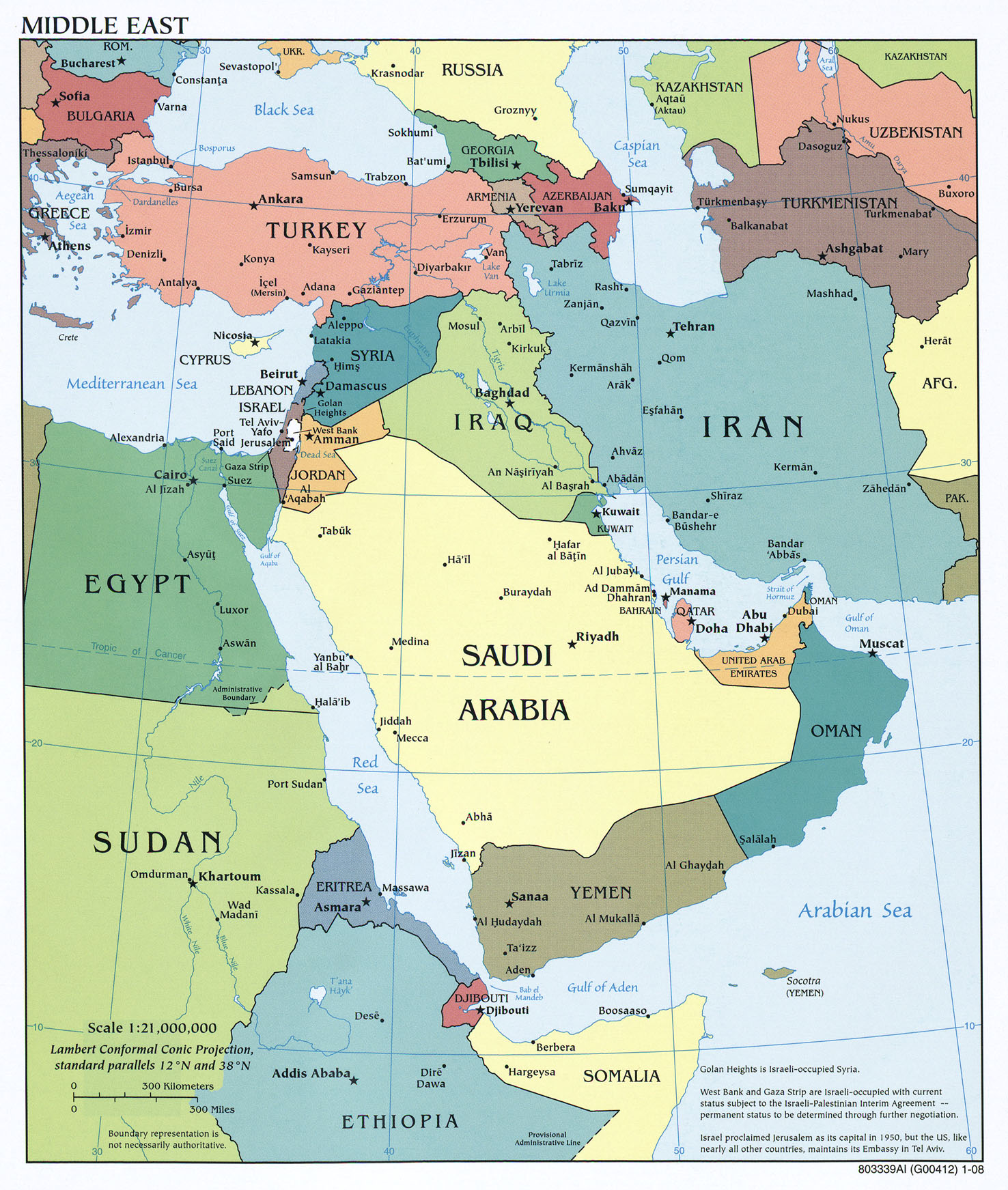
Persian Gulf & Middle East (UTex Lib. 2008)

and there are certainly major geopolitical issues in OPEC‘s Mideast and North African (MENA) member states–which is what this post is about.

The Present Saudi Pumping Surge is a Key Element of the US & EU Iran Sanctions Strategy

It is certain that the Iran confrontation will only intensify as the mid-summer sanctions deadline approaches.  By July, Washington and the EU hope to significantly curtail Iran’s ability to export oil.  In this situation, it is perhaps surprising that prices have not gone higher.

This past week, the normally understated Economist, while noting the Saudis’ extraordinary efforts to pump excess capacity, nevertheless warned that the Iran crisis could trigger a worst-ever oil shock:

Continue reading

PDVSA ships fuel to Syrian regime: Chavez risks sanctions?

[Edited Tues  630 EDT] The Negra Hipólita, a tanker operated by an affiliate of PDVSA, should be arriving at the Syrian port of Banias after a 15-17 day voyage from the Venezuelan refinery at Puerto La Cruz (El Universal, 17Feb12).

Syrian tanks are seen in Bab Amro near the city of Homs,12Feb12. Photo Reuters

Puerto La Cruz produces about 187k bbl/day and, the Negra Hipólito, if fully loaded, will deliver 47,000 (47k) tonnes of diesel fuel to alleviate reported widespread shortages of fuel in Syria. That’s about 330k barrels of fuel usable as home heating oil, or as fuel for Assad’s Russian tanks “indiscriminately” shelling neighborhoods, as in the city of Homs.  Note:

In Vienna, the U.N. chief demanded the Syrian regime stop using indiscriminate force against civilians caught up in fighting between government troops and Assad’s opponents. “We see neighborhoods shelled indiscriminately,” Ban told reporters. “Hospitals used as torture centers. Children as young as ten years old jailed and abused. We see almost certain crimes against humanity.” (Time World, Syrian Troops Shell Central City with Tanks. 17Feb12).

What, however, is the geopolitical significance of this shipment?  Let’s examine three issues:

  1. Chavez’ motivations: Why risk sanctions?
  2. Is this a significant material assistance to Assad’s regime?
  3. Has Chavez blundered by miscalculation? Continue reading

China’s Iran-Oil Import Angst – Part II: 2012 Following 2010 Script

Misinterpretations of China´s Opposition in 2010 and 2012

(Continued from Monday, 13 Feb 2012) The last time the Obama Administration wanted new sanctions on Iran, in 2010, Beijing started out loudly opposed, threatening to block the sanctions at the U.N., something Beijing had never before seriously threatened.

President Obama thanked Vice Premier Xi for China's support on Iran oil sanctions. NYT photo by Doug Mills, 14Feb12.

Continue reading

China’s Iran-Oil Import Angst. Part I: U.S.-Saudi Cooperation

Thus far, Beijing has found little wiggle room to resist the U.S.-E.U.-Saudi common vision that severe sanctions be used to shut down the bulk of Iran’s oil exports by June.

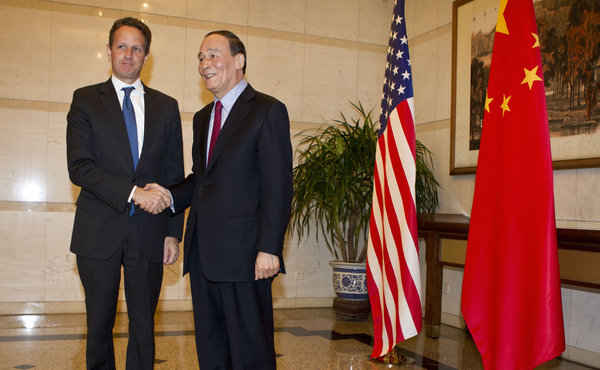
US Treasury Sec Geithner in Beijing with Vice Premier Wang Qishan. NYT Photo Andy Wong

The reality being revealed in this confrontation is that China has much less ability to maneuver independently in the global oil system—whether in the market or in diplomatic and military matters—than most analysts would lead us to believe.

Preface: What are Washington v. Beijing´s strategic objectives here ? Continue reading

With a USA-dependent oil sector, Chavez can’t help Ahmadinejad

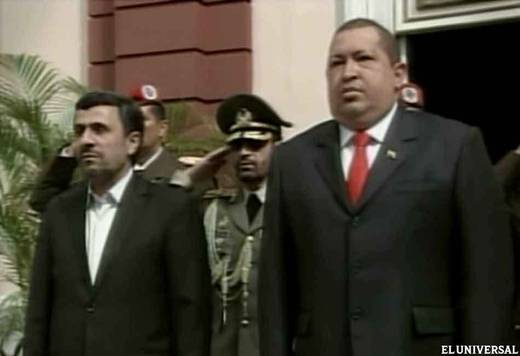
(Edited, 20 Jan.) President Ahmadinejad of Iran visited Venezuela on January 9, and then three of President Chavez’ closest Latin American allies, to search for help. His tour was part of a flurry of diplomacy in the New Year leading up to the imposition of severe new U.S. sanctions on Iran’s ability to export oil, beginning in June.

Presidents Ahmadinejad and Chavez in Caracas (Photo: El Universal)

While these two presidents met in Caracas, U.S. Treasury Secretary Geithner was visiting South Korea, Japan and China, and other U.S. officials were Continue reading

A Santos-Chavez Pipeline: Where’s the demand for Latin America’s oil boom?

President Santos of Colombia recently went to Caracas where he and PresidentChavez signed a letter of commitment  for the “Binational Project on the Venezuela-Colombia Oil Pipeline” to run 3,000 km. from Venezuela’s Faja heavy-oil region, west across Colombia to the Pacific port of Tumaco.  (El Universal and El Universal).  After many disappointments in recent years in collaborations with PDVSA, Latin American presidents haven’t endorsed many joint projects lately.  Nevertheless, Santos was beside himself with enthusiasm after the five-hour meeting on 28 November, declaring “Wherever we’ve mentioned this, people’s eyes open wide.” (Reuters)

Let’s look at some data to see if Santos and Chavez are really onto somehing here. Continue reading

Part IV: Another $6.5b in loans: The frustrated Beijing-Caracas courtship

(Greetings! It’s good to be back blogging.)  The common perception is that Chinese oil companies in Venezuela are winning big deals on very favorable terms.  However, as I’ve stressed in previous posts, Beijing is actually very frustrated not to be getting the deals it expects for new Faja heavy oil fields, especially considering its big investments in the Bolivarian state.  More evidence continues to emerge.

From 21-23 November the “10th Meeting of the China-Venezuela High-Level Committee” took place in Caracas at the Hotel Gran Meliá, with something like 400 businesses and state representatives coming from China.    Continue reading

Part III: Venezuelan heavy oil: China’s persistence is finally paying off

First, here is an outline of this and the next three or four blogs on this topic:

I. Changes on the Venezuelan side that are enhancing the Chinese role:

a.  Chavez’ recent interest in increasing national oil production 

b.  The existential crisis Chavismo faces from the slow collapse of dysfunctional state institutions, civil infrastructure, and nationalized enterprises

II. Changes on China’s side that enhance its role in Venezuela:

a.  China has now loaned Venezuela so much money, and Venezuela so badly needs continued Chinese financing (lately it  also feels a need for managerial and technical assistance), that Beijing has been able to insist Caracas not only begin to come through on long-awaited heavy-oil contracts, but that it also comply with certain  geo-political and fiscal-accountability conditions. A couple of these are pretty amazing.

———————————————————————————————-

I. Changes on the Venezuelan side enhancing the Chinese role:   a. Chavez’ new interest in increasing national oil production

One reason for China’s deepening influence in Venezuela is that PDVSA‘s president and energy minister, Rafael Ramirez, is no longer alone in insisting that PDVSA’s level of production has to rise.  President Chavez now seems to have gotten behind the need to increase national production.  If the price of oil falls significantly (many feel six months at an average of $60/barrel would be ruinous) and PDVSA’s exports per day have not risen to compensate, Venezuela will be in real trouble.  Venezuela is extraordinarily dependent on imported goods, from food to machinery for which dollars are needed; and it also must keep up payments to foreign bond holders, for which a steady stream of dollars are also needed.  Chavez and Ramirez have every reason to expect that the world’s economic woes will lead to a decrease in oil demand over the next year or two, and this of course can lead to significantly lower prices.  These fears were not apparent in the recent past. It has been more or less a tenent of Chavista faith at elite-and-professional levels that the price of oil will never again fall significantly.  I have been told this many times.  Continue reading

Part II: Venezuelan heavy oil: China’s persistence is finally paying off

Major Chinese Faja heavy-oil-production contracts had not materialized till now. Why not?

(This is continued from Part I)    On the one hand, technical reasons would be given against closing deals with the Chinese. For example, it was thought by some in PDVSA that Chinese companies lacked the technology to efficiently implement the refineries needed to upgrade Venezuela‘s extra-heavy oil to a grade light enough to enable it to be accepted by foreign refineries. On this excuse, some top PDVSA executives had pressed Chinese firms to focus on making joint proposals together with, say, Total of France.  This was because Total had already proven the quality of its upgrader-refinery technology in one of the four proof-of-principle projects foreign companies had implemented during the previous government’s apertura period. (The apertura was the liberal “opening” of the oil sector to significant Continue reading

Part I: Venezuelan heavy oil: China’s persistence is finally paying off

In my travels and interviews in Venezuela this summer, it became clear that there has been a major advance in the relationship between China and the Bolivarian administration of President Chavez.  China’s dogged persistence and large state-sponsored investments in Venezuela – apparently the largest they’ve made to date in any country – are finally beginning to bear fruit.  The new Chinese influence is being simultaneously extended to both oil and non-oil sectors. 

Partly this development is due to the many crises affecting the Bolivarian state, and decisions it has been forced to take to make increasing national oil production a priority.  To advance this program, President Chavez’ administration has made initial moves to grant Beijing access to Venezuelan oil in major ways it had not previously. 

However, there are two sides to this story: on the other side, increasing Chinese participation is also a product of China having step-by-step put some quite sharp demands on PDVSA and the Venezuelan Bolivarian state for financial transparency and accountability, for geopolitical stabilization, and in particular, for Chinese firms being granted large-scale access to new heavy-oil fields in the Faja of the Orinoco River.  The key ingredient here is that Continue reading

Back from Caracas & Maracaibo: Time for writing and talks

First of all, Greetings!  I have been in Venezuela during July and half of August, talking to contacts and doing research on the present situation.

I was fortunate to have had the benefit of hundreds of hours of heart-to-heart discussions with Venezuelans  from both the pro- and anti-chavista camps, both in and out of government, and some in neither camp.  I also met with several foreign reporters, business people and diplomats.  There are really not many other people from the global north in Venezuela now (I did find one grad student, from Finland). Continue reading