Category Archives: Hugo Chávez

Beijing ups Venezuelan oil investments, but refuses Chavista leaders’ plea for a cash bailout

folha_header_08apr13folha_quote of the day_venez-and-china_08apr13Back in April, Brazil’s Folha de SaoPaulo ran an article entitled: The Future of Venezuela Depends on China and highlighted this quote:  Translation: “If Maduzo wins, he’ll have to regain the confidence of the Chinese.”  TOM O’DONNELL, petroleum consultant

Indeed, it is now clear that the short-term strategy of the post-Chavez Maduro-Cabello administration was to escape the country’s severe dollar crisis: convincing Beijing to extend it a $5 billion cash loan alleviating food-import shortages before 8 December elections.  In particular, the cash was to fund a new dollar exchange system (see El Nacional,25 Sept 2013). Continue reading

AQ Follow-up | Caracas & Maracaibo: Venezuela’s Private Sector Anxious to Invest if PDVSA Builds Confidence

Americas Quarterly today carries a followup that to my 29 August piece on Post-Chavez changes at PDVSA.

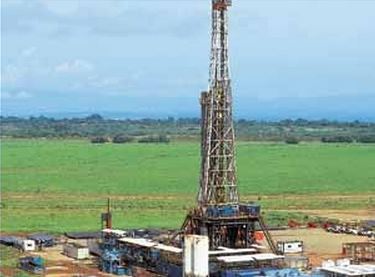
Drilling rig (PDVSA)

Drilling rig (PDVSA)

NOTE:  During the past couple weeks, while in Maracaibo and Caracas, I was repeatedly told of a new offshore payment mechanism that PDVSA has begun offering to its Joint Venture foreign partners.  Venezuelan private sector leaders took credit  for the general idea. Continue reading

My AS/COA piece: PDVSA Post-Chavez: Will Partnerships with the Private Sector and Chinese Experts Boost PDVSA Oil Production?

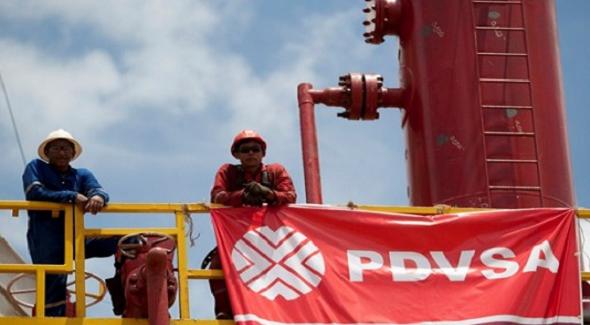
PDVSA oil rigs in Venezuela (TalCual)

PDVSA oil rigs in Venezuela (TalCual)

Throughout 2012, and especially after President Hugo Chávez’ death in early March 2013, Venezuela’s national oil firm, Petróleos de Venezuela S.A. (PDVSA), has taken measures beyond anything done in the past decade to raise its lagging production. While the likely impact merits cautious analysis, the drivers of the Bolivarian Republic’s scramble for increased oil revenues are clear.  … Continue reading

En Espanol: Venezuela’s “Tal Cual” on my al-Naimi post

For Spanish speakers: below is an article from Tal Cual daily in Venezuela summarizing my blog on Saudi oil minister al-Naimi’s opinons on the “North American tight-oil revolution” and their implications for Venezuela and Iran.  The article is by Jose Suarez Nunez.

Para hispano parlantes: Aquí abajo está un artículo en Español publicado en Tal Cual de Caracas, un resumen de mi blog de la última semana que trató en las opiniones del ministro de energía saudita Sr. al-Naimi, y en las implicaciones para Venezuela e Irán. Continue reading

NYC Lecture: THE LEGACY OF HUGO CHAVEZ: Is ‘Oil-Socialism’ a Sustainable Alternative Development?

English: Hugo Chávez

I’m invited to deliver a public lecture Wednesday, 24 April, at 3:30 in New York City at The New School University‘s Graduate International Affairs. This will be a  critical examination of the legacy of Hugo Chavez’ “oil socialism” as an “alternative developmental model” for Latin America. Continue reading

“Tough Policy Choices Await Chavez Successor”- My viewpoint in Petroleum Intelligence Weekly

Below is a “Special Reprint of Petroleum Intelligence Weekly for The Global Barrel”–I was quoted in three EIG articles last week.

A special thanks to James Bourne, Energy Intelligence’s Senior Editor for Latin America. James is moving on to new challenges in Singapore   His frequent calls with probing questions and insightful analysis of Venezuela and Latin America will be sorely missed here!!  Una buena despidida – mucho éxito en todo! 

tough_choices_after_chavez_energy_intell_11Mar13

Chavez’ Legacy for Venezuela’s poor & institutions: Watch my German TV News Interview

Deutsche Welle, the German international TV service, interviewed me on the
legacy of Hugo Chavez on  their live evening news broadcast Journal  from Berlin.  I tried to relate two, strikingly contradictory aspects of President Chavez legacy:

The outpouring of sincere affection for him from the poor and many others in Caracas, which the world is witnessing, as the embodiment of their liberating political awakening.  And, in contrast, the utter shambles in which Hugo Chavez, as a practical political leader of 14 years, left the Venezuelan state and economic institutions, including PDVSA.  My segment comes at 4:08 minutes into the video stream here:

PDVSA Future Uncertain After Chavez – My views in “Platts” today

PDVSA: Reform?

Venezuela’s troubled national oil company, PDVSA — Post-Chavez Reforms ?

What’s the future of PDVSA post-Hugo Chavez?  My comments to Platts Energy writer Mery Mogollon were quoted in detail today in Oilgram News.  A JPEG  image is below (click it to enlarge).   My thanks for permission to post it here.  Continue reading

As Chavez’ oil alliance with China gets serious, Beijing holds PDVSA to its word

Groundbreaking at CNPC refinery for PDVSA heavy oil, set tol be China's largest.

Groundbreaking, PetroChina-CNPC refinery for PDVSA heavy oil. It is to be China’s largest. (April 2012)

Over the past few weeks, I have been looking at the state of the Venezuelan-Chinese oil alliance that Hugo Chavez has so fervently championed.  The picture that emerges is not what one might expect. Here is an overview, in qualitative terms. [Correction: I originally wrote Ramirez reported that PDVSA produced “60,000” new barrels of Faja oil in 2013. He actually said “20,000”.]

A. Structural Changes – Vertical Integration with China

Till now, commentators have looked primarily at the obligations of the Bolivarian Republic of Venezuela (BRV) to send oil to China to repay Beijing’s huge loans.  However, there are major changes afoot in the structure of this relationship, no matter who succeeds Hugo Chavez.  Developments on the ground in both countries show an energy infrastructure buildup will soon bring significant cross-border vertical integration.  Soon, Venezuelan oil will not be shipped to China simply to fulfill financial-and-contractual obligations, but also for locked-in infrastructural reasons. 

All indications are that the Chinese side is actively fulfilling the obligations it entered into ca. five years ago (esp. December 2007) to build oil tankers, pipelines and refineries in China in order to import and process Venezuelan heavy crude.

Continue reading

Succession Crisis #2: Chavez’ non-inauguration: Why violate the “Chavez Constitution”?

The Supreme Court of Venezuela has just made a rather strange decision. Rather than deciding between the two possible scenarios described in the constitution for the case when a president-elect is unable to take the oath of office on the prescribed day of 10 January, they have instead pronounced a third scenario proposed by leaders of Chavez’ party: There is “no temporary absence” of Chavez, and there is “administrative continuity” (i.e., that there is no new administration since he was the previous president).

The decision by the TSJ [press conference 9Jan 2012] seems particularly amazing as it rejects the constitutional option of declaring Chavez  “temporarily absent” that would have kept Chavismo in the presidency without an election for 180 days.

This decision is just as transparently un-constitutional and invented as the rationals of the right-wing Honduran military and congress in 2009 for throwing the president out of their country in his pajamas, rather than pressing whatever grievances or charges they had against him within the framework of the constitution.  There is a habit growing in Latin America of “democracies” being unwilling to fight out political crises within the sphere of the constitution and the nation’s institutions.

Here’s the situation in Venezuela:  The vice-president and acting president, Continue reading

Venezuelan Succession Crisis? 1: Two men Chavez wants to succeed him

A succession crisis is stalking Venezuelan society. cabello-venezuela--644x362President Chavez of Venezuela is again in Havana, after a complex six-hour surgery, his third in a year for an unspecified form of cancer. Just before the surgery, he returned to Caracas to address the nation. For the first time he spoke about what he wishes to be done if he is unable to return to the presidency.   Continue reading

I’m cited: “(BN) Chavez Buys Enemy U.S.’s Fuel While Lauding Iran”

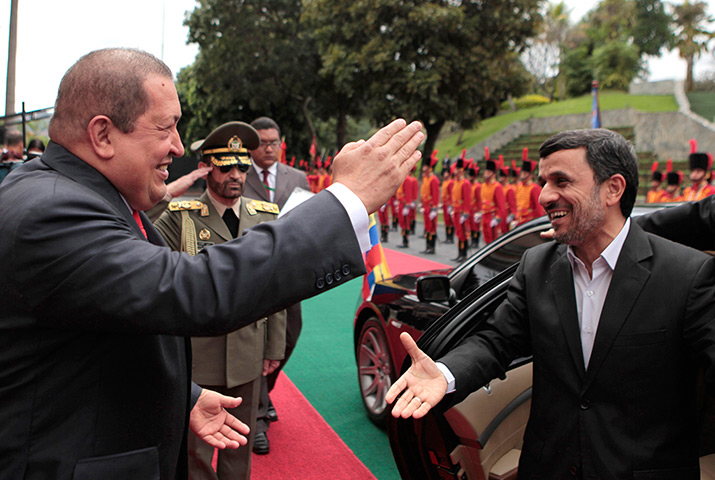
Presidents Chavez and Ahmadinejad met in Caracas in January (here) and June 2012

I was cited a number of times yesterday in a Bloomberg News article by Nathan Crooks in Caracas and Paul Burkhardt in NYC.  I reprint it below because the authors’ research further illustrates an issue I’ve often stressed here.

That is: in spite of President Chavez’ rhetoric promising to stand by Presidents Ahmadinejad of Iran (and Assad of Syria, and previously Qaddafi of Libya), he is actually in no position to withstand the U.S. sanctions that could be imposed on Venezuela for aiding Iran. Continue reading

Venezuelan Faja Surprise: USA’s Harvest sells not to China but Indonesia

Petrodelta,SA rig in the south of Monagas state, Venezuela (PDVSA 2011 Annual Rept)

In March, U.S.-based Harvest Natural Resources (HNR) had disclosed to shareholders it was in exclusive confidential negotiations with a national oil company (NOC) to sell its 32% stake in Petrodelta SA–a lucrative, mature, medium-heavy Faja oil field in the south of Monagas state, in which PDVSA holds a 60% share.  Thursday evening, Harvest surprised observers by announcing they had signed an agreement with the Indonesian National Oil company, Pertamina.

The big question immediately being asked was: “Indonesia?  Why not China?”  I was quoted at length Friday morning on this question by Bloomberg’s Nathan Crooks in Caracas (See:

Continue reading

My Iran-in-Venezuelan-Oil Study: Summarized in “Tal Cual” today in Caracas; in Spanish

For those who read Spanish:  Today Tal Cual in Caracas carried a detailed summary in Spanish by Jose Suárez Núñez of my study, “Bolivarian Venezuela’s Oil Policy & Iran: A Failed Energy Alliance” (which appeared in Middle East Economic Survey’s [MEES] Energy and Geopolitical Risk for May 2012).

Suárez Núñez is the Tal Cual oil columnist, and one of Venezuela´s most senior oil journalists.  Here are the links: Continue reading

Bolivarian Venezuela’s Oil Policy & Iran: A Failed Energy Alliance

My study of Iran in Bolivarian Venezuela’s oil sector is just out in the May 2012 edition of Energy and Geopolitical Risk-published by MEES: Middle East Economic Survey.  You can read it here: Venezuela_Iran_failed_energy_alliance-Geopolitical-Risk-May-2012-3. Continue reading